
Care · 8 min read
How to clean a mosquito screen

Senior mosquito screen specialist at moskitnyesetki.kz
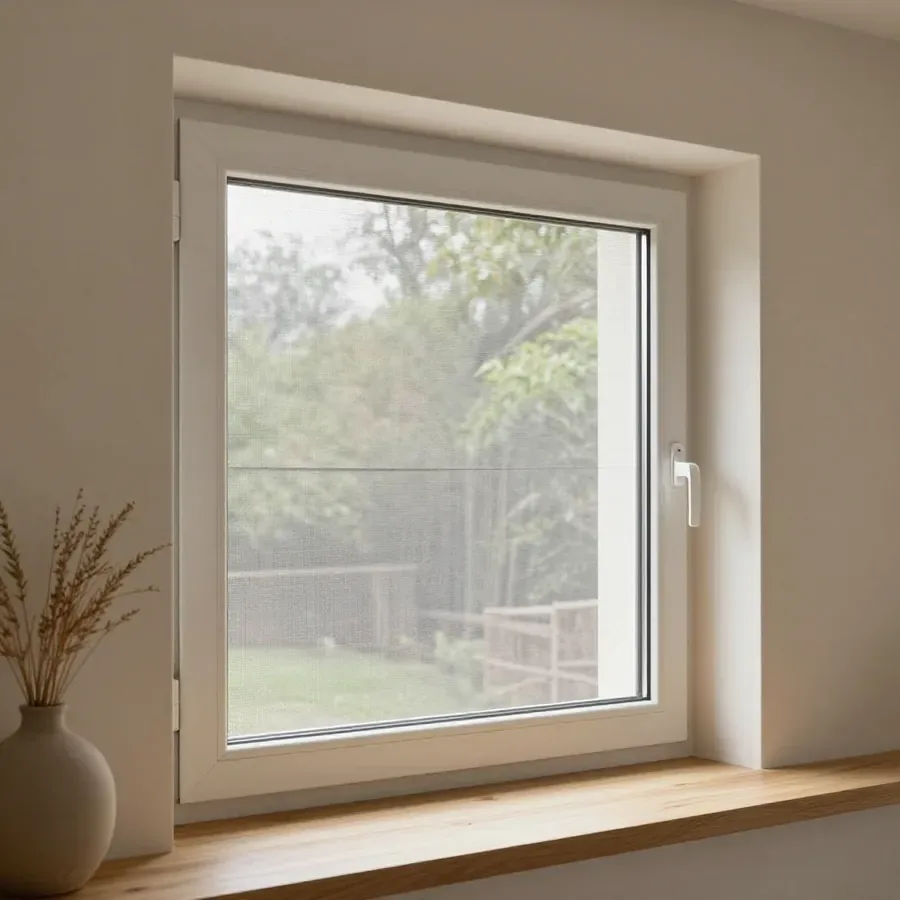
To clean a mosquito screen, take it down from inside, rinse off loose dust, wash the mesh with mild dish soap and a soft sponge, rinse, dry it in the shade and put it back straight. We make framed screens that lift out in a minute, and we repair or replace mesh when washing no longer helps.
How to Remove a Window Screen Without Damaging the Fastenings
Taking the screen down is the riskiest cleaning step. The method depends on the fastening, not window size, so check your type before touching the mesh.
Taking down a framed screen held by Z-brackets or pins
- Release the top first: unclip upper Z-brackets or pull top pins straight out, then tilt the panel toward you.
- Support both corners: keep one hand under each side so the screen cannot swing and bend brackets.
- Lift, do not lever: raise the panel out of lower clips in one motion, not sideways.
- Check the mesh: run a palm over the fabric before washing; a bent edge shows as a loose strip.
- Set it down flat: rest the screen on a clean surface, not against a wall.
- Know your warranty: our screens carry a one-year warranty; most bent brackets come from prying, not wear.
Sliding, door and magnetic screens
- Magnetic screens: lift the whole panel away steadily, then set it flat to keep magnets aligned.
- Pins (plungers): draw each pin straight out, working evenly around the edge.
- Sliding door screens: raise the panel at the bottom rollers first, then tilt it out.
- Hinged door screens: open fully and lift off the hinges, holding the frame, not the mesh.
Which fastening is easiest to remove for frequent cleaning
| Fastening | How it releases | Best for | Care when removing |
|---|---|---|---|
| Magnets | Lift the panel away | Frequent washing | Keep magnets clean of grit |
| Pins (plungers) | Pull straight out | Standard windows | Pull evenly, not at an angle |
| Z-brackets | Tilt frame toward you | Firm hold, high floors | Support both corners |
How to Clean a Mosquito Screen by Mesh Type
One mesh takes a brush without complaint, another tears at the first firm stroke. Below is how to clean a mosquito screen of each fabric type and what to avoid.
Washing Standard, UltraVue and metal mesh
- Standard (Fiberglass): mild dish soap, warm water, soft sponge, gentle rinse; fibreglass resists fire and temperature swings, but stiff brushes fray it.
- UltraVue: same soap-and-sponge routine, no scrubbing; lets 25% more light and air through than other meshes.
- Metal mesh: a little more scrubbing is fine; a soft-bristle brush lifts sticky film.
- Sticky film: warm water with dish soap dissolves kitchen grease; rinse from the clean side so dust leaves the weave.
- Vinegar: skip it on metal; the acid dulls the protective coating over time.
- Drying: blot with a soft cloth and air-dry flat so water does not pool in the profile channel.
Cleaning Anti-Cat and Anti-Pollen without tearing them
Anti-Cat takes light wiping because its vinyl threads are strong but can be scuffed, while Anti-Pollen with its 0.25×1 mm cell needs only a soft sponge and low water pressure. On the pet screen, wipe along the strands and rinse gently, since the vinyl coating holds up to weight but not to a hard jet at close range. Poll-Tex is the opposite: its small cell traps pollen and fine dust, so a sponge and a slow rinse clear it, while rubbing pushes particles deeper and distorts the weave. Never machine-wash or pressure-wash either sheet, as the Poll-Tex grid distorts and the Anti-Cat coating can crack.
What to use and what to avoid on any mesh
- Mild dish soap and water: safe on every fabric, from Standard to Anti-Pollen; handles ordinary dust and kitchen film.
- Vinegar: fine on fibreglass weak, but dulls metal coating; best left out.
- Bleach and strong cleaners: attack coating and strands, leaving residue that traps new dust faster.
- Garden hose at full pressure: bends the weave and pushes dirt inward; use a gentle stream instead.
- Pressure washer: too strong for any window screen; distorts delicate anti-pollen cells or cracks vinyl.
- Soft-bristle brush or vacuum attachment: lifts loose dust before washing, so you scrub and stress less.
How to Clean a Mosquito Screen Without Removing It
Sometimes lifting a screen out is more trouble than the job, or the panel sits high and awkward. Here is when cleaning in place works, and when you must take the mesh down.
Quick cleaning in place with a vacuum or brush
- Vacuum with a brush head: low suction lifts loose dust without distorting the weave.
- Soft-bristle tool: a dry paintbrush handles light soiling on flat, easy-to-reach panels.
- Top-to-bottom passes: start at the upper bar so loosened grit drops away.
- Edge last: wipe the border after the weave to avoid pushing dust back inside.
- Dry only: skip water, since moisture plus dirt forms a grey film a brush cannot lift.
When washing in place is not enough
- Garden hose on low pressure: a gentle rinse from the room side clears loose grime if the stream stays soft.
- Pressure washer: never use one, the jet drives particles deeper and can split fine threads.
- Full-blast hose: the same risk, a hard stream bends the profile and forces grit into the openings.
- Balcony and veranda screens: these clog fastest because they face open air and pollen all season.
- Anti-Pollen (Poll-Tex): its 0.25×1 mm cell traps fine particles that a rinse alone will not release.
- When to take it down: a sticky film or blocked airflow means the mesh needs a full wash, not a rinse.
Drying and Reinstalling the Screen Without Rattles
Improper drying warps the frame; careless fitting leaves the screen rattling. Drying in the right place and seating the screen in the right order solve both.
Drying in the shade, not in the sun
Dry the screen flat in the shade, because direct sun heats the profile and mesh unevenly and can warp the frame or stretch the weave. A standard fiberglass screen is the most forgiving here: the glass threads tolerate temperature swings, yet the profile bends faster than the mesh itself. Heat is the real risk, not water. Stand the screen on edge so air reaches both sides and it dries evenly. Never dry near a radiator or with a hairdryer — concentrated heat softens the PVC profile and can pull it out of square. A quick shake after rinsing removes most water, and the rest evaporates in twenty to thirty minutes in warm weather.
Reinstalling so the screen sits tight
- Top first: hook the upper edge over Z-shaped brackets or pins before the lower side.
- Bottom second: press lower corners evenly until both sides sit flush.
- Loose rattle: one bracket not fully engaged or a bent pin causes most noise — re-seat it first.
- Pins and plungers: check each plunger springs back freely; a stuck one lets the screen shift.
- No tools needed: a correctly seated screen sits tight by hand; forcing usually means it is upside down.
Clean, Repair or Replace and When to Call a Master
Washing does not fix every problem. A damaged panel or loose frame needs a different decision: clean the screen, repair it, or replace the fabric.
Signs that cleaning will not fix the screen
- A tear or hole: even a small split grows once the fabric loses tension and catches on the frame.
- A sagging panel: it no longer seals the opening, and insects slip past the gap.
- A bent or cracked frame: it stops sitting flush, so the screen rattles in the wind.
- Fastenings that no longer hold: worn Z-brackets, pins or magnets let the screen drop out.
- A loose spline: the cord holding the fabric in the groove has pulled free.
Repair, replacement and seasonal care
- Repairs and fastenings: we repair screens, replace worn fastenings; every screen has a 1-year warranty.
- Winter removal: a framed screen lifts out in a minute; take it down before cold.
- Off-season storage: keep the frame flat and dry over winter so fabric does not crease.
- Cleaning rhythm: washing once or twice a season keeps airflow open and stops dust packing.
- When to replace: if fabric is torn across the middle or frame bent, a fresh screen is quicker.
Frame mosquito screen — from 6 000 ₸/m²Free measuring and advice, payment after installation. We make a frame screen in 10–15 minutes.
What to remember about removing and washing a screen
A recap of steps keeping a screen intact through the cycle, from release to reinstall, plus signs a wash is no longer the answer.
- Release top clips first: tilt frame toward you so Z-brackets and pins stay straight.
- Match wash to material: mild soap and water suit fiberglass and metal; fine Poll-Tex and vinyl Pet Screen take a soft sponge.
- Skip harsh options: vinegar, bleach, full-pressure hose and pressure washer damage threads and coatings.
- Dry flat in shade: direct sun and radiators warp the frame and make fabric sag.
- Know when to stop: a torn, drooping or loose panel needs repair or replacement.
Source: Phifer's screening FAQ on cleaning.



