
Repair · 8 min read
Mosquito screen falls out

Senior mosquito screen specialist at moskitnyesetki.kz
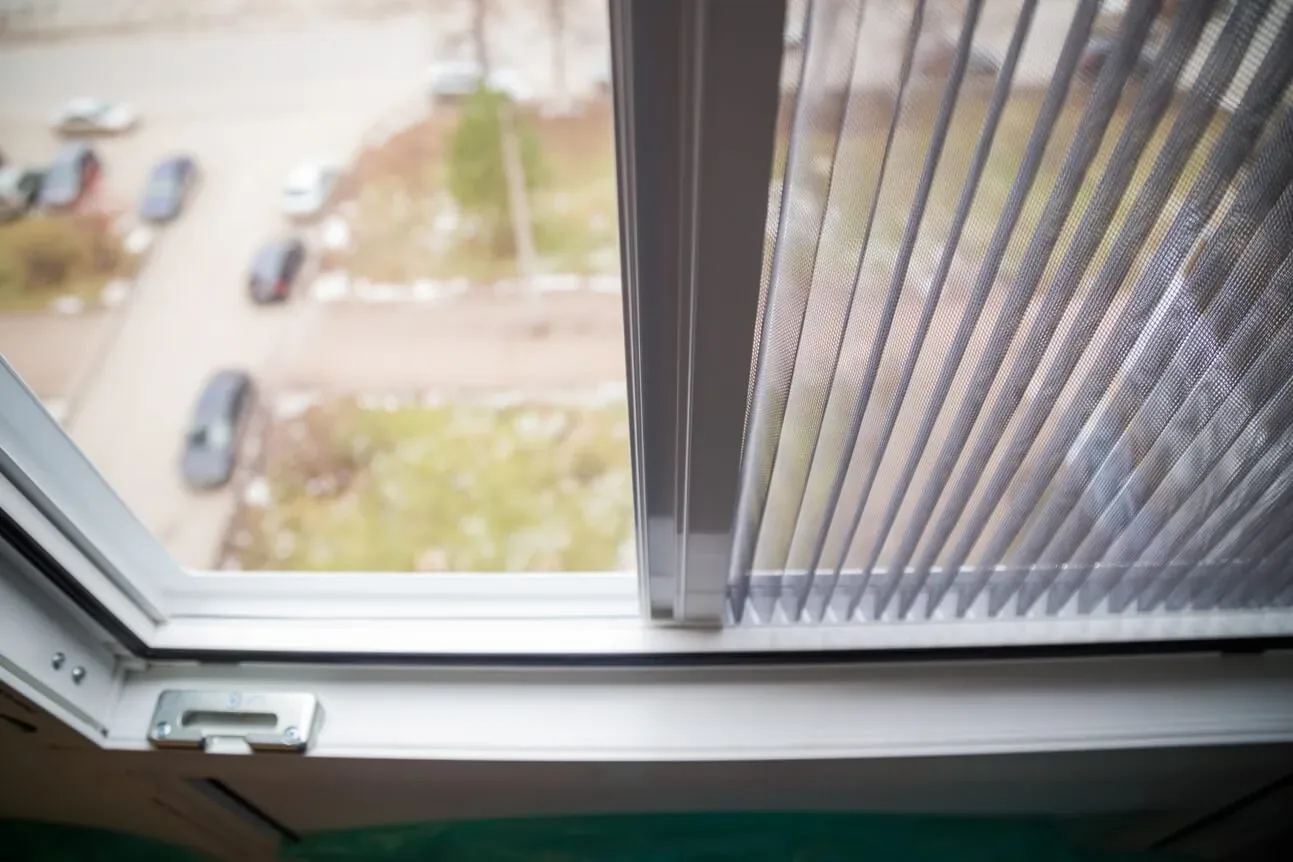
A mosquito screen falls out when the fastening no longer matches the window profile, the floor or the weight of the mesh, or when the frame was measured wrong. Most cases are solved by replacing the fastening, but a bent frame or a wrong size calls for a new made-to-size screen.
Why a mosquito screen falls out of the window
A screen rests on a fastening chosen for a specific window. When it drops, the cause is almost always a mismatch between fixing, size and mesh.
What actually holds a screen in the window frame
A framed screen is held by fastenings that grip the window profile, not by sitting loosely in the opening. Z-brackets hook over the edge, pins slide into drilled seats and magnets pull the unit against a steel plate. The fabric is pressed into a channel with a rubber spline, so it stays taut while the aluminium surround does the holding. If the fixing sits loose, the whole structure shifts with every draught or slamming casement. A panel sized a few millimetres short also rattles, with nothing to press against. This is why a mosquito screen falls out most often at the corners, where the fastening takes the load. When the fastening matches the profile and the height, the screen stays put even when the casement is slammed shut.
Why the same screen holds on one window and drops on another
- Plastic: a flat outer edge lets Z-brackets and magnets seat firmly with little play.
- Wood: the softer, less even surface holds pins more reliably than clip-on hardware.
- Aluminium: thin walls leave little room for drilling, so the load spreads wider.
- Worn spline: a slack rubber cord lets the mesh sag and pull the unit out of its seats.
- Height: wind load grows with every floor, so the same model needs different hardware low down and on a high-rise balcony.
Z-brackets, pins and magnets compared
Three fixing types behave very differently under wind and daily handling, and the right one depends on your window profile, floor and how often a mosquito screen falls out.
Which fastening holds best on a high floor
On a high floor we lean towards Z-brackets and pins, because they lock the screen into the profile instead of relying on pull alone. A Z-bracket hooks it behind the window profile, so gusts press the mesh inward rather than lifting it out. Plungers work the same way from inside the opening: spring-loaded pins press into the surround and hold until you release them. Magnets hold by magnetic pull only, and on an upper floor a full-size screen catches enough load to beat that pull. A magnet is convenient for frequent removal, but in strong gusts it gives way to a mechanical holder.
Fastening types at a glance
| Fastening | How it holds | Best for | Removal |
|---|---|---|---|
| Z-brackets | hooks into the profile | high floors, windy sides | tool-free, quick |
| Pins (plungers) | spring pins press inward | plastic and aluminium windows | push and lift |
| Magnets | magnetic pull only | low floors, frequent removal | instant |
Fixing it yourself or replacing the fastening
Some cases are solved on the spot by swapping the clips or tightening the mesh, so it helps to know where do-it-yourself repair ends and a proper fix begins.
What you can check and tighten yourself
- Check the fit: press each corner and see if it lifts or stays seated.
- Inspect the hardware: worn pins and loose brackets lose grip before the surround gives way.
- Look at the mesh: a sagging spline means the cloth and tension are the problem, not the clip.
- Wipe the channel: dust and grit in the rail stop the holder seating fully.
- Test the alignment: a unit rocking inside the frame was probably measured wrong from the start.
When replacing just the fastening is enough
We repair mosquito screens and replace their fastenings, so a sound unit with tired clips does not need a whole new one. Our own workshop handles the work directly, without middlemen, and fits fresh Z-brackets, pins or magnets to match the profile and the floor. A window screen keeps falling out mainly because the clip has given up, and that is the cheapest part to swap. Replacement makes sense while the surround is still straight and its size matches the window. Once the profile is bent or the dimensions are off, new clips will not hold, and the whole thing needs redoing.
When repair is not enough and a new screen is needed
Sometimes the fastening is not the problem at all — the mesh unit itself drops out because of its dimensions or shape, and no new clips will hold it.
Signs the screen was measured wrong
- It rocks: the unit shifts in the aperture when you press a corner, so clips never sit fully engaged.
- It catches the sash: the mesh rubs against the window as it closes, and friction pushes it outward.
- Gaps at the edges: daylight shows between frame and profile, meaning the part is undersized.
- It drops after re-fitting: the same corner pops out again, even with fresh fasteners, because geometry stays wrong.
A bent frame or a wrong size calls for a new made-to-size screen
We make screens to your exact dimensions in our own workshop, so a bent edge or a wrong measurement is replaced rather than patched. Proper mosquito screen fixing starts with the right geometry, and a new unit is the only way to correct a frame that was never the right shape. The measurer comes at a convenient time, takes the sizes on site and helps pick the right profile, mesh and fixing for your aperture and floor. A framed unit made to your size takes 10–15 minutes to produce, and every screen carries a 1-year warranty. A new unit removes the cause, not the symptom: the hardware is matched to your window and floor, so it sits flat.
Winter removal, wind and why a mosquito screen falls out in spring
Seasonal removal, wind load and mesh weight all change stress on the fastening. These factors are rarely explained when a mosquito screen falls out of the window every year.
Why a screen drops after winter removal
A framed screen comes off from inside in a minute and should be removed for winter, but a rushed re-fit is a common reason it drops in spring. We make framed screens so they lift out without tools: you tilt the panel, unhook it from the brackets and store it flat. In the warm season it goes back the same way, and here the trouble starts. A pin that misses its hole, a Z-bracket turned the wrong way or a magnet left on the wrong side still lets the screen sit in the opening, so nothing looks wrong until the first gust. If the fastening did not seat in its own slot, the mesh will drop at the first strong wind.
Do heavy meshes and different screen types fall out more
Heavier meshes such as Anti-Cat (Pet Screen) and metal put more load on the clips, so they fall out more often when the hardware is weak. Pet Screen is several times stronger than standard fibreglass: its vinyl threads carry the weight of a small animal, and that mass swings harder in a gust. Standard (Fiberglass) is the lightest option and forgiving of worn pins, while UltraVue lets in 25% more light and air. Sliding and pleated screens are held by a track and mechanism rather than clips, so they fail differently: a jumped runner or a bent guide, not a pulled pin. On an upper floor with an Anti-Cat mesh, ask for Z-brackets rather than pins.
Frame mosquito screen — from 6 000 ₸/m²Free measuring and advice, payment after installation. We make a frame screen in 10–15 minutes.
How to stop the screen falling out again
A screen that keeps dropping is telling you something specific about its clips, its frame or the way it was fitted.
- Fastening mismatch: a screen falls out when the clip no longer suits the window profile, floor or mesh weight.
- High floors: Z-brackets and pins grip better in wind, while magnets suit screens you remove often.
- Worn clips only: a straight frame with tired fasteners needs new clips, not a new screen.
- Bent frame or wrong size: new clips will not save it — the panel must be made to measure.
- Winter care: take a framed screen off before cold and refit it level, or it drops in spring.
- Quick test: press each corner gently; a corner that lifts shows which clip has given up.



