
Mesh types · 8 min read
Anti-pollen screen

Senior mosquito screen specialist at moskitnyesetki.kz
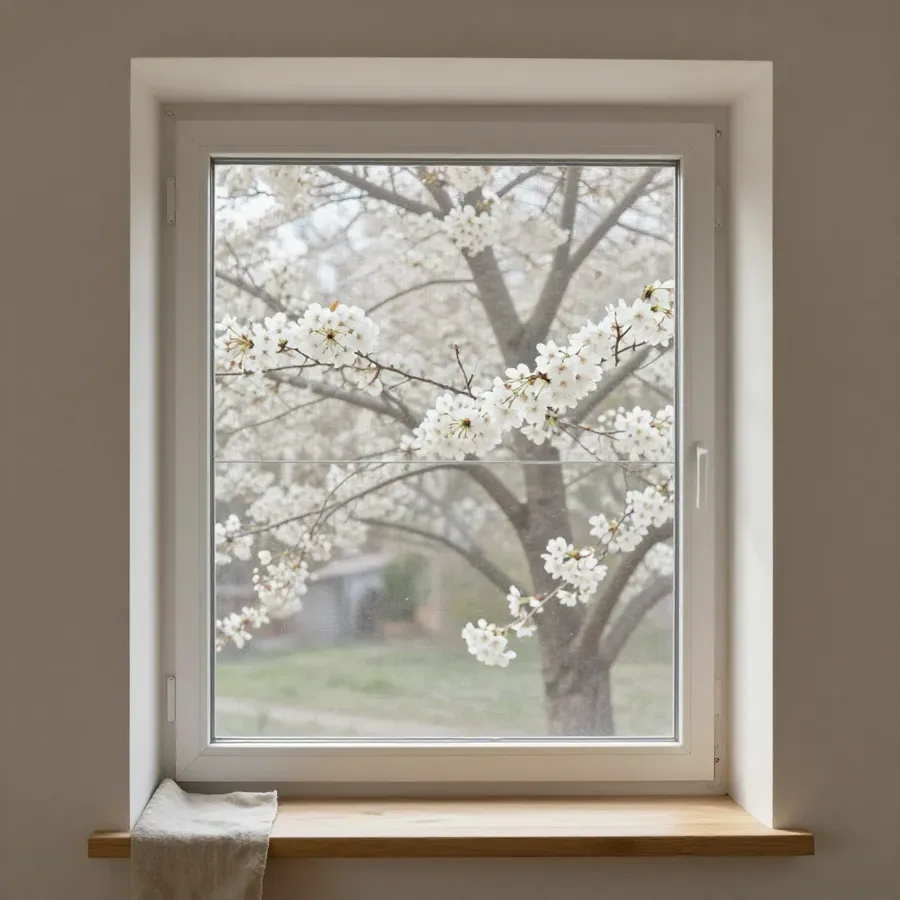
An anti-pollen screen does help with hay fever, because a fine mesh such as Poll-Tex with a 0.25×1 mm cell catches most pollen grains before they reach the room. It works as a barrier at the window, not as a cure, and it works best combined with sensible ventilation and cleaning.
Does an Anti-Pollen Screen Really Help with Hay Fever
Size decides: a pollen grain versus a mesh cell. If the cell is wider than the grain, the screen is decoration; if narrower, it is a filter.
Why a Regular Mosquito Net Does Not Stop Pollen
- Cell size: standard fiberglass net stops mosquitoes and flies, so openings stay far wider than a pollen grain.
- Pollen dimensions: most hay fever grains measure roughly 10 to 100 µm across, small enough to drift through untreated mesh.
- What you notice: sneezing indoors on a windy spring day means the net does its insect job, not an allergy job.
- Airborne path: wind carries grains upward and sideways, following airflow through the weave.
- The trade-off: tightening the weave is the only way to change the result, so standard and fine filtration mesh differ.
How a Fine Anti-Pollen Mesh Catches Pollen
Our fine mesh, known as Poll-Tex, has a 0.25×1 mm cell, small enough to intercept pollen grains that a standard net lets through. The weave works as a physical barrier rather than a chemical one: grains hit the threads and stay on the outer face, and the finer structure also holds back part of the dust carried on the same air current. A properly fitted anti-pollen screen therefore changes what reaches the room, not just what you see on the frame. We make these panels in our own workshop, so the mesh is cut to the exact window size and sits taut without gaps. On a windy day the difference shows at the sill, where yellow dust stops collecting.
Choosing the Right Anti-Pollen Screen for Seasonal Allergies
Once you know a screen can help, the next question is which one to pick. We compare the pollen-focused and dust-focused weaves directly, then set the full range side by side.
Pollen Weave vs Dust Weave
The pollen weave intercepts grains, while the dust variant targets coarser household particles, so for seasonal allergies the Poll-Tex option is the closer match. Its 0.25×1 mm openings trap grains as air moves through the window, and we stock it in our own workshop. When choosing a window screen for allergies, compare how each weave handles particle size. The dust-focused fabric works on larger specks that settle indoors, and it does not hold smaller grains the way a dedicated product does. If airborne grime bothers you all year and pollen only in spring, the choice depends on which problem dominates your symptoms, since the two are tuned for different particle sizes.
Mesh Options Compared
| Option | Cell or material | Best for | Light and air |
|---|---|---|---|
| Standard (Fiberglass) | coarse fiberglass | insects only | high |
| UltraVue | tight weave | light-sensitive rooms | +25% vs other meshes |
| Anti-Cat (Pet Screen) | vinyl threads | homes with pets | medium |
| Anti-Dust | dense mesh | year-round grime | medium |
| Anti-Pollen (Poll-Tex) | 0.25×1 mm | seasonal allergies | lower |
Does a Fine Mesh Block Light and Airflow
A fine weave costs daylight and ventilation, so know that cost before choosing. Here is how large the trade-off is and how to soften it.
What a Finer Cell Costs in Light and Ventilation
A finer weave slightly reduces airflow and daylight, as smaller openings let less through per square centimetre than a coarse net. The Anti-Pollen canvas (Poll-Tex) holds a 0.25×1 mm cell — tight enough to catch pollen grains from 10 µm upward, while a Standard Fiberglass net passes far more because its weave is visibly wider. On one window the difference rarely reads as a dark or stuffy space: you notice a slightly softer draught at the sash and a marginally dimmer sill in the morning. In a small bedroom with a single opening, that margin matters, since the whole exchange depends on one net.
Where UltraVue Makes Sense
- Light gain: UltraVue lets in 25% more daylight and air than other meshes, so dim spaces keep both.
- Best placement: living areas, kitchens and glazed balconies where brightness matters above finest filtration.
- Mixed approach: pollen screen on the bedroom window and UltraVue elsewhere balances allergy relief against everyday comfort.
- Condensation check: denser fabric traps moisture at the glass in cold weather, so watch the inner pane on north-facing frames.
- Frame colour: we paint the screen frame any shade to match your windows, keeping a mixed set uniform.
- Measuring: our measurer comes free, takes sizes and helps match fabric to each opening.
Screen or Air Purifier and How to Ventilate
A window screen is one part of a wider system of protection at home, and fitting one changes how you air a room during the pollen season.
A Barrier at the Window and a Purifier Inside
A window screen and an air purifier work at different levels, so one does not replace the other, and together they cover more than either alone. The Poll-Tex panel sits at the opening and stops pollen before it crosses the frame, while a HEPA unit cleans what is already indoors. Its 0.25×1 mm cell holds back particles from about 10 µm upward, and most hay fever triggers — birch, alder, grass and mugwort — fall in that range. A purifier must pull the whole room volume through its filter, which takes time and electricity. The barrier stops pollen from entering, while the appliance handles only what is already inside, so the panel comes first.
How to Ventilate with a Pollen Screen
You still need to ventilate with a pollen screen fitted, but the panel lets you air the room on windy days without opening the frame to a full pollen stream. Keep the routine short and timed: five to ten minutes of cross-ventilation in the early morning or right after rain moves more air than a sash left ajar all afternoon. A dry, breezy afternoon carries the highest pollen load, so that is the time to keep it closed. We deliver and install screens for windows and doors, and a framed panel lifts out from inside in a minute, so you can pull it off for cleaning without tools.
Fitting It Yourself or Calling a Fitter
We look at what you can reasonably do with your own hands, where a measurer earns his visit, and how to keep a fine weave working season after season.
What You Can Do Yourself and When to Call a Fitter
A ready-made framed screen can be fitted by hand, but a made-to-measure model is best left to a fitter who matches the fastening to your window profile and floor. Replacing the canvas, wiping the runners and re-seating a screen that slipped out of its guides are jobs a careful owner handles with a screwdriver. We paint the surround to match your windows, so the finished piece reads as part of the window. The fixing choice — Z-shaped brackets, pins or magnets — depends on the window type and height, the part most self-installs get wrong on upper floors, where a screen held by the wrong fastener can drop in a gust.
Cleaning and Caring for a Fine Mesh
- Rinse gently: wash the Poll-Tex canvas with a soft sponge and lukewarm water, never a hard brush.
- Work from inside: rinse from the room side so loosened pollen falls outward.
- Dry flat: let the canvas dry flat, since hanging it wet by one corner widens the cell.
- Wipe the edges: clean the surround and fastenings so grit does not wear the mesh.
- Store in winter: lift the framed screen out and store it flat until the season returns.
"Anti-Pollen" screen — from 12 200 ₸/m²Free measuring and advice, payment after installation. We make a frame screen in 10–15 minutes.
What to expect from a screen during the pollen season
A short recap of what the mesh can and cannot do, so the decision is easier to make before the pollen season peaks.
- It helps, within limits: a fine mesh lowers pollen entering a room but does not remove it entirely.
- Cell size decides: a standard net is too coarse, while a 0.25×1 mm cell catches most grains.
- There is a trade-off: finer weave means slightly less light and airflow, so match canvas to room.
- Use it in a system: a screen stops pollen outside, a purifier handles what is indoors.
- Care keeps it working: gentle cleaning and seasonal removal preserve the weave and fit.



