
Prices · 8 min read
Mosquito screen cost

Senior mosquito screen specialist at moskitnyesetki.kz
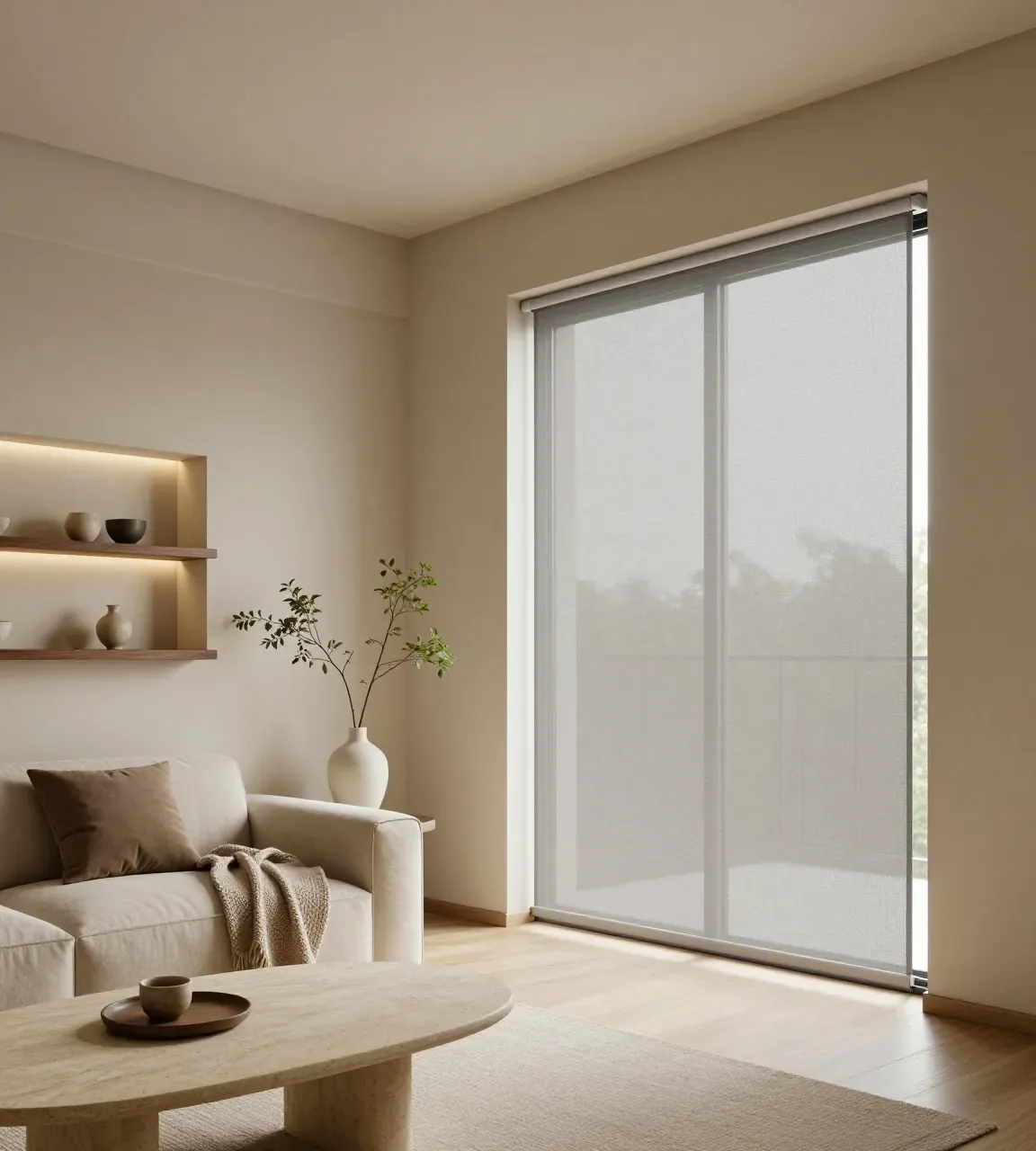
Mosquito screen cost depends on window size, construction type, mesh choice, and frame profile and fasteners. A made-to-measure framed screen is usually the most affordable option, while pleated, roller and door screens cost more due to their hardware. Mesh upgrades add to the price but change how the screen performs.
What Actually Drives the Cost of a Mosquito Screen
Mosquito screen cost is never one flat figure — the total adds up from a handful of practical choices. We break down what really moves the number.
The Four Factors That Move the Price
Four things drive most of the final cost: window size, construction type, mesh grade and the frame profile with its fasteners. Size sets how much material and work go into a single unit, while construction decides whether you get a simple framed panel or a sliding or pleated mechanism with more moving parts. Mesh grade is the quiet cost driver — a basic fiberglass sheet and a premium canvas such as UltraVue or Poll-Tex sit in different bands, and the gap shows up in light, airflow and durability. The frame matters too: a hinged door screen in a Prestige 42×17 mm profile uses more aluminium than an Economy 32×10 mm one, and the fasteners add their own line. Always ask what is inside: the cheaper unit may hide a thinner frame or a basic sheet.
Why Two Quotes for the Same Window Differ
- Sheet name: "standard mesh" hides whether you get fiberglass or a premium canvas such as UltraVue.
- Frame size: ask for exact millimetres — a 32×10 mm edge and a 42×17 mm one differ.
- Fastener type: Z-brackets, pins or magnets are picked for your fitting and floor, not the invoice.
- Measuring and installation: check whether both are included or billed as extras.
- What is inside: line up sheet, frame, fasteners and inclusions before deciding — the number alone tells little.
Size and Made-to-Measure vs Standard Mosquito Screen
How much is a window screen of an odd size? Almost every screen is cut to the window, yet an awkward opening and the glazing type still change the work and materials, shaping the bill.
Made-to-Measure Is the Norm, Not the Exception
We make every screen to the exact size of your window, so there is no standard-size surcharge — the dimensions simply set how much mesh and profile the unit needs. A wide span takes more mesh and longer runs than a narrow vent, and that is the whole difference. Measuring and consultation are free: the measurer comes at a convenient time, takes dimensions and helps choose the design, mesh and fixings. A framed screen made to order takes 10–15 minutes in our own workshop. An odd-shaped opening is not automatically more expensive; what adds work is the fitting — a vent, a loggia or a gazebo needs different fasteners and sometimes a custom surround. Ask for the measurement first and compare quotes on the same gap, because a figure given over the phone without dimensions tells you very little.
How Window Type and Floor Affect the Fitting
The measurer picks the fastener for your profile and floor — Z-brackets, pins or magnets — and that choice is part of what you pay for. Plastic, wooden and aluminium units, vents, loggia panes and gazebo openings all take different fixings, matched on site rather than by photo. A high floor or a tilt-and-turn profile can rule out some fasteners, so a screen cheap to fit at ground level may need a sturdier fixing higher up. We paint the surround any colour to match your windows, which matters most on visible facades. When asking about a screen for your opening, give the fitter the glazing type and the floor, not just width and height.
Types and How Construction Changes the Cost
Framed, sliding, door, pleated and roller screens differ in mechanism and profile, which explains the difference in mosquito screen price. Here is how the main types compare.
Framed, Sliding, Pleated and Roller Compared
| Screen type | Best for | What drives its cost | Made in |
|---|---|---|---|
| Framed | Standard windows, vents | Simple frame and mesh | 10–15 min |
| Sliding | Balcony and patio doors | Track and roller hardware | On order |
| Hinged door | Entrance and balcony doors | Economy or Prestige profile | On order |
| Pleated | Doors and wide openings | Folding mechanism | 40–60 min |
| Roller | Windows you open often | Roll-up cassette | On order |
Door Profiles Economy vs Prestige
Door Profiles Economy vs Prestige Hinged door screens come with either an Economy 32×10 mm or a Prestige 42×17 mm profile, and the larger Prestige profile carries more weight and lasts longer under daily use. This frame holds the mesh and takes the load every time the door opens, so its wall thickness matters more on a door than on a window. Economy suits a balcony opening used now and then, while Prestige is the choice for an entrance in constant traffic. Both are painted to match your window colour in our workshop. For a door opened many times a day, the bigger profile is the better long-term buy despite costing more up front.
Mesh Types and Why They Move the Price
The canvas is the second-biggest cost driver after the frame. Below we break down what separates the five canvases and when paying more buys you something.
Standard, UltraVue, Anti-Cat and Anti-Pollen
| Mesh | What it does | Worth it when |
|---|---|---|
| Standard (Fiberglass) | Base mesh, fire- and temperature-resistant | Everyday windows |
| UltraVue | Lets in 25% more light and air | Dark rooms, small windows |
| Anti-Cat (Pet Screen) | Vinyl threads, several times stronger | Homes with cats or dogs |
| Anti-Pollen (Poll-Tex) | 0.25×1 mm cell traps fine pollen | Allergy season |
| Anti-Dust | Reduces dust coming through | Street-facing windows |
Is It Worth Paying More for a Premium Mesh
A premium mesh is worth the extra cost when it fixes a real problem you already have, not as a default upgrade. Standard fiberglass handles everyday ventilation and resists temperature swings, so a dark room with a small window gains more from UltraVue and its 25% extra light than from a thicker canvas. A household with a cat notices the difference in the first season, since vinyl threads in Anti-Cat take claws that would tear a base canvas within weeks. This layer is hard to swap later without redoing the whole screen, so choosing for the long term pays off better than saving on the frame.
DIY vs Professional and How to Compare Quotes
DIY vs Professional and How to Compare Quotes — the final window screen cost depends on how much work you can genuinely do yourself, and some you cannot; you must also tell a fair offer from a merely cheap one.
What You Can Do Yourself and When to Call a Master
- Simple framed screen: a standard window with straightforward fixings is realistic to fit yourself if you measure accurately.
- Door screens: constant use loads the frame, so a hinged or sliding screen is better left to a fitter.
- Pleated and roller screens: the mechanism must run true in its guides, and slight misalignment jams it within weeks.
- Odd openings: arched or out-of-square windows need on-site measuring a home tape rarely matches.
- Parts bought separately: possible, but you still need the right profile, spline and tension.
What Should Be Included and What to Compare
A fair quote names the mesh, the profile, the fixings and whether measuring and installation are included, and we fix the price in the order after measuring so it does not change later. We measure and consult for free, choose mounting hardware to suit the window profile and floor, and cover every screen with a one-year warranty. Ask whether the frame colour can be matched to your windows and whether old brackets are replaced or reused. The most common hidden cost is a missing line: an offer that leaves out installation or fittings looks cheaper until added. Compare two quotes by the same list of parts, not by the bottom figure alone.
Frame mosquito screen — from 6 000 ₸/m²Free measuring and advice, payment after installation. We make a frame screen in 10–15 minutes.
What the price is made of and how to check it
Five points sum up how a window screen's cost is actually formed and what to weigh before picking one for your home.
- Price follows build, not a flat rate: size, construction, mesh and frame profile each shift the final figure.
- Odd sizes are normal: every unit is cut to the window, so non-standard openings aren't automatically surcharged.
- Simplest hardware costs least: framed versions stay most affordable; pleated, roller and door types add mechanism costs.
- A premium weave needs a reason: upgrade only when it solves a real issue like pets, pollen or darkness.
- Compare like for like: check mesh, profile, fasteners and inclusions, not just the bottom number.



