
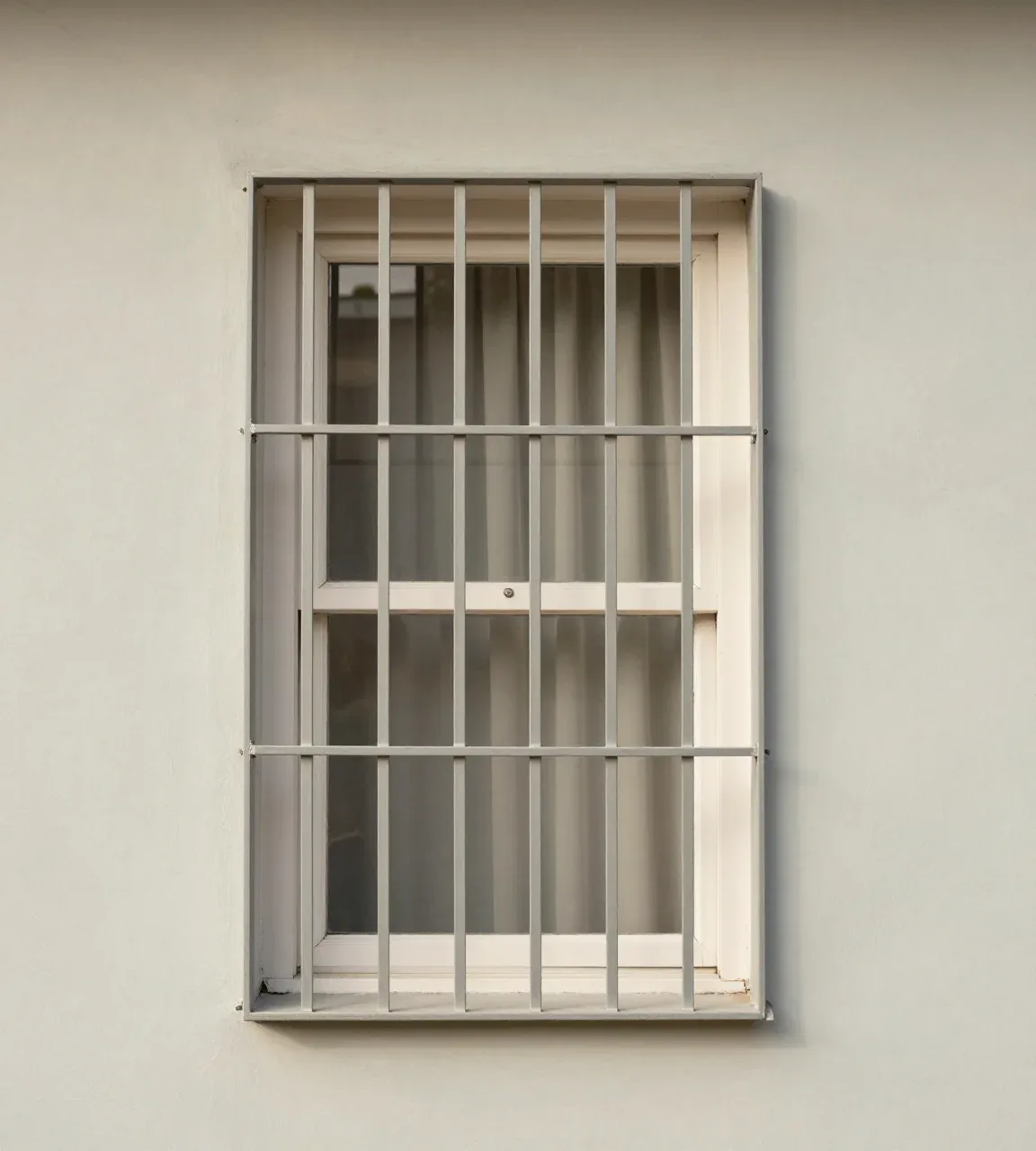
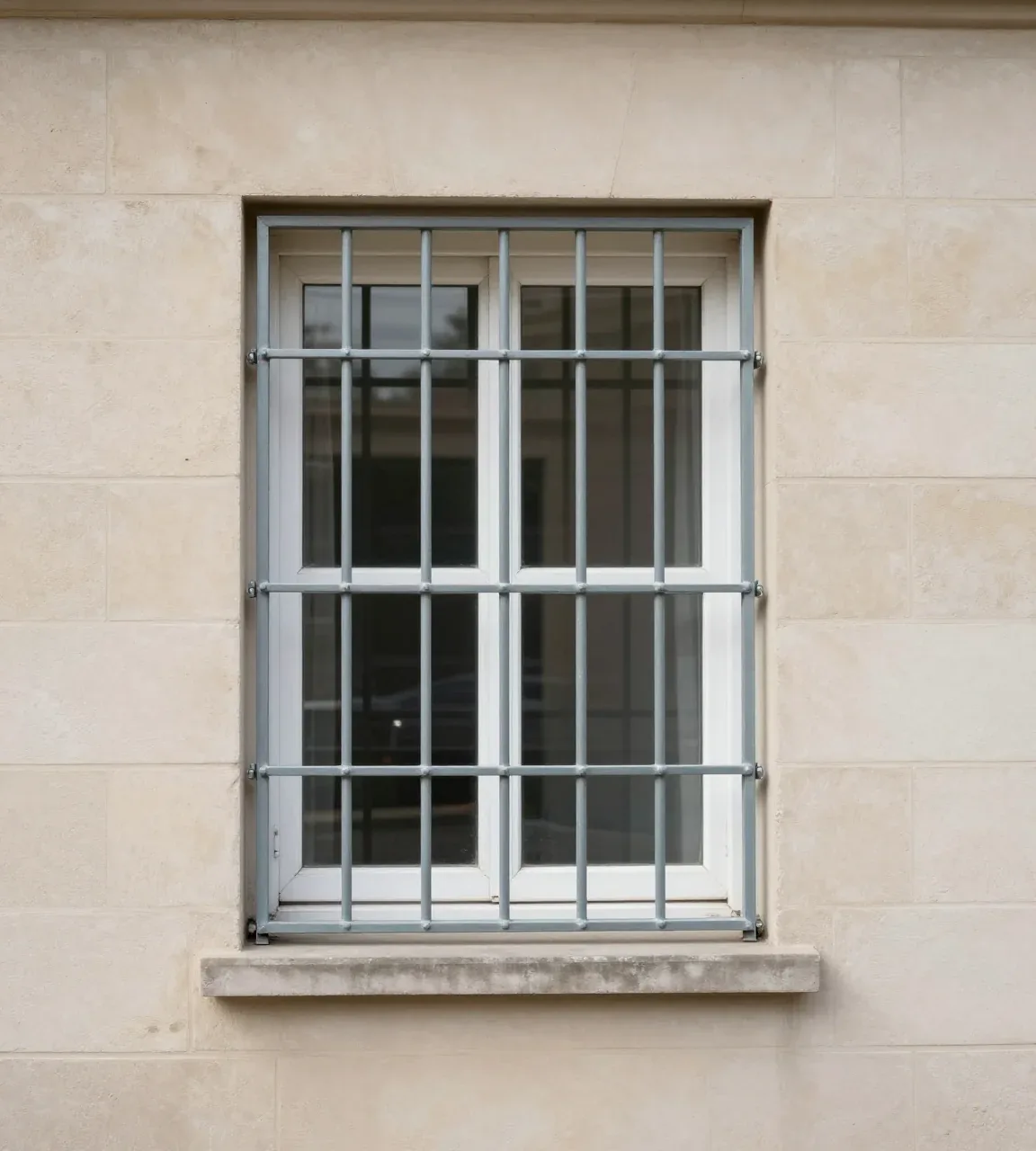
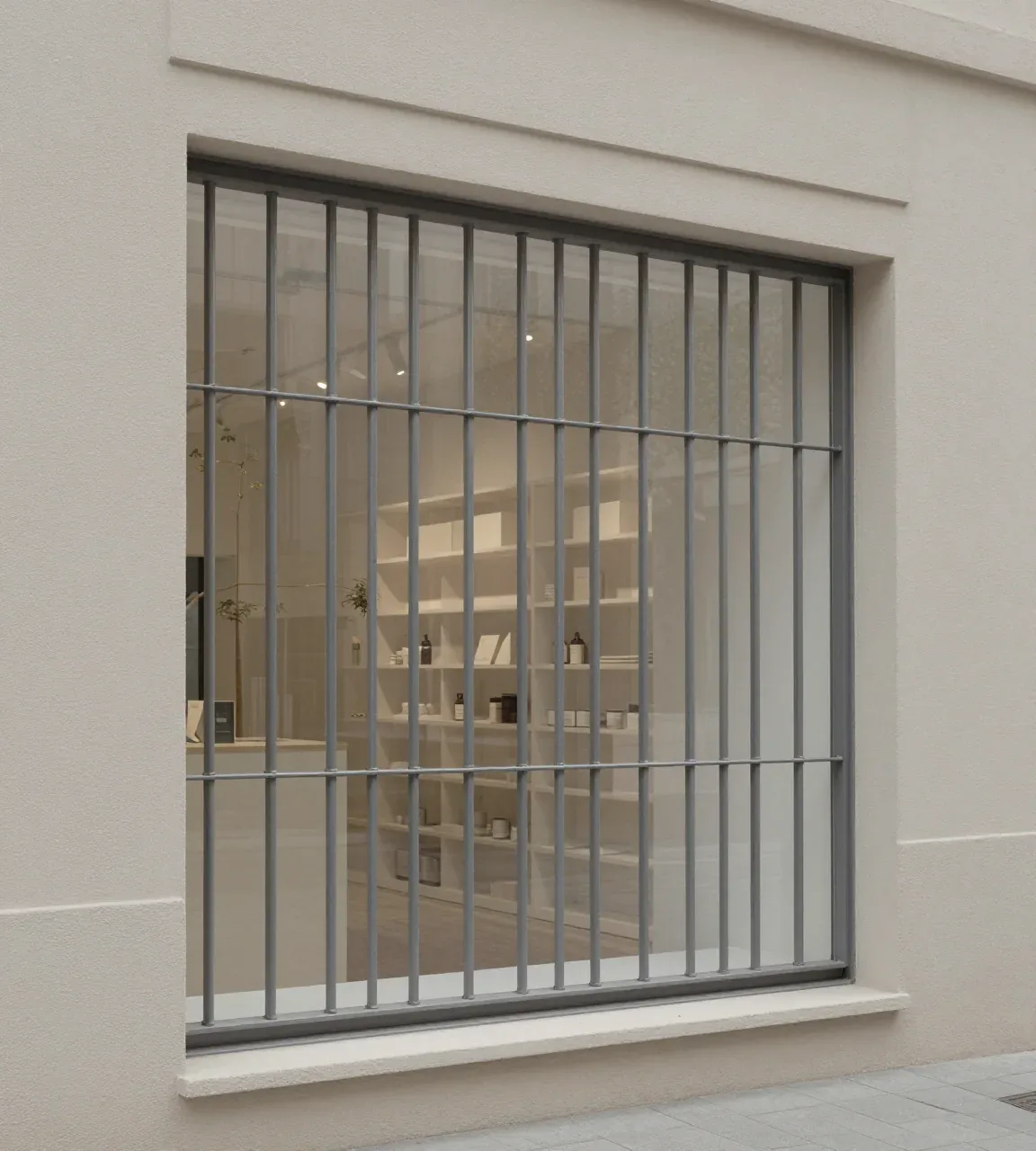
First floor · welded
Welded grille
Standard pattern made of steel rod, basic version — ask the technician for the price per m²
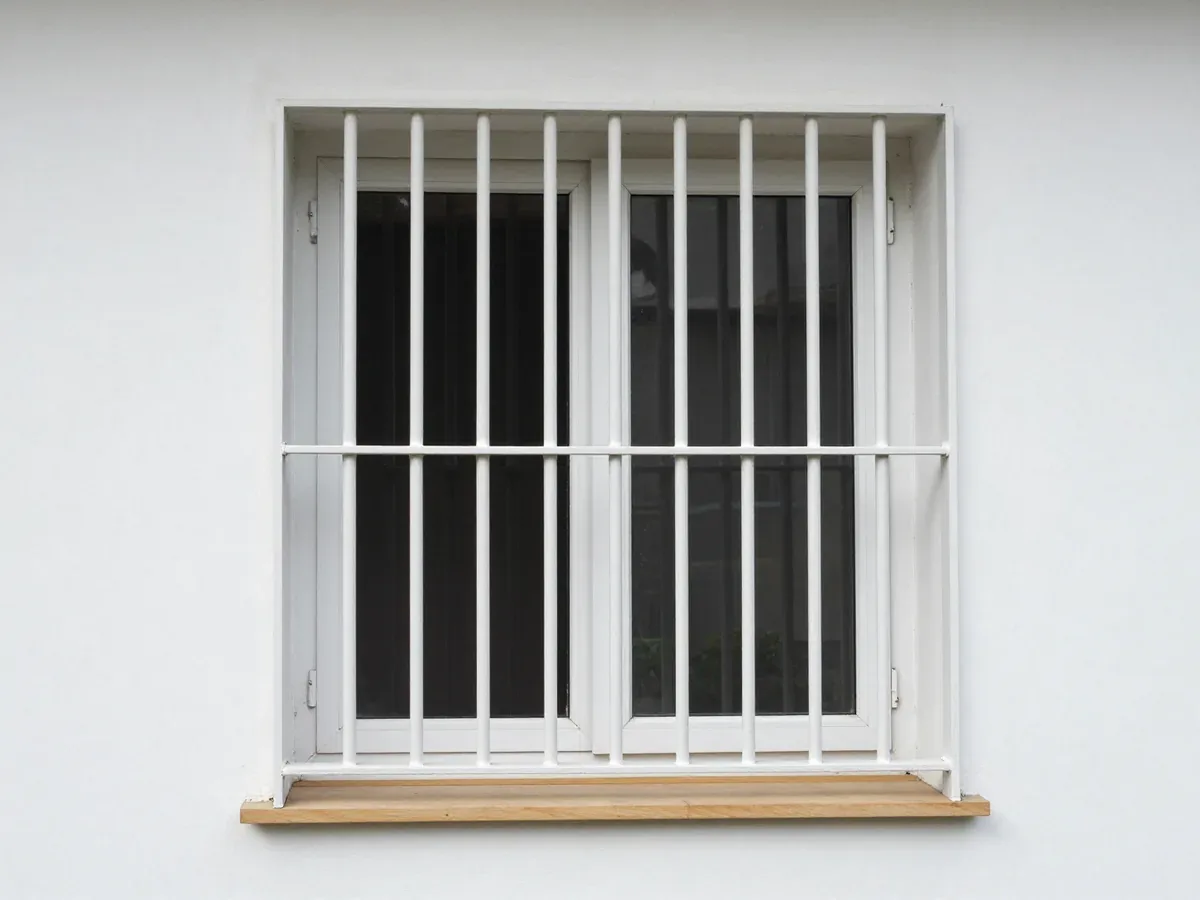
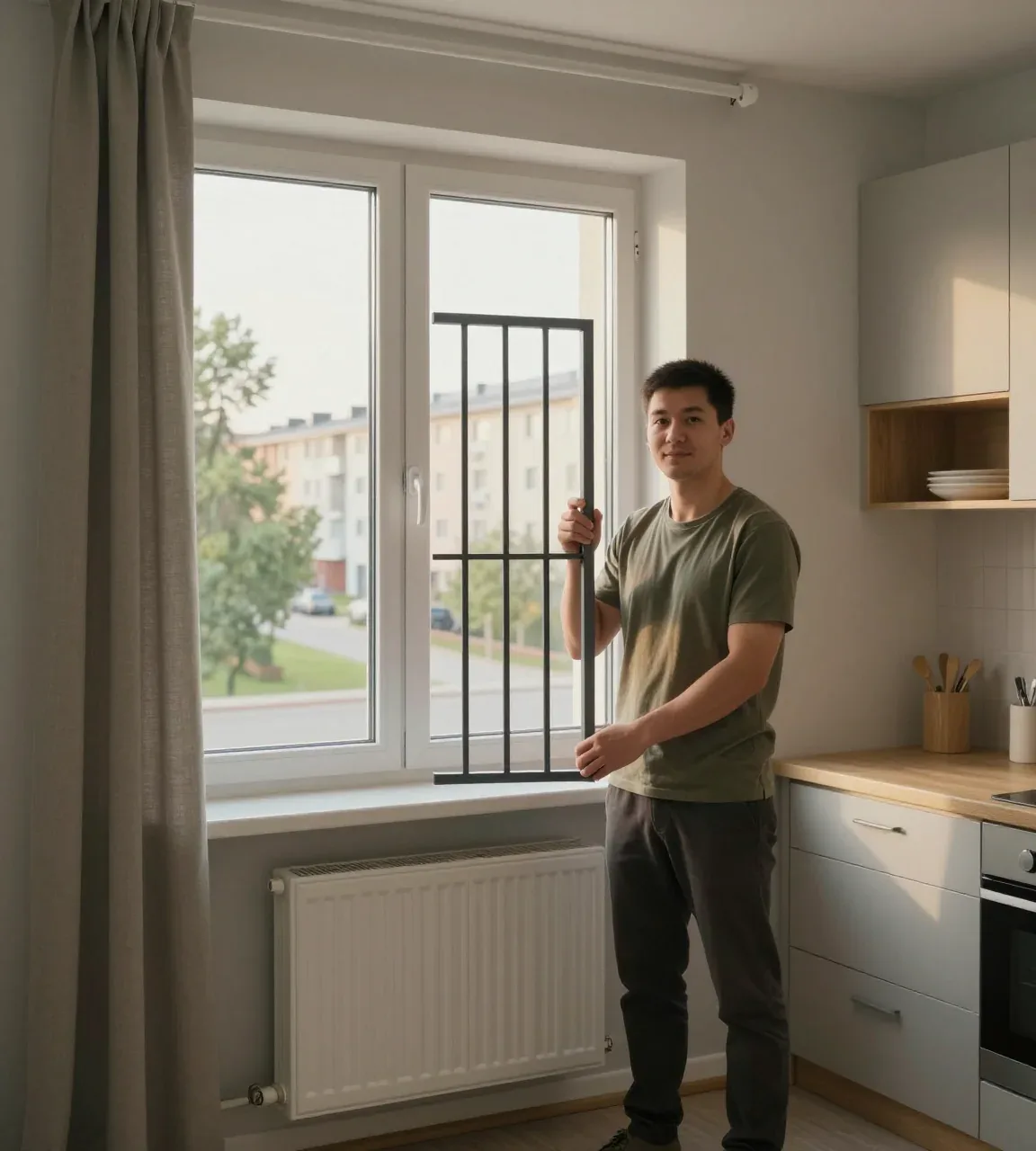
Welded grille
Standard pattern made of steel rod, basic version — ask the technician for the price per m²
Wrought iron grille
Artistic forging with a pattern to match the facade — the cost per m² is calculated individually
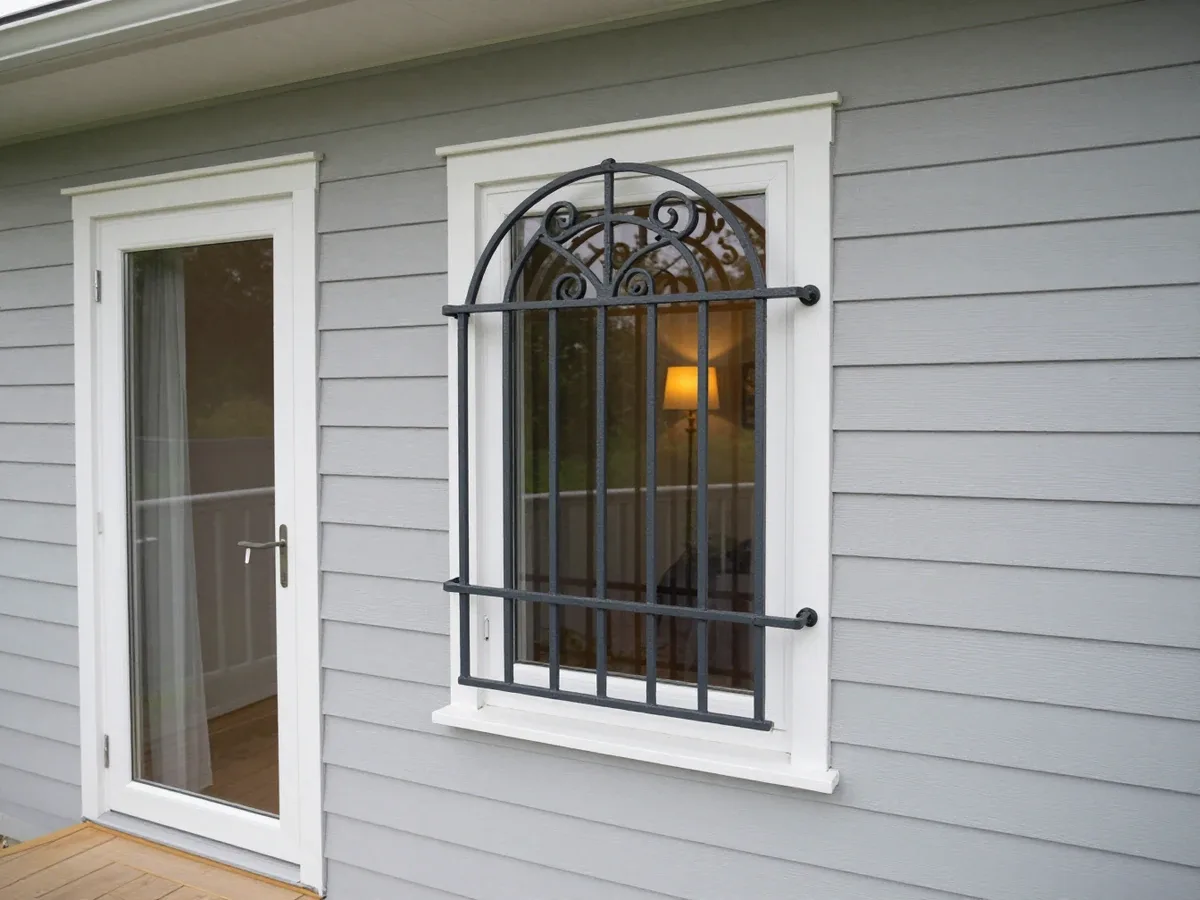
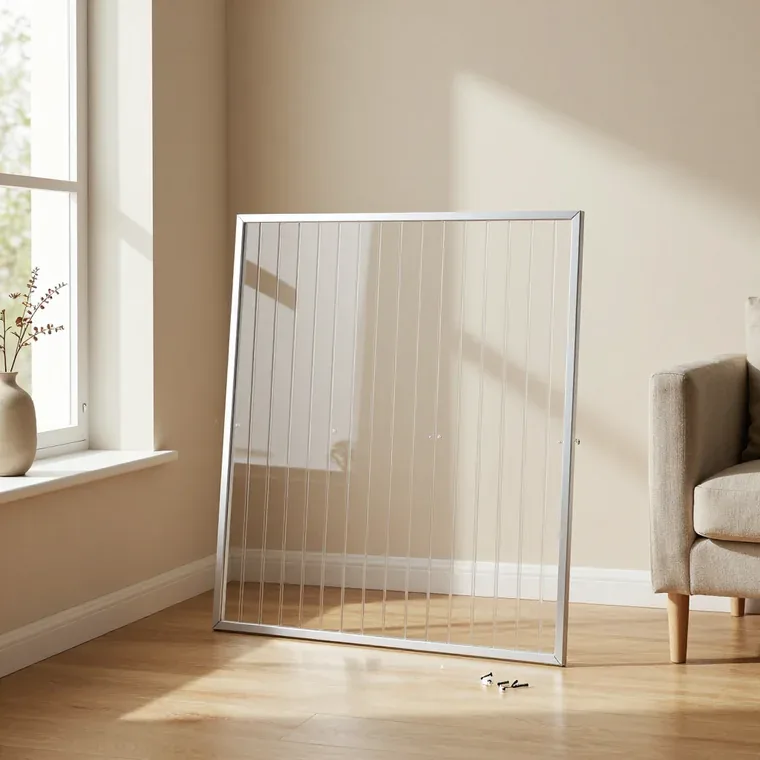
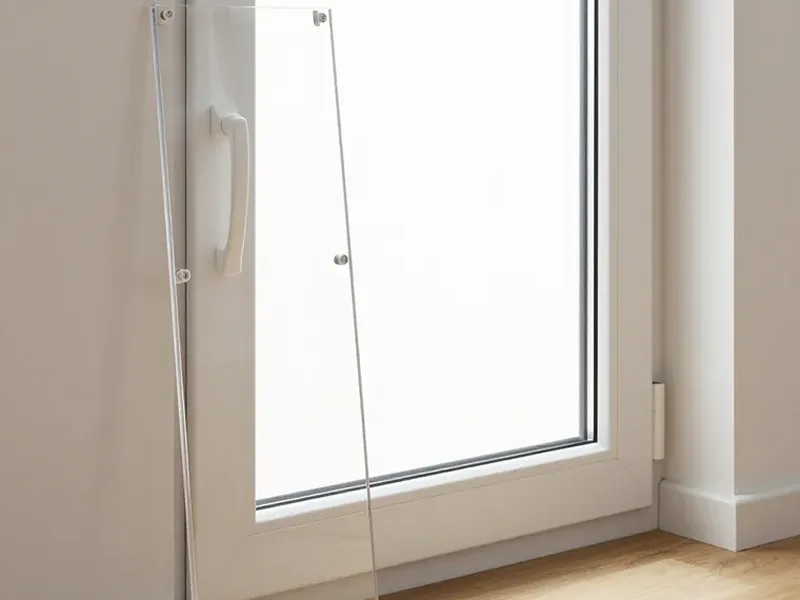
Transparent
Polycarbonate keeps the view and light clear and prevents falls — ask the technician for the price per m²
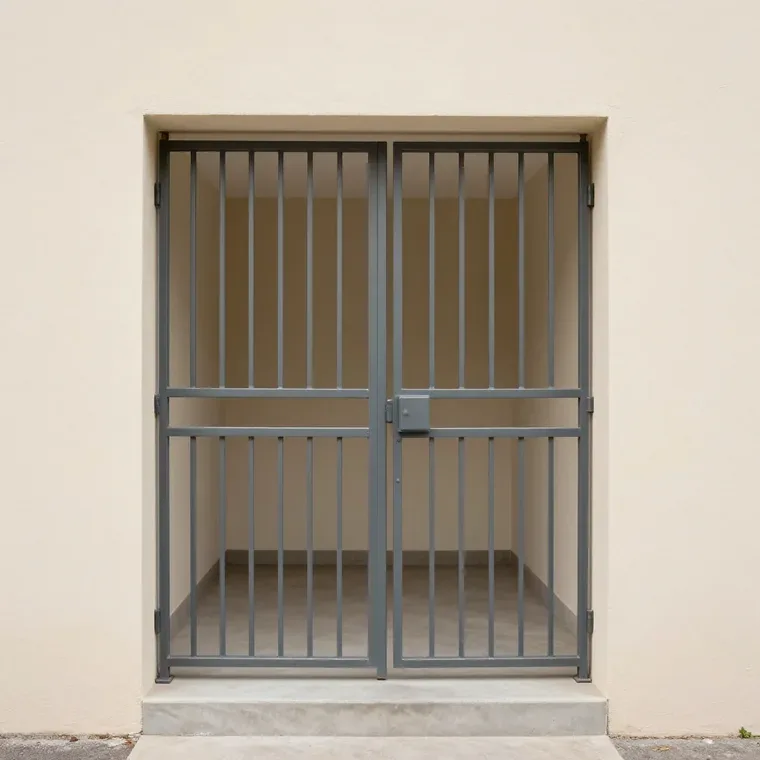
Hinged leaf
Extra charge to the main grille for a leaf with an inside lock — ask the technician for the surcharge
Net 2 in 1
Protective grille with a mosquito net in one frame — ask the technician for the price per m²
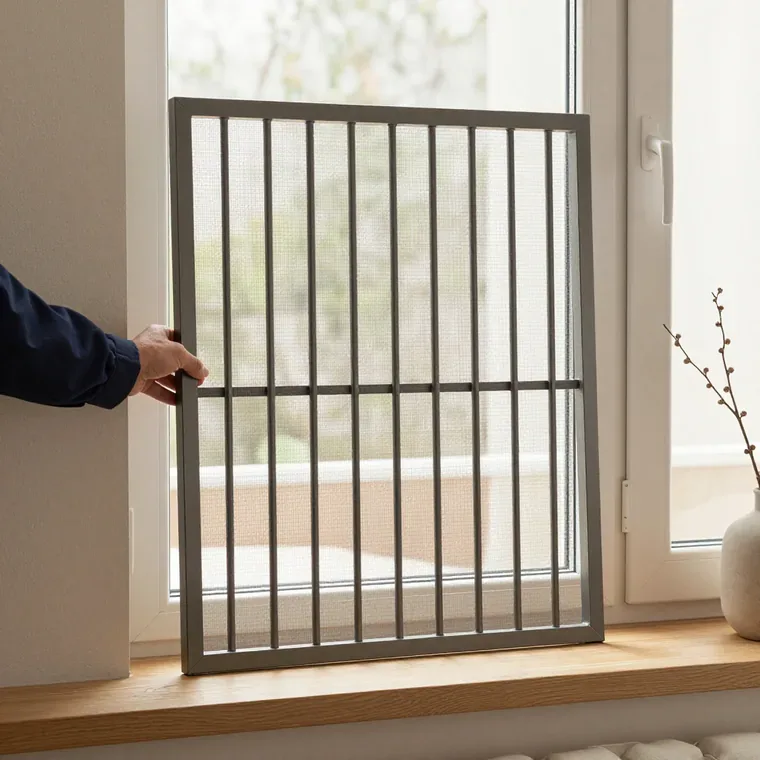



5,097 reviews on review sites
A protective structure in the opening: a steel frame with rods that covers the window from the outside and prevents entry.
A window grille is a frame made of steel profile with rods, fixed in the opening on the outside. It blocks access to the sash and at the same time acts as a barrier against falling out of the window.
The structure consists of a load-bearing frame, rods with a set spacing and fixing points to the wall or window profile. The pattern and rod thickness are chosen for the task: protection against break-in, preventing a child from falling, or decorative facade design.
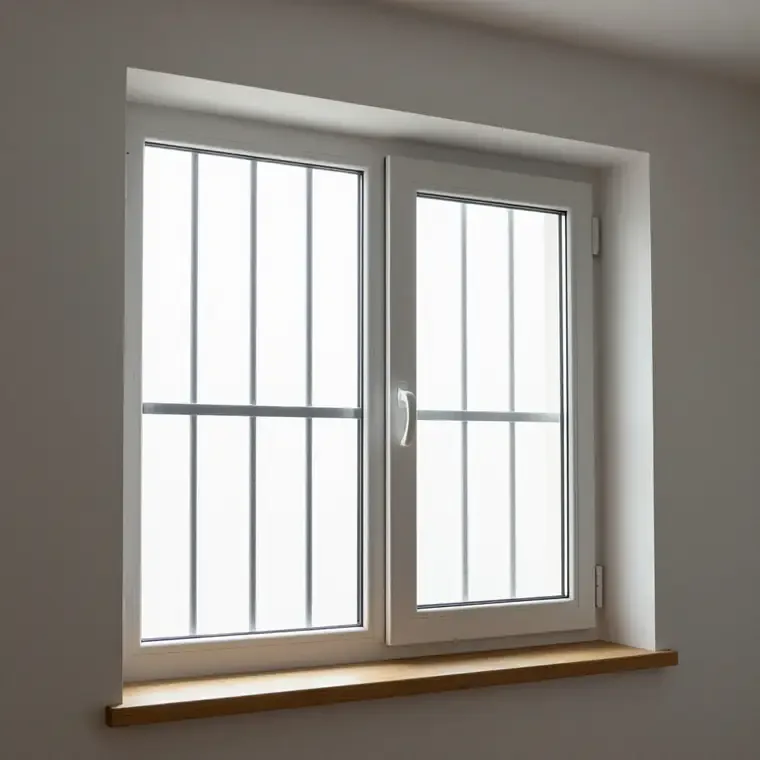
per m² of welded grille with a standard pattern
warranty on work and replaced components
in Kazakhstan where you can order grilles
The surveyor chooses the fixing method based on the wall material, window profile and floor: this affects both access to the sash and reliability.
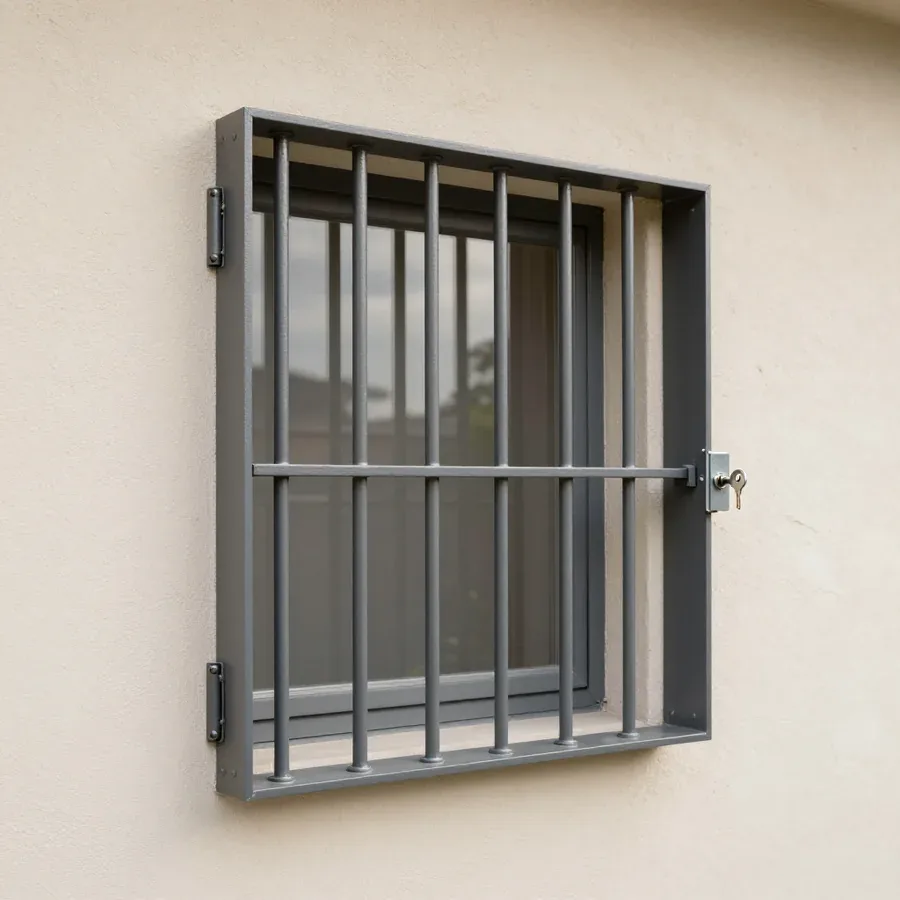
With anchors into brick or concrete at the edges of the opening — a rigid fit for the first floor and basements.
Brackets to the frame without drilling the reveals — an option when the wall is clad or the opening is narrow.
Part of the grille opens on hinges, the lock is fitted inside — the window can be washed and used as an exit.
Dismantling the rusty structure and installing a new one with powder coating — the technician gives the price after measuring.
The table lists grille types and individual services: painting, installation, removal, and surcharges.
| Type of item | Price |
|---|---|
| Welded grille with a standard patternbasic version | from 7 500₸ per m² |
| Wrought iron grilleartistic forging | from 26 000₸ per m² |
| Cast convex grillethree-dimensional pattern | from 26 500₸ per m² |
| Decorative laser-cut grillecustom design | from 25 000₸ per m² |
| Sliding accordion grillefolding design | from 28 000₸ per m² |
| Hinged grille leafextra charge to the main grille | from 15 000₸ per leaf |
| Transparent polycarbonate grillekeeps the view clear | from 26 000₸ per m² |
| Aluminium fall-prevention grilleper window | from 12 200₸ per pc. |
| Grille with mosquito net 2 in 1protection and insect control | from 19 800₸ per m² |
| Powder coating for the grillecolour to match the windows | from 5 500₸ per m² |
| Grille installationon-site fitting | from 4 500₸ per m² |
| Removal of the old grilletaken down before replacement | from 4 000₸ per pc. |
| Child safety window grillefall prevention | from 12 500₸ per pc. |
The price is fixed in the order after measuringExpress production — surcharge to the base price, the technician confirms the sizePayment after installation: cash, card or Kaspi
Book a measuring visitOur own mosquito screen production in Almaty, free measuring, painting to match the windows, and a warranty on the work.
the price is fixed after measuring
on work and replaced components
white, brown, grey — to match your windows
we reply within 5 minutes
daily 09:00–22:00 in Almaty and Astana
you can order in 17 cities of Kazakhstan
we deliver and install on windows and doors
the measurer will come at a convenient time and take the measurements
Four steps from request to a finished grille on the window

Message us on WhatsApp or call: we reply within 5 minutes and clarify the task — break-in protection, fall prevention or decoration.
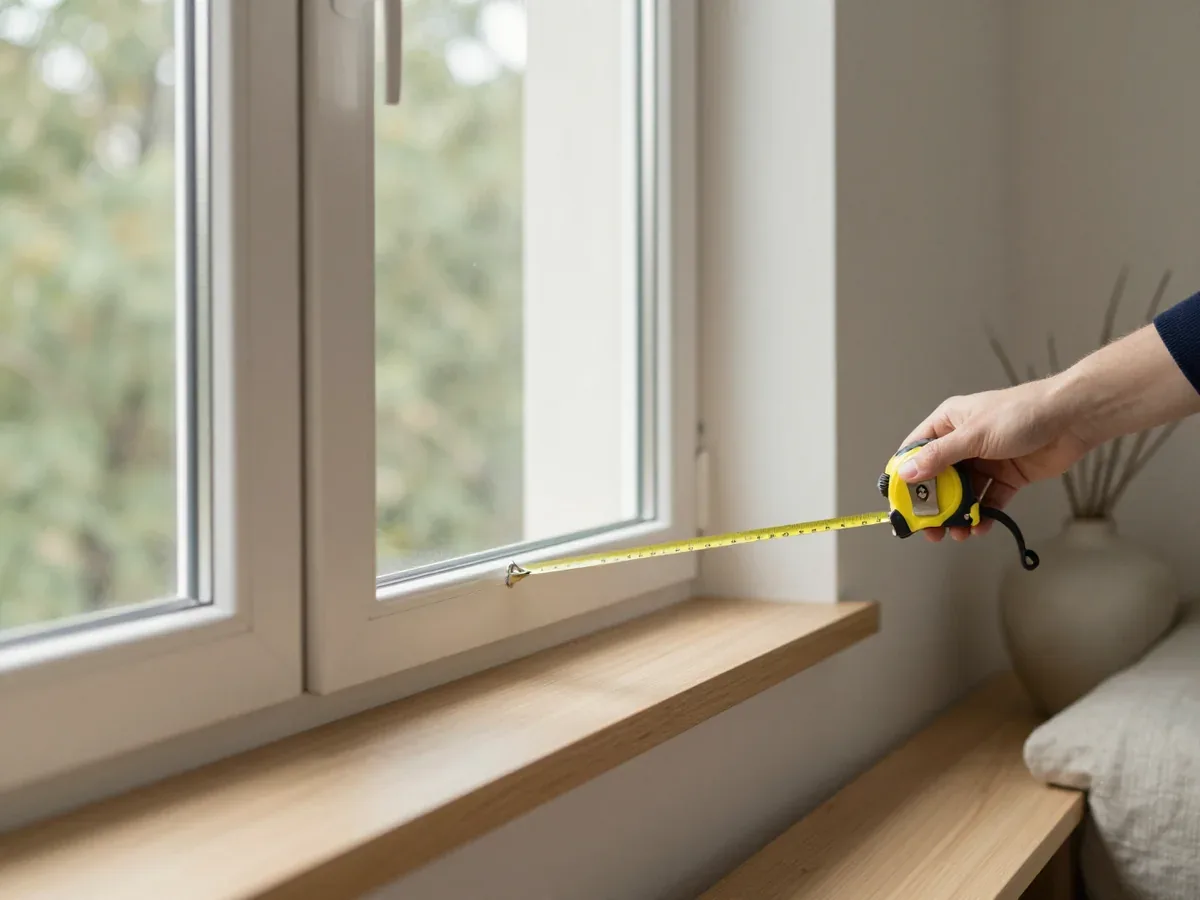
The surveyor visits free of charge, takes the opening dimensions, and helps choose the type, colour and fixings.
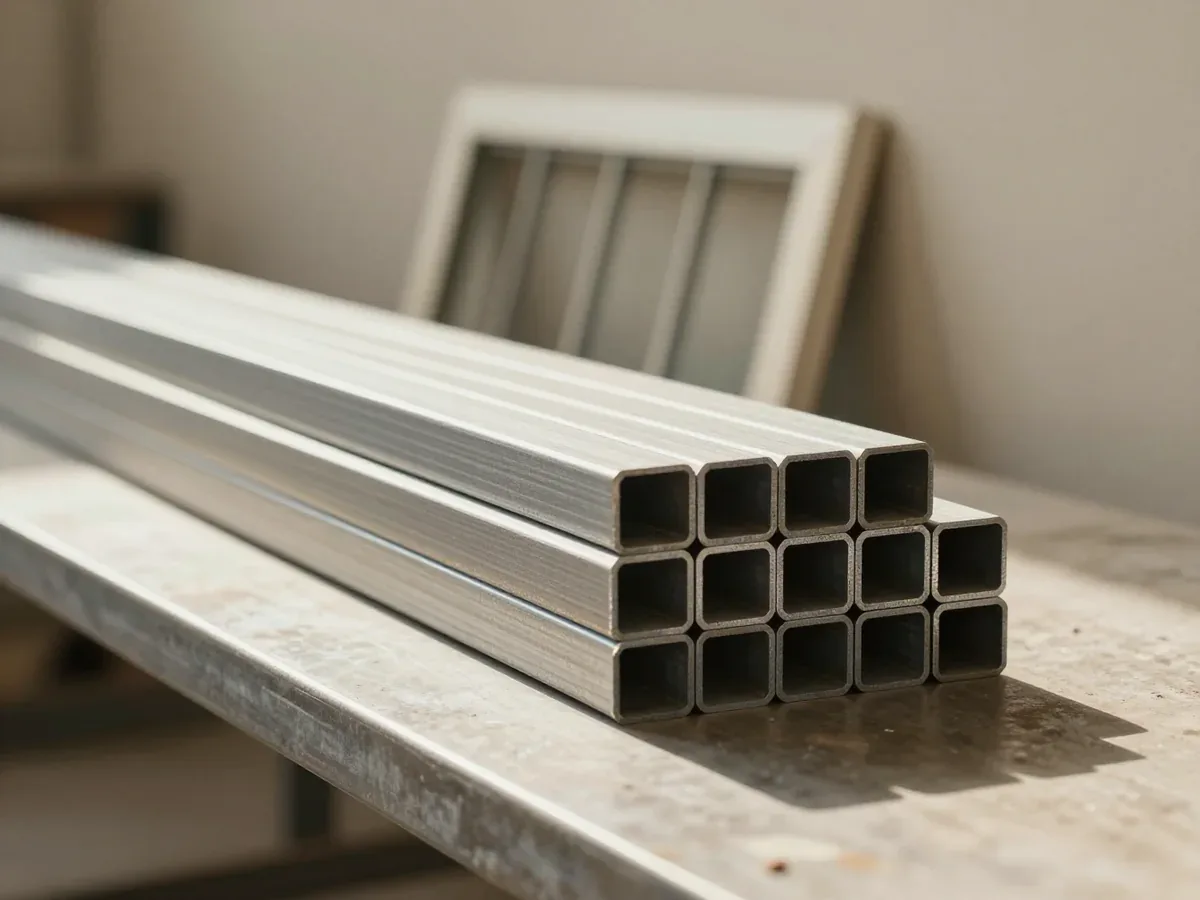
The grille is made to your dimensions and painted in the chosen colour; the lead time depends on the type and painting.
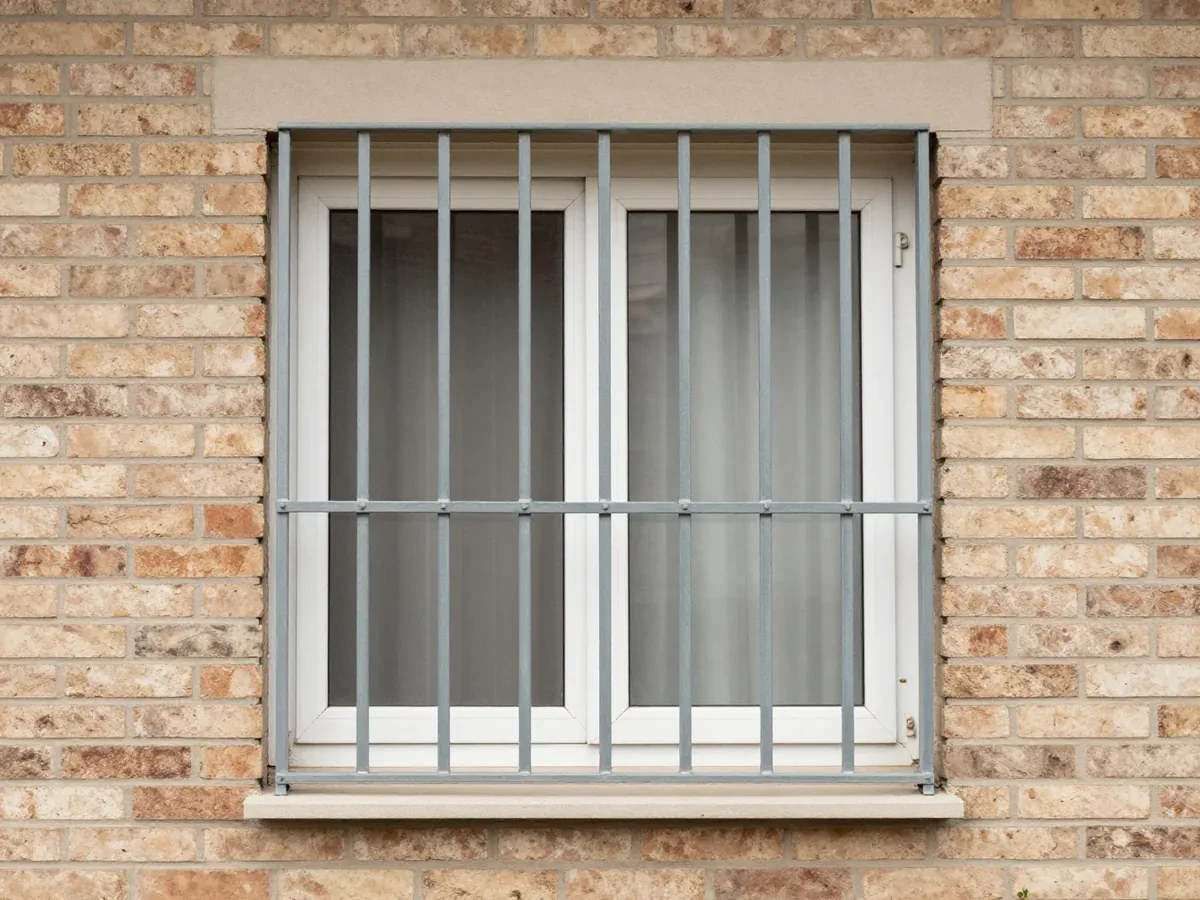
We bring and fit the grille to the window, then check the sash movement, lock operation and secure fixing to the opening.
Good to know

Senior mosquito screen specialist at moskitnyesetki.kz
We supply and fit window grilles in Shymkent as a direct contractor with our own fitters, not a broker. We measure your window for free, help you pick the type, paint the frame to match your profile and take payment only after installation. Every order is fixed in writing once measuring is done.
Window grilles Shymkent buyers choose by three things: window type, floor, and the barrier's job — children, break-ins or view. These three parameters narrow the choice to one construction.
Welded grilles are the workhorse for security, forged grilles carry the decorative load, and clear grilles trade some bar thickness for daylight while still closing the opening. A welded grid uses straight steel bars joined at every crossing, so the pattern stays rigid and spacing stays even across a wide opening. Forged work is shaped by hand at crossings and curls, so it reads as a facade element first and a barrier second, and weighs more per square metre than a similar welded grid. Clear grilles use thinner bars set further apart or a fine lattice, letting the eye pass through to the street. Bar spacing matters more than the style name: a wide decorative pattern on a ground-floor opening gives a hand far more room than a tight welded grid of the same weight.
We fit grilles to plastic, wood and aluminium frames, vent panes, loggia glazing and gazebo and veranda openings, and the frame type decides the fixing rather than the barrier itself. A plastic sash takes Z-brackets into the frame rebate; timber needs longer anchors into solid wood; aluminium profiles are thinner, so the fastener avoids crushing the chamber. Loggia glazing and gazebo openings are usually wider than a standard unit, pushing the frame toward a stiffer bar section. A first-floor opening and a tenth-floor one of the same size rarely need the same construction — on the ground floor it is the barrier, higher up it is about children and fall protection. Tell the measurer your floor before drawing.
You can order a single grille for one opening — we do not require a minimum — but most orders in Shymkent cover the units a child can reach or the ones facing a walkway or a neighbouring roof. A single unit is measured, painted and fitted on its own schedule, so nothing else in the flat waits. A full set is planned as one batch: the same bar section, paint colour and pattern repeat across every opening, which keeps a facade looking deliberate from the street. We paint the frame any colour to match your windows and install grilles on both windows and doors. Ordering one by one is often cheaper, yet matching paint and bar pattern across a facade is easier in one batch.
A transparent model is not glass or film. We explain what the term means, how it differs from a standard barrier, and when it is the right choice.
A transparent model is a metal frame with a sparse, slim bar pattern or a polycarbonate infill, so it reads as a light outline rather than a cage — it is not invisible and it is not glass. The metal still has to carry load, so the bars remain solid and the pattern stays simple: fewer verticals, wider spacing, thinner profile stock. Polycarbonate infill softens the look further but scratches and yellows over time, so most buyers stay with slim metal. The honest test is to stand at the window at night with the room lit — the bars still show from outside, so treat this as a sightline-preserving option, not a see-through one.
Transparent grilles suit upper-floor flats, loggias and rooms where the opening is the main source of daylight, and we paint the frame to match your profile so the outline stays quiet. The measurer brings colour samples and matches the powder coat to your finish, which keeps the frame from reading as a separate object on the facade. On a sunny south-facing opening the slim pattern also cuts glare less than a dense grid, which matters in a city with as much sun as Shymkent. In our practice the choice usually comes down to one question — is the opening a scene to keep or a barrier to build.
| Parameter | Clear grille | Dense welded grid |
|---|---|---|
| Daylight kept | High | Lower |
| Outward sightline | Mostly open | Bars in view |
| Break-in resistance | Moderate | High |
| Best floor | Upper floors, loggias | Ground and low floors |
| Look from outside | Light outline | Solid barrier |
A protective grille, an opening restrictor and a window lock solve different problems, and mixing them up costs money or safety. Here is what each does and how they combine.
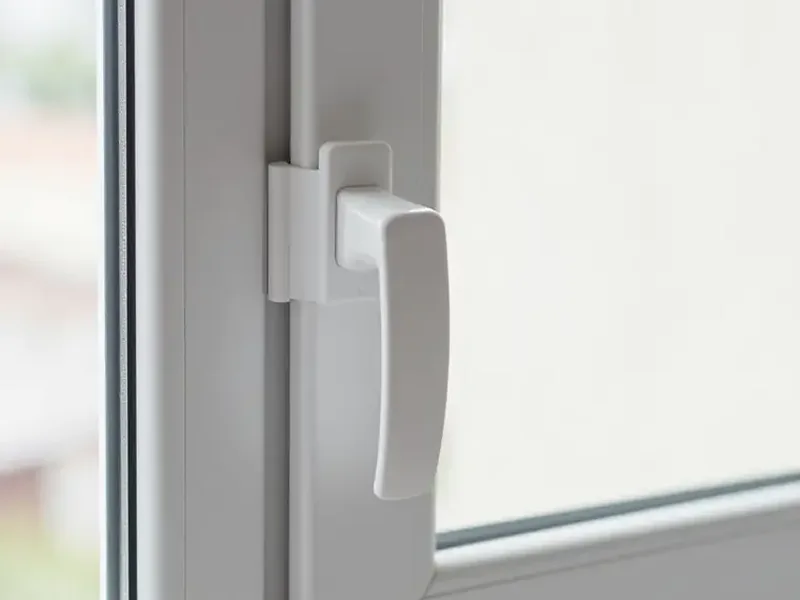
A protective grid stops a body passing through the opening, a restrictor stops the sash opening wide, and a lock stops the handle being turned from outside — three different jobs often confused. A restrictor is a small arm or cable limiting how far the sash swings, usually to 10–15 cm, and is the cheapest. A window lock blocks the handle itself, so nobody outside can turn it even with the glass broken. A protective barrier is the only one that stays in place when the sash is fully open for air. A restrictor alone keeps a toddler from climbing out but does nothing against a break-in, while the barrier alone leaves the sash free to be opened for air — so the two are usually paired.
If a full barrier is not what you want, we can fit an opening restrictor on the sash and a grille only on the windows a child can reach, so the room keeps its light and the risk is closed. The restrictor goes on the opening sash, the grid covers the fixed part or the low window, and the upper windows stay bare. Our measurer brings both options to the visit and shows how the sash will open with the restrictor mounted — measuring and consultation are free. We paint the frame any colour to match your windows, so a partial barrier does not stand out against the facade. The windows that matter most are the ones with furniture under them — a sofa or a bed by the sill turns an ordinary opening into a climbing frame.
A welded barrier fixed into the wall is a real barrier to a casual break-in, but not a vault — the fixing and the wall behind it decide how much it holds. Bars of 10–12 mm on a welded frame resist a crowbar far better than a thin decorative grid, and the assembly must be anchored deep enough that it cannot be pulled out as one piece. On a first floor the weak point is rarely the bar but the gap between frame and masonry. A grid bolted only into a plastic profile can be levered out with the frame, so on a ground floor the fixing matters as much as bar thickness. Ask what the anchors go into before comparing bar diameters.
Mounting hardware suits the window profile and your flat's height, not the bar structure. Here is how that works at the measuring appointment and what stays usable once bars are on.
Our measurer picks the mounting hardware to suit your profile and storey — Z-shaped brackets, pins or magnets — so the bars hold without drilling through the sealed part of the frame. On plastic, wood and aluminium units the same design can take a different mount, because profile depth and sash position decide where the load goes. A ground-floor opening and a tenth-storey one of identical size can end up with different hardware, since the risk and pull on the frame are not the same. The measurer brings the options to the appointment and shows each variant against your own opening before anything is ordered, as the load and risk differ even when the frame is identical.
A barrier fitted the right way leaves the sash free to open for cleaning and air, and a framed panel still lifts out from inside in a minute when you need the glass clear. We mount bars on openings and doors so the hinges, the handle and the ventilation gap keep working as before, and the frame is not boxed in. On a framed unit the panel comes off from the room side, which matters on upper storeys where reaching outside is not an option. Plan the metalwork around how you use it — an inward-opening sash needs clearance the bars must not eat into, decided at the appointment, not after.
The measurer comes at a time that suits you, takes the sizes, checks the profile and the height above ground, and helps you choose the design, the mesh and the fixings — measuring and consultation are free. He notes the opening direction, the sill, the radiator below and any obstacle that would block a panel from lifting out. You are not asked to prepare drawings or exact figures; the appointment produces them. The price is then fixed in the order, so what you agree at the appointment is what stands later. Nothing is cut before that call, so the sizes on the order are your actual opening, not a nominal size from a catalogue.
The order runs in clear steps, each giving a checkpoint before the next begins. Below is how it looks from your first message to a grille mounted on the frame.
You write to us on WhatsApp and we reply within five minutes, then the measurer visits, and the price is fixed in the order after measuring — not before. The visit and consultation cost nothing: the measurer comes at a time that suits you, takes the sizes, and helps you settle on the design, the mesh and the fixings. He also checks the profile and the floor, because a Z-bracket, a pin or a magnet changes both the labour and the parts list. A price quoted over the phone before anyone has seen the opening is a guess, since the fixing, the profile and the floor all move the work. The fixed order price holds, so nothing on the invoice shifts between measuring and installation.
We make the metalwork to your size, deliver and install it on your opening or door, and you pay after installation by cash, card or Kaspi. A framed screen takes 10–15 minutes to assemble, and a pleated one 40–60 minutes, so most orders are measured and fitted without a long wait. We paint the frame any colour to match your glazing, and we service the screens and replace their fixings as part of the same work. Paying after the screen is on the frame means you see the fit, the paint and the fixing before any money changes hands. The order is only closed when you are satisfied, and we work seven days a week so the visit can fall on your day off.
We give a one-year warranty on mosquito screens and a one-year warranty on window repair covering labour and replaced parts, and we service the screens and replace their fixings as part of the same work. Window installation carries a five-year warranty, and glass unit replacement three years, which matters when a screen is fitted together with new glazing. The warranty covers our own labour and the parts we supplied; it does not cover damage from a hit, a bent bar after an impact, or rust where the paint was scratched by something other than us. Ask who handles the call-out — with us it is our own fitters, not a subcontractor. Keep the order sheet with the fixed price and the date.
Paint, care and pairing a grille with a mosquito screen decide how the job looks on day one and how it holds up a year later.
We paint the screen frame any colour to match your windows, so the barrier reads as part of the opening rather than an add-on bolted to the facade. The coating goes onto a primed steel frame before the bars are assembled, covering welds and cut ends where rust usually starts. On white plastic we match the PVC shade, on wood-grain laminate the darker grain tone, and on aluminium the anodised finish. Colour matching matters most on a street-facing facade — a barrier in a close but wrong shade draws the eye more than a clearly different colour. Ask for a painted sample against your own window in daylight before ordering.
Wipe the metal with a damp cloth once the coating has fully cured, and check the fixing points each season — dust and grit on the bars start corrosion, not the steel itself. Fresh paint needs about a week to harden, so skip the wet wash in the first days and let rain do the light work. After that, a soft cloth with plain water is enough; abrasive powders and chlorine cleaners dull the finish and open the surface to moisture. Look at the anchors twice a year: a loose bracket lets the panel move and rubs the coating off at the contact point. In a dusty city the lower bars collect the most grit, so a quick wipe of the bottom row does more than an occasional full wash.
The metal barrier goes on the outside and the insect mesh sits inside it, so the fabric still lifts out for cleaning and the frame keeps its position. On a plastic window with a net already fitted, we keep the existing frame and plan the metal guard around it rather than pulling the insert off. The measurer checks the depth of the reveal, the profile of the sash and the floor, then chooses Z-brackets, pins or magnets so both items share the opening without one blocking the other. The fabric can be Standard fiberglass, UltraVue, Anti-Cat, Anti-Pollen or Anti-Dust, and the barrier does not change that choice. Tell the measurer the net is staying — the two are made to fit together.
A short recap of what decides the barrier on a Shymkent window — the window, the floor and the job first, the style last.
Choice, protection, installation, materials
Konstantin Selenenkovsenior mosquito screen specialist, 10 years in the tradeOnline · replies within 5 minutes
Ask a questionWelded grilles are more reliable for anti-burglary protection: solid metal with rigid joints is hard to cut through. Forged grilles are more attractive and lighter, but decorative elements are less resistant. The choice depends on the task and budget.
Yes, vandal-resistant grilles made of transparent polycarbonate withstand impact and hardly block light. The room stays bright, and the facade looks neat. The level of protection depends on the thickness of the panel and the fixings.
Yes, this is a common option: a fixed grille is placed on the blind part, and a hinged or removable one on the opening sash. This preserves access for ventilation and washing. The design is selected for the specific window.
If the window is often opened for ventilation, a fall-prevention grille or a lockable restrictor is more reliable: they prevent the sash from opening wider than safe. A lock is simpler, a grille provides a more serious barrier. They are often installed together.
Steel with powder coating or galvanizing lasts longer: the coating withstands sun and temperature changes, protecting against corrosion. Aluminum structures also do not rust. Service life depends on care and coating quality.
Yes, the product is powder-coated in any color to match your windows: white, brown, gray and others. The coating is applied at the factory, it is even and durable. The exact shade is matched to a sample during the measuring visit.
Thank you. We will call you back within 10 minutes!
Your order number is on the receipt or in the SMS. Choose where to leave your review.
Write a review on WhatsApp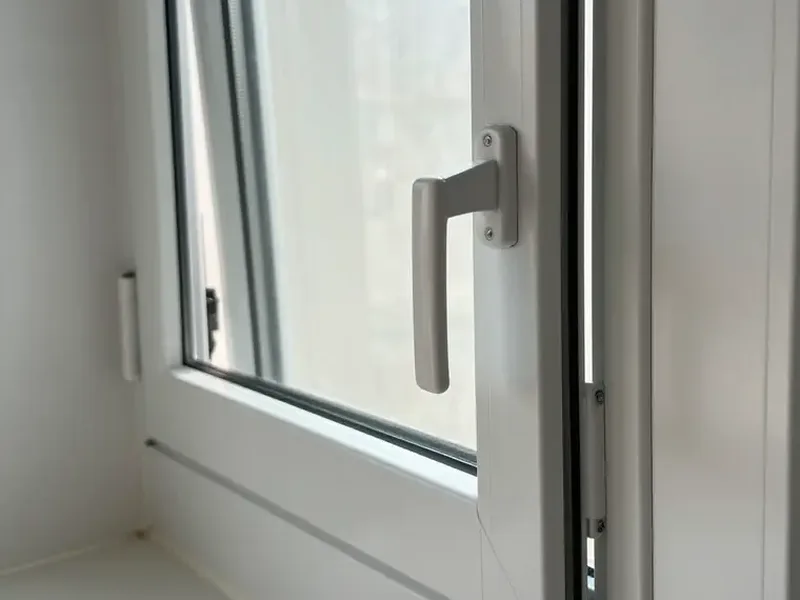 Window restrictors
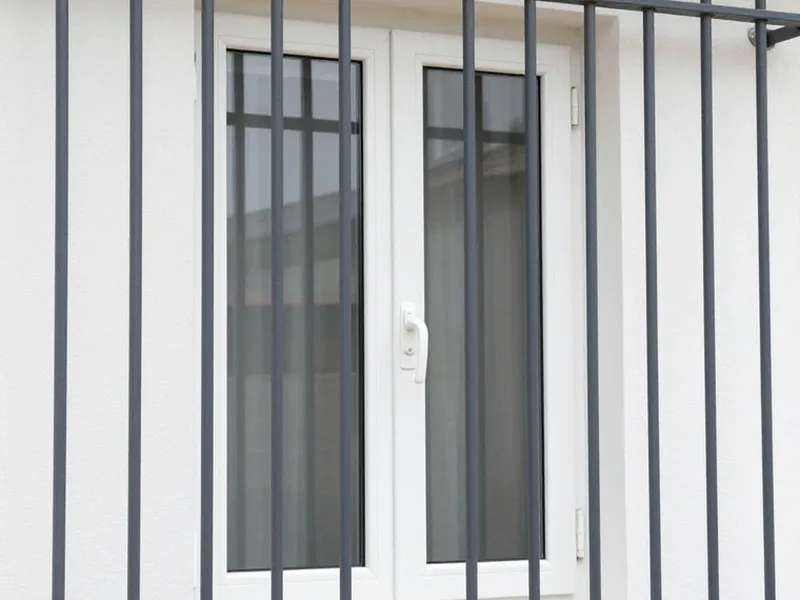 Metal grilles
 Transparent grilles
 Window blockers
 Ready-made mosquito screens
