Choosing · 8 min read
Mosquito screen for cats

Senior mosquito screen specialist at moskitnyesetki.kz
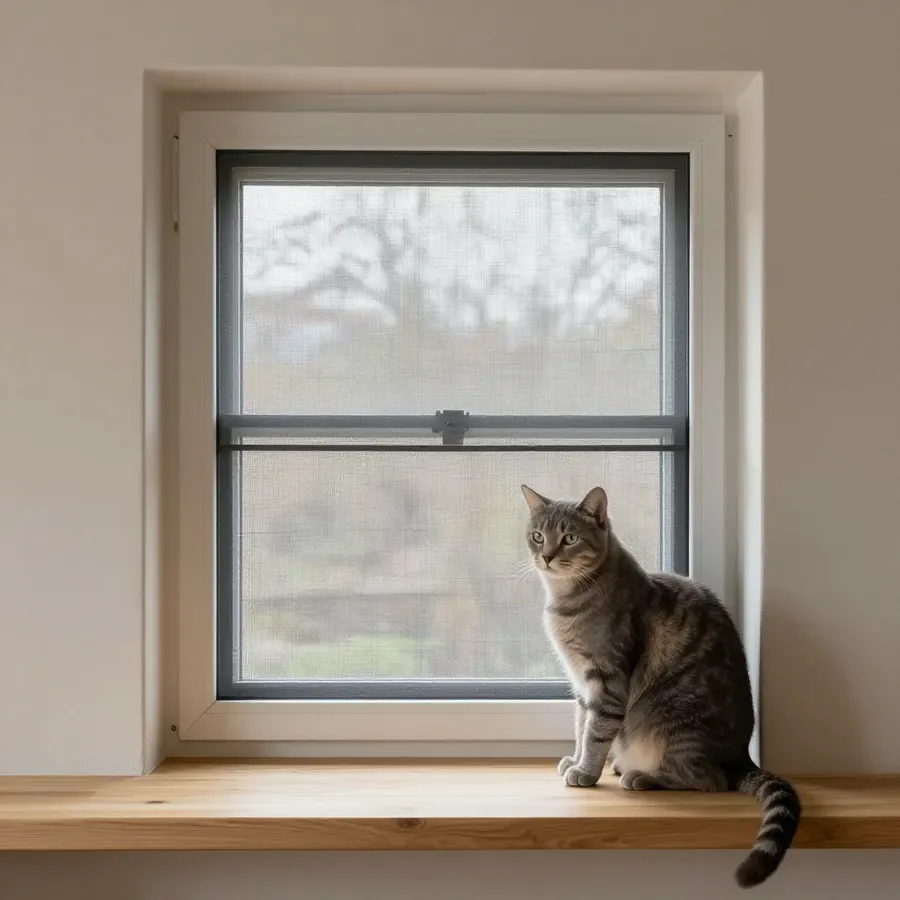
A mosquito screen for cats works only when the mesh, the frame profile and the fixings are chosen together. Anti-Cat (Pet Screen) mesh is several times stronger than standard fiberglass and holds the weight of a small animal. We make screens to measure, pick the fixing for your window and repair torn mesh.
Why a Standard Screen Fails and What a Cat Resistant Mesh Does Differently
A standard mosquito screen for cats stops insects, not animals: cats hook claws into the fabric and hang on it, so the cloth fails long before the frame does.
How a Cat Actually Damages a Standard Mesh
Standard (Fiberglass) mesh is built to keep insects out, so a cat's claws catch in the weave and the threads stretch and tear under the animal's weight. The yarn is thin and has almost no elasticity, so a single jump leaves a ladder of pulled threads rather than a clean hole. A pet climbs the screen because the surface gives slightly under its paws, inviting it to push harder. Once stretched, the opening grows with every contact, and the next leap finishes the job. The weak point is rarely the frame — it is the cloth itself, so replacing only the profile will not stop the next tear.
What Makes Anti-Cat (Pet Screen) Different
We fit Anti-Cat (Pet Screen) made of vinyl threads several times stronger than standard fiberglass that hold the weight of a small animal. Each strand is coated rather than woven thin, so a claw slides off instead of catching, and the fabric returns to shape after being pushed. This pet resistant screen looks similar to ordinary cloth from a distance, so the difference is best checked by hand. On a sample you feel it at once: the material is thicker and springs back when pressed, while ordinary cloth stays creased. Ask to compare both pieces side by side before you decide, because colour and pattern alone tell you very little.
Anti-Cat Against Metal and Standard Mesh
Each option trades off differently: metal resists the sharpest claws, Anti-Cat stays soft enough not to fray, and light and airflow depend on weave tightness.
Comparing the Meshes Side by Side
| Mesh | Strength against claws | Light and airflow | Best for |
|---|---|---|---|
| Standard (Fiberglass) | Low, tears under weight | Good | Homes without pets |
| Anti-Cat (Pet Screen) | High, holds a small animal | Good | Most cat households |
| Metal mesh | Highest | Lower, denser weave | Cats that climb and hang |
| UltraVue | Medium | 25% more light and air | Bright rooms, calm cats |
Does a Stronger Mesh Darken the Room
A denser pet resistant screen blocks a little more light than thin fiberglass, but the difference is small, and where brightness matters we offer UltraVue, which lets in 25% more light and air than other options. The weave on Anti-Cat (Pet Screen) is thicker than standard fiberglass, so on a north-facing window the room reads slightly dimmer at midday. UltraVue solves that with a finer weave that keeps the glass clear while still holding a calm pet away from the opening. If the window faces north or the room is already dim, choose the product for light first and add a window limiter so the animal cannot push the screen open.
Strength Comes From the Frame and Fixings Too
Even the toughest mesh holds only as well as the profile and the fixings behind it. Under a pet's weight, the weak point in the assembly gives way first.
Choosing Fixings for a Window a Cat Jumps On
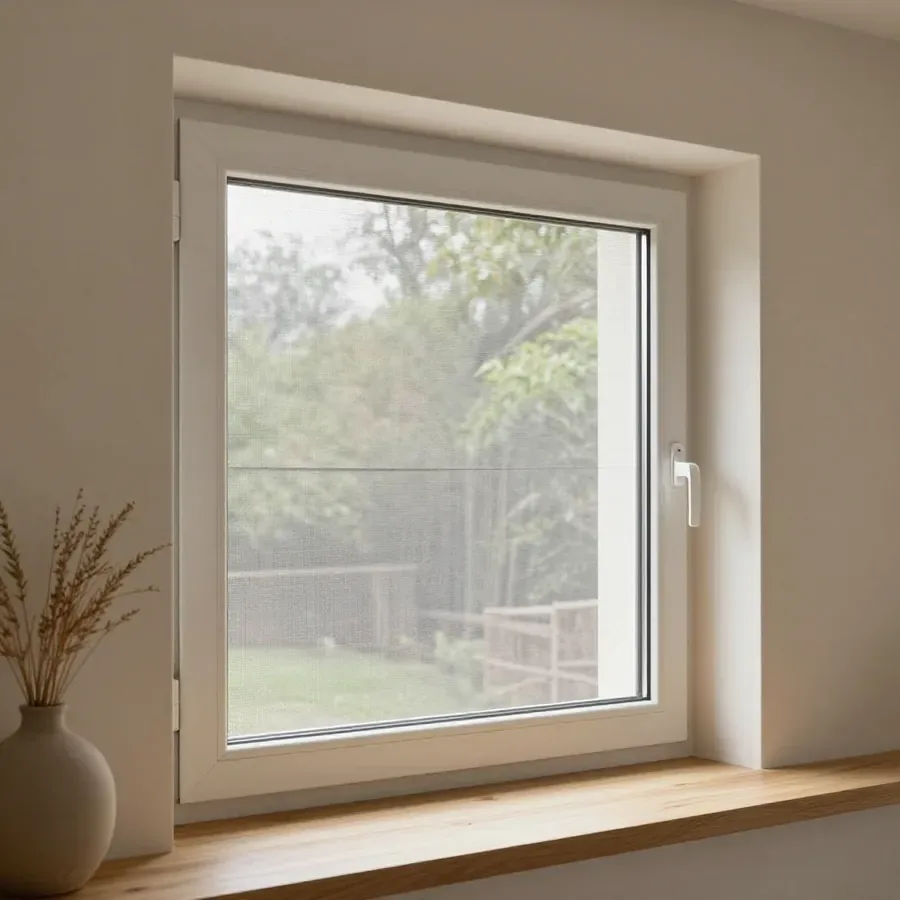
Our measurer picks the fixing for the window profile and floor, choosing between Z-shaped brackets, pins (plungers) or magnets so the frame stays put when a pet lands on it. A small vent window usually takes magnets or short pins, while a full-height casement on a balcony needs Z-brackets that grip the frame on all four sides. The measurer checks how the sash opens and how deep the profile sits, because a bracket that fits one window type will not hold on another. A cat proof window screen depends on these fixings as much as on the fabric. On upper floors a firm bracket matters more, since a screen pushed out of its seat leaves a gap the animal can slip through.
Frame Profiles and Colour for Cat Households
- Economy 32×10 mm: slim hinged-door profile for light use and standard openings where the cat does not charge the screen.
- Prestige 42×17 mm: heavier profile for a hinged door the cat runs at, with more material to resist a direct hit.
- Frame colour: we paint the frame any colour to match your windows, so the stronger setup does not stand out.
- Wooden and aluminium windows: the same profiles and fixings work on plastic, wooden and aluminium frames, including vent windows and loggia openings.
- Fixed versus door: a fixed window usually needs the standard frame, while a door benefits from heavier Prestige.
A Mosquito Screen for Cats on Doors and Balconies
A balcony door is the most exposed spot in a pet household, because the animal sees a way out and tests it constantly. The canvas, profile and door opening all matter.
Why a Balcony Door Needs a Stronger Setup
We fit hinged door screens with Anti-Cat (Pet Screen) mesh and a reinforced profile, so an animal pressing against the door cannot push the fabric out of the frame. The Anti-Cat canvas is several times stronger than standard fibreglass: vinyl threads carry the weight of a small animal without tearing at the fixing points. For a door leaf we usually recommend the Prestige 42×17 mm profile, which holds a wider spline and keeps the fabric tight along the hinge side. A door screen takes a running jump, not a slow lean, so the profile and the hinge side carry more load than on a window and should be chosen first.
Pleated and Sliding Screens on a Loggia
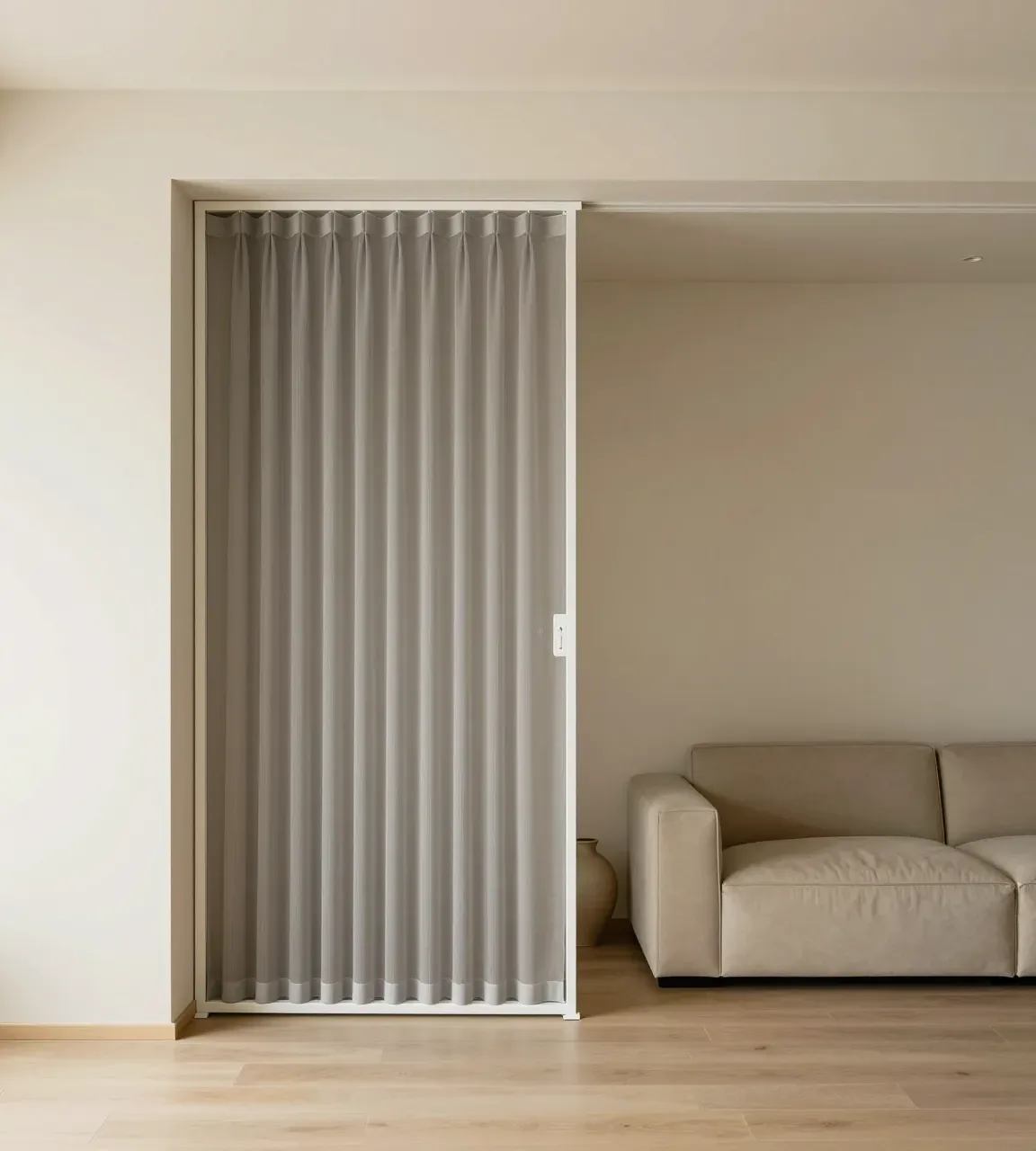
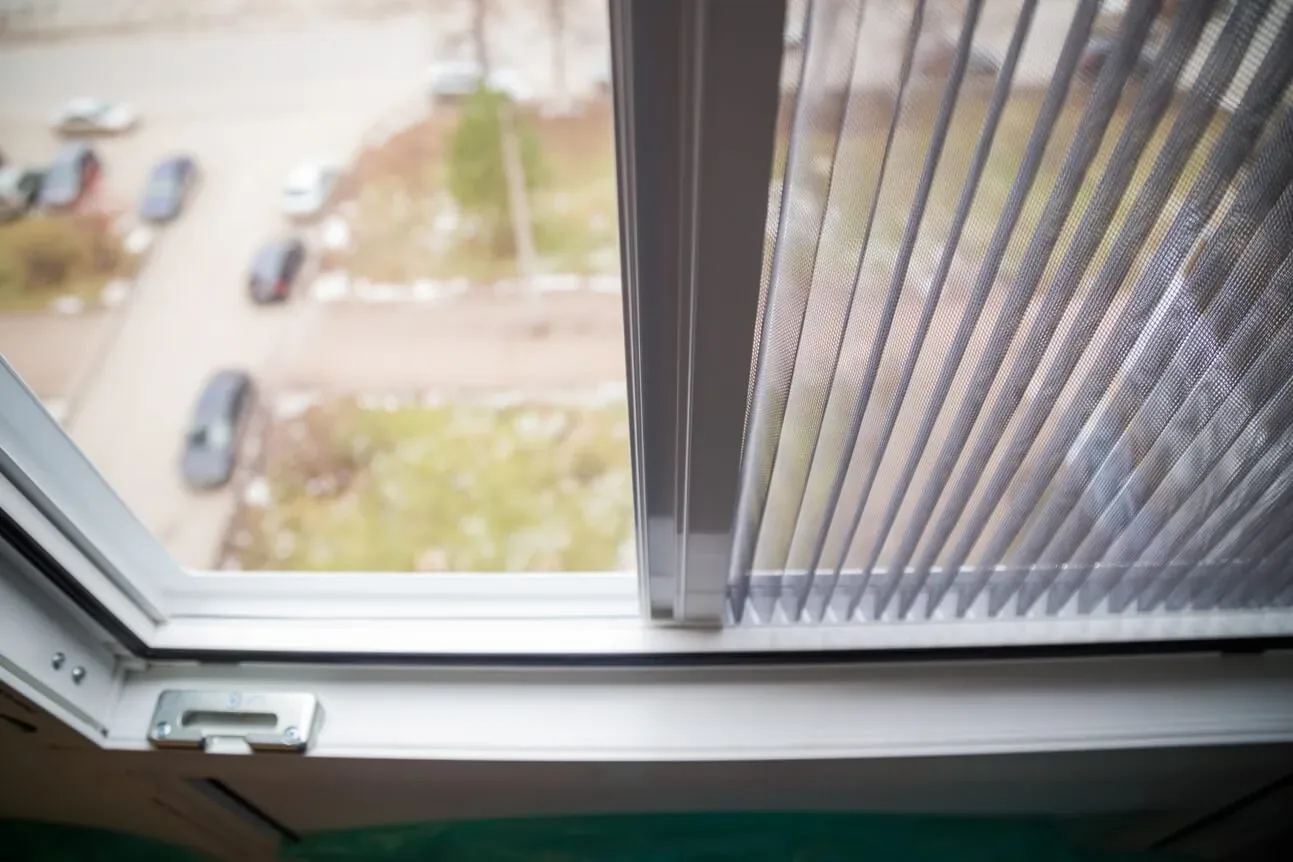
- Pleated screens: a made-to-size pleated screen takes 40–60 minutes to produce and folds away without blocking the doorway.
- Sliding screens: the leaf travels on a track, keeping a wide loggia opening usable for people and pets.
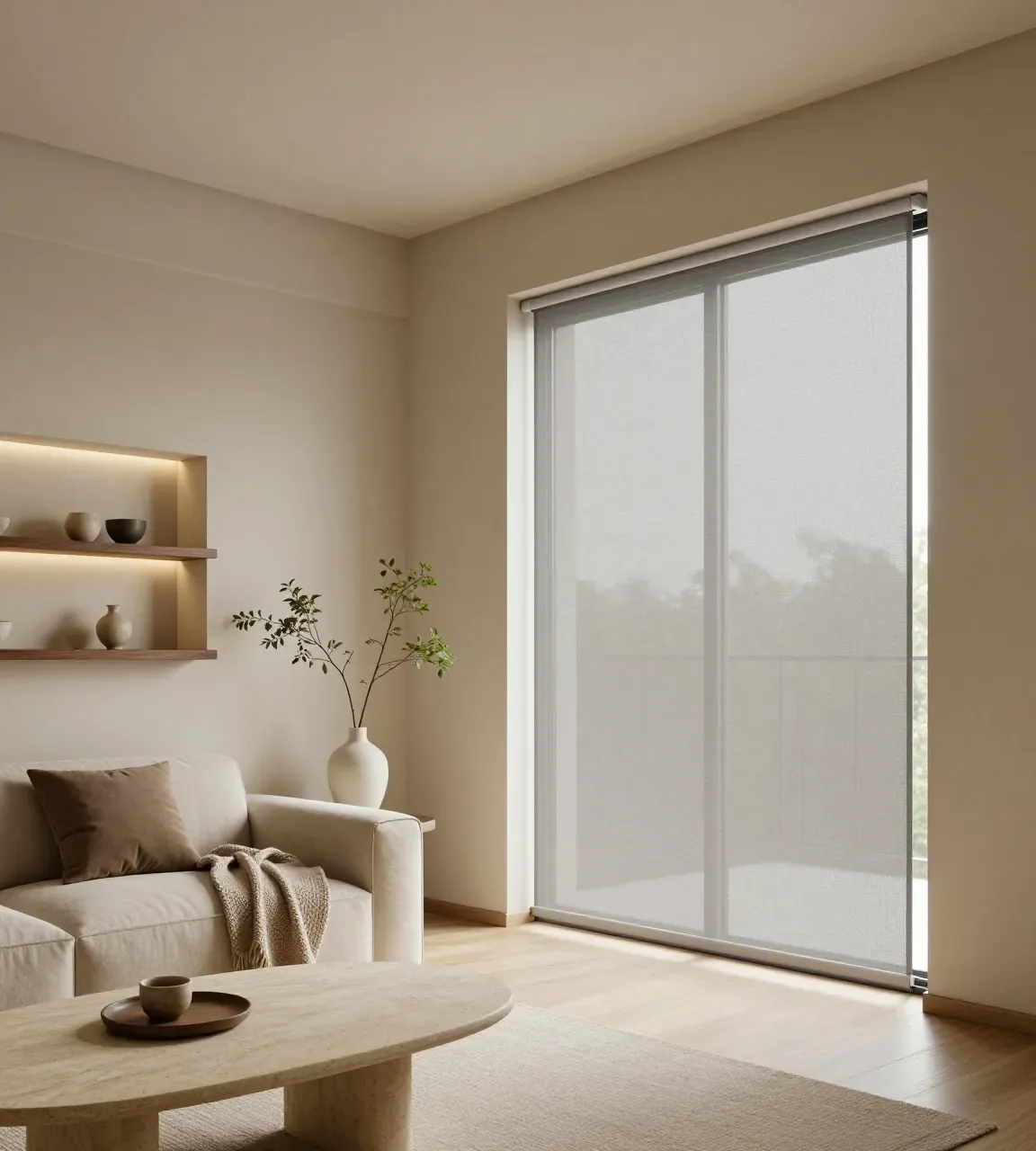
- Roller screens: the fabric rolls into a top cassette and suits openings where a fixed frame would be in the way.
- Track check: the frame guides the fabric, so test that the track is firm — a loose track lets a cat work the edge open.
- Door profile choice: hinged door screens come with Economy 32×10 mm or Prestige 42×17 mm profiles; the heavier suits a cat that jumps at the door.
When a Mosquito Screen for Cats Is Already Torn
Most cat damage stops at the fabric, and the frame usually survives. So is only the mesh torn, or have the fixings and corners taken a hit too?
Replace the Mesh or the Whole Frame
If the profile is straight and the fixings are intact, we replace only the fabric and keep the profile, the usual outcome after a cat tears the weave. A framed screen is built so the aluminium profile and the spline outlive the canvas, and the Anti-Cat (Pet Screen) material gives way last. We check the joints, the Z-brackets or plungers, and the groove before quoting a repair, because a sound unit with fresh cloth costs far less than a new one. A bent joint or a cracked fixing means the whole assembly should be replaced too, or the new cloth will pull loose again.
Doing It Yourself or Calling a Master
- Sound base first: home swap works only if the profile is straight and the groove clean, with no cracks at joints.
- Even seating: new fabric must sit flat all round, since any slack becomes a pawhold within days.
- Tension control: the locking cord is easy to over-stretch by hand, and too much pull bows the profile.
- Tools and patience: a roller, sharp blade and flat surface are needed, and first attempts are often redone.
"Anti-Cat" screen — from 12 000 ₸/m²Free measuring and advice, payment after installation. We make a frame screen in 10–15 minutes.
What to consider if you have a cat at home
A screen that survives a cat comes down to three decisions — the fabric, the frame profile and the fixing — and getting each right matters more than the box label.
- Standard fiberglass: built for insects, so claws and body weight rip the weave, often within a season.
- Anti-Cat (Pet Screen): vinyl threads are several times stronger than ordinary netting and hold a small animal's weight.
- Metal mesh: toughest, but blocks daylight; UltraVue trades strength for 25% more light and airflow.
- Fixings and profile: these carry the load, so match brackets, pins or magnets to window type and floor.
- Torn netting: usually means replacing the weave only — frame and fittings stay in place and keep working.
Source: Phifer's PetScreen product page.