
Sash · Compression
New rubber seal
A fresh seal and winter sash compression stop draughts around the perimeter. From 1 000 ₸ per linear metre.
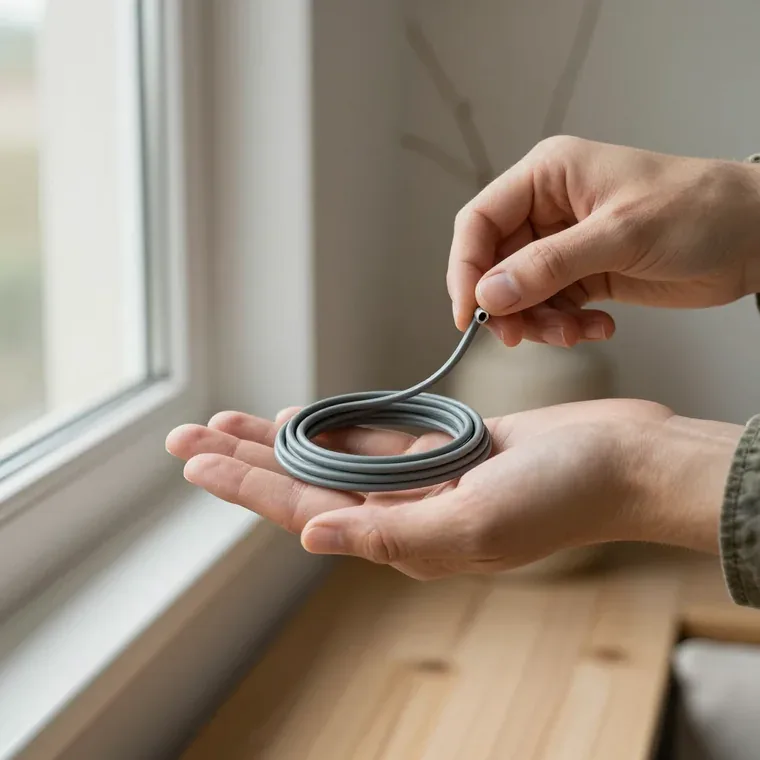
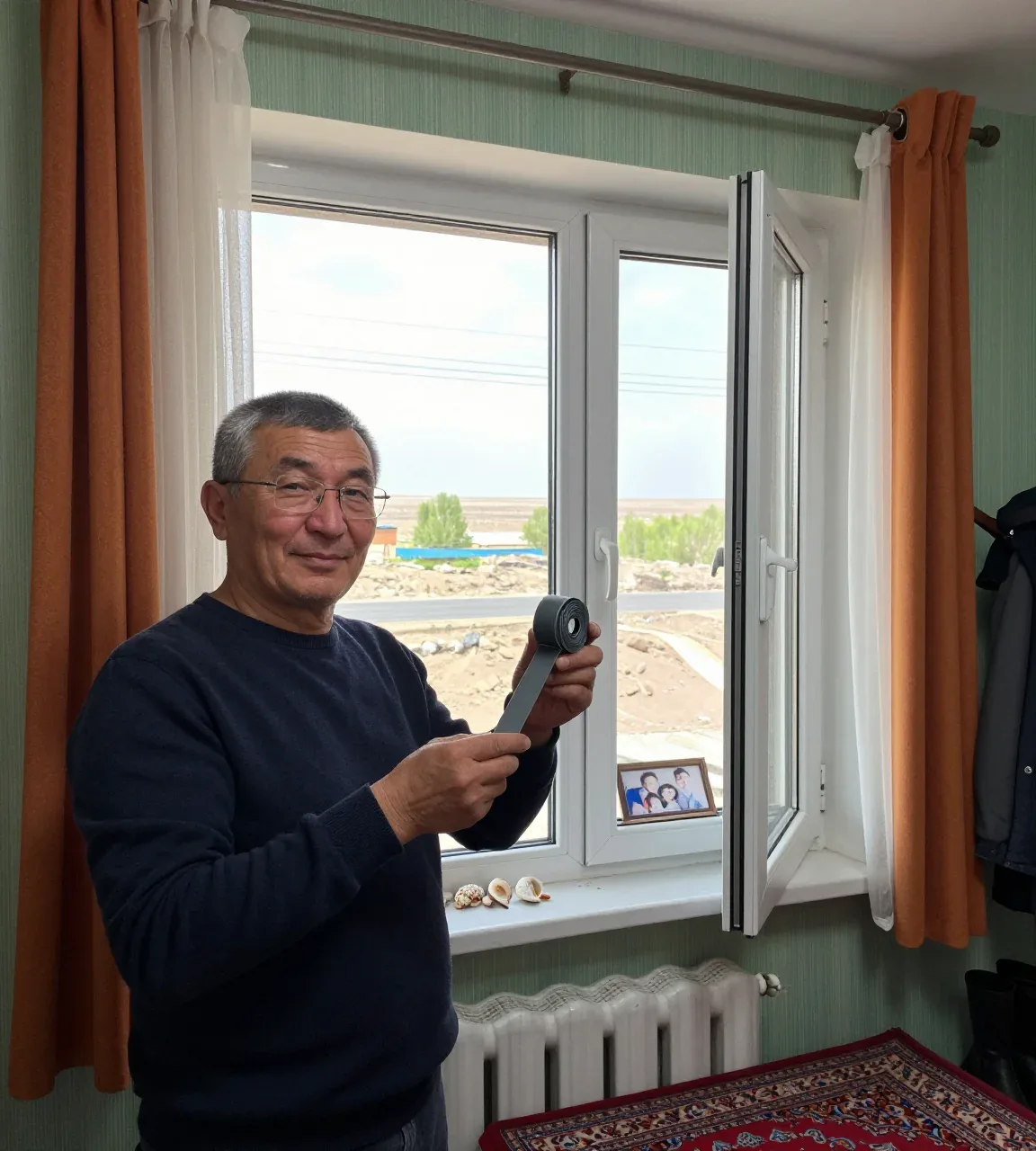
New rubber seal
A fresh seal and winter sash compression stop draughts around the perimeter. From 1 000 ₸ per linear metre.
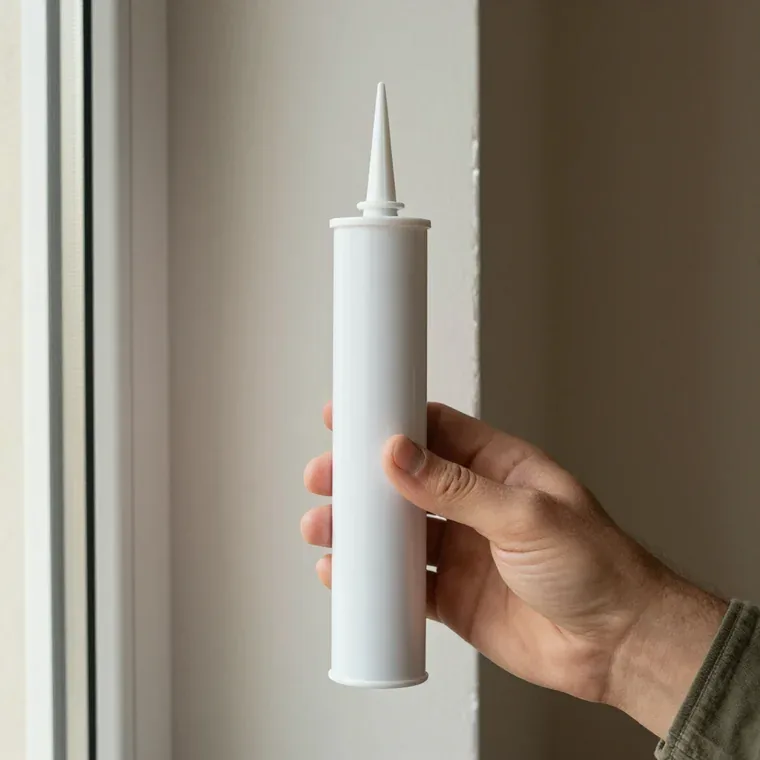
Seams around the frame
Sea air soaks the seam foam; we seal it with liquid plastic and external tape. From 1 500 ₸ per linear metre.
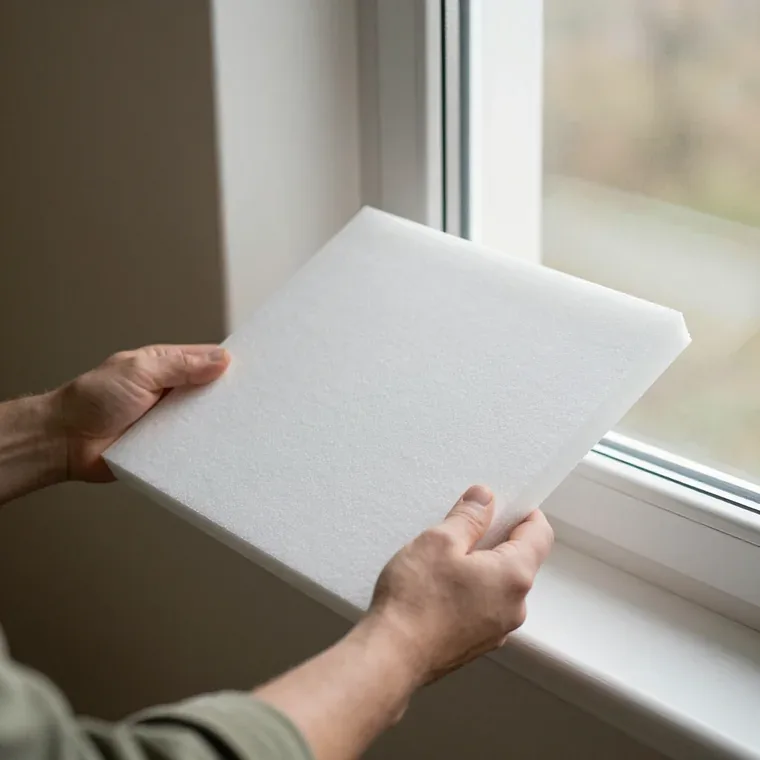
Reveals
A cold reveal collects moisture and mould; we insulate and finish it anew. From 19 900 ₸ per linear metre.
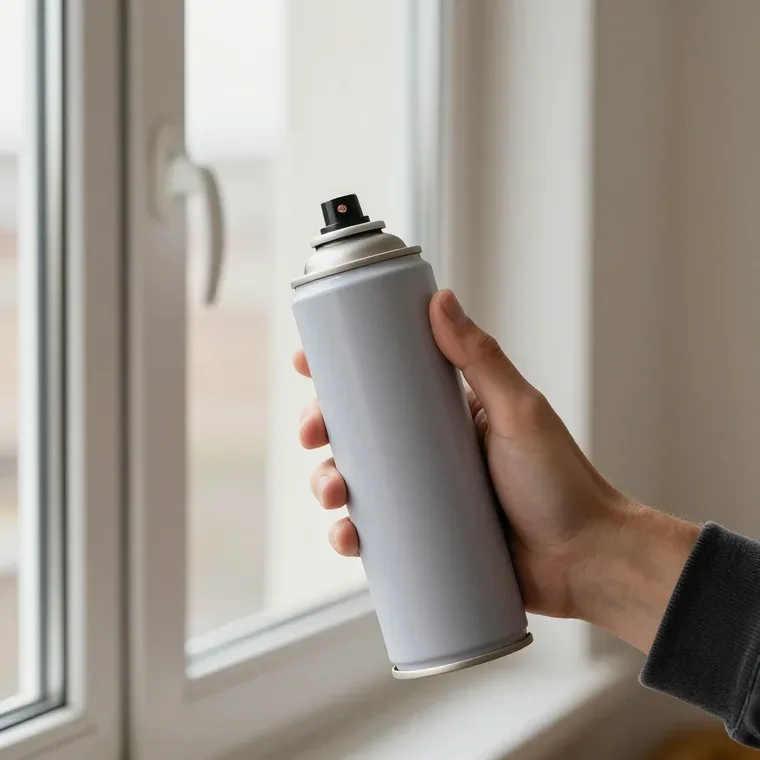
Window sill
We fill voids under the window sill with foam and seal them with sealant — from 15 000 ₸ per job.
Between-frame contour
A third layer of rubber between frame and sash keeps heat in during stormy winds. From 2 800 ₸ per window.



5,097 reviews on review sites
Heat escapes through five places: the sash, the seam, the reveal, the window sill and the drip cap. The technician checks each one and fixes what is needed.
We start by finding the leaks: we run a hand and a candle around the sash perimeter, and inspect the seam and reveals. Then we replace the rubber, set the compression, seal the seams with liquid plastic, and if needed insulate the reveal and window sill.
In Aktau, strong sea winds blow in winter, and the damp salty air quickly damages the foam of the installation seam. That is why, besides the rubber, we almost always check the outer side of the seam.
full service for one window
warranty on repair and parts
WhatsApp reply to a window photo
Four problems people come to us with in winter.
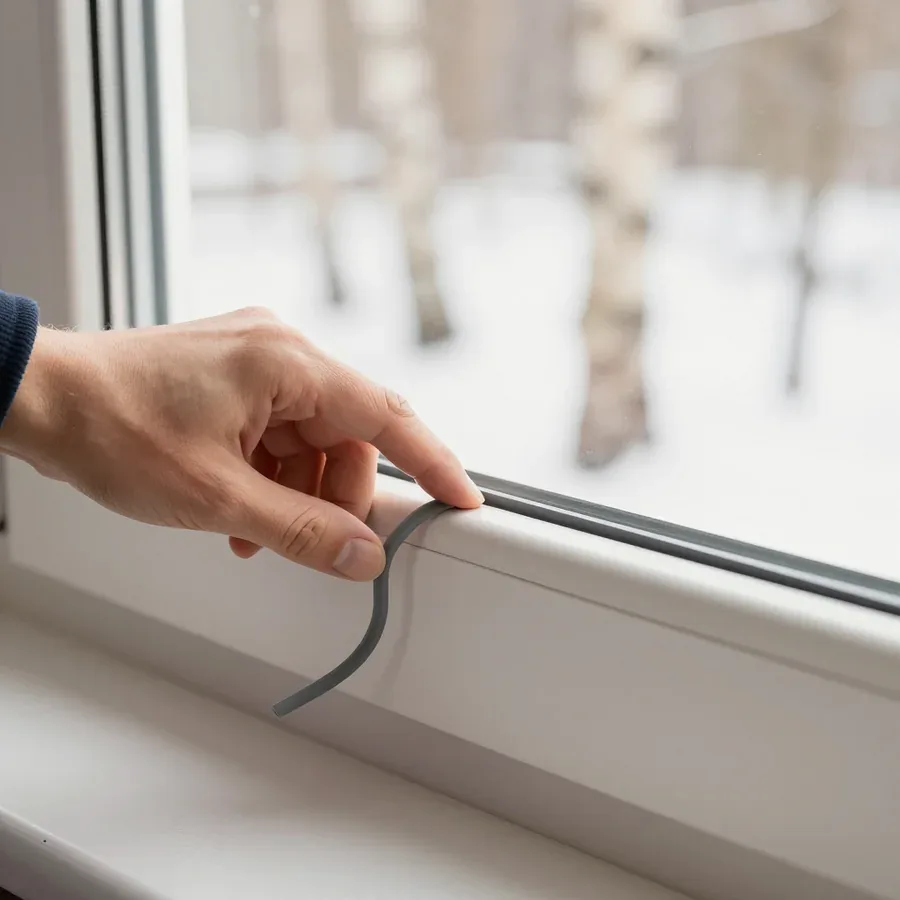
Worn rubber and weak compression let wind through around the perimeter, especially in a storm.
The foam under the frame has got wet from sea air and no longer keeps heat in.
A cold reveal collects moisture, and dark deposits appear in the corner.
There is a void under the window sill, and draughts blow straight onto the radiator.
We choose based on the inspection: one flat needs only rubber, another needs the seam and reveals.
PVC sashes
New seal around the perimeter and winter compression mode.
at the frame inside
Liquid plastic protects the foam from indoor moisture.
on the street side
Sealant and tape protect the seam from salt and rain.
cold, damp
Insulation and new finishing remove the cold corner.
windows facing the sea
A third rubber contour for the windy side of the house.
The cost depends on which parts of the window need sealing; the technician works it out at the inspection.
| Type of work | Price |
|---|---|
| Full window insulationrubber seal, compression, seams | from 3 800₸ per window |
| New sealsash perimeter | from 1 000₸ per linear metre |
| Draught eliminationfinding the gap | from 3 500₸ per sash |
| Liquid plastic on the inner seamseam at the frame | from 1 500₸ per linear metre |
| External sealingagainst moisture and wind | from 2 000₸ per linear metre |
| Insulated revealinsulation and finishing | from 19 900₸ per linear metre |
| Draught-free window sillfoam and sealant | from 15 000₸ per job |
| Swedish-style wooden windowrubber in the groove | from 4 200₸ per linear metre |
| Extra compression or micro-lifttighter closing | from 1 700₸ per unit |
| Between-frame contourplus one layer | from 2 800₸ per window |
| Thermal cameraheat leak map | from 9 000₸ per job |
| Balcony from insidewall and floor insulation | from 6 800₸ per m² |
Price fixed in the order after measuringFree measuring and consultationPay after installation: cash, card, Kaspi
Call a technicianWhat every customer gets.
on the work and replaced parts
KBE, Rehau, VEKA, Provedal and other brands
fixed after inspecting the window
work payment: cash, card or Kaspi
on WhatsApp to your message
we come on a day that suits you
we take requests every day
we work across Kazakhstan
Four steps to a warm room.

Describe on WhatsApp where it is cold: the sash, the joint, the reveal or the window sill, and send a photo.
The technician looks for drafts with a hand and a candle, checks the joint and reveals, and names the price.
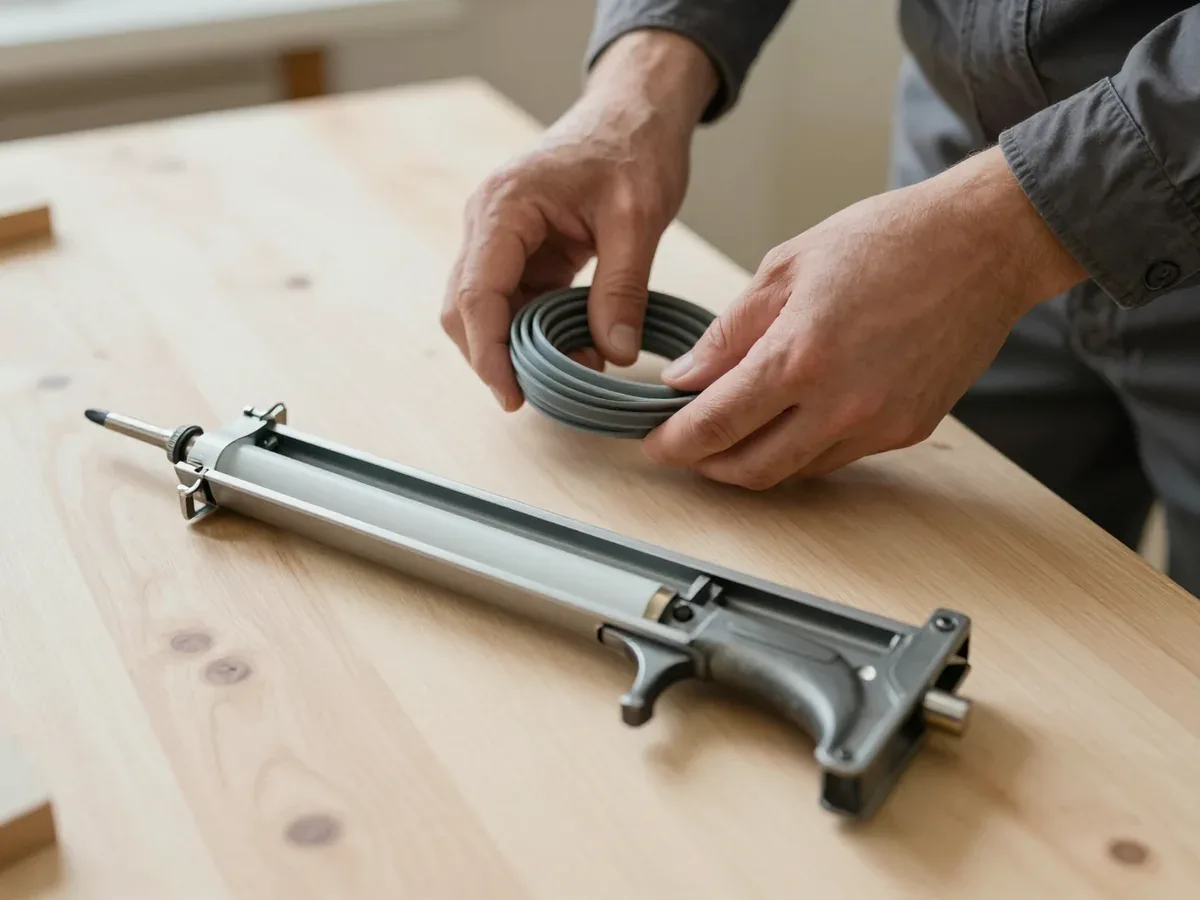
We replace the rubber, set the pressure, seal the joints and window sill, and insulate the reveal by agreement.
We check the window for drafts together with you and show you winter mode, and only then do you pay.
Good to know

Senior mosquito screen specialist at moskitnyesetki.kz
We handle window insulation in Aktau as a direct contractor with our own fitters, not an agency. We start with a free measuring visit, trace where the cold actually enters, then replace seals, adjust the sash pressure or swap the glass unit. Price is fixed after measuring, and you pay once the work is done.
A sealed handle does not mean a sealed window. Cold air finds three routes — the rubber gasket, the closing pressure and the perimeter — and each one needs a different fix.
Cold air enters a closed window through the rubber gasket, through a loose leaf that no longer presses evenly, or through the frame-to-wall joint around the perimeter. The gasket is a soft contour between the leaf and the casing, and it flattens with age until the two surfaces no longer meet. Closing pressure is set by the hardware: hinges and the locking cam pull the leaf inward, and years of use leave that pull uneven along the edge. The perimeter joint sits behind the casing, where foam, tape or plaster can crack and open a direct path to the street. A draught at the bottom of the leaf points to the gasket; a draught along the whole edge points to the hardware setting. Proper window insulation in Aktau starts with finding which of these three routes is open in your unit.
The coastal wind presses constantly on the windward side of a building, so a gasket that would hold in a sheltered city starts leaking here much sooner. Salt air dries out and hardens rubber faster than dry inland air, and the casing takes a steady load on the exposed side of the block. On upper floors the pressure difference is stronger, which is why the same unit can feel fine on the first floor and draughty on the ninth — the repair is the same, but gasket quality matters more. Flats facing the sea carry the worst of it, while courtyards stay calmer.
Most draughty windows do not need a new glass unit. The choice between a seal, an adjustment and a replacement follows from where the cold enters and whether the glass itself is failing.
| Symptom | Likely cause | What we do |
|---|---|---|
| Draught along the sash edge | Worn or flattened seal | Replace the seal |
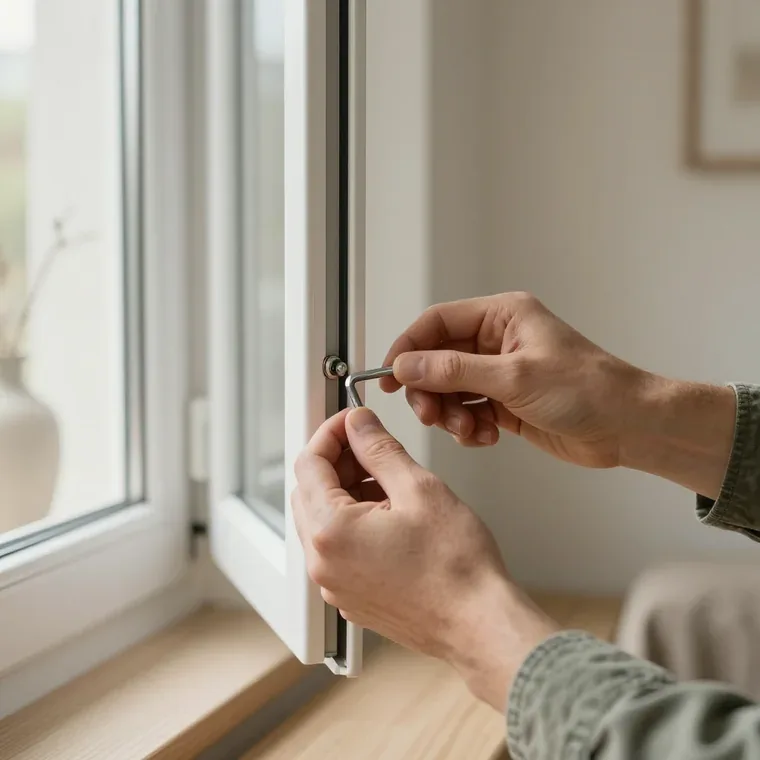
| Sash rattles or sits loose | Weak pressure on the frame | Adjust the pressure |
| Cold glass, warm room edge | Failed sealed cavity | Swap the glass unit |
If moisture forms inside the glass unit or the edge of the glass frosts over, the sealed cavity has failed and no amount of sealing will fix it — the unit has to be replaced. We check this before quoting any work: a gasket change on a dead pane would only hide the real fault for a few weeks. A unit that mists between the panes is a closed system that has already lost its seal, so the condensation will return every cold snap until it is swapped. On KBE, Rehau, VEKA and Provedal profiles we replace the gasket and set the pressure in the same visit, because a fresh strip on a loose sash reopens the gap within a season.
Plastic, wooden and aluminium windows fail in different ways, and the seal that suits one profile is not automatically right for another. Here is what changes on site.
| Frame type | What we check first | Typical fix |
|---|---|---|
| Plastic (KBE, Rehau, VEKA) | Rebate depth and seal groove | Seal replacement, sash adjustment |
| Wooden | Uneven rebate, dried joints | Matched seal, joint filling |
| Aluminium (Provedal) | Thin profile, wall joint | Slim seal, perimeter sealing |
Loggia and balcony glazing takes the full force of the coastal wind, so the perimeter joint there needs as much attention as the sash itself. On a glazed loggia the frame is fixed to a thinner outer wall, which leaves the wall joint as the weak point once the sash is sealed. We check the sash, the frame and the perimeter in the same visit, because fixing one and leaving the others open simply moves the draught a few centimetres sideways. Awkward openings — narrow, angled or set deep into the wall — are measured rather than assumed, since a standard seal cut to length will not close a gap that changes width along its run. In our practice, the perimeter is where most loggia complaints start, not the glass.
The job runs in a fixed order: measuring, agreeing the scope, the work itself, then a check that the unit is actually tight. Nothing is ordered before the source of the draught is confirmed.
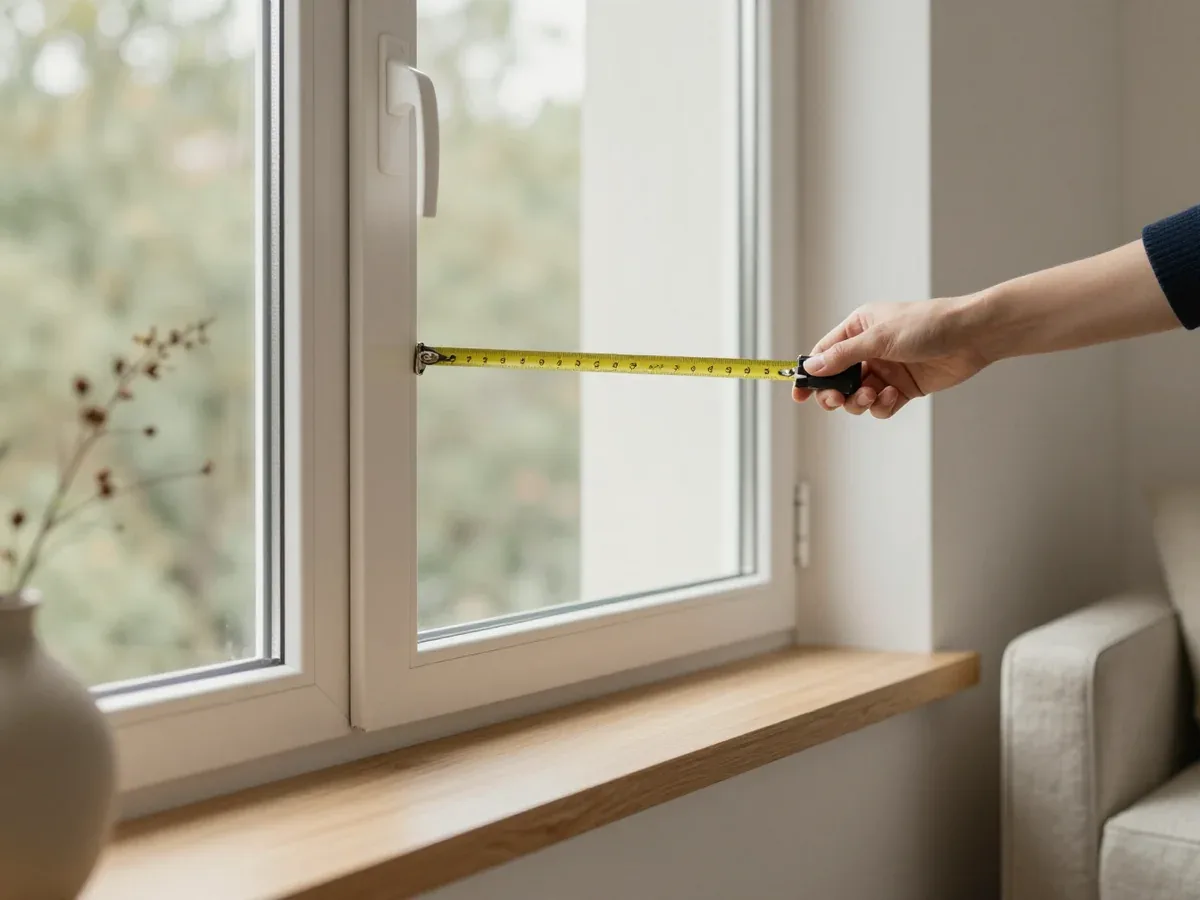
Measuring and consultation are free, the measurer comes at a time that suits you, takes the sizes and helps choose the seal and fixings, and the price is fixed in the order after that visit. The same visit covers the perimeter, the slope and the hardware, so the scope you agree reflects what the flat actually needs rather than a guess. We note the profile type — KBE, Rehau, VEKA or Provedal — because the seal and the fixings differ between them. Because the price is locked in after measuring rather than estimated over the phone, the scope agreed on site is what you pay for, and no additions appear once the fitters have started.
Not every draught starts at the sash. Damp on the slope or a cold band around the frame points to the junction between the unit and wall, which is a separate job.
Moisture that gathers on the slope or in a line around the frame, rather than on the glass, usually means the perimeter is letting chilled air reach the inner wall. The damp follows the outline of the opening, so the band sits at the edge and the slope feels colder than the plaster beside it. On frosty nights that same line can turn white with ice while the pane stays clear. An even misting across the whole glass tells a different story — it points to the glass unit or to a loose seal against the sash, not to the wall. Residents in coastal districts often misread the two. A cold bridge shows up as a damp strip tracing the outline, a pattern clearly unlike the uniform misting of a failing pane.
At the perimeter we check the junction between frame and wall and close the gap so chilled air no longer reaches the inner slope. The work covers the space behind the opening, the foam and vapour barrier under the finish, and the trim that closes the junction from the room side. We open the sash first and confirm the gasket and the hardware, then move outward to the wall, because chasing the outer edge while a sash still leaks wastes the effort. Sealing before the sash is adjusted can mask a draught that actually comes from the gasket, so we close the gap only once the sash is confirmed tight. A slope that stays dry through the first cold snap is the practical proof the work is done.
Cold air at a window comes from a limited set of places, and the right fix depends on which one you find. Use the checks below to decide what to order before any parts are bought.
Diagnostics, materials, condensation, freezing
Konstantin Selenenkovsenior mosquito screen specialist, 10 years in the tradeOnline · replies within 5 minutes
Ask a questionRun your hand along the perimeter of the closed sash: if you feel airflow at the seal, the sash is leaking. If the cold comes from the reveals or the windowsill, the problem is in the installation seam or the insulation of the opening.
For Aktau's windy and dusty climate, EPDM or TPE seals with high elasticity and abrasion resistance are suitable. They hold the compression better and keep sand out, but the specific type depends on the window profile.
Yes, often it is enough to adjust the sashes, replace the seal and seal the seams. Double glazing needs replacing if it lets cold through itself — for example, if it has lost its seal or is too thin for your climate.
First, check where the moisture appears: at the edges or in the centre. If it is at the edges, insulation of the rebate and seams may help; if the centre fogs up, the double glazing itself is the issue.
It is realistic if the frame and sashes are intact: the seal is replaced, the rebate and seams are tightened, and extra compression is added if needed. When the wood has rotted or the geometry is off, insulation will not help and the window is better replaced.
Freezing of the reveal is usually caused by a cold installation seam, not the sash. Insulation includes sealing the seam and insulating the reveal, so the wall around the window stops letting cold inside.
Thank you. We will call you back within 10 minutes!
Your order number is on the receipt or in the SMS. Choose where to leave your review.
Write a review on WhatsApp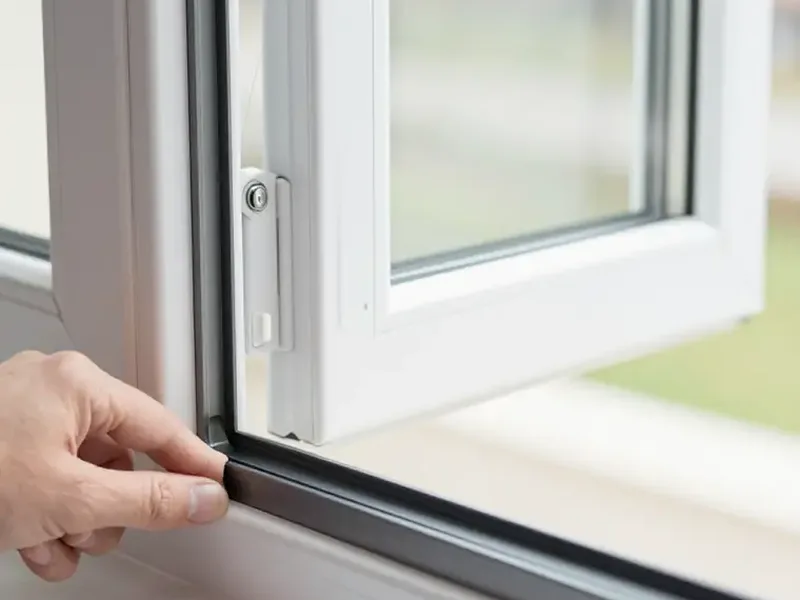 Seal replacement
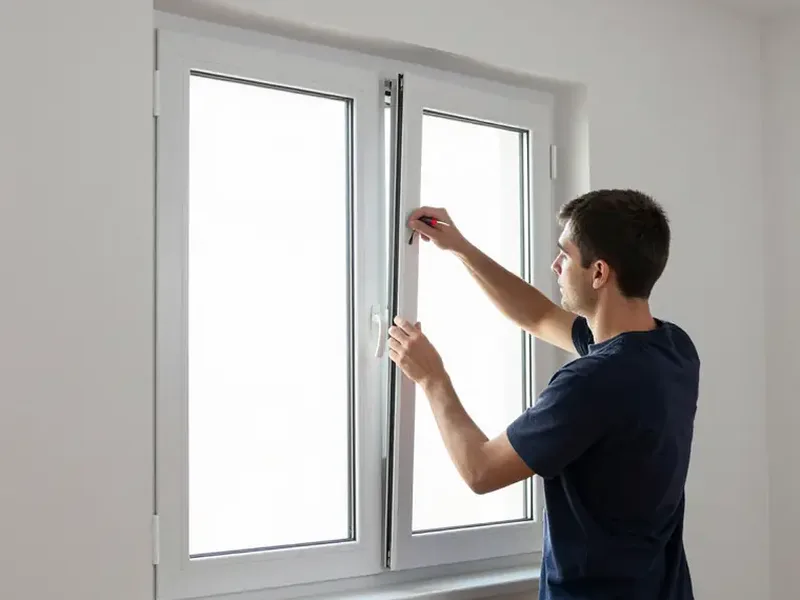 Window adjustment
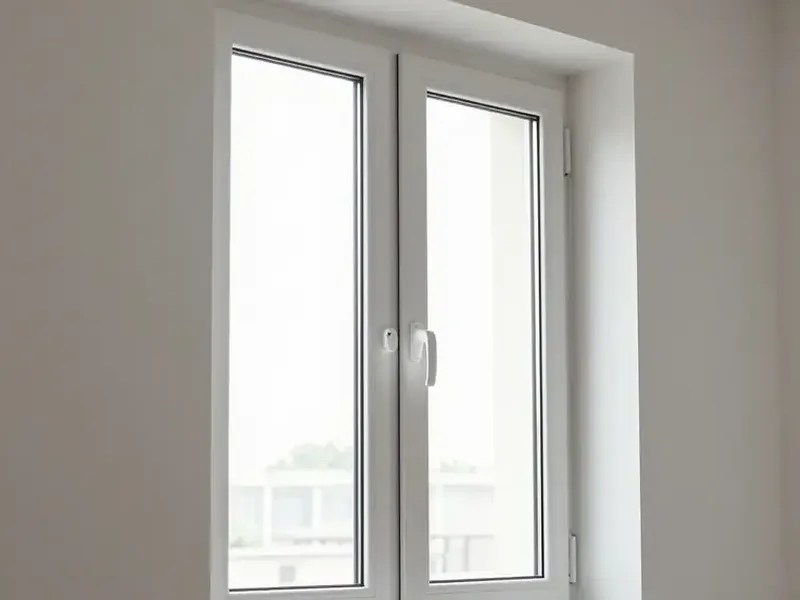 Reveal finishing
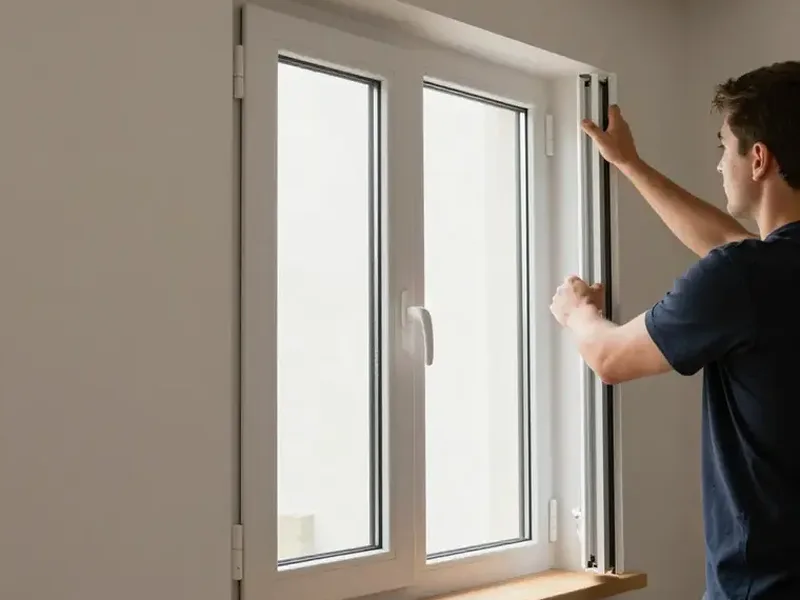 PVC window repair
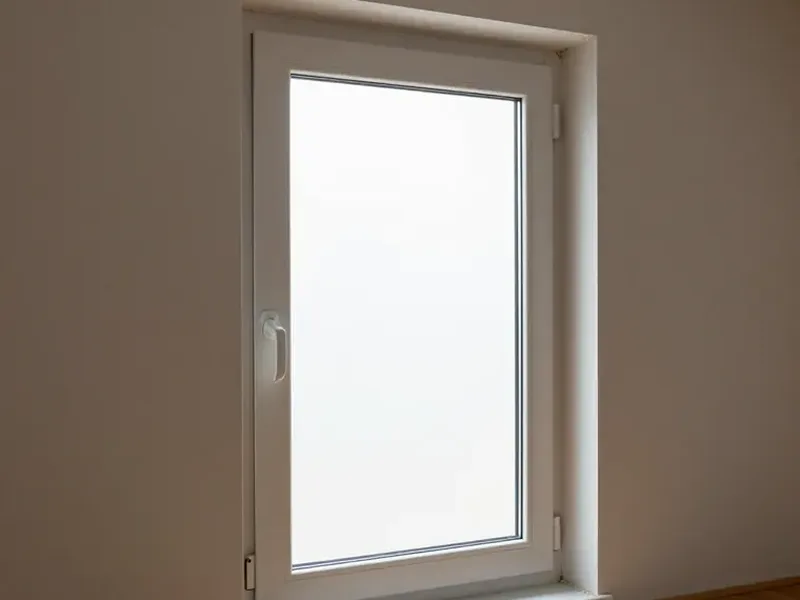 Window replacement
