




Good to know
Roof Window Mosquito Screens in Aktau

Senior mosquito screen specialist at moskitnyesetki.kz
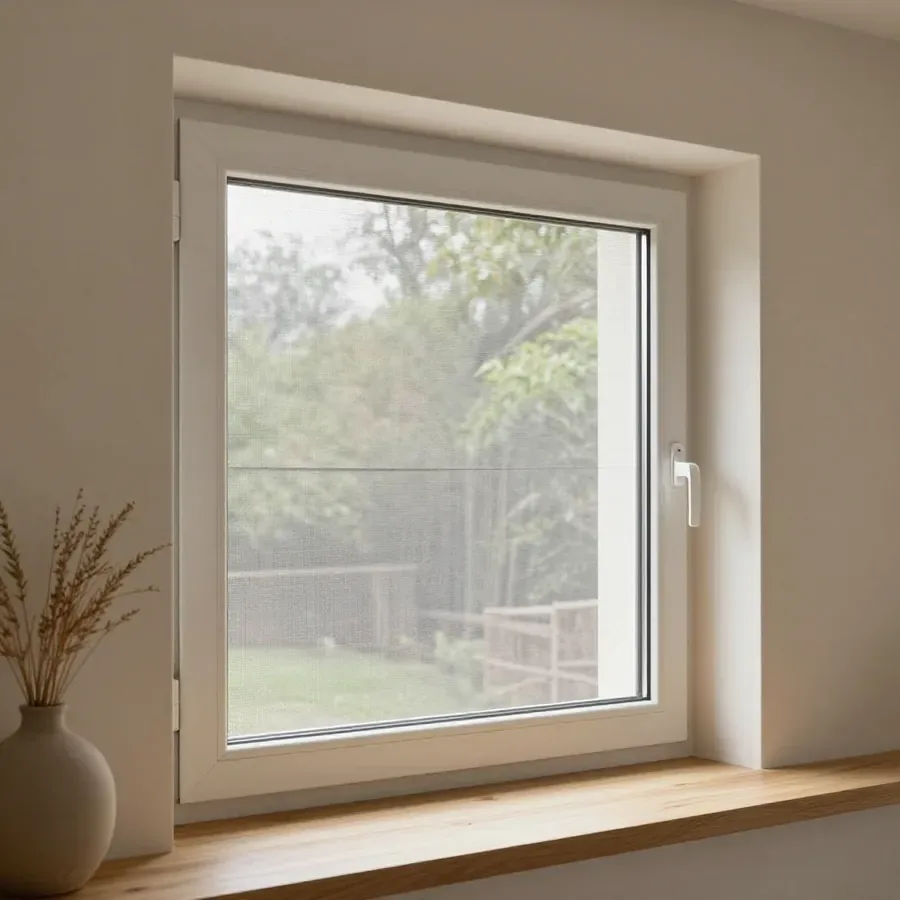
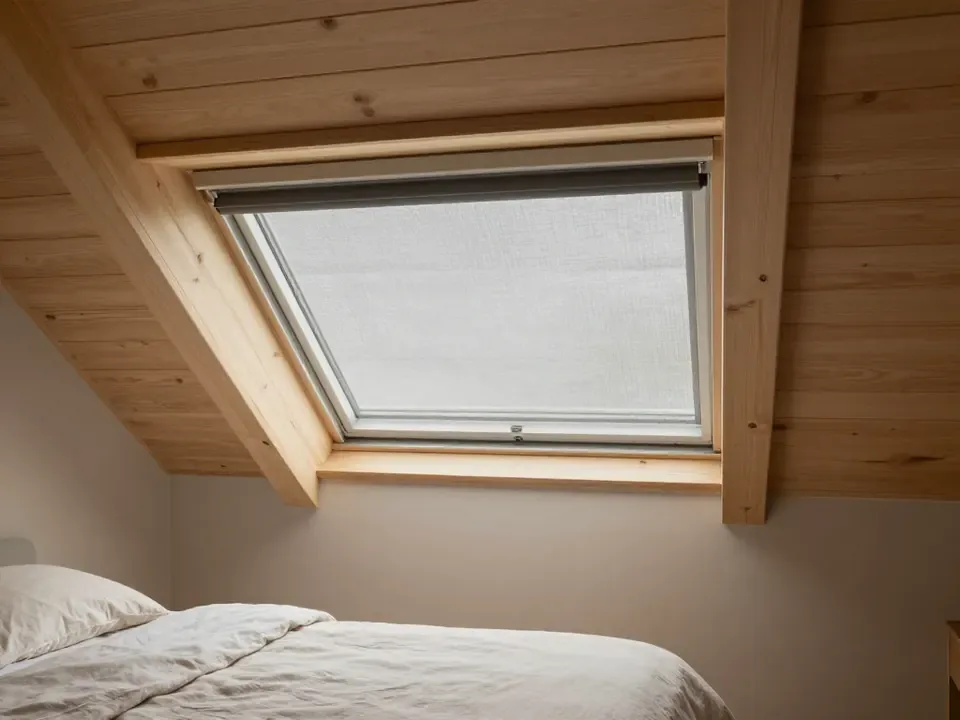
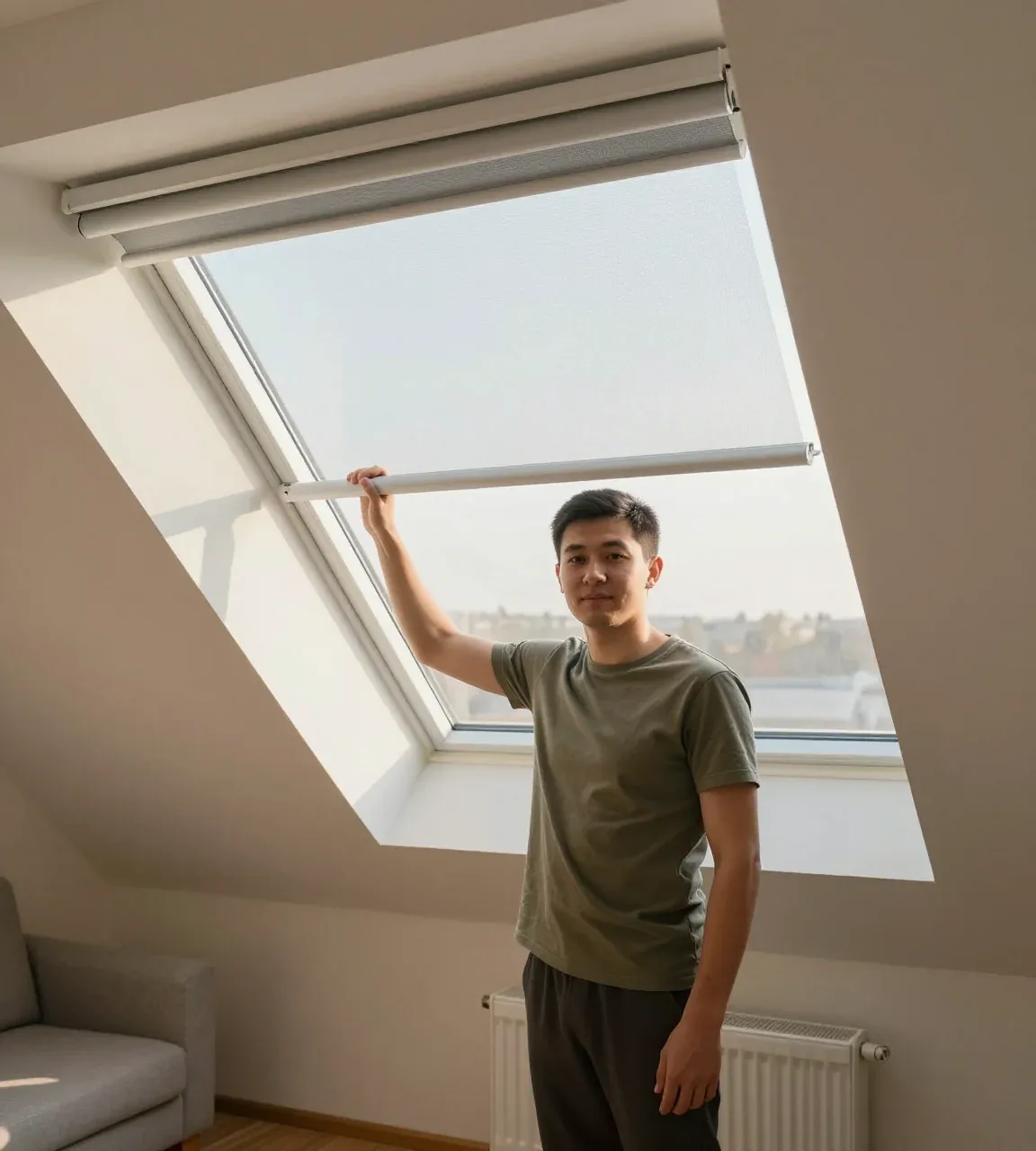
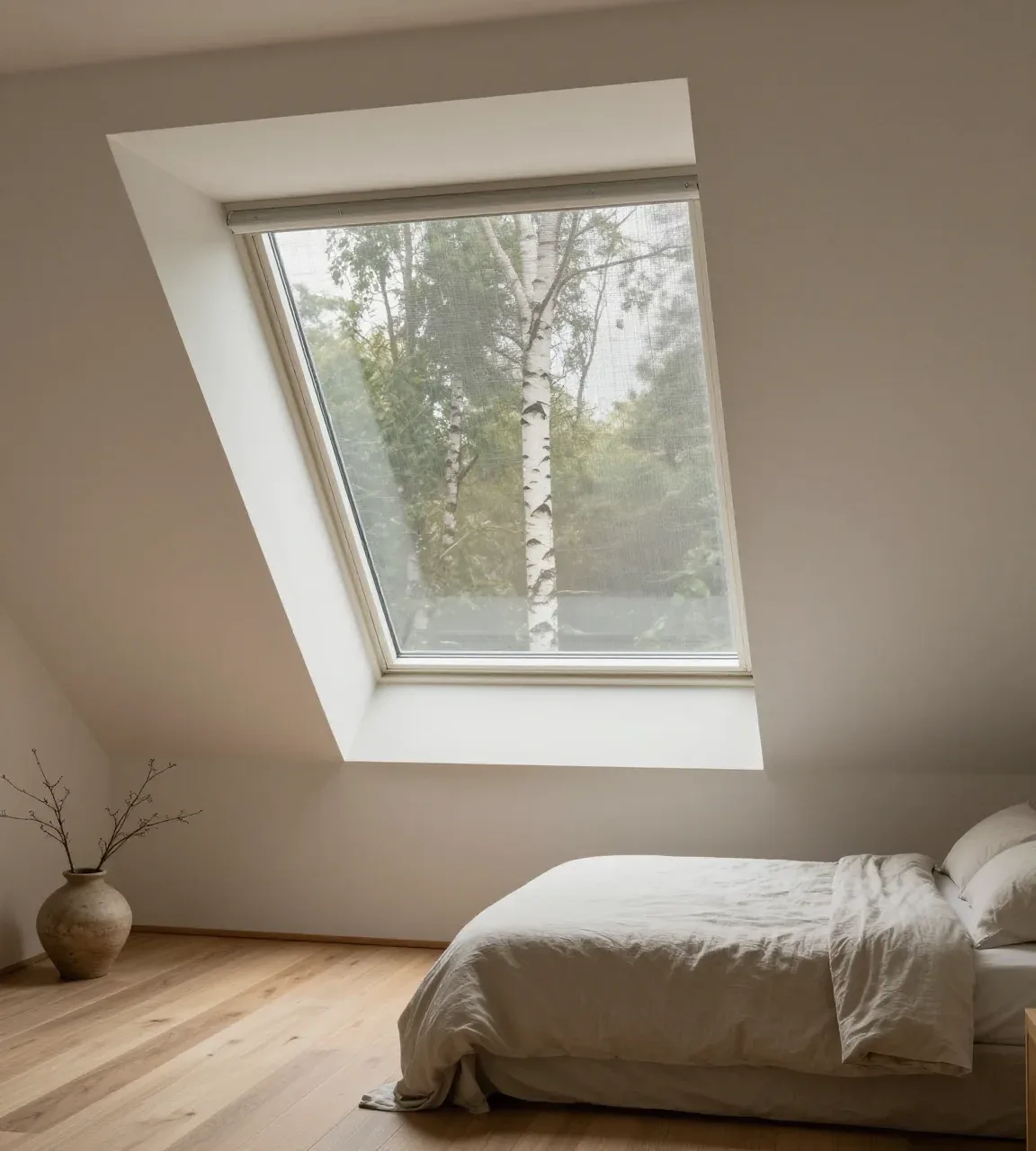
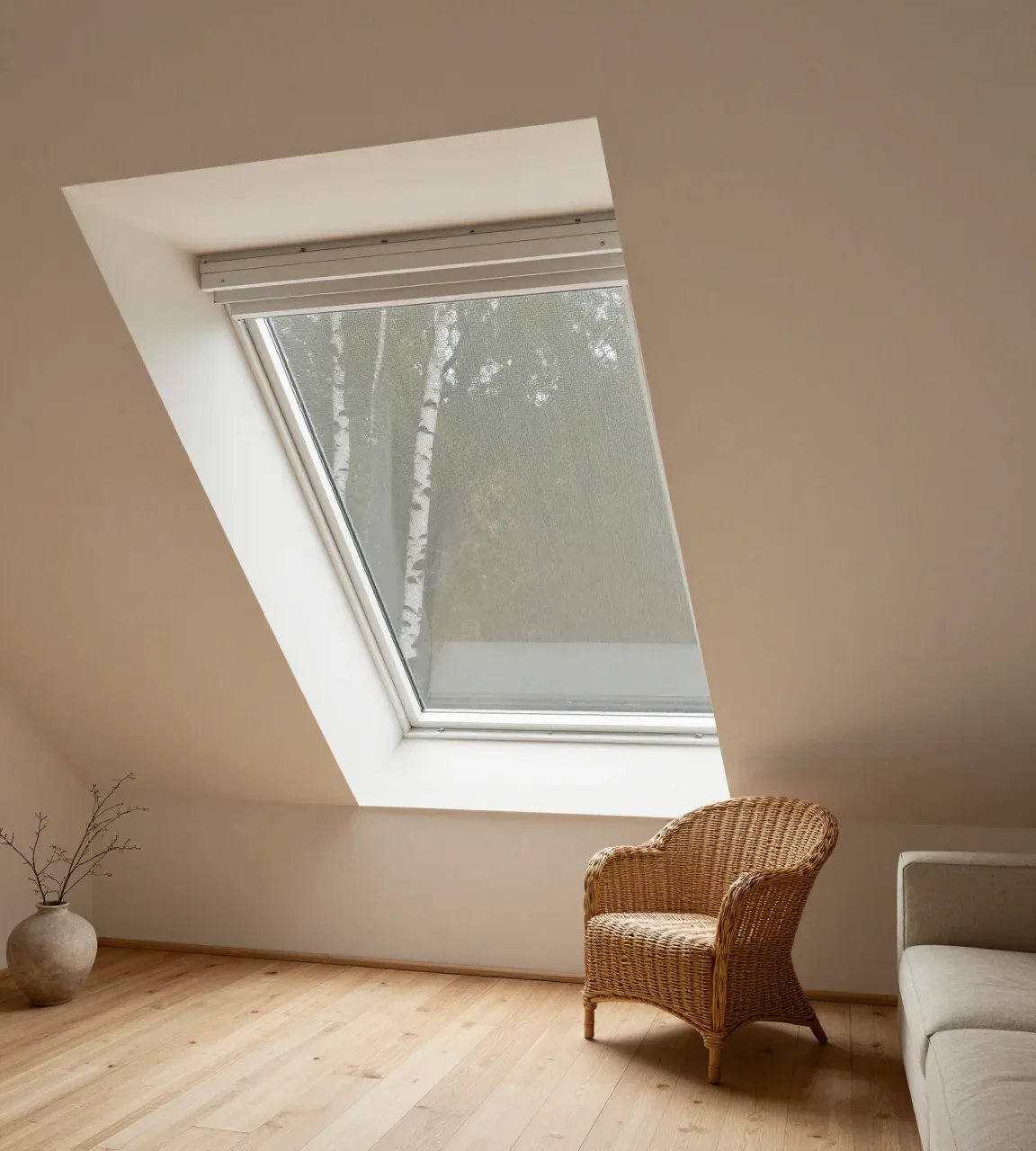
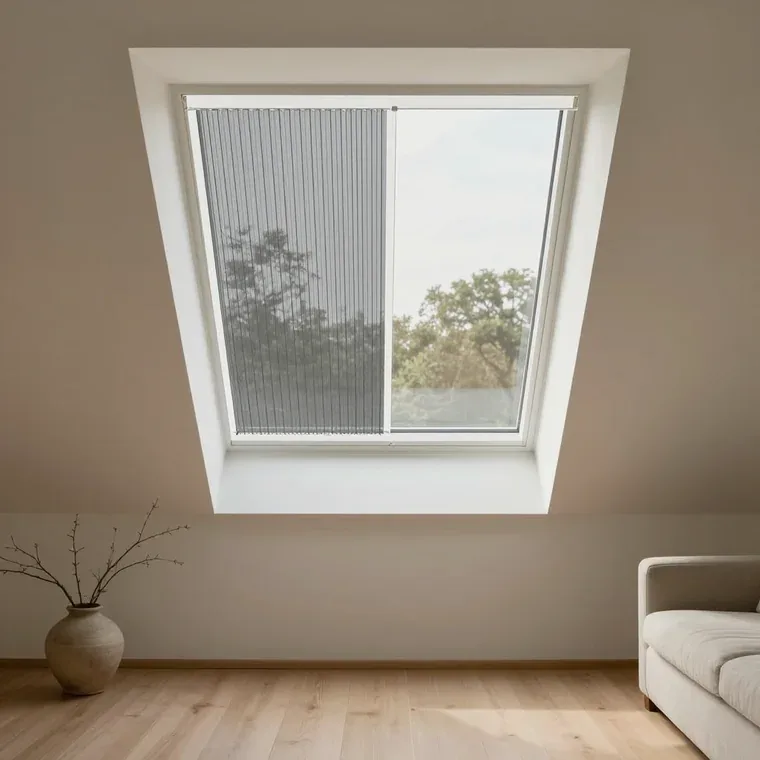
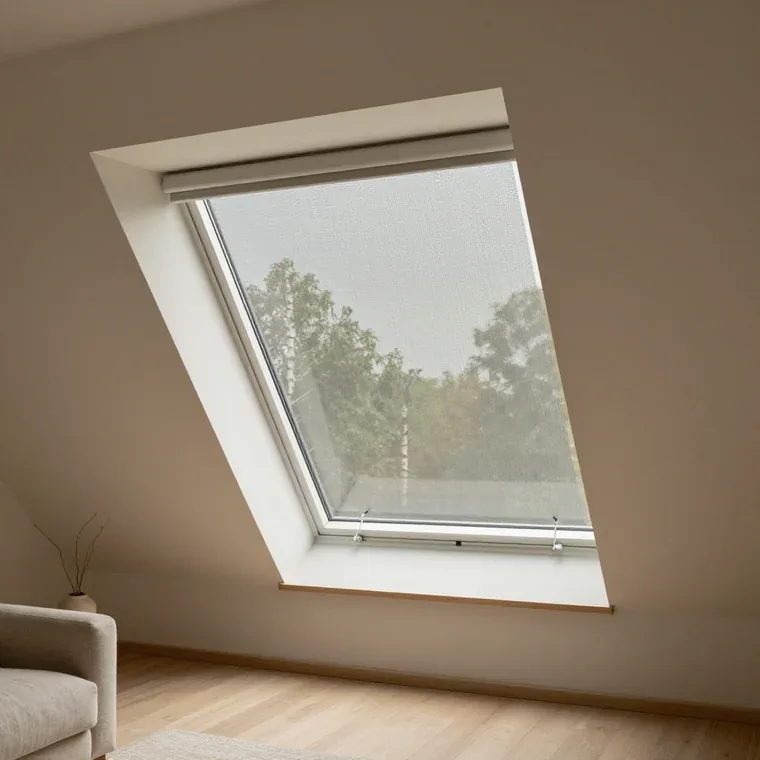
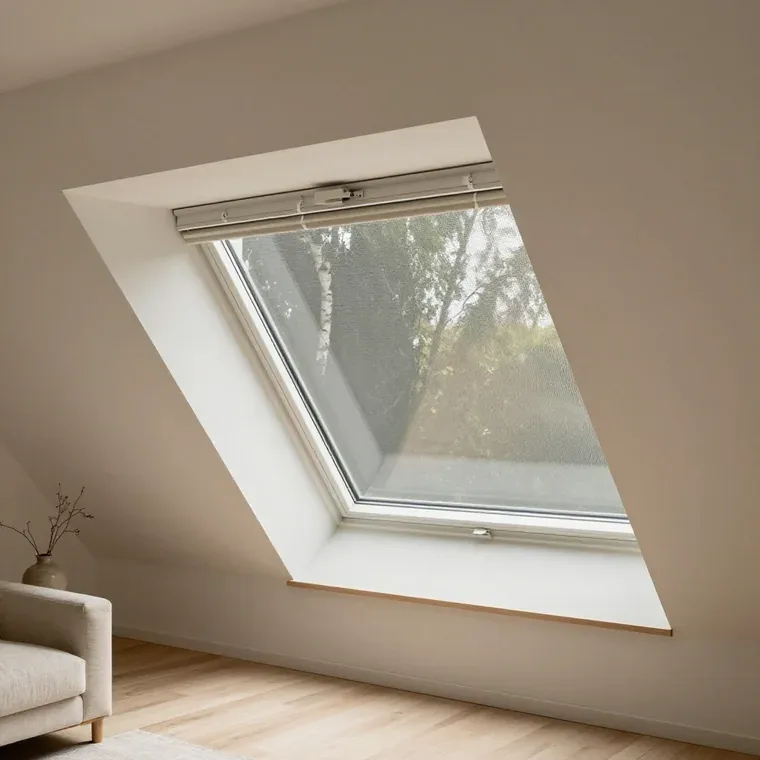
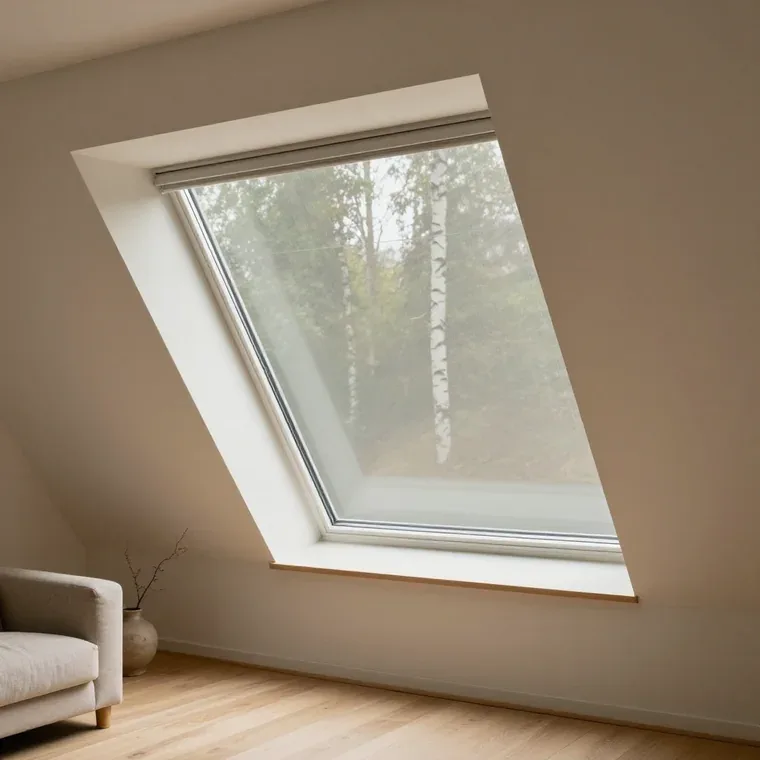
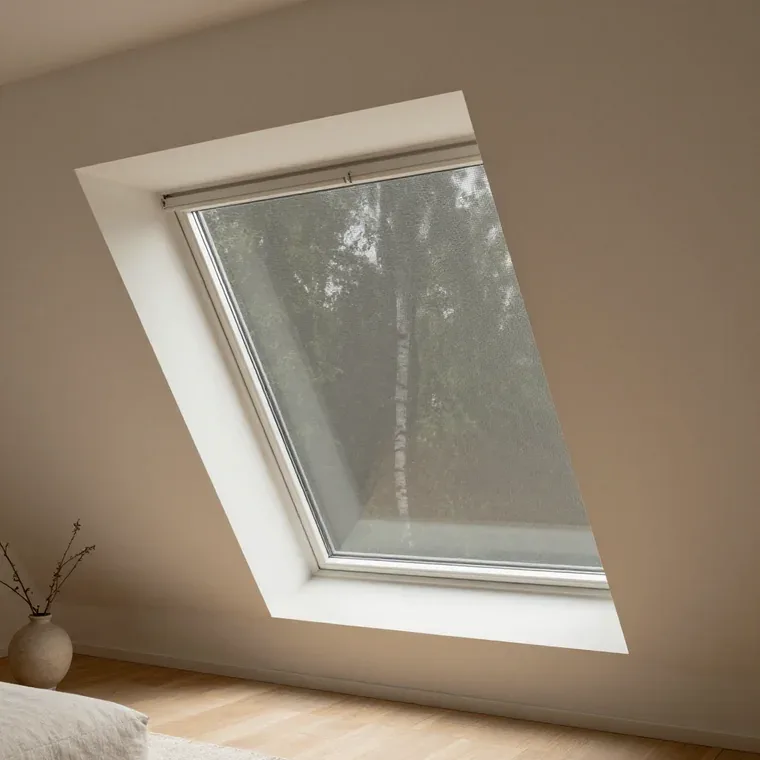
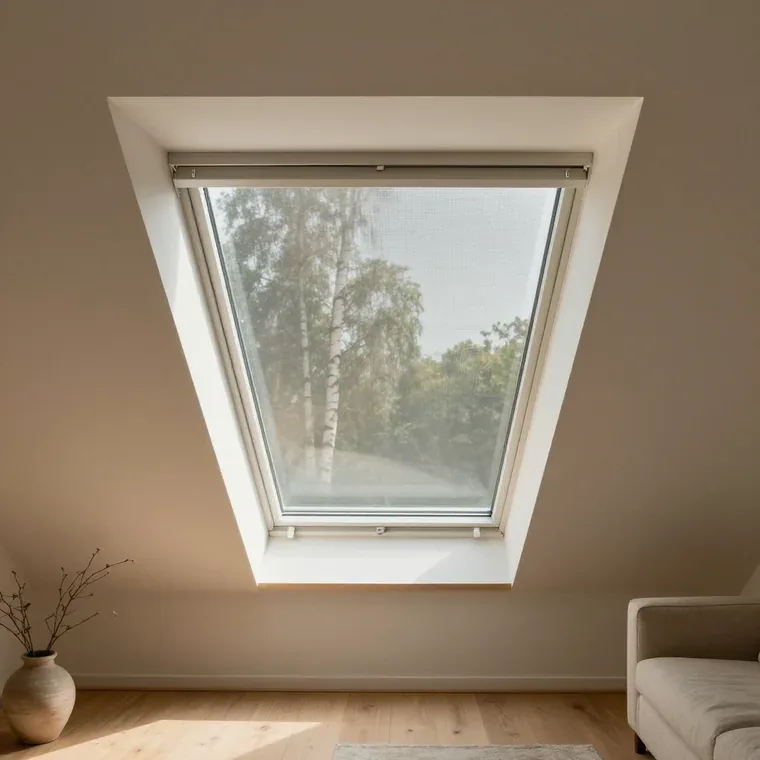
We make and fit roof window mosquito screens in Aktau, choosing a pleated or roller system to match how your sloped sash opens and fixing it to the inner reveal. Measuring and consultation are free, a pleated screen is ready in 40–60 minutes, and every screen carries a 1-year warranty.
Why roof window mosquito screens slip on a sloped roof window frame
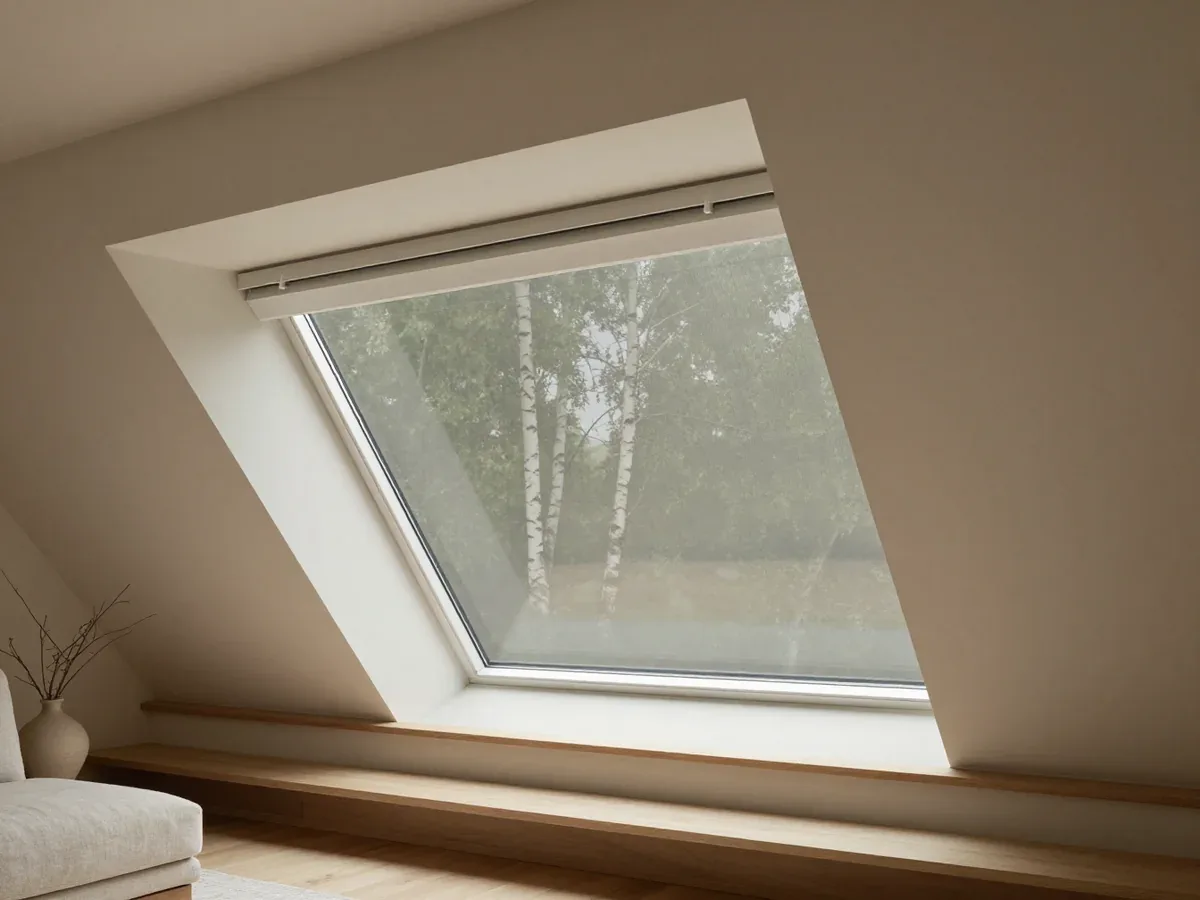
A sloped plane and a leaf swinging on a central axis change how a mosquito barrier must hold; rigid logic does not survive, so settle this before choosing a system.
What Happens to a Frame Screen on a Tilted Sash
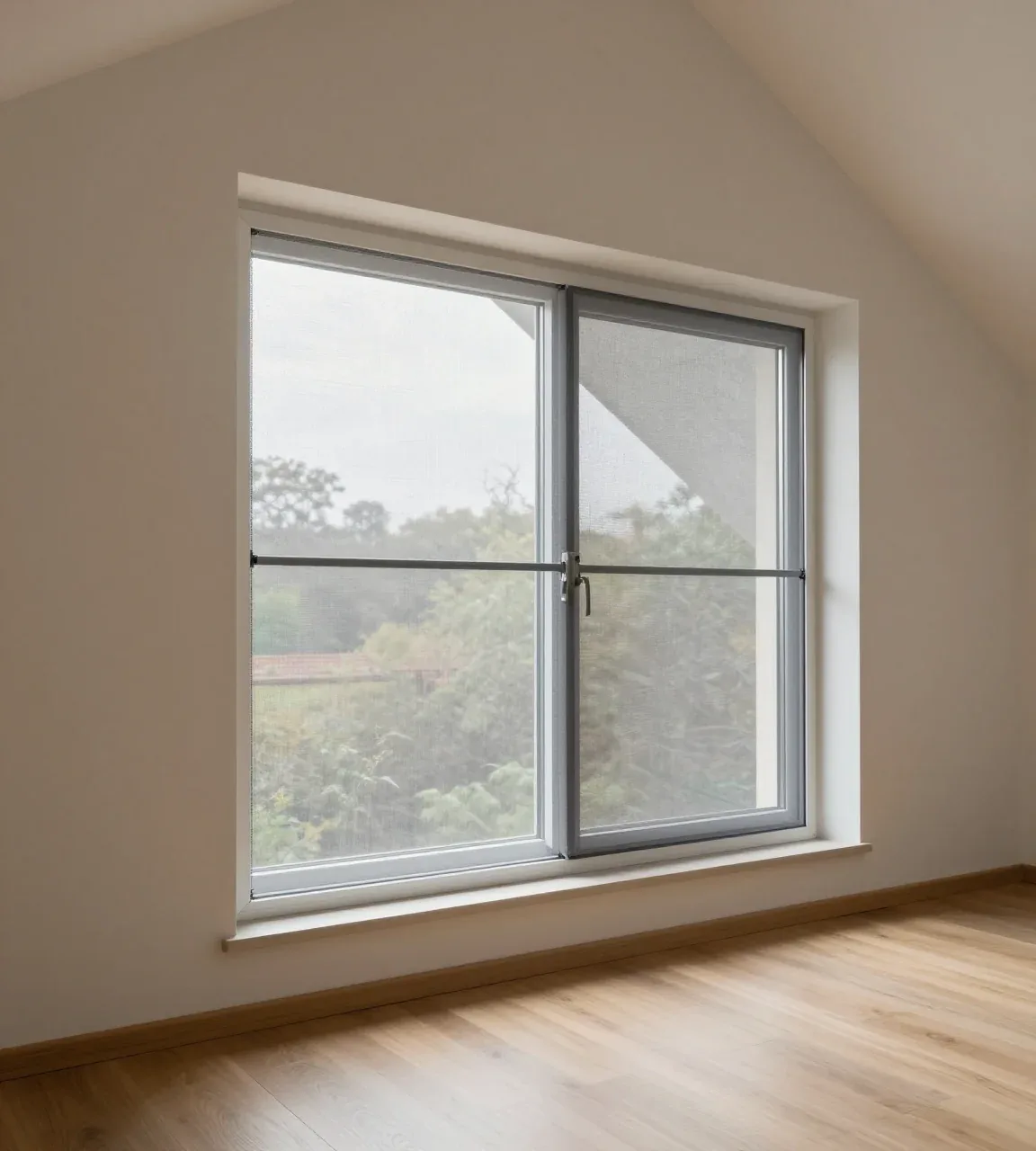
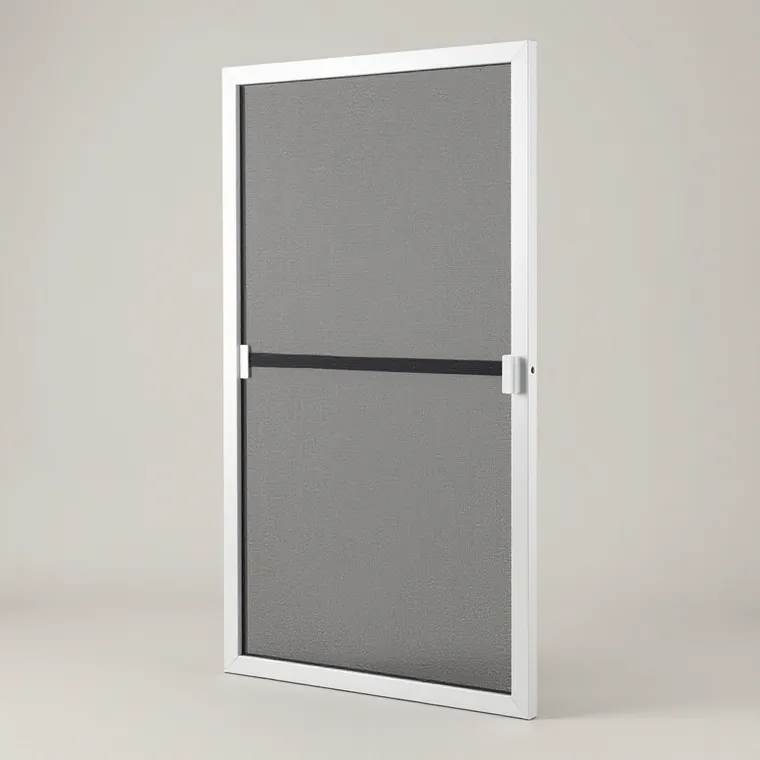
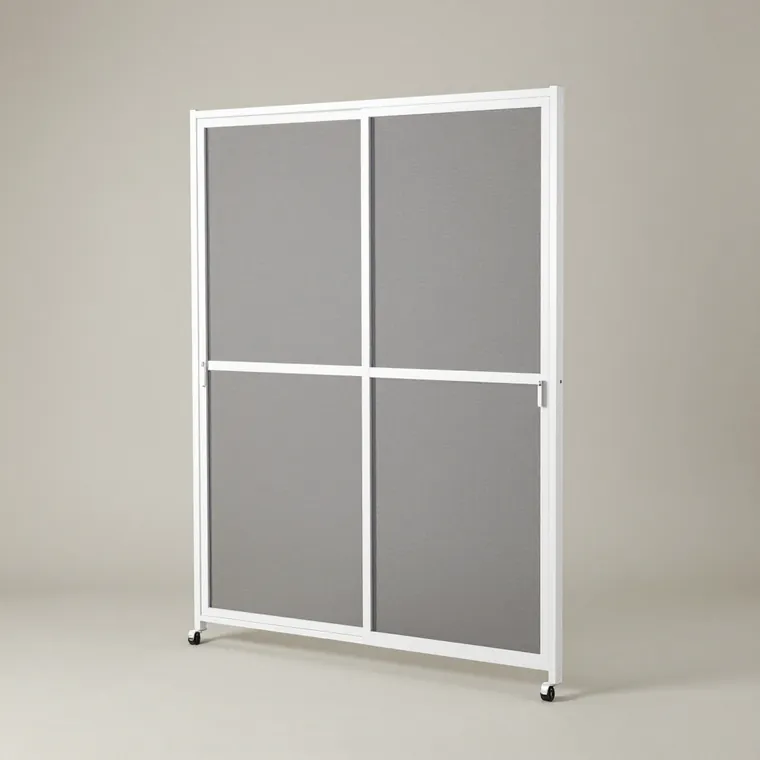
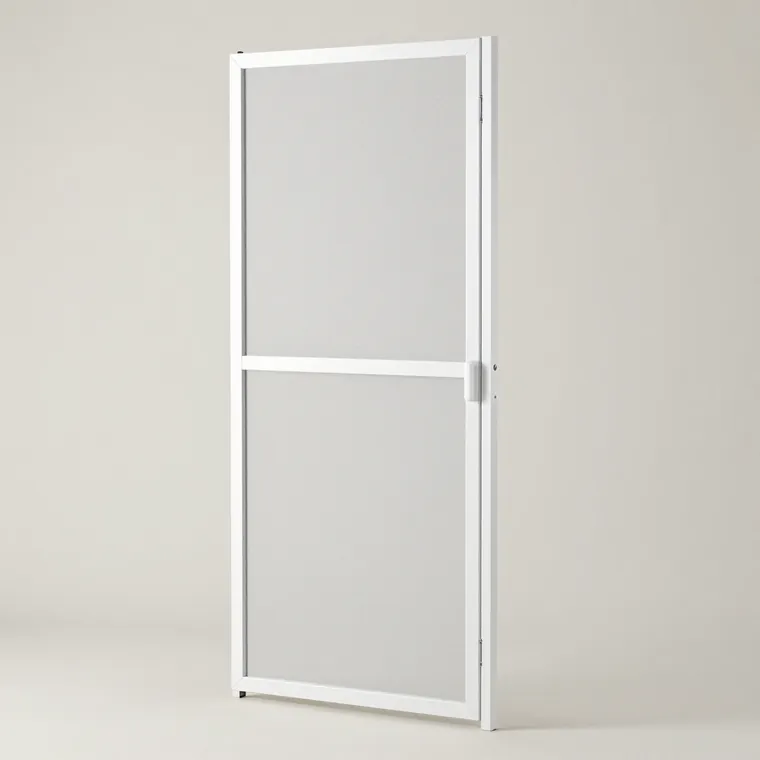
- No vertical plane: rigid units need a flat upright window, so a tilted roof window offers no straight surface.
- Nothing to hook onto: the narrow, angled outer profile leaves standard brackets no square edge to grip.
- Sagging canvas: without tension across the aperture, the mesh hangs loose and pulls away.
- Gap at the bottom: gravity drags the free lower edge outward, so insects enter at the base.
- Late discovery: the aperture looks closed in daylight, and people spot the gap only after the first warm evening.
How the Sash Opening Type Decides the System
We match the screen to how the leaf pivots, because a centre-pivot window sweeps an arc a fixed frame cannot follow. A top-hung unit turns on a different line and leaves a different clearance, so two windows of the same width can call for two different builds. The measurer checks the pivot axis and reveal depth on site, notes where the hinge line sits, and only then picks the fixings — Z-brackets, pins or magnets — against the actual profile. On a sloped window the handle's arc matters as much as size: a unit that clears the frame can still foul the moving part halfway through opening. This check takes minutes and saves a return visit, so ask for the pivot line to be measured.
Pleated or Roller Roof Window Mosquito Screens for a Sloped Opening
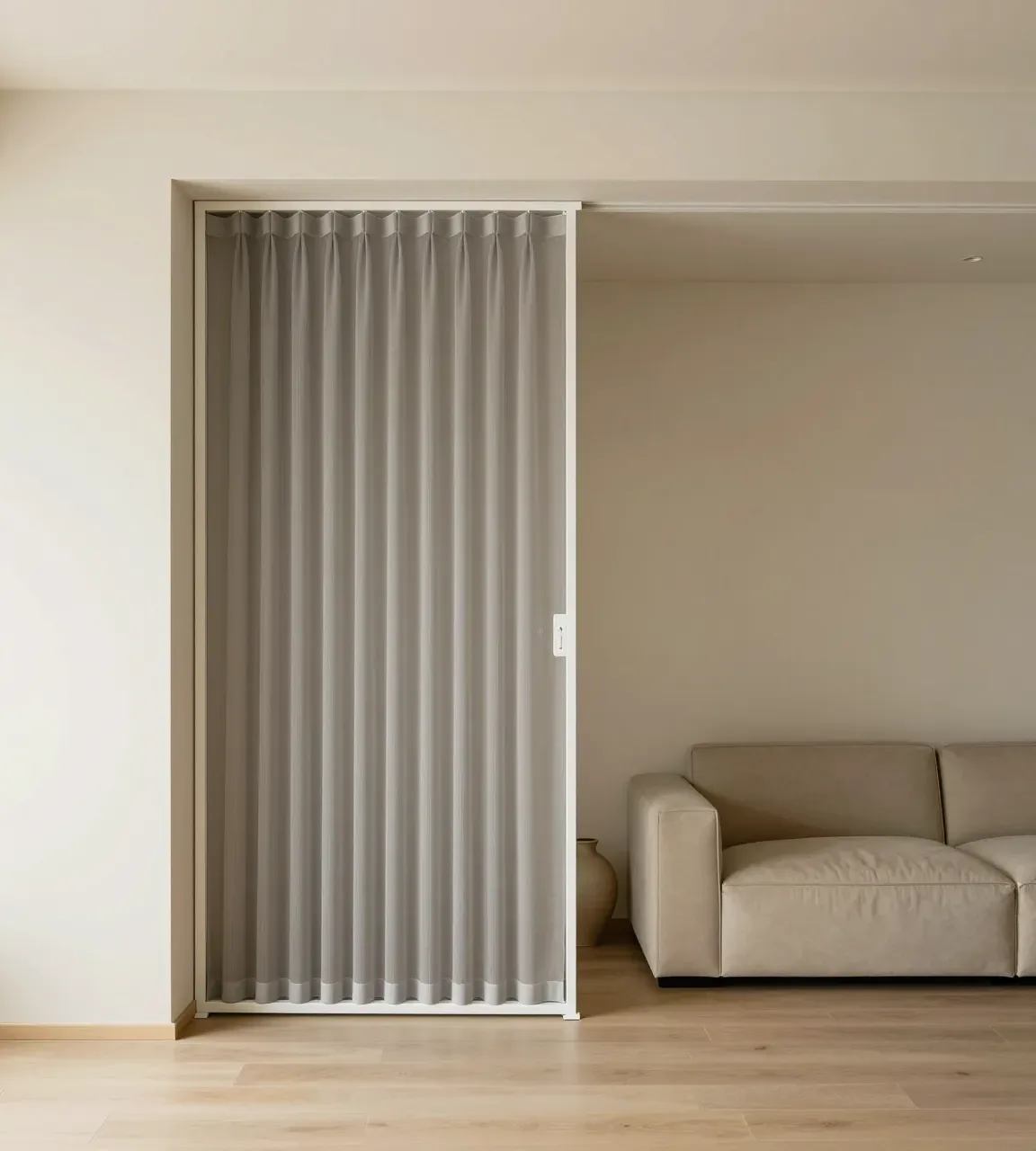
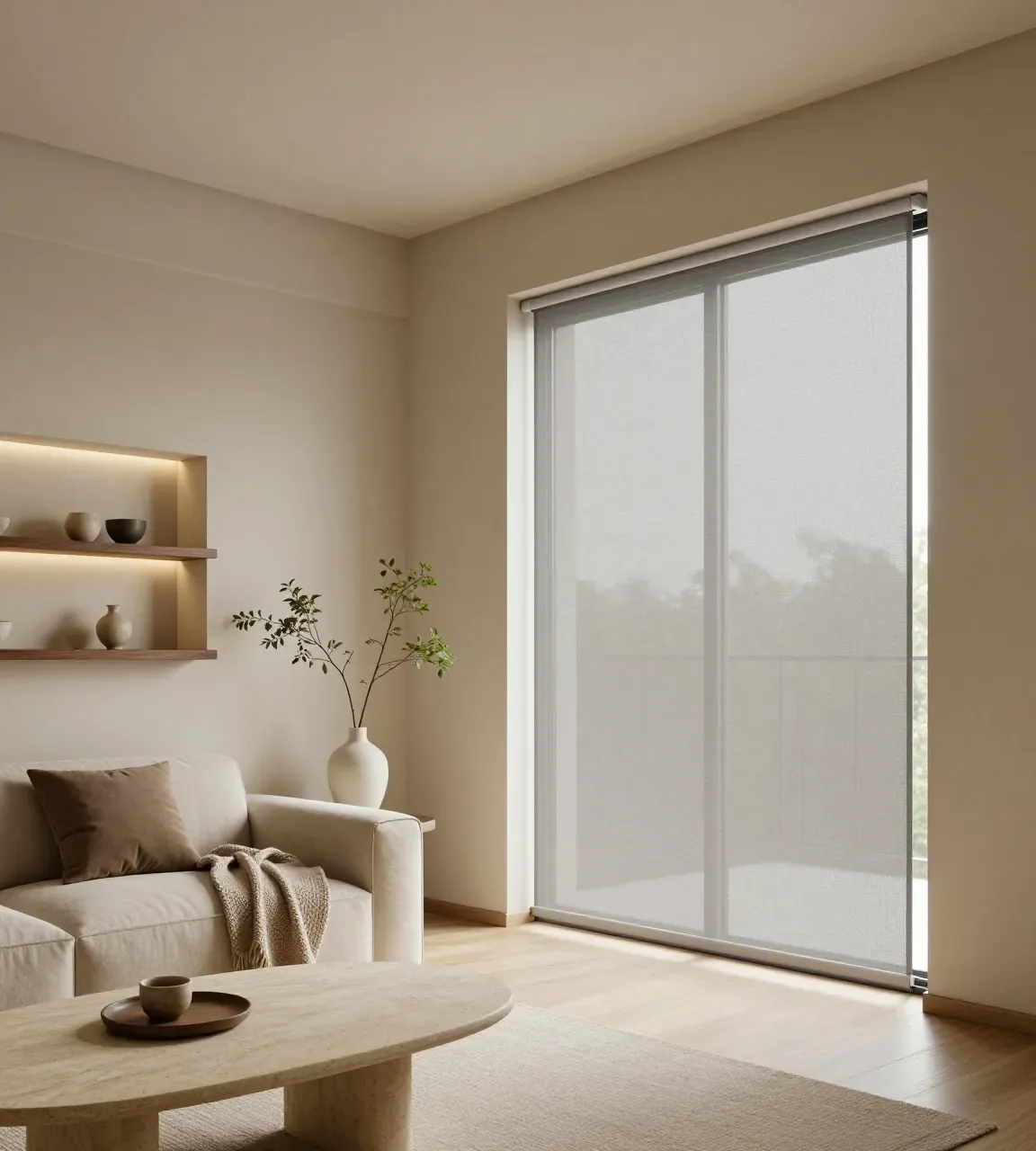
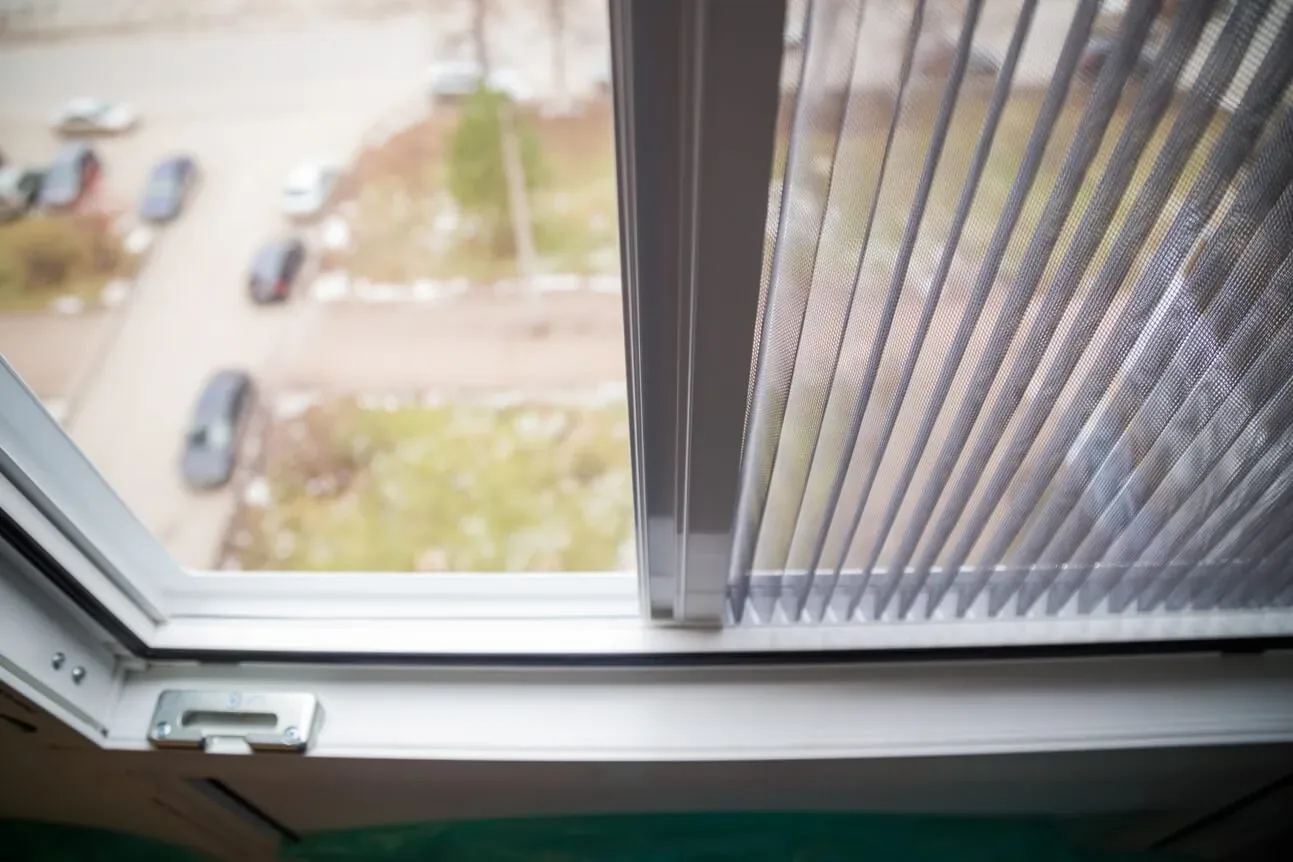
Two systems handle a sloped opening and behave differently when you open the sash. They differ in how the fabric gathers and whether it holds a midway point.
How Pleated and Roller Systems Differ in Daily Use
| System | How it works | Ventilation position | Best for |
|---|---|---|---|
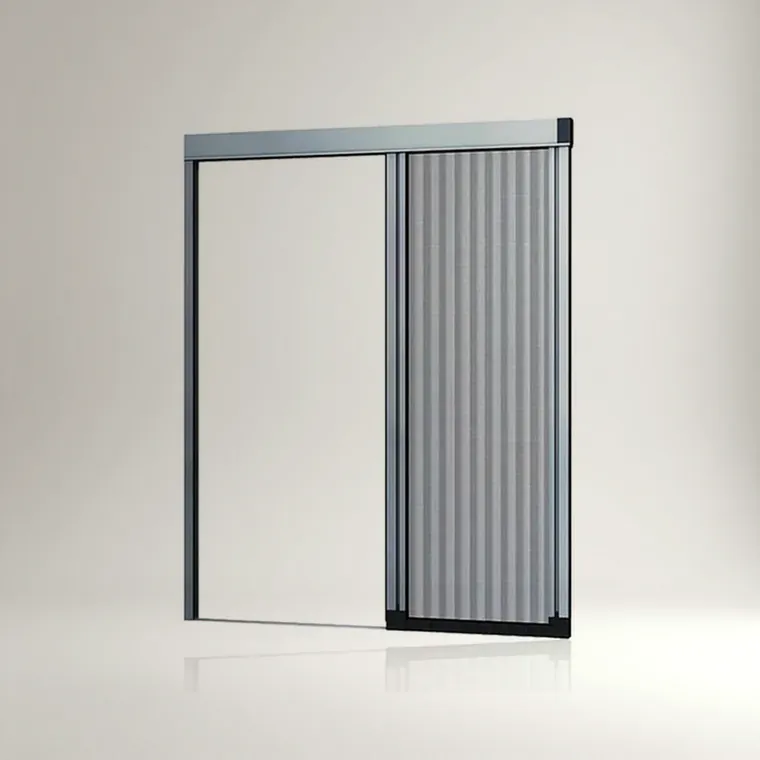
| Pleated | Folds into an accordion | Stops halfway | Frequently opened roof windows |
| Roller | Winds onto a spring cassette | Fully open or closed | Sashes opened rarely |
| Frame | Rigid fixed panel | None | Vertical units only |
Sloped Windows Beyond the Attic
The same pleated and roller systems work on tilted glazing in loggias, gazebos and verandas, not only on attic panes. We fit them on plastic, wooden and aluminium units, including loggia panes and gazebo frames where the sash tilts rather than swings. The accordion model holds a midway point, so you vent the space without taking it off. For outdoor glazing we suggest the anti-dust canvas, because that side collects more grit and wind. If you need roof window mosquito screens in Aktau for a tilted sash, the measurer will pick the right canvas and fixings on site. A tighter mesh keeps fine dust out, and a firmer cassette fixing stops the fabric from flapping in a gust.
Fixing Roof Window Mosquito Screens to the Inner Reveal
On a sloped window the fixing decides whether the mesh stays flat for years or works loose by midsummer. We cover placement, what holds it, and sagging fabric.
Reveal or Frame and Which Fasteners We Use
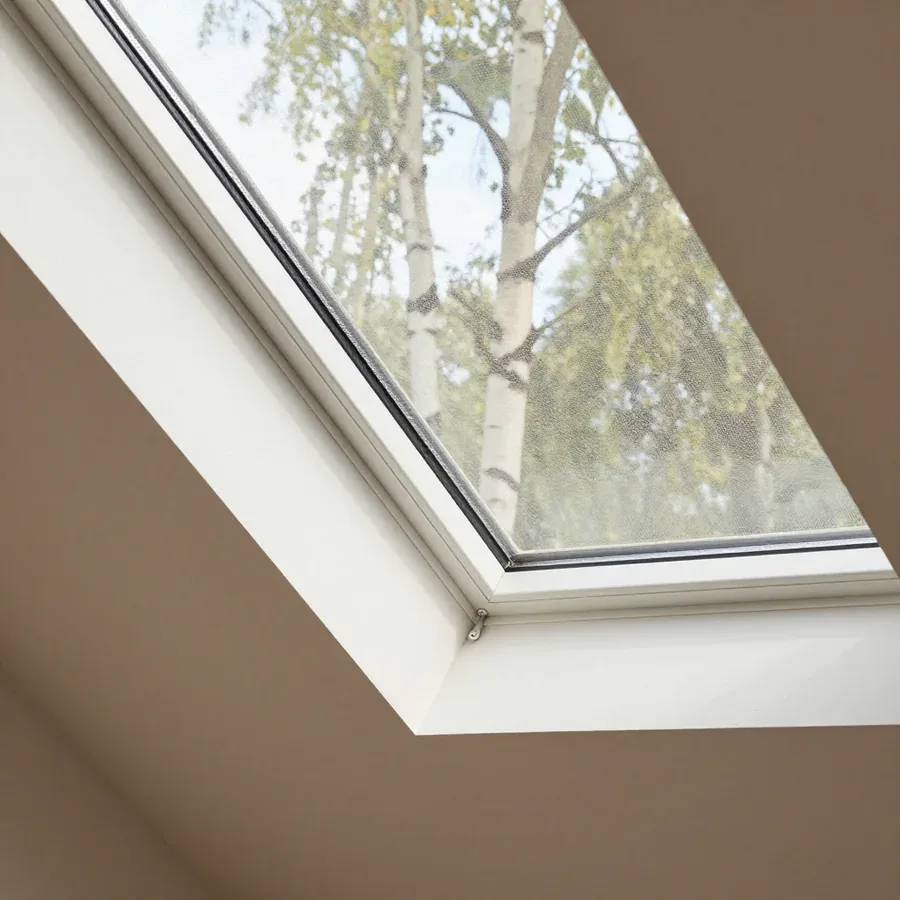
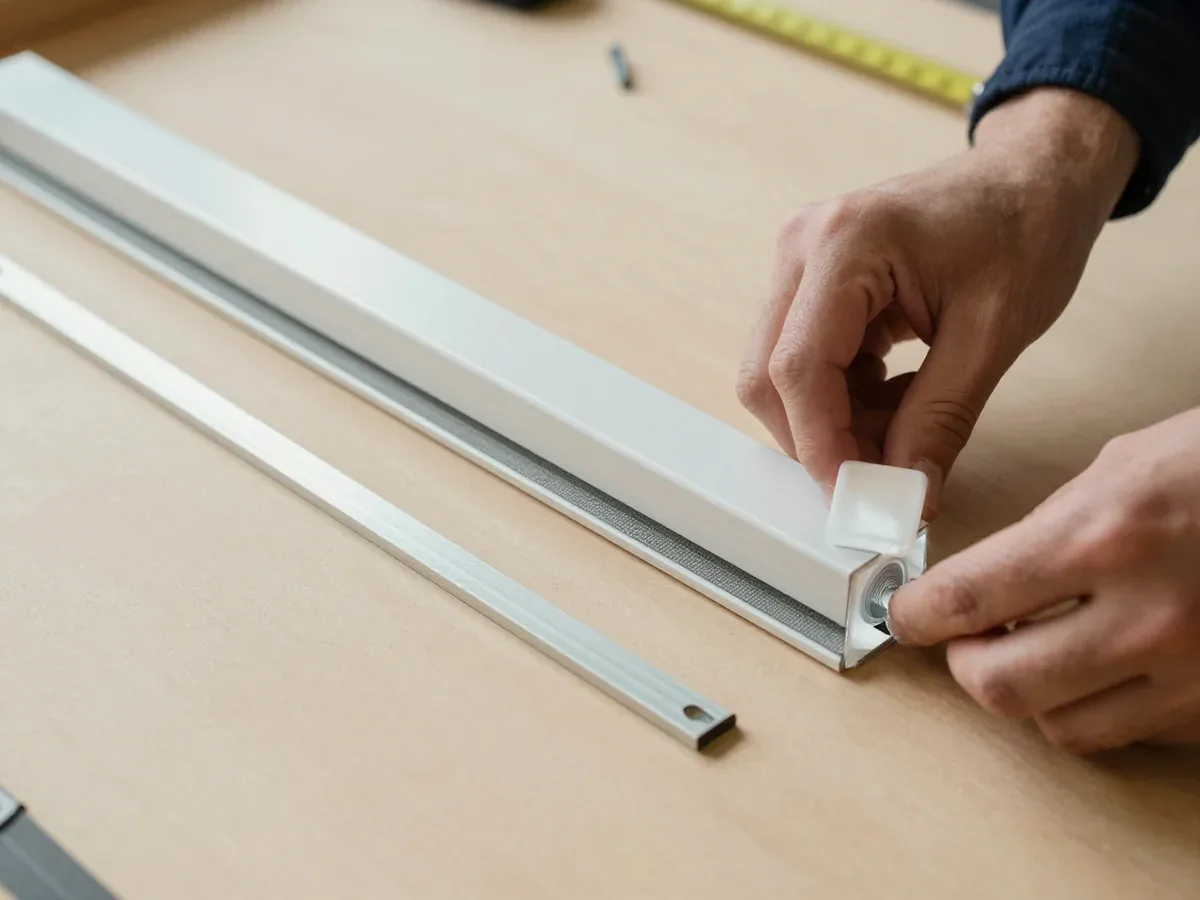
We fix the cassette to the inner reveal rather than drilling the sash frame, so the window mechanism stays untouched and the mesh follows the slope cleanly. That reveal gives a flat, load-bearing surface behind the moving part, which matters on a tilted window where a frame-mounted unit would catch the handle and fight the hinge. Mounting it there also keeps the fabric out of direct sun, so the cord ages more slowly. The fastener choice depends on the window profile and the floor, so the measurer picks Z-brackets, plunger pins or magnets on site. Upper floors with wider reveals usually take Z-brackets, while shallow ones suit plunger pins.
Opening the Window and Handling a Sagging Mesh
You can open and close the sash with the screen in place, and if the mesh starts to sag we re-tension it or replace the worn cord and fastenings. The cassette sits on the reveal, not on the moving part, so the handle swings clear and nothing has to be unclipped for daily ventilation. Most sagging comes from a stretched cord or a fastener that worked loose over a hot season, so a quick service visit usually restores the unit. We repair mosquito screens and change fastenings across the city, and a re-tensioned fabric often outlasts a rushed new build. Check the lower corners after the first hot month: a loose pin shows up there first, and tightening it early keeps the whole frame square.
Choosing the Mesh for Roof Window Mosquito Screens in a Dusty Climate
The canvas is picked for the job, not for taste. On a sloped roof window facing sun and wind-blown dust, demands on cell size and strength run higher than on a vertical wall.
Which Canvas Suits Which Problem
| Canvas | What it handles | Key property |
|---|---|---|
| Fiberglass | Everyday use | Resists fire and temperature swings |
| Ultravue | More daylight | 25% more light and air |
| Pet Screen | Cats and dogs | Several times stronger than standard |
| Anti-dust | Fine dust | Tight weave |
| Poll-Tex | Pollen | 0.25×1 mm cell |
Matching the Frame Colour and the Pet-Proof Option
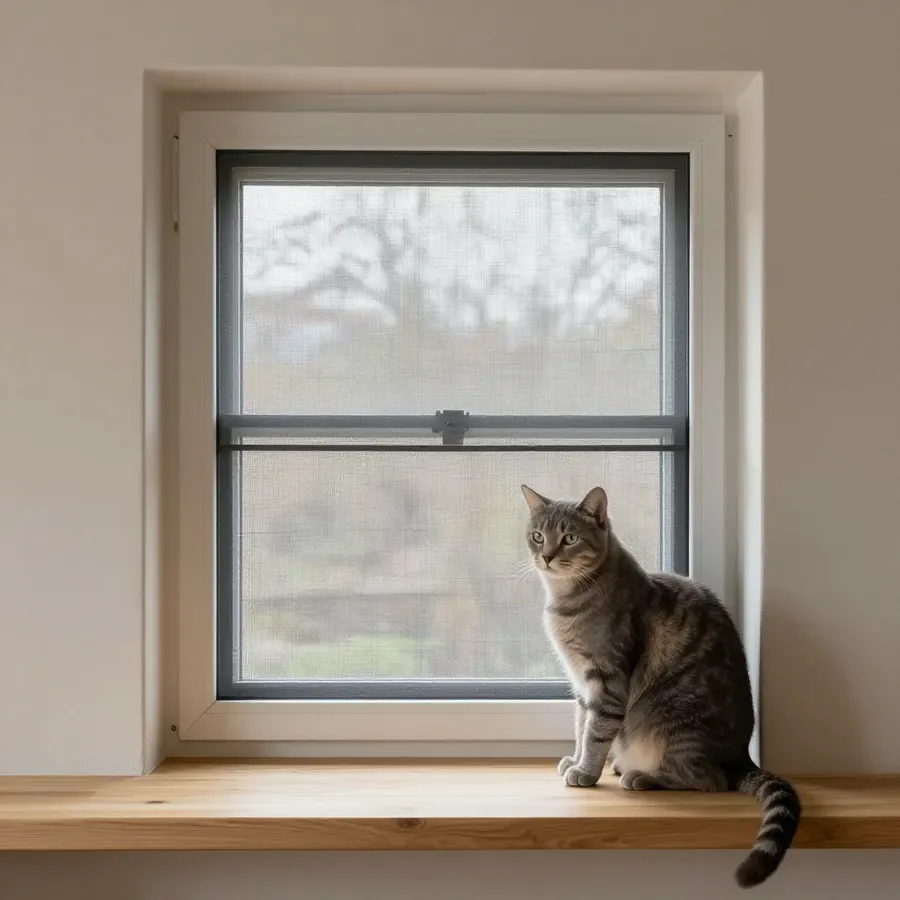
We paint the screen frame any colour to match your window, and the Pet Screen canvas holds up where a cat leans against the mesh. The frame is powder-coated to the shade of your profile, so the cassette reads as part of the window rather than an add-on. Pet Screen uses vinyl threads woven several times stronger than standard canvas, which keeps a claw from opening a tear after a season of a cat pushing at the sloped sash. A colour-matched frame matters more on a sloped window because the profile sits in the sightline, so a mismatched cassette is far more visible than on a vertical wall.
Measuring, Making and Guaranteeing Roof Window Mosquito Screens in Aktau
From the first call to a finished product the route is short. Below is what happens at the measure, how long production takes and what the warranty covers.
The Free Measure and How Fast the Screen Is Made
Measuring and consultation are free, the measurer comes at a time that suits you, and a pleated model is made in 40–60 minutes while a framed one is ready in 10–15 minutes. On the visit the specialist takes the exact sizes of the opening, notes the profile of the sloping sash and helps you pick the design, the mesh and the fixings. He also records the reveal depth and the pivot line, since those two figures decide where the frame sits and how the sash swings past it. We paint the frame any colour to match your windows, so the product reads as part of the window rather than an add-on. Because those numbers are captured on the first visit, the fitter does not re-drill on installation day.
Warranty, Payment and Ordering
Every mosquito screen carries a 1-year warranty, and you pay after the work is done by cash, card or Kaspi. The price is fixed in the order once measuring is complete, so the figure you agree to at that point is the figure you settle at the end. Delivery and fitting cover windows and doors, and the same team repairs the mesh and swaps worn fasteners if needed later. The screens Aktau residents order from us can also be arranged in 17 cities of Kazakhstan. Settling on completion means you check the fit and the ventilation position before any money changes hands — the simplest way to catch a sizing issue on the spot.
Winter removal care and repair of roof window mosquito screens
A mesh on a sloped window winters differently from one on a vertical wall; a few habits keep the weave sound for years and cut frequent repairs.
Taking the Screen Down for Winter and Cleaning It
A framed unit lifts out from inside in a minute, and we recommend removing it for winter so snow load and frost do not strain the weave. On a sloped sash the panel faces the sky, so a fitted screen collects drifting snow and holds moisture against the fabric through freeze-thaw cycles. Store it flat in a dry room. In spring, wash the canvas with plain water and a soft brush rather than a pressure jet, since a strong stream pushes the weave out of shape and causes early sagging. Pleated and roller models stay mounted all year and only need the cassette track wiped free of dust before the season starts.
When a Screen Needs Repair Rather Than Replacement
- Sagging mesh: stretched by sun and salt air, it is re-tensioned or re-meshed on the existing frame.
- Loose cassette: a unit pulled from the reveal is re-anchored with new brackets or plungers.
- Torn corner: a small split near a fixing point is patched or the panel is re-meshed.
- Worn magnets or clips: fresh fastenings hold the panel flush again without a new order.
How to choose a skylight mesh for the frame angle
Window screens reward a few correct decisions up front — the right system, fixing point and mesh. Here is what to keep in mind before you order.
- Skip the rigid frame: a fixed version cannot grip a sloped sash; use a pleated or roller cassette for skylights.
- Follow the pivot: match the system to sash movement and anchor the cassette to the inner reveal.
- Choose the canvas by the problem: dust, pollen, pets or daylight each need a different mesh.
- Measure the recess first: a free measure records depth and pivot line for a correct fit.
- Service it yearly: remove for winter and wash gently; loose housing or small tears are repairable.
 Balcony screens
 Vent window screen
 Loggia screen
 Terrace screen
 Ready-made screens