


Good to know
Pleated Mosquito Screens in Astana

Senior mosquito screen specialist at moskitnyesetki.kz
We make pleated mosquito screens to your exact size in Astana, with a free measuring visit and installation by our own fitters. A pleated screen is built in 40–60 minutes, the frame can be painted to match your windows, and every screen carries a 1-year warranty. You pay only after installation.
Pleated screens next to framed and sliding screens
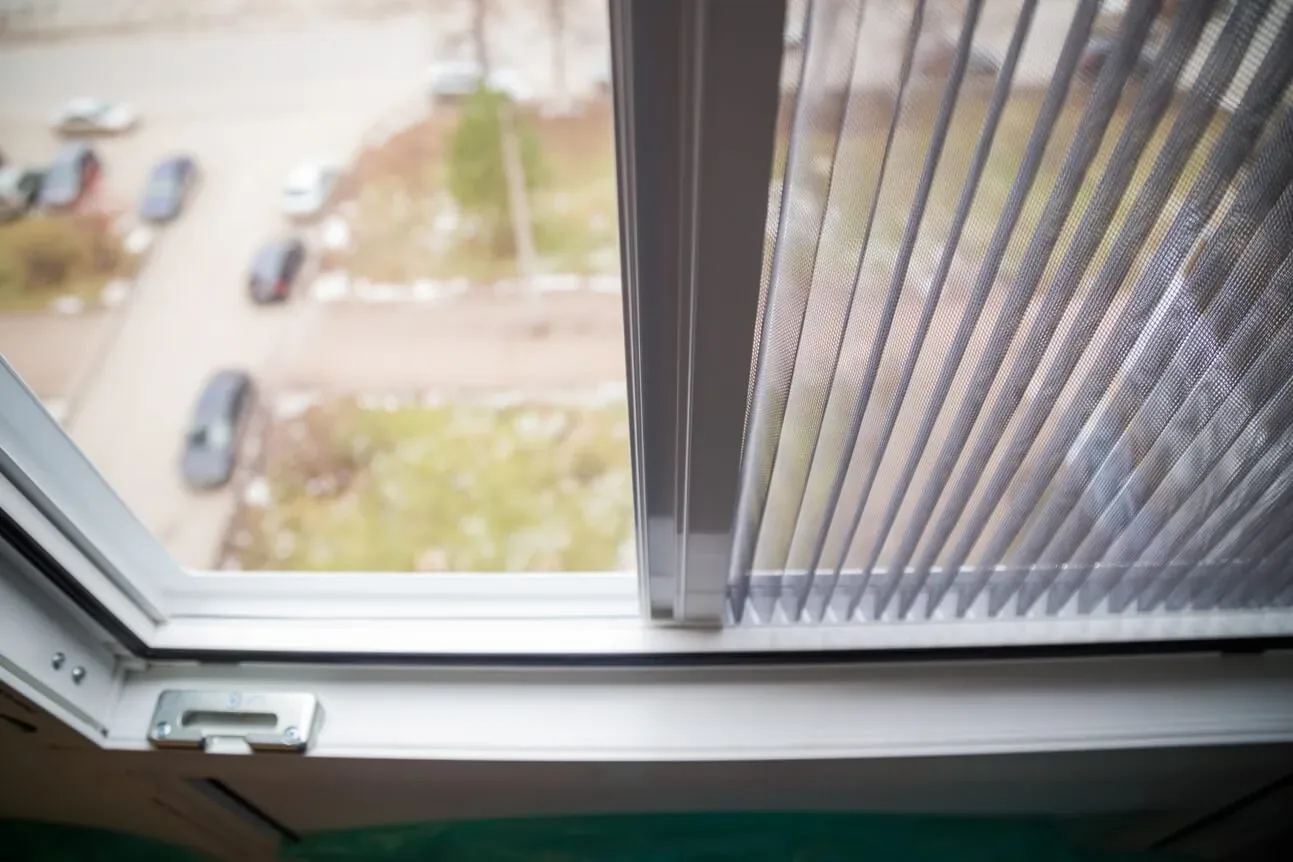
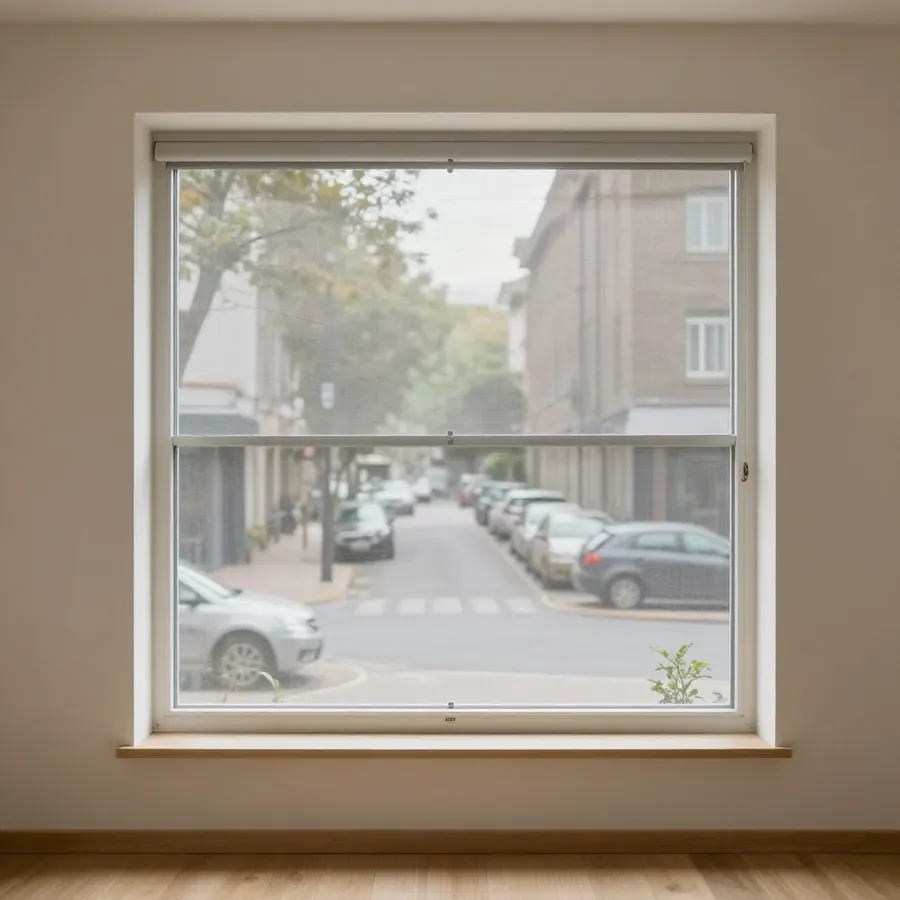
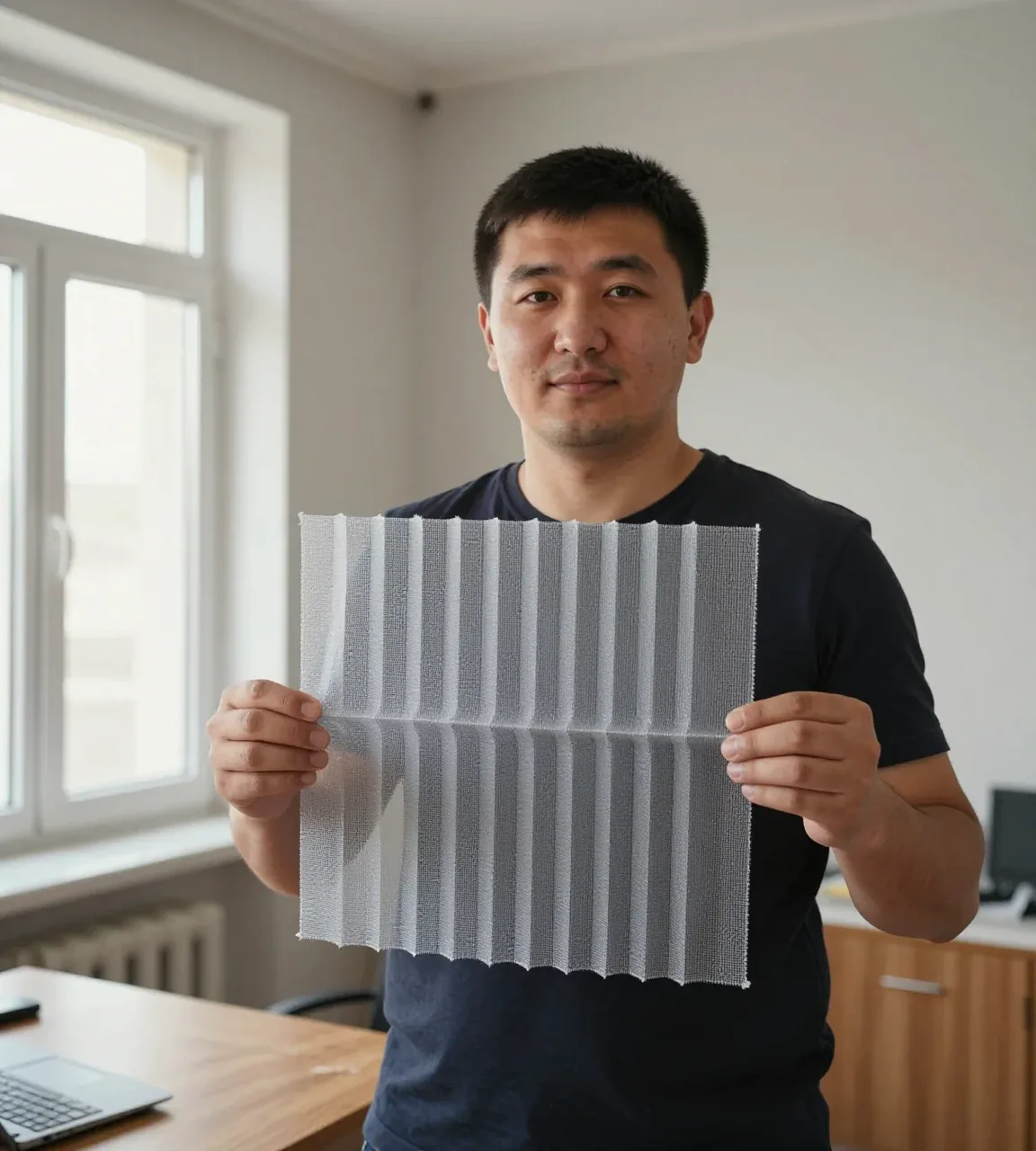
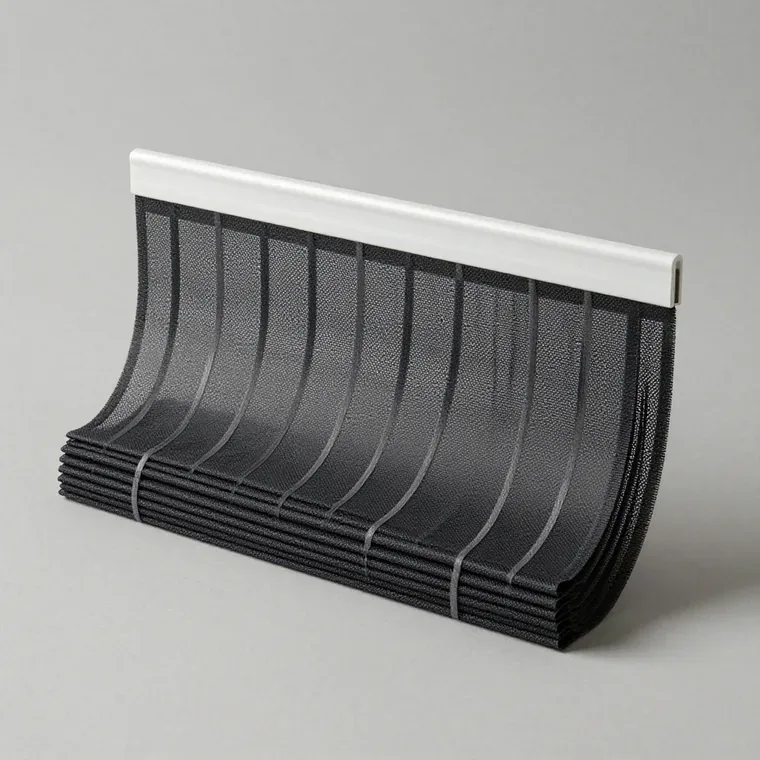
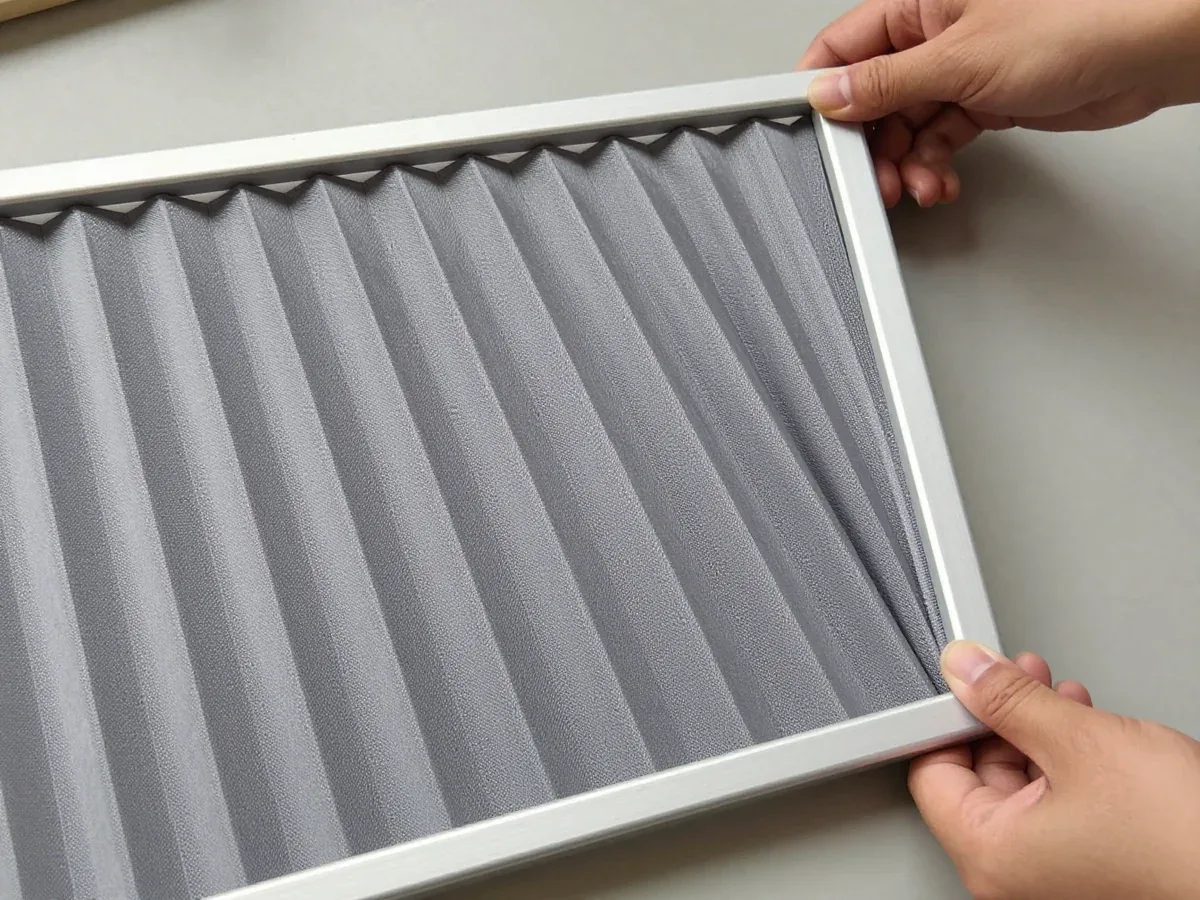
A pleated model is an accordion of mesh that folds along side tracks, and it solves the jobs where framed and sliding versions fall short. Below is how it works and which openings suit it.
How a pleated screen works and where it beats a framed one
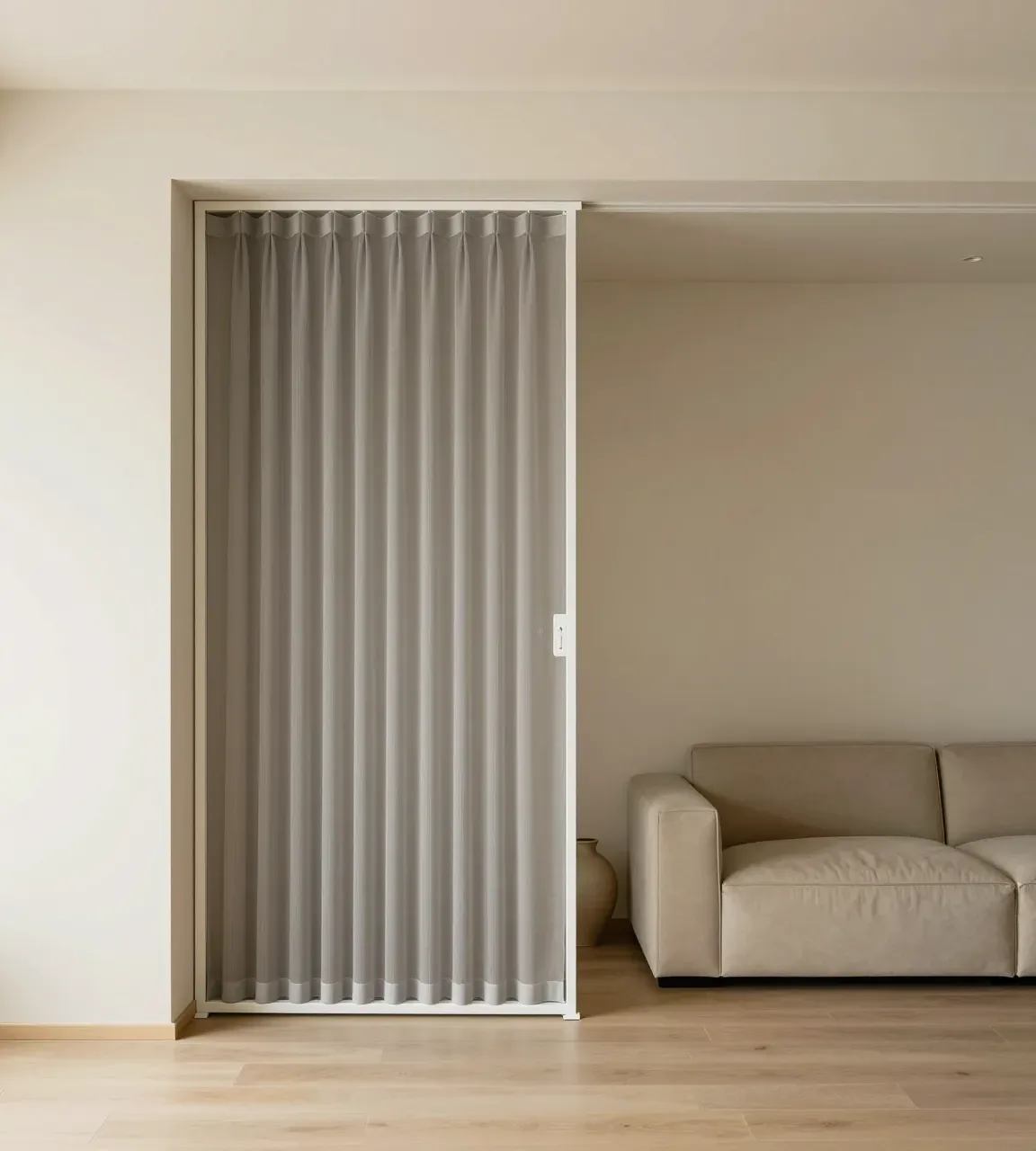
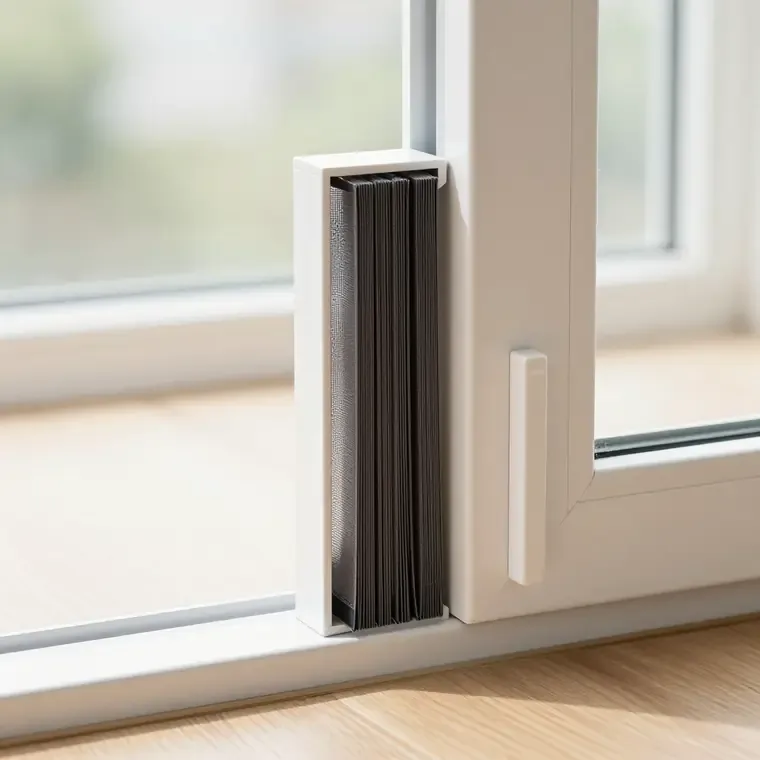
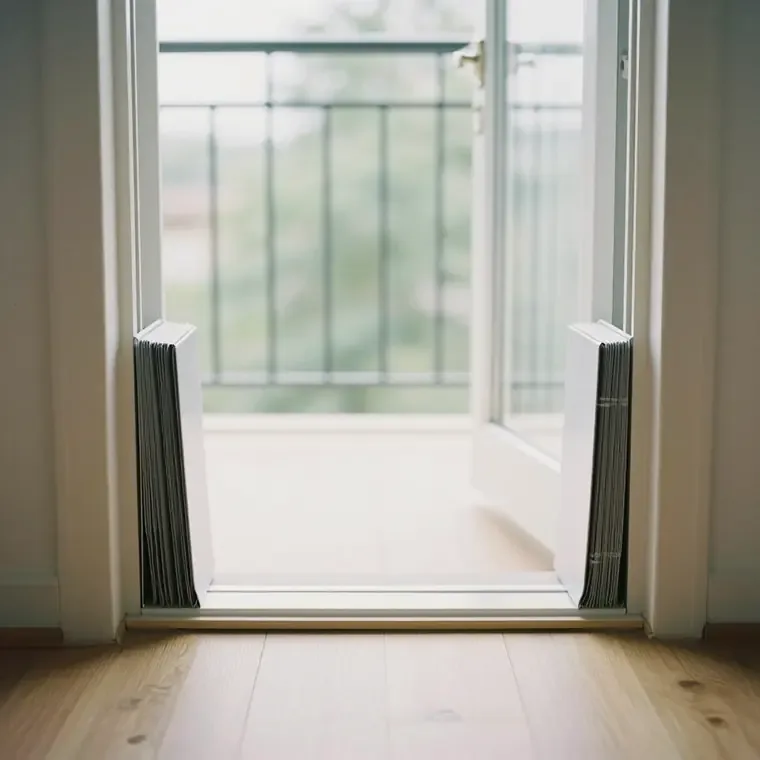
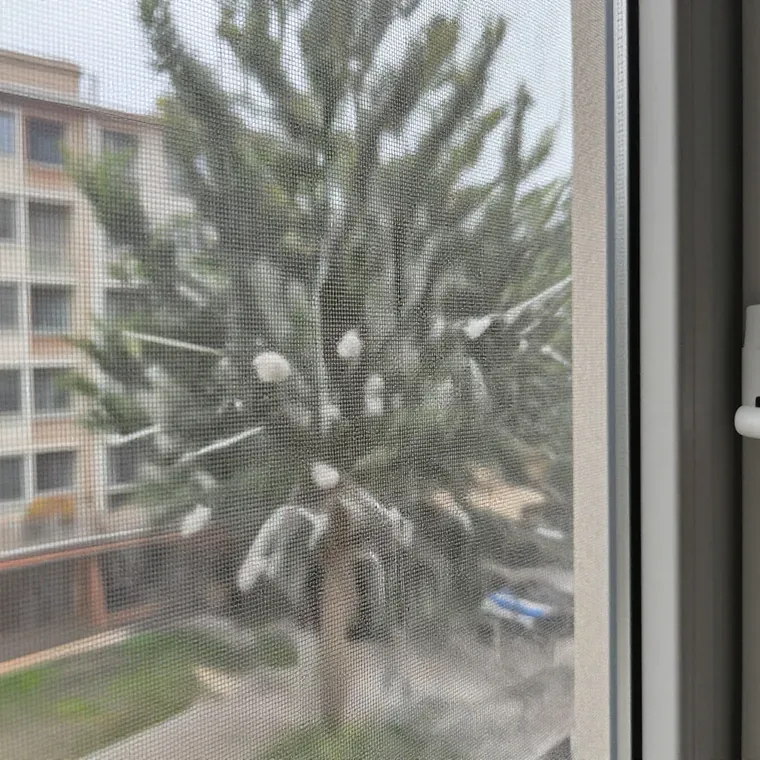
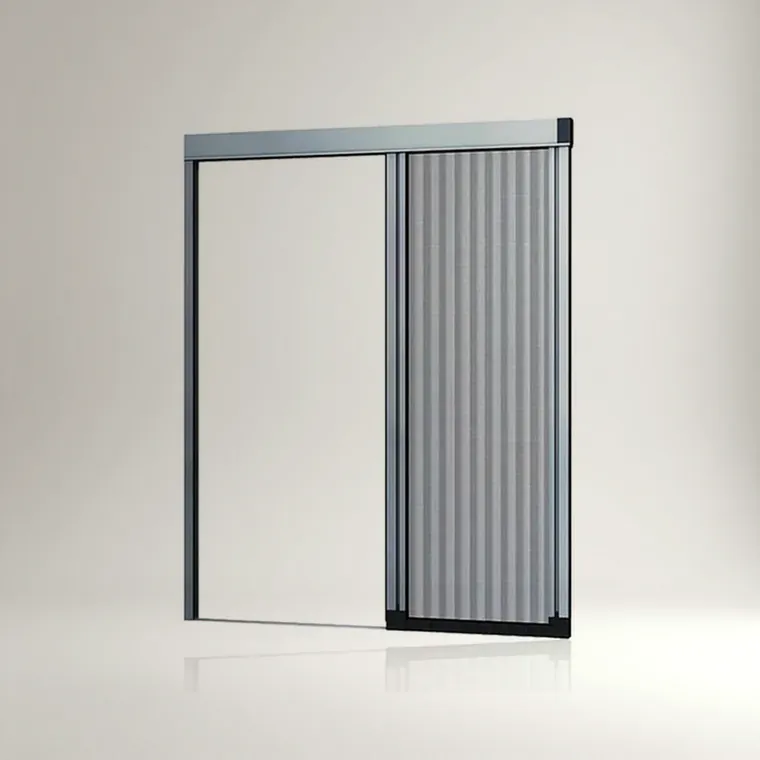
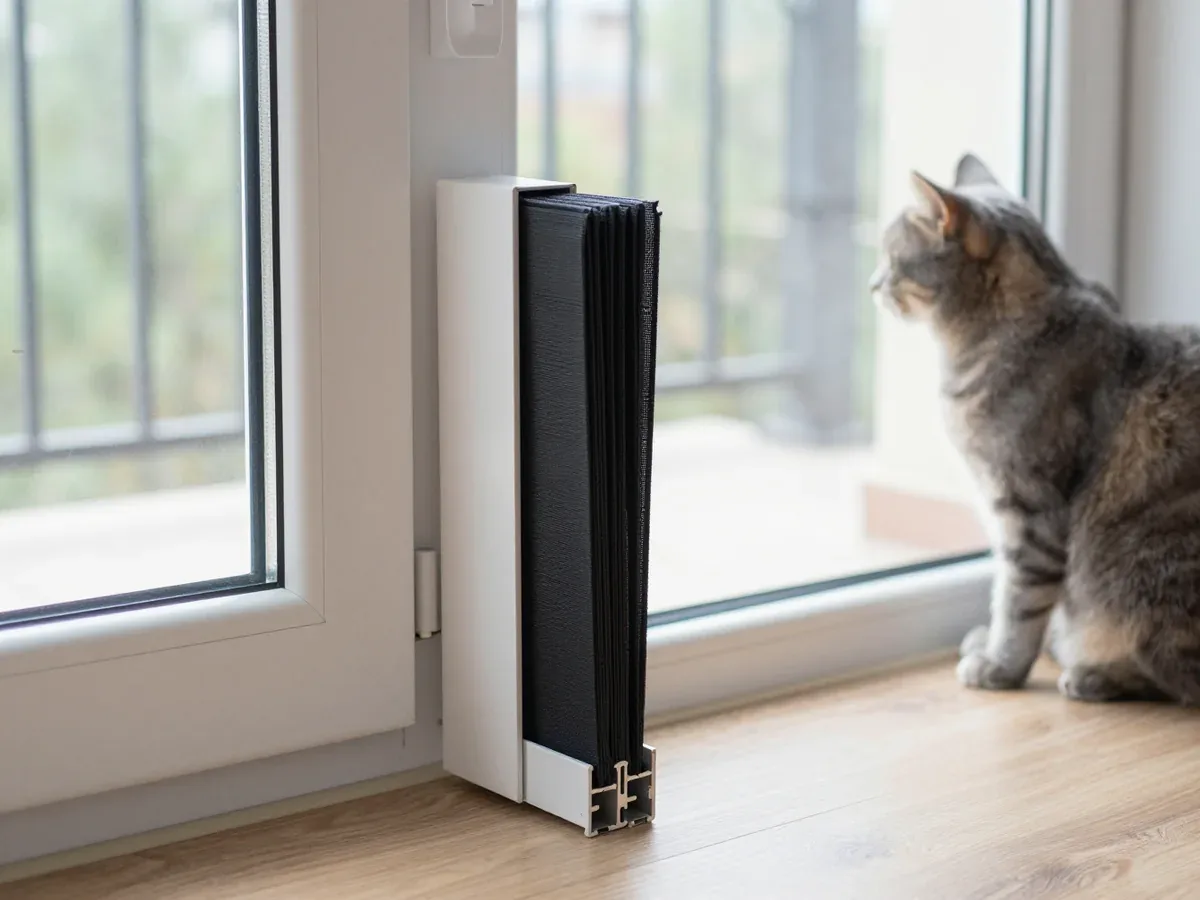
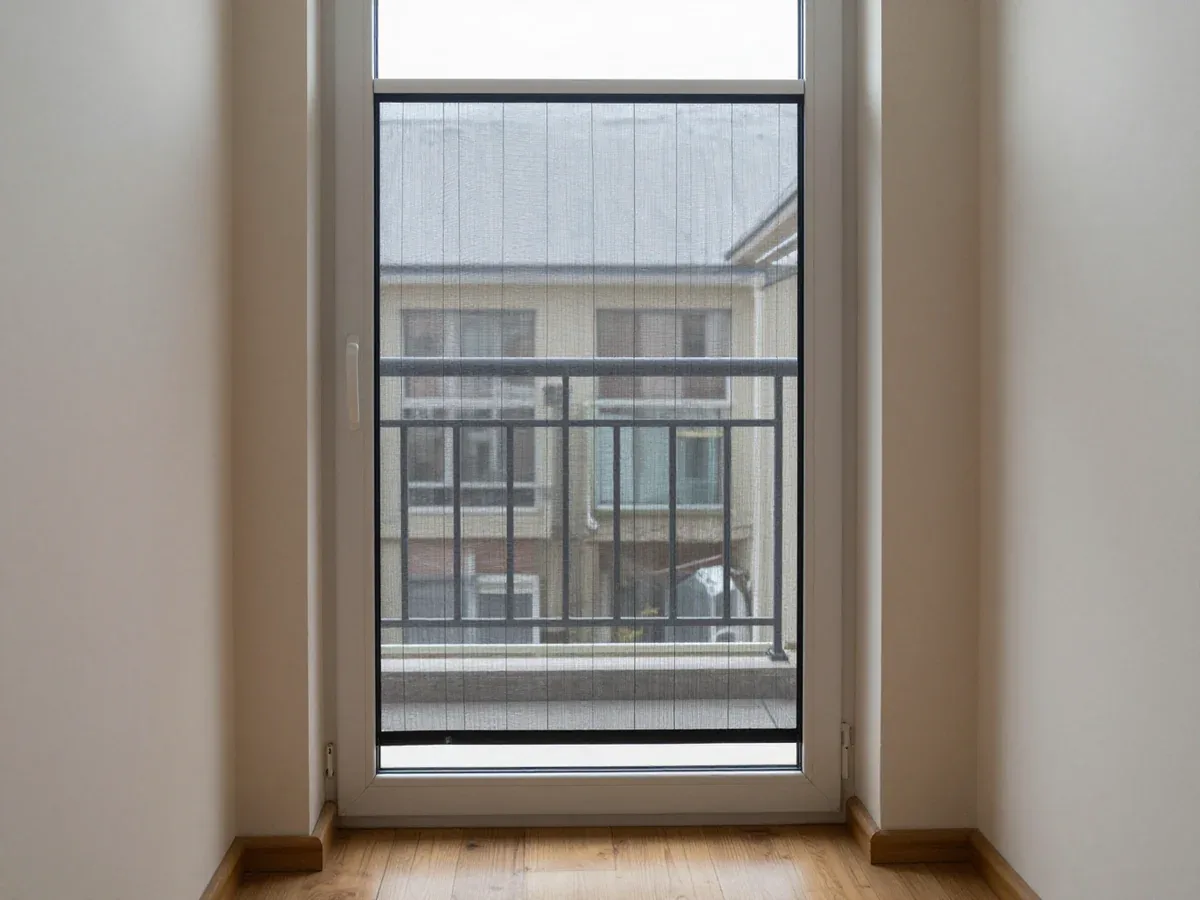
An accordion-style design folds along side tracks, so it opens across the whole opening instead of being lifted out like a framed version. The mesh gathers into a slim stack at one edge and pulls back out on a cord or handle, which means the leaf never leaves the frame and never needs somewhere to be stored. On a balcony door you can step through with one hand while holding a tray in the other. Because the mesh stays captured in the tracks, there is no gap to slide past at the edges, which is the usual reason framed models let insects through on windy upper floors.
Pleated, framed or sliding for your opening
| Opening | Best screen type | Why |
|---|---|---|
| Narrow casement window | Framed | Cheapest, lifts out for winter |
| Wide terrace or balcony door | Pleated | Folds clear, no leaf to store |
| Wide opening used daily | Sliding | Glides sideways on a rail |
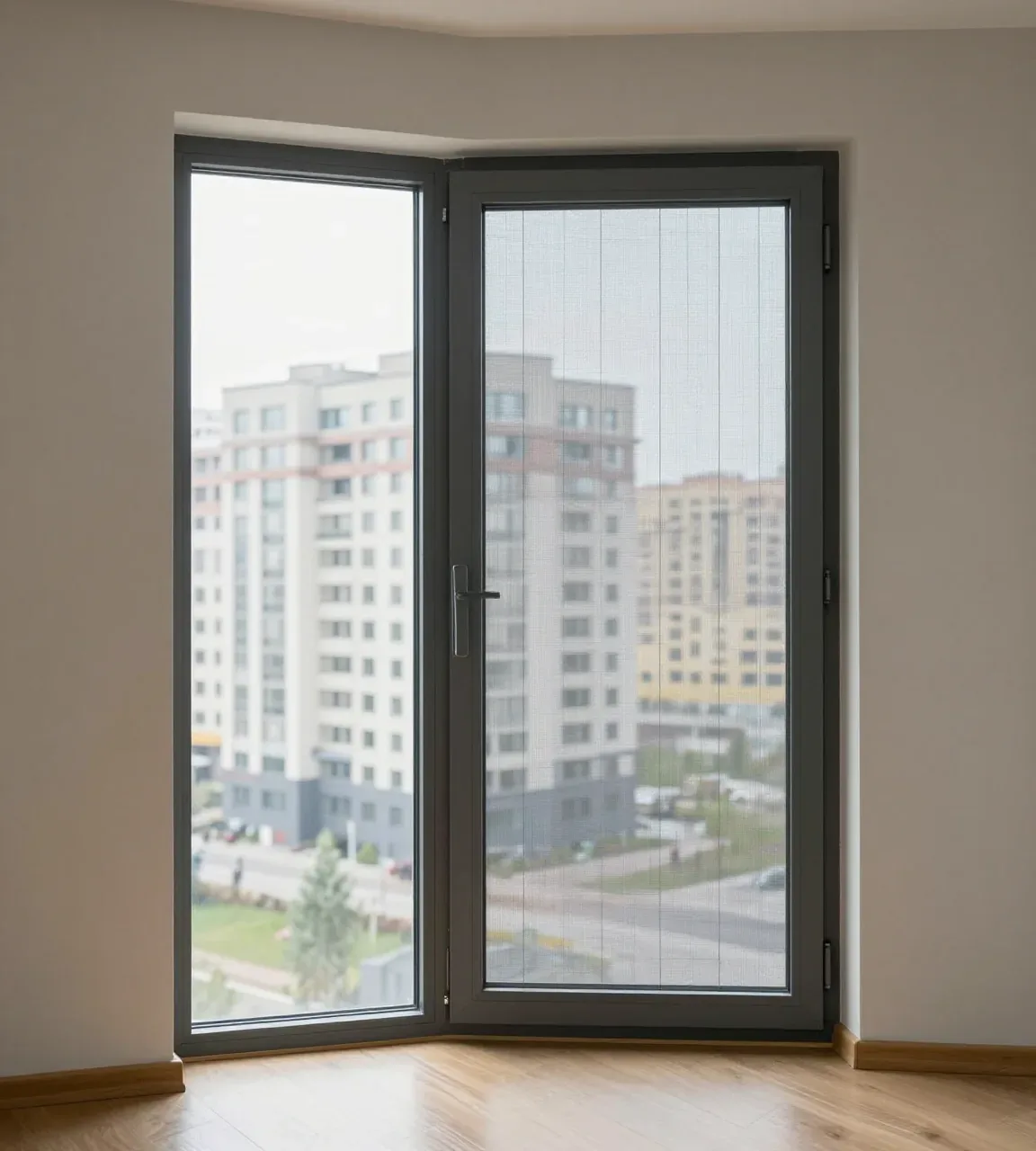
| Odd-shaped or arched frame | Pleated | Tracks follow the frame line |
Where pleated mosquito screens fit in Astana homes
A pleated model is not only a window accessory: it suits openings you walk through, sit behind and leave open all evening. Below we cover the places we fit and the window types the track has to sit on.
Doors, terraces, loggias and gazebos
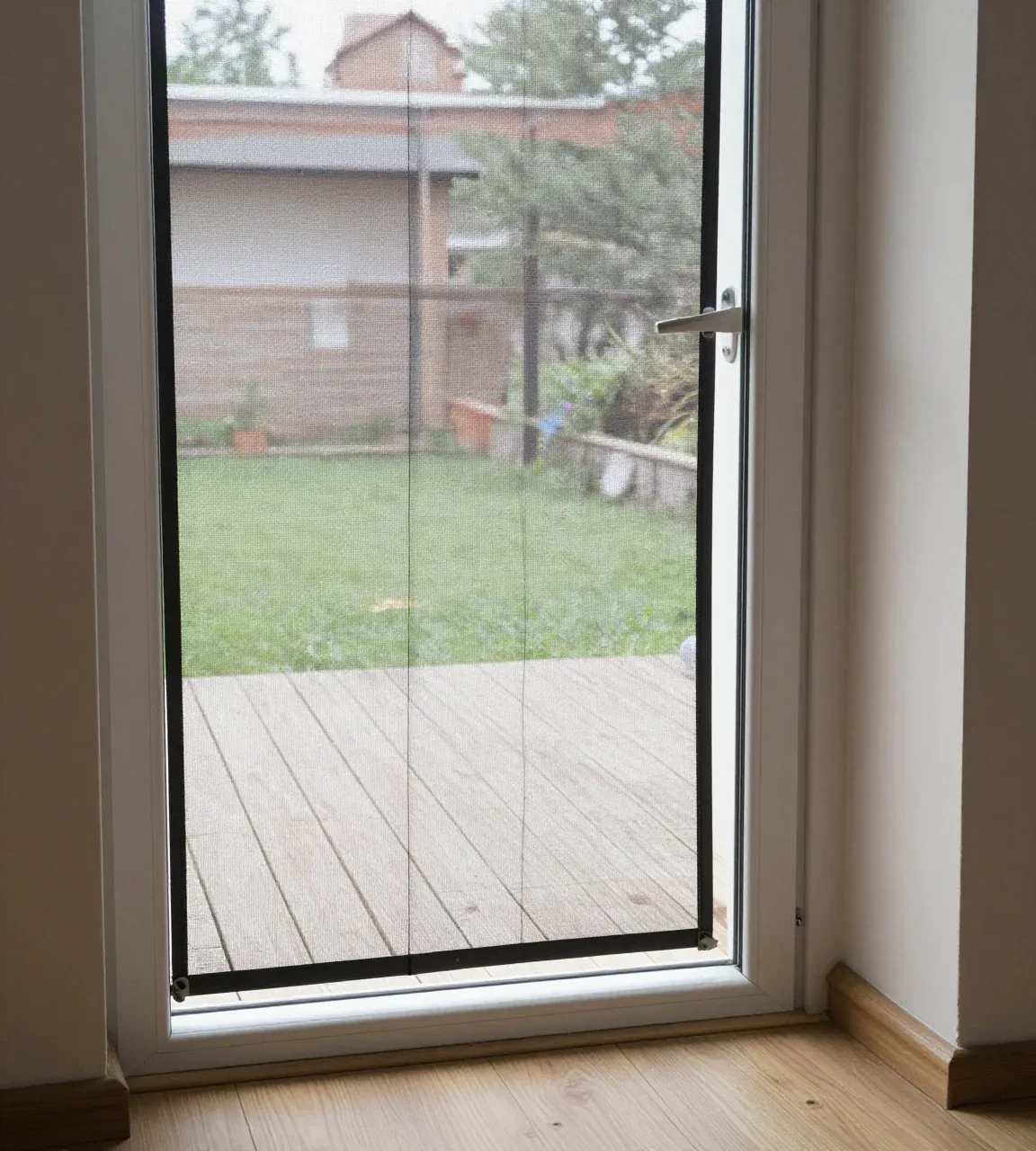
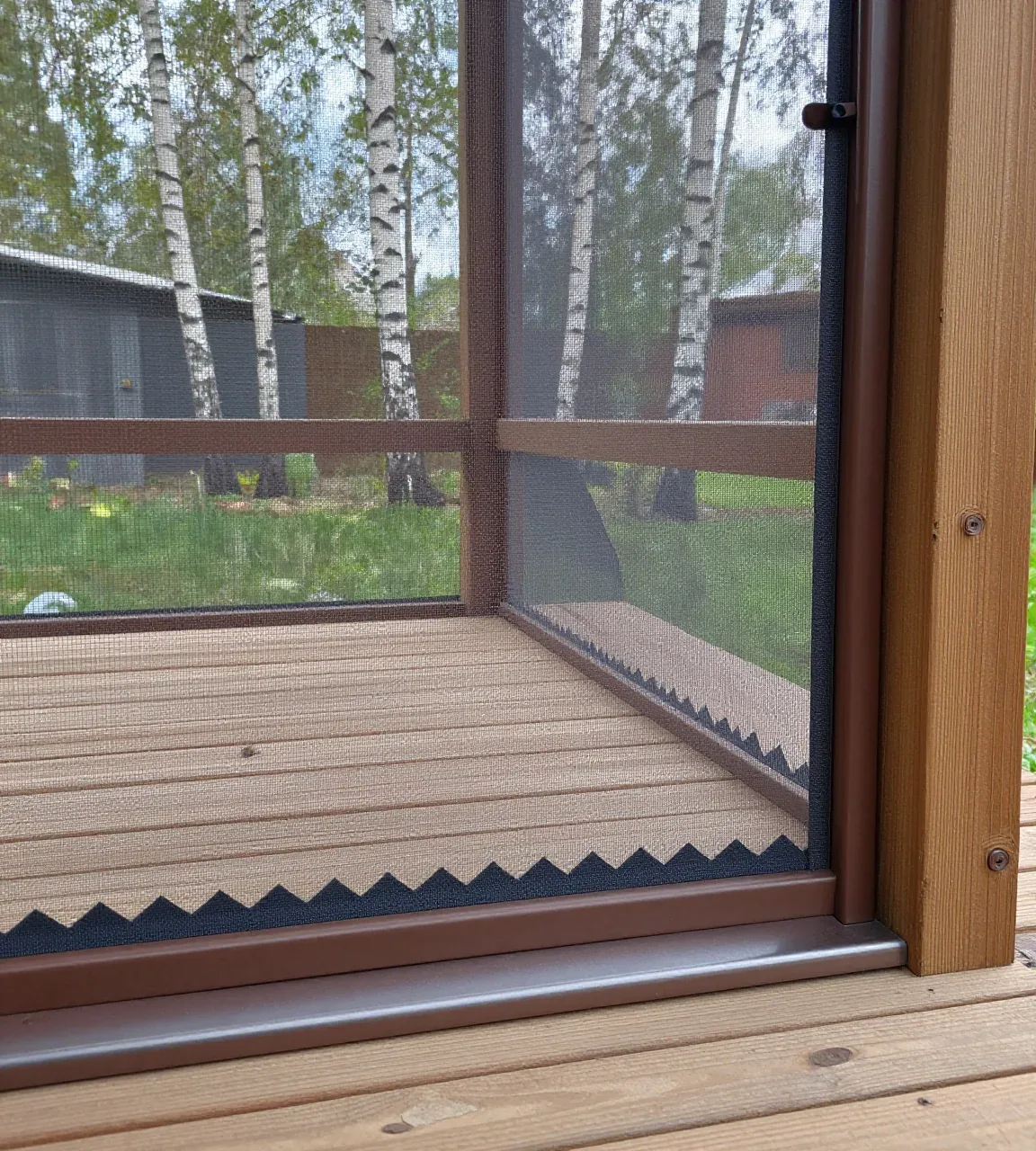
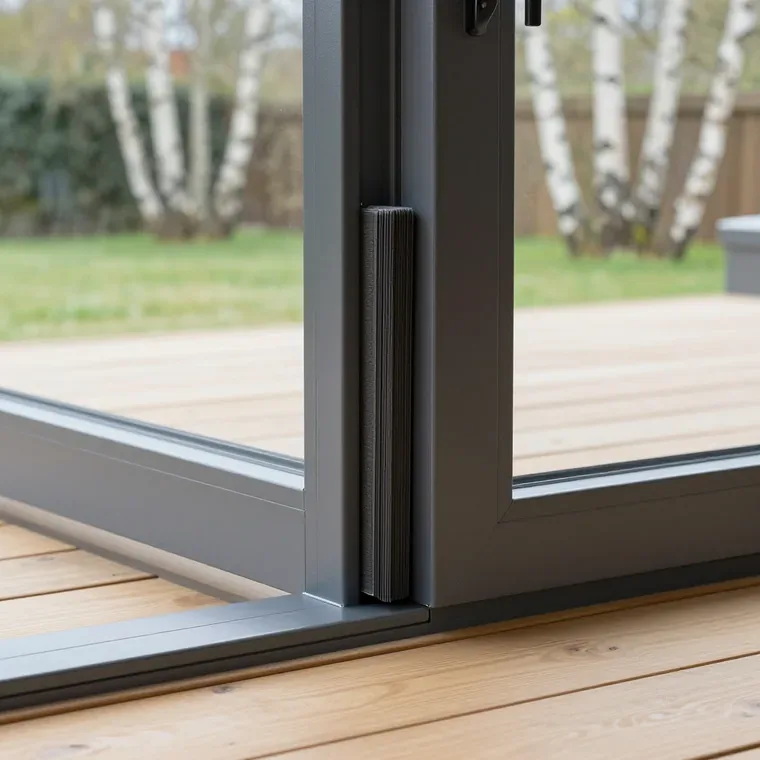
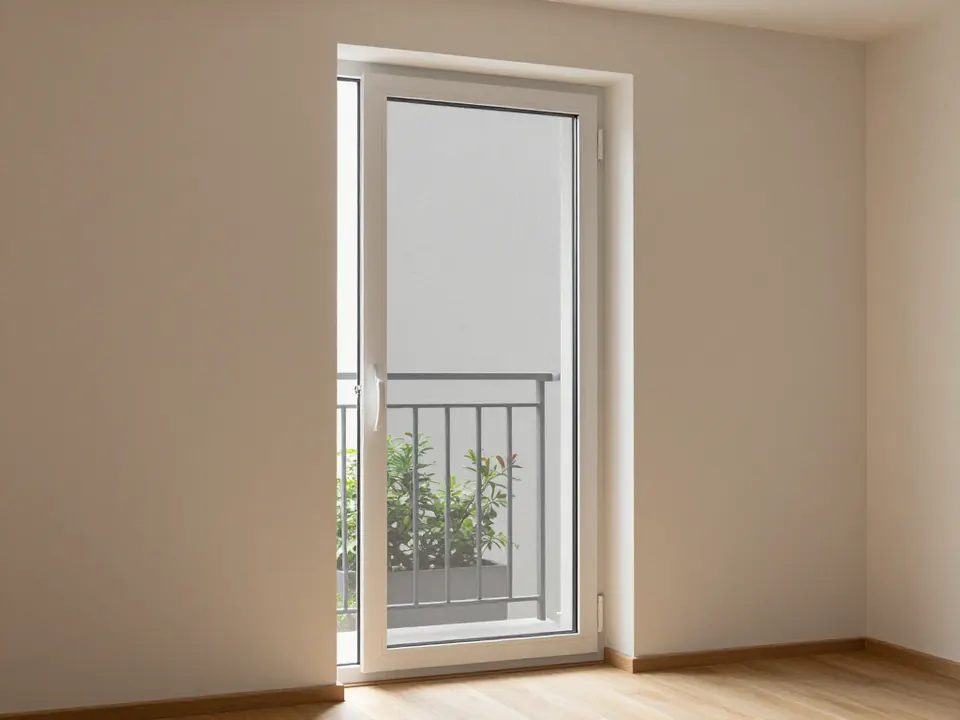
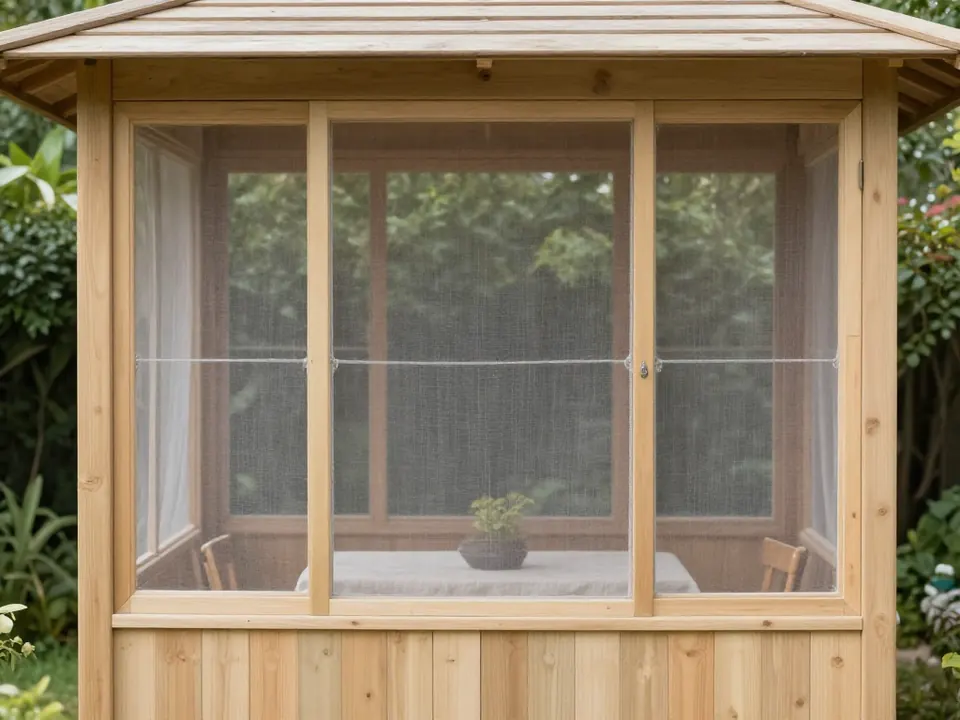
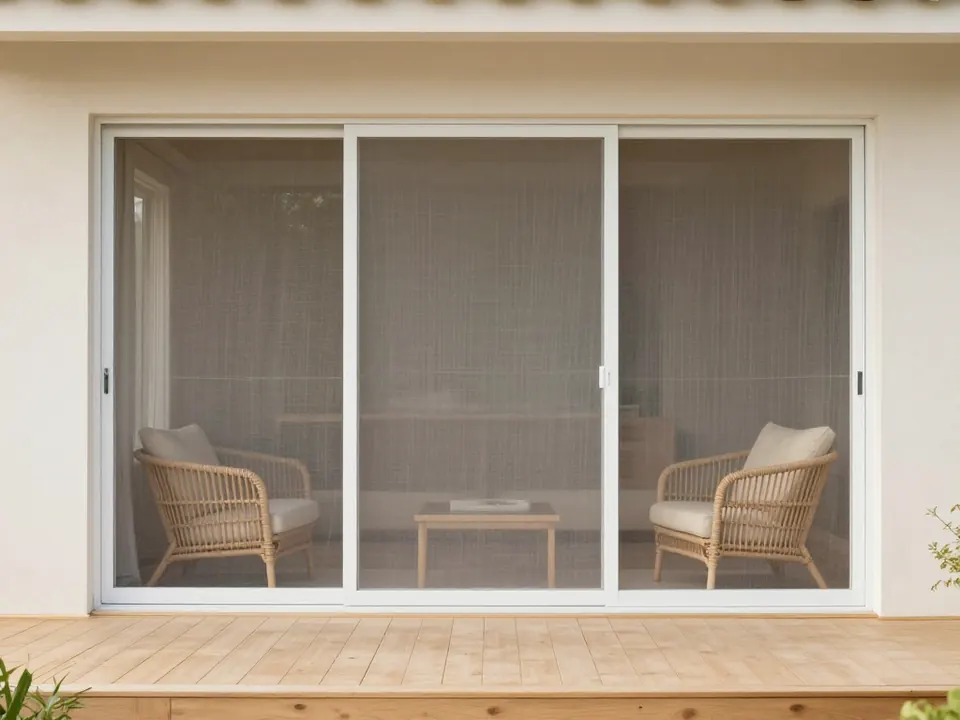
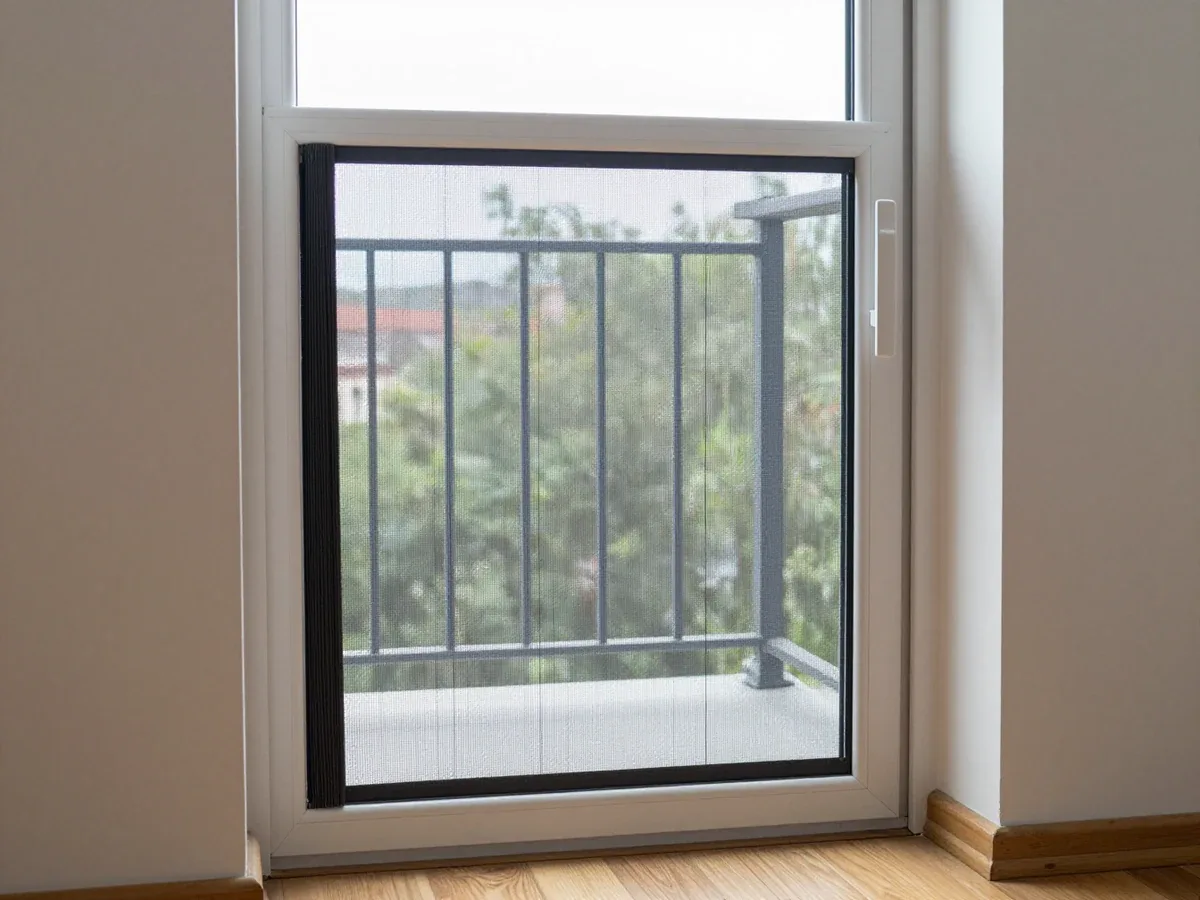
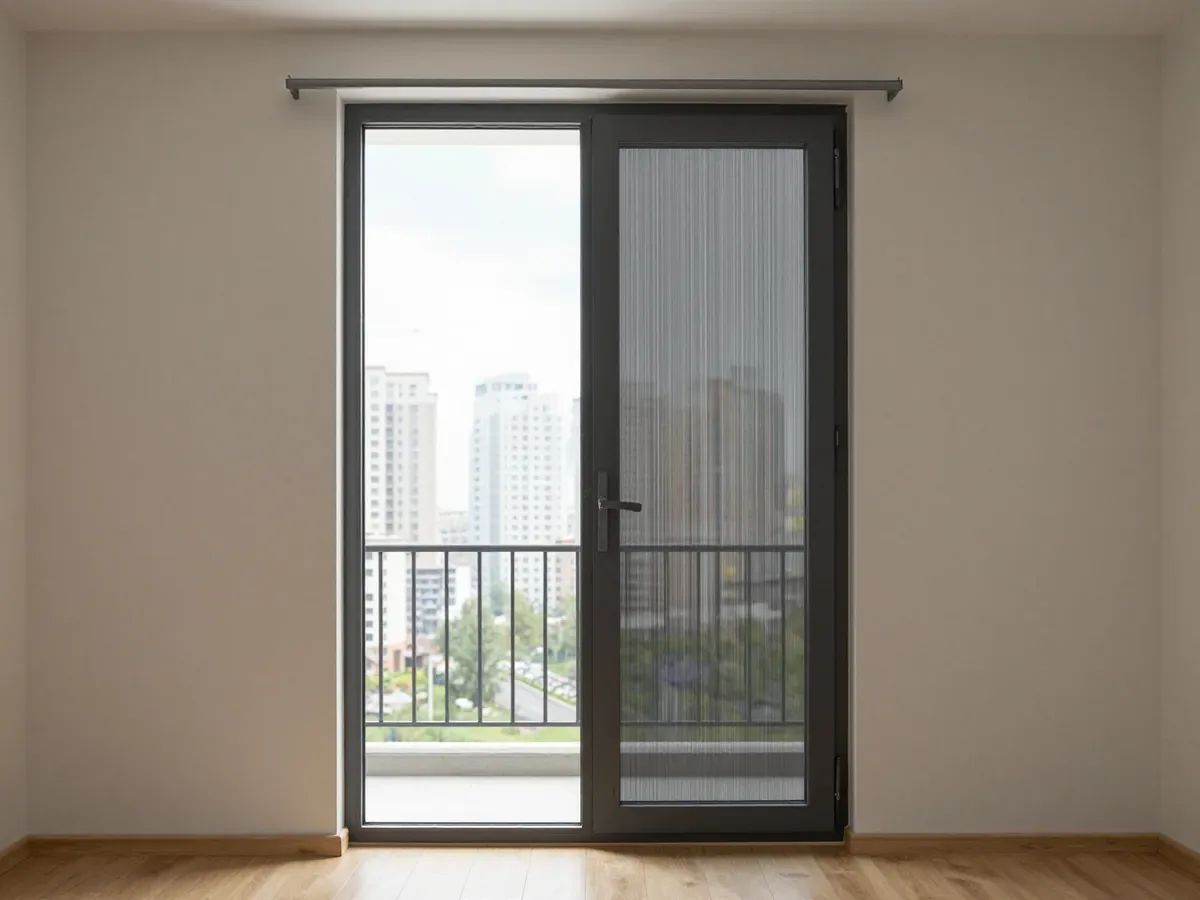
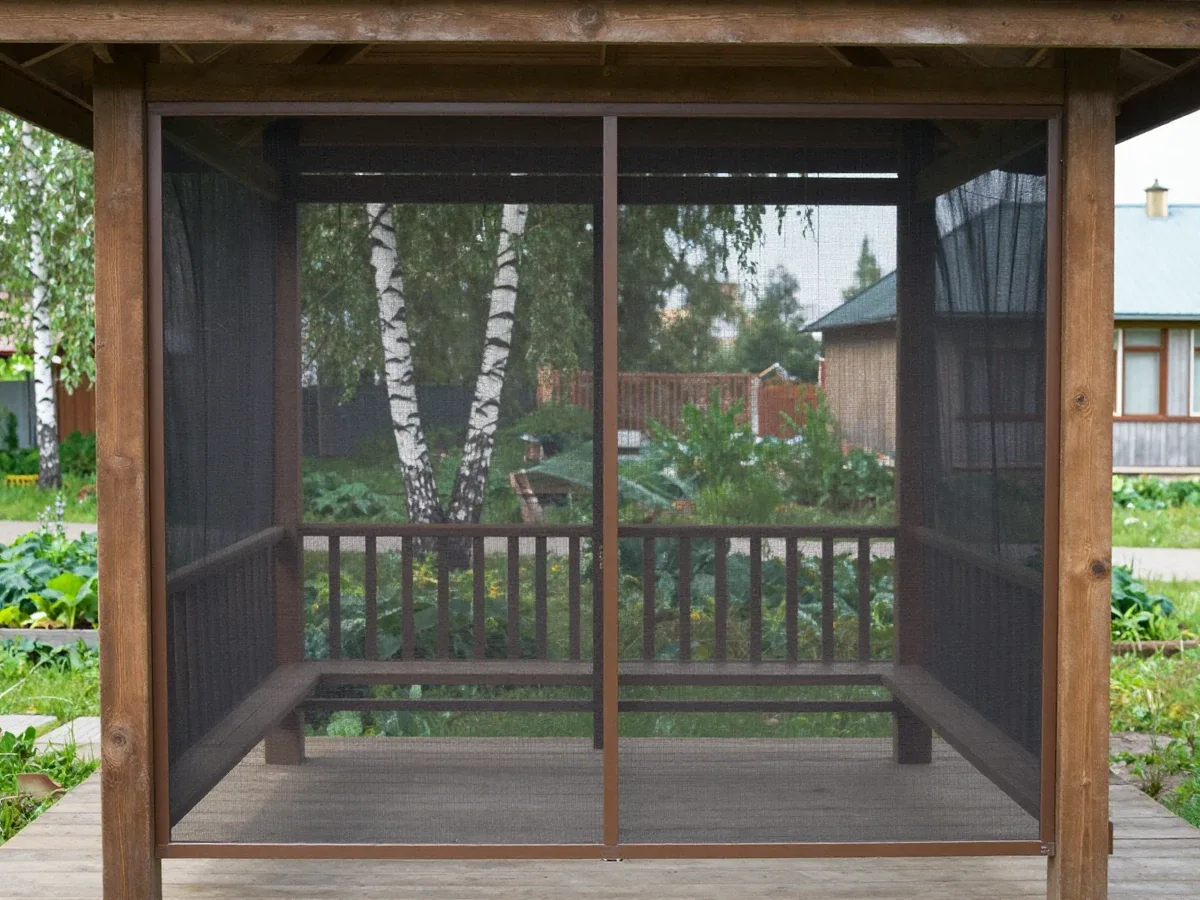
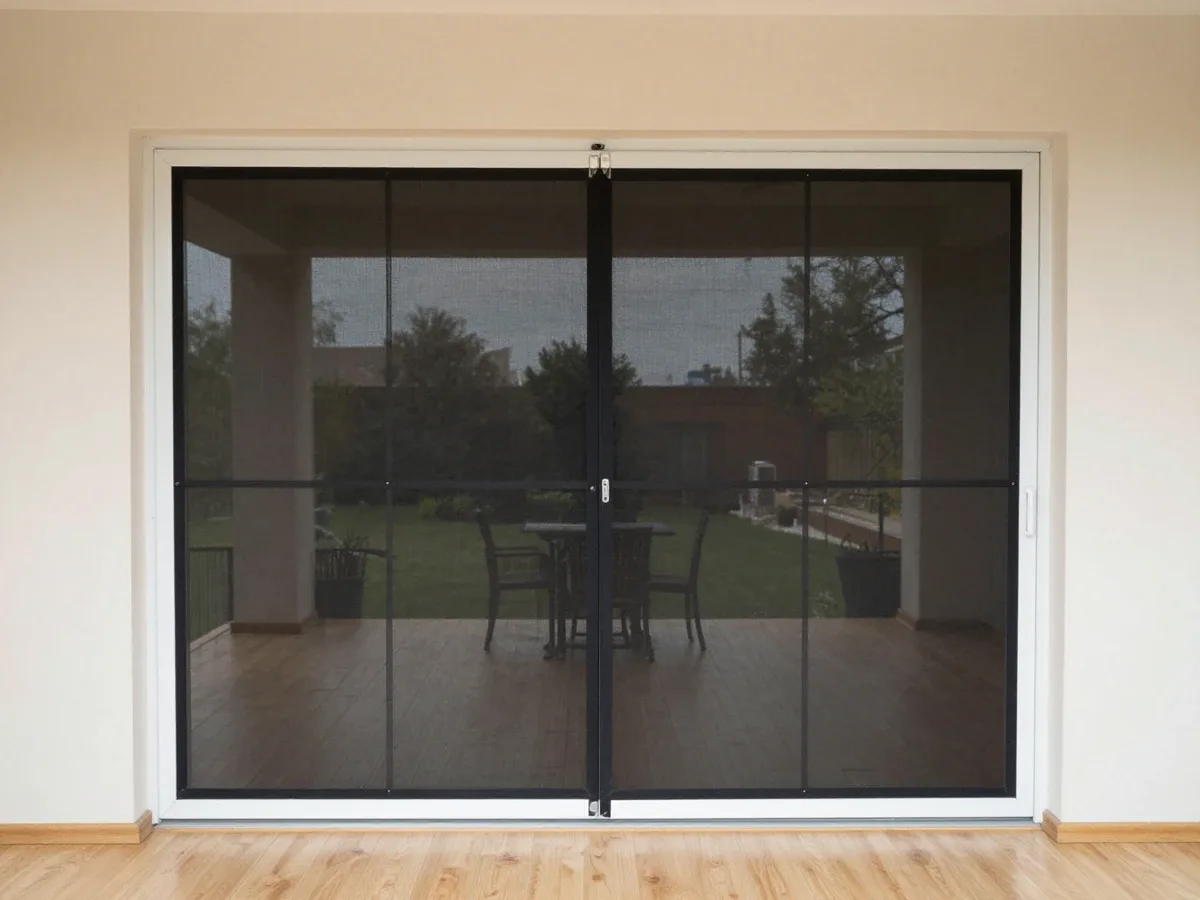
We fit pleated mosquito screens astana homeowners use on balcony and entrance doors, terraces, loggias, verandas and gazebos, where a fixed framed model would block the way. On a balcony door in a panel-block flat the mesh slides along a low track and leaves the threshold clear, so nobody steps over a sill bar. On a terrace or gazebo opening the mesh spans the full width and folds into a slim stack at the jamb. We paint the surround any colour to match your windows, and the fitter picks the fastening for the profile and the floor level. On a door you pass through daily, the mesh folds to one side in a single push, so it can stay mounted all season instead of being taken down and stored.
Plastic, wooden and aluminium windows, including odd shapes
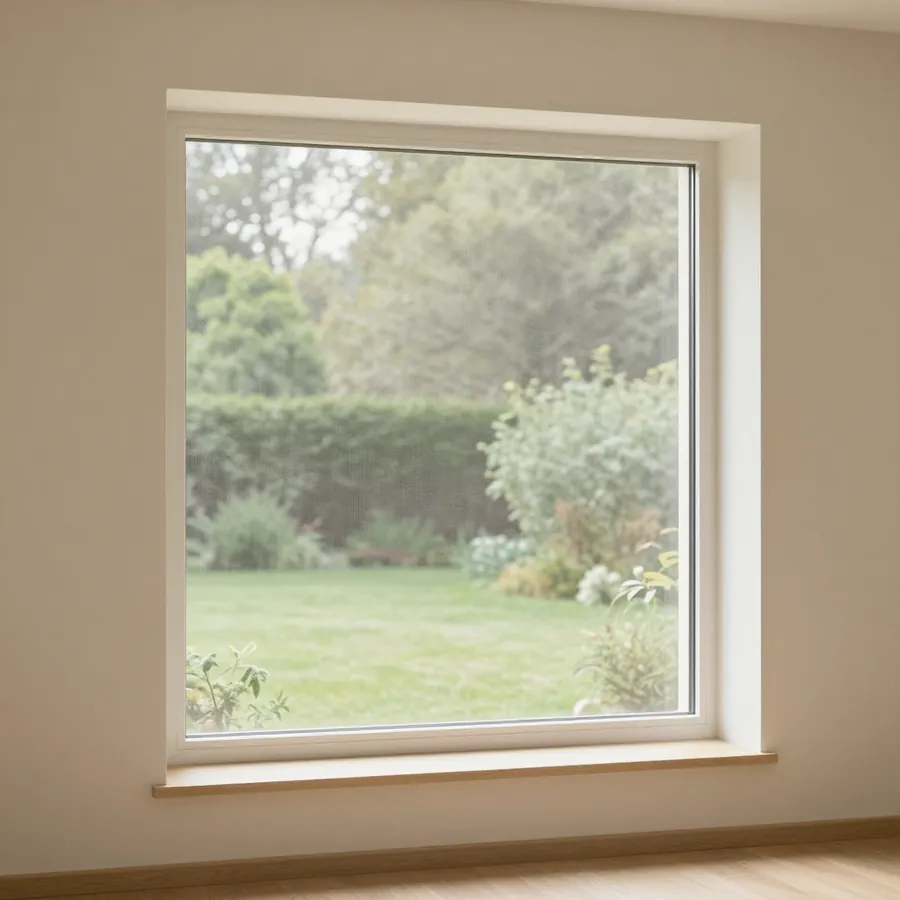
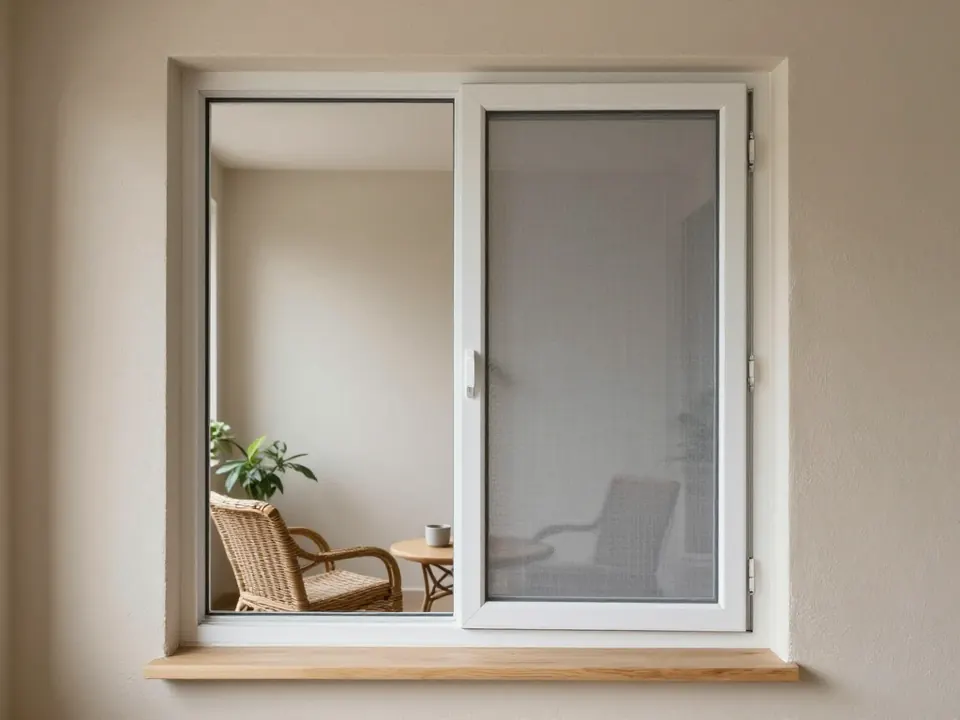
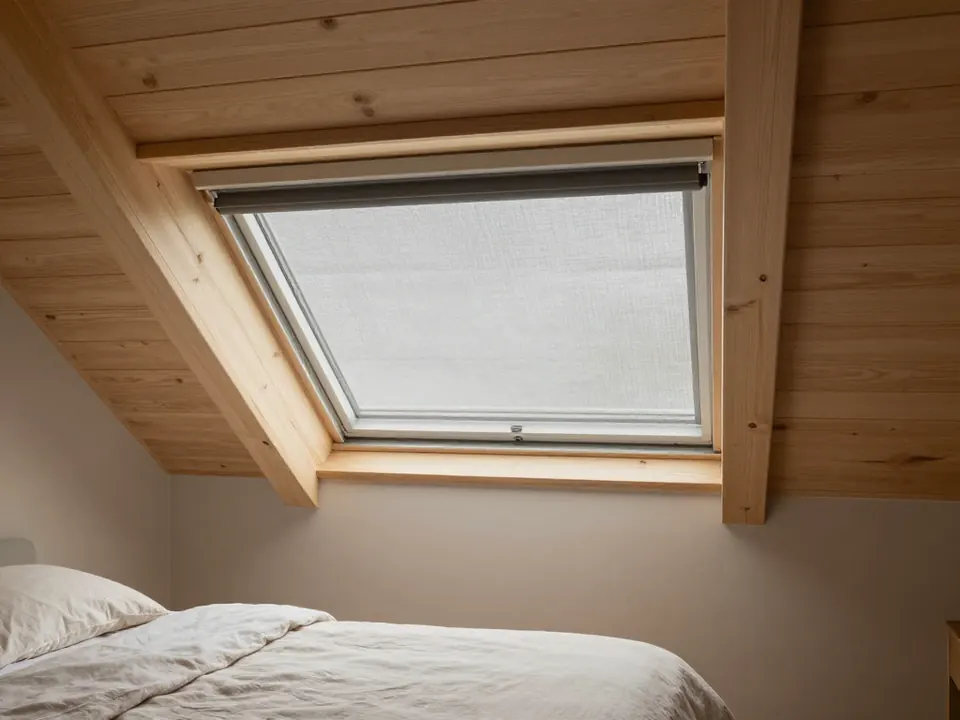
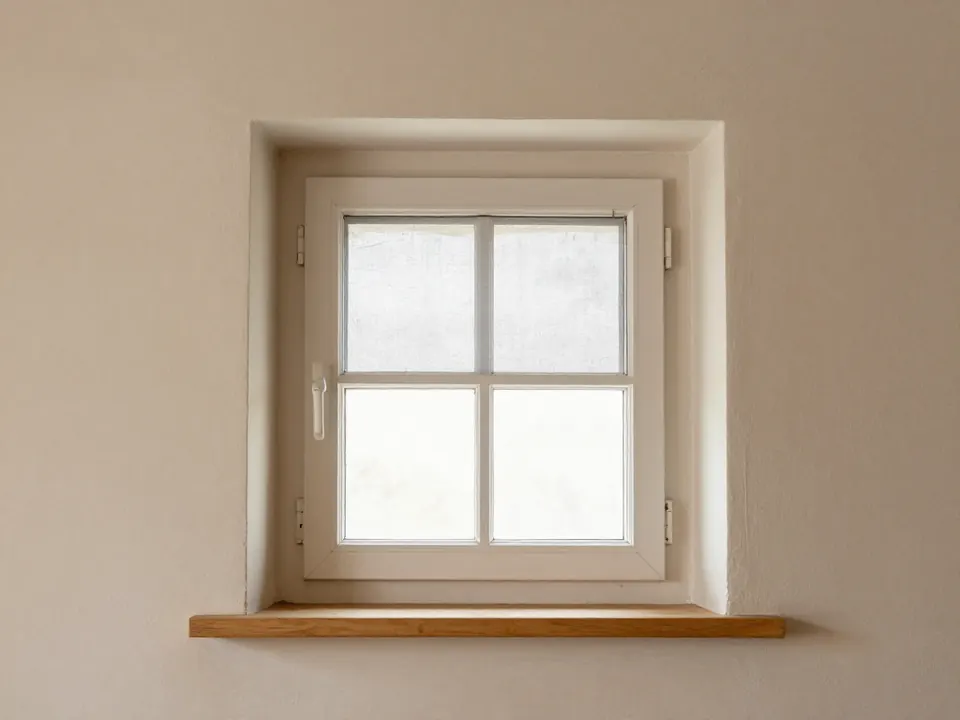
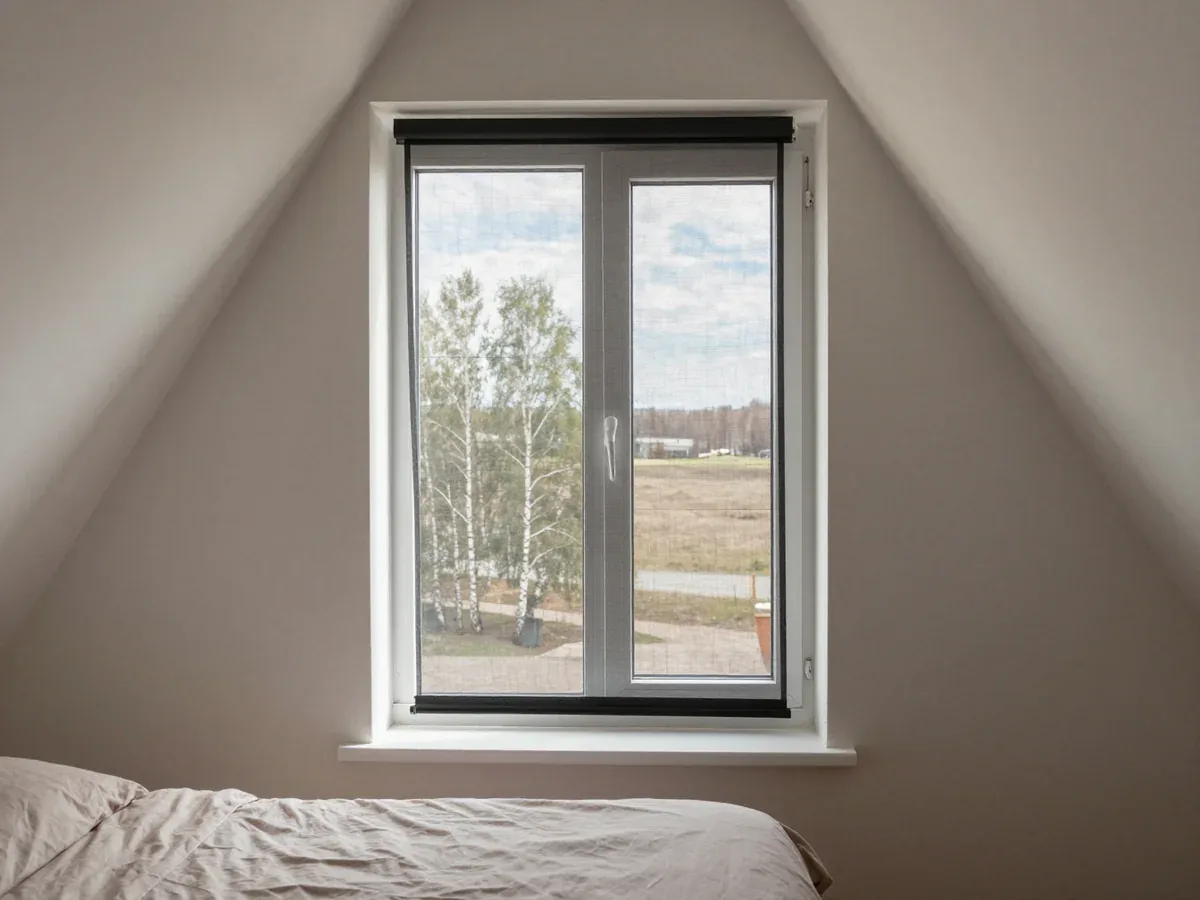
We install pleated mosquito screens on plastic, wooden and aluminium windows, transoms, loggia glazing and non-standard openings, not only on standard PVC frames. A wooden surround usually sits deeper than a PVC one, and an aluminium profile is shallower still, so the guide sits at a different offset on each. Arched and triangular reveals get a guide bent to the shape of the reveal rather than a rectangular unit cut down to fit. The measuring visit settles the width, the height and the fixing points before anything is made. Because wooden and aluminium surrounds differ in profile depth, the track and fasteners are chosen on site rather than from a catalogue, which is why a measuring visit comes before any order.
Choosing the profile, mesh and fastening for your screen
Three decisions define the finished unit: the profile that carries the pleated leaf, the mesh inside it and the way it hooks onto your window. Here is how each one is picked in practice.
Economy or Prestige profile and painting to match
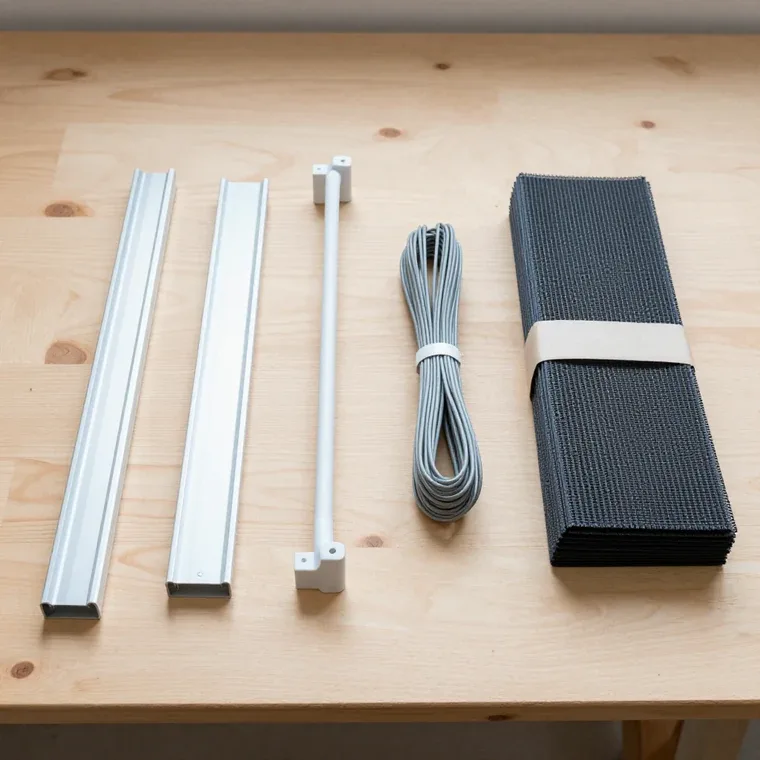
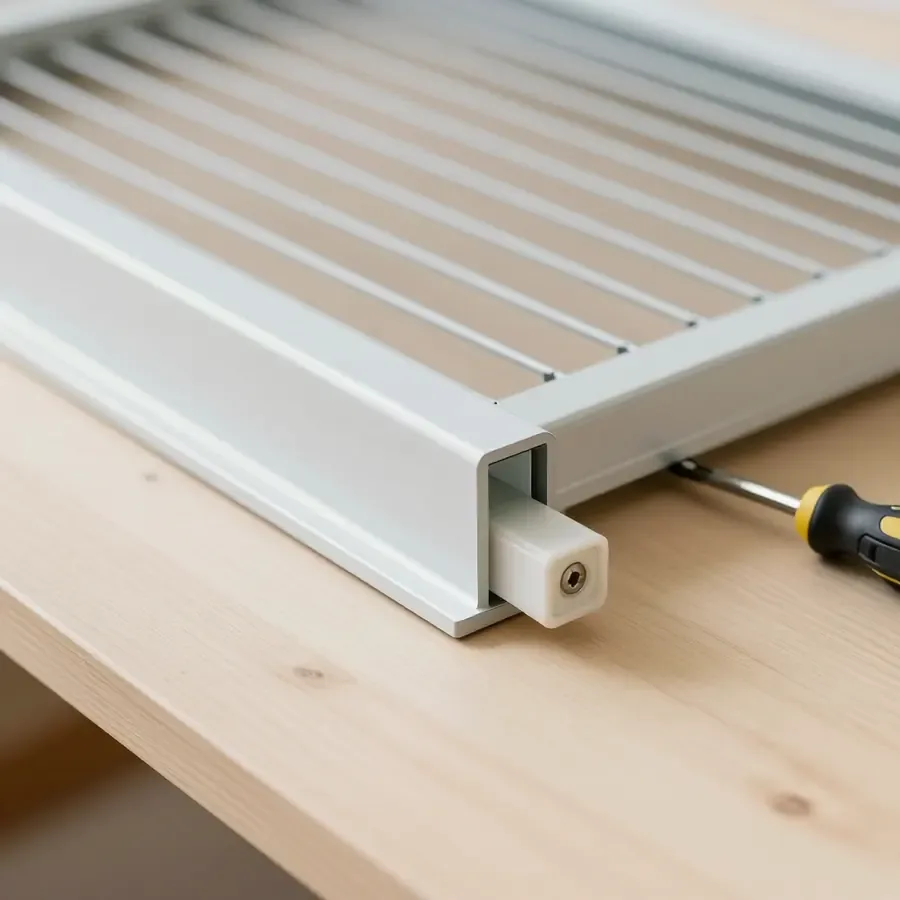
Door screens come with an Economy 32×10 mm or a Prestige 42×17 mm profile, and we paint the frame any colour to match your windows. The Economy section suits a standard balcony or terrace doorway where the panel is light and opened a few times a day. The Prestige 42×17 mm extrusion is heavier, so a wider and taller panel runs on it without flexing or jumping the track. We mix the paint to your window colour rather than offering a fixed palette, so a brown or anthracite surround does not stand out against the facade. The heavier Prestige option holds a wide panel steadier on a doorway opened many times a day, so the choice is about daily load, not looks alone.
Which mesh to put in a pleated screen
| Mesh | Best for | Key property |
|---|---|---|
| Standard fibreglass | Everyday windows | Fire-resistant, stable in temperature swings |
| Ultravue | Sun-facing living rooms | 25% more light and air |
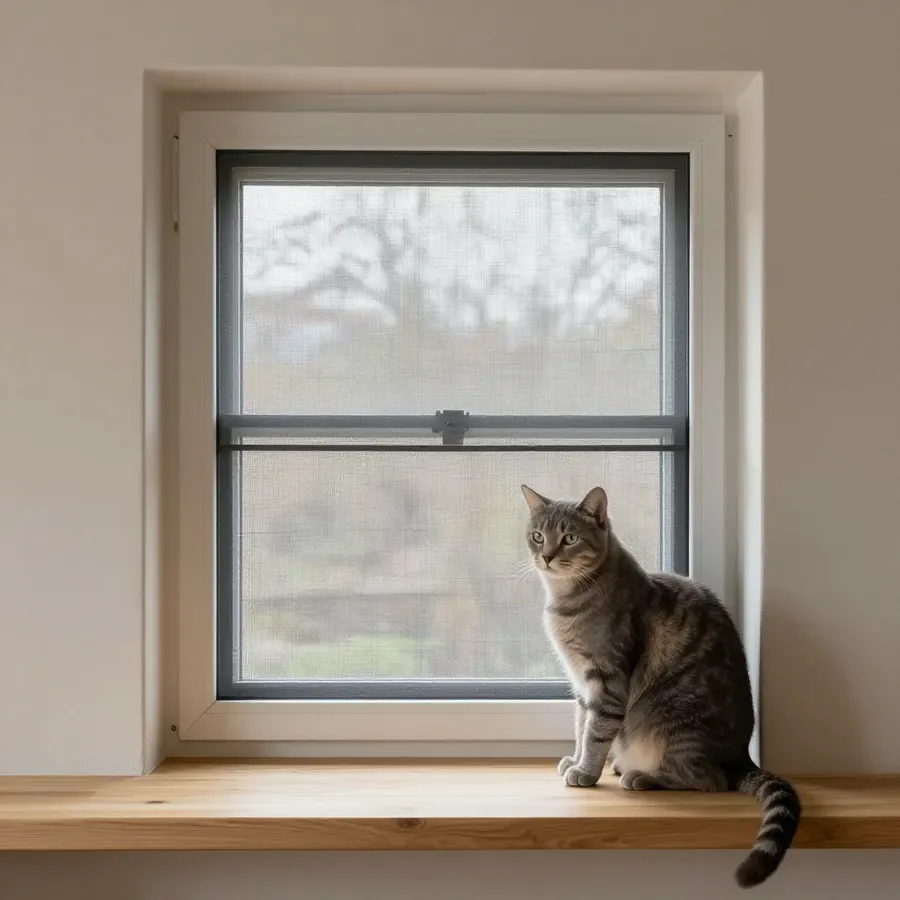
| Pet Screen | Cats and small dogs | Vinyl threads resist clawing |
| Anti-dust | Ground floors, dusty streets | Denser weave holds back grit |
| Poll-Tex | Allergy sufferers, bedrooms | 0.25×1 mm cell traps pollen |
How the screen is fastened and whether the window is drilled
The measurer picks the fastening for your window profile and floor, choosing Z-brackets, pins or magnets, so the fixing suits the frame rather than a single default. Z-brackets clamp onto the edge and need no drilling at all, which keeps the surround intact on plastic and aluminium windows. Pins, also called plungers, slot into the groove and hold a cassette firmly on a tall balcony door. Magnets are the gentlest option for thin wooden surrounds and small panes you open often. On upper floors the screen is usually mounted from inside, which keeps the fitter off the outside sill and lets you re-tension the tracks yourself later.
Measuring, making and fitting your pleated screen
Ordering pleated mosquito screens astana runs from a free measuring visit to a build of 40–60 minutes and then fitting on site. Below we walk through how the measuring works and what happens on installation day.
The free measuring visit and why size matters
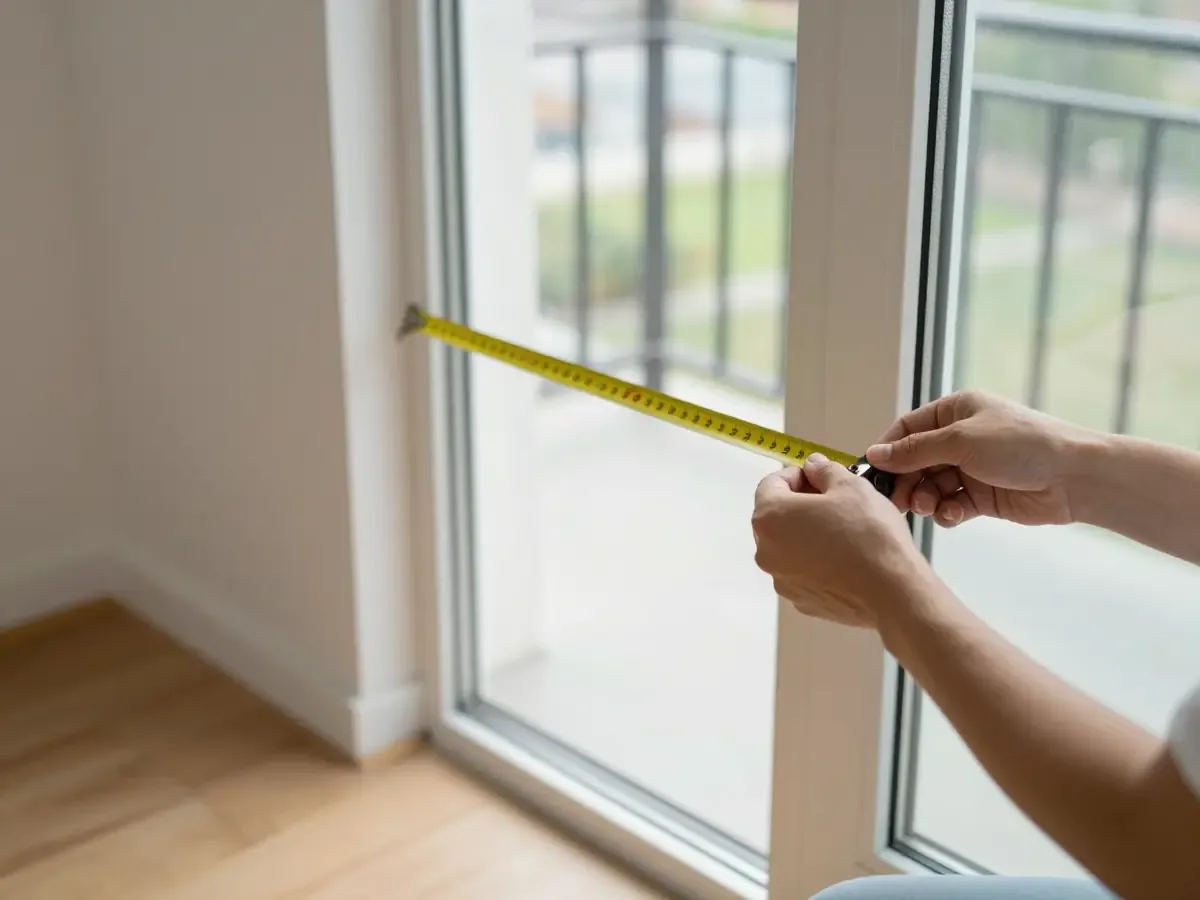
Measuring and consultation are free, and the measurer comes at a convenient time, takes the sizes and helps choose the design, mesh and fixings. The specialist checks the opening, the frame profile and the floor level, then notes the track position and the side the leaf will fold to. A pleated screen is made to the opening, so a few millimetres decide whether the tracks sit flush or the leaf rubs — and there is no single maximum size, since the limit depends on the opening and the fold direction. That is why the size is taken on site rather than from your own tape measure. Ask the measurer to mark the folding side on the sketch before they leave.
From 40–60 minutes of making to installation day
A pleated screen made to your size takes 40–60 minutes to build, and we deliver and install screens on windows and doors once it is ready. Cutting and folding the mesh, setting it into the frame and checking the tension happen before the fitter rings your doorbell. Because the screen is assembled to the measured size beforehand, installation is mostly fixing the tracks and checking the fold, so you clear the sill rather than the whole room. Keep the window closed and the approach to it free on the day, and move any pots or blinds standing in the way. The fitter then opens and closes the leaf a few times and shows you how it folds.
Winter care, repairs and what the warranty covers
Once a screen is fitted, the practical questions shift to frost, cleaning the folds and what happens if something breaks. Below we cover the cold months and the warranty and payment terms behind the work.
Winter, cleaning and repairing a pleated screen
Unlike a framed unit, a pleated model stays on its tracks through the Astana winter, and we repair units and replace fastenings if the fold jumps or the mesh tears. Frost and wind load the accordion, so check that the glides still run freely after a hard cold spell. A framed unit lifts out from inside in a minute and is worth removing for the winter, while a pleated leaf is built to stay put. If the fold jumps its track or a fastening pulls loose, our fitters re-set it and swap the worn Z-brackets, pins or magnets. Wash the pleats with a soft brush and mild soap while the leaf is folded open, since scrubbing a closed accordion pushes dust into the fold where it stiffens the mesh.
Warranty, payment and ordering from the fitter directly
Every mosquito unit carries a 1-year warranty, you pay after installation by cash, card or Kaspi, and we reply on WhatsApp within 5 minutes. The price is fixed in the order once measuring is done, so the figure you agree is the figure you settle after the fitters finish. We make and fit the units ourselves rather than passing the order on, so a warranty claim goes to the same fitters who installed it, not to a third party. Orders are accepted in 17 cities of Kazakhstan, and the workshop is open seven days a week. In our practice, a direct fitter saves time on repairs — nobody has to work out who owns the fastening, because the person who set it closes the issue.
Key facts about pleated mosquito screens
Folding designs earn their place on wide and high-traffic openings, though the right setup depends on the opening itself. A short recap of what decides a good fit before ordering.
- Wide and pass-through openings: a folding design gathers to one side, so it suits balcony doors and terraces where a framed model would block the way.
- Frame, fabric and fixing: the profile sets strength, the mesh sets light and airflow, while the fastening depends on the window profile and the floor.
- Making time: a made-to-size unit takes 40–60 minutes, against 10–15 minutes for a framed one.
- Care and winter: a soft brush is enough for cleaning, no special storage is needed, and worn parts can be repaired or replaced.
- Right size first: dimensions taken at a free measuring visit decide how the unit sits in the opening, so measure before ordering rather than after.
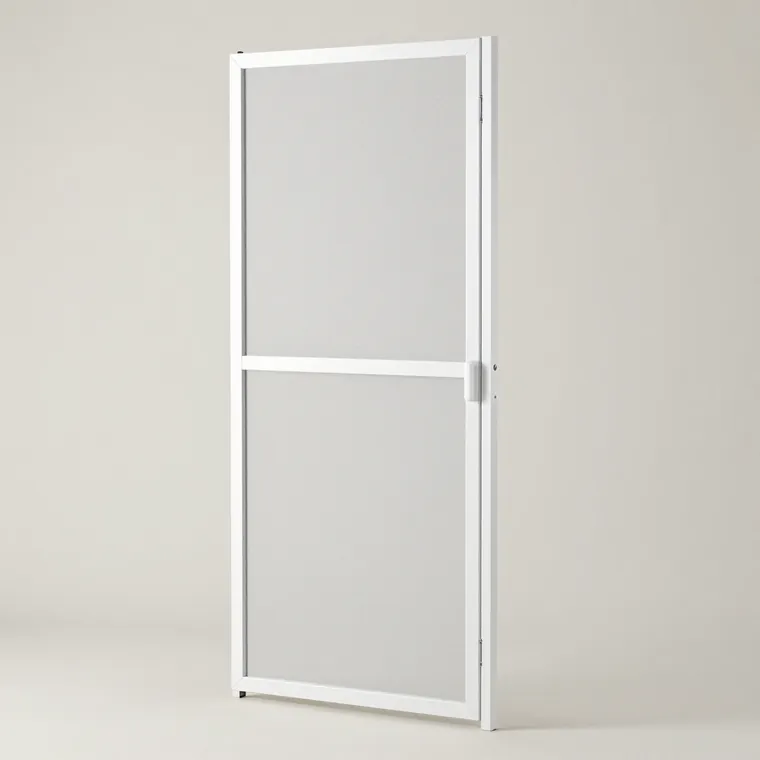 Door mosquito screens
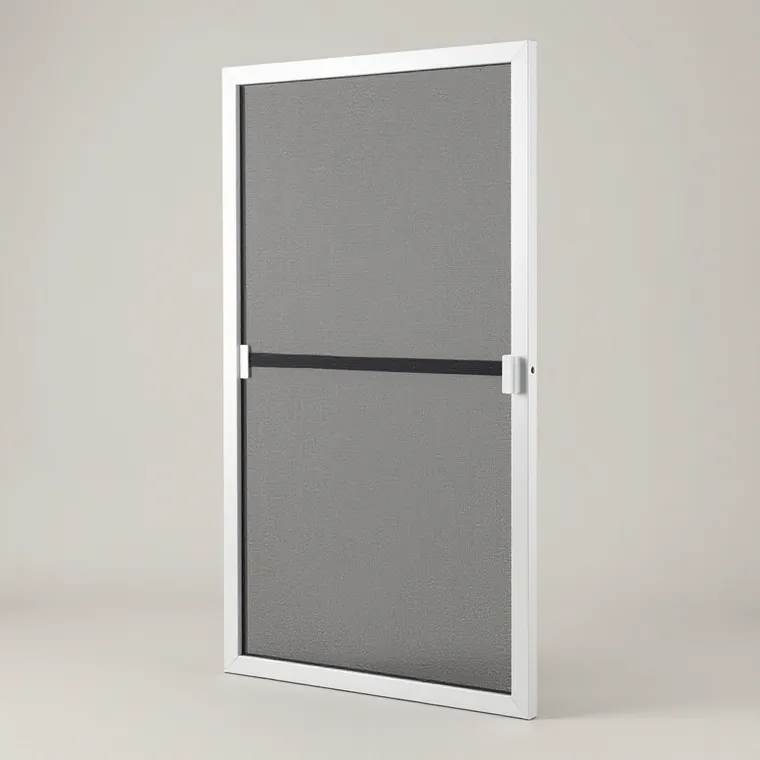 Framed screens
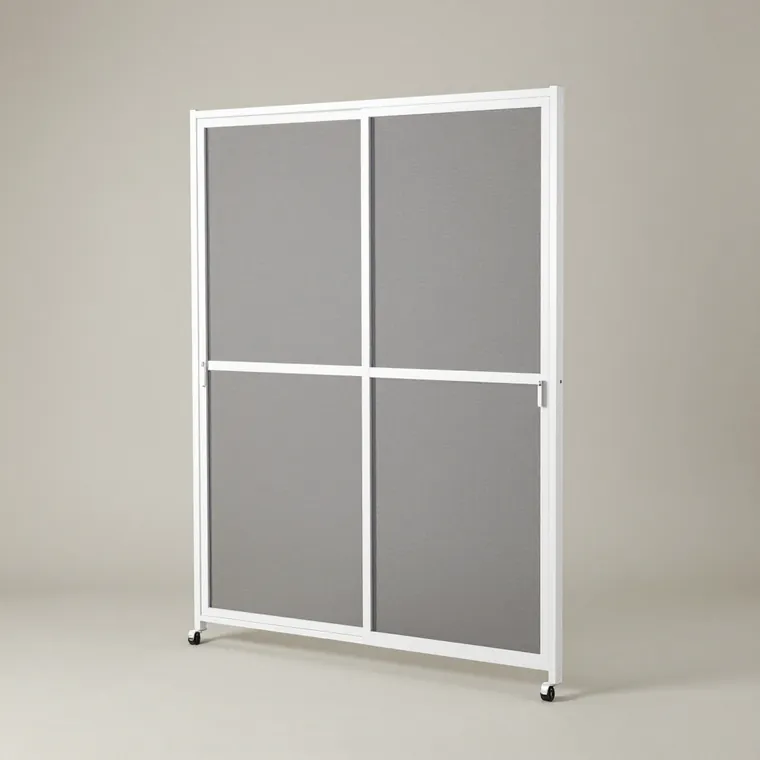 Sliding screens
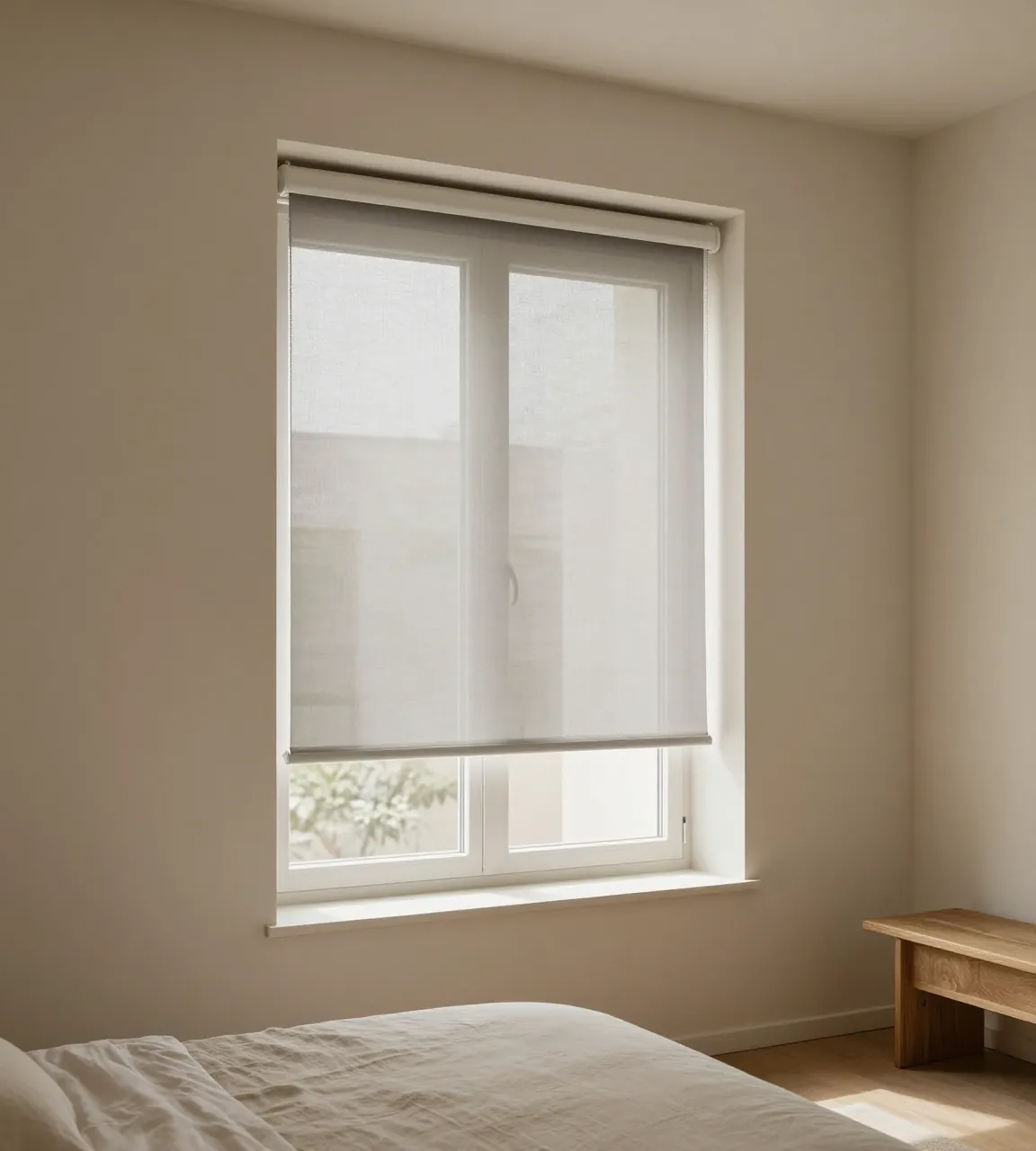 Roller screens