
Burglary protection
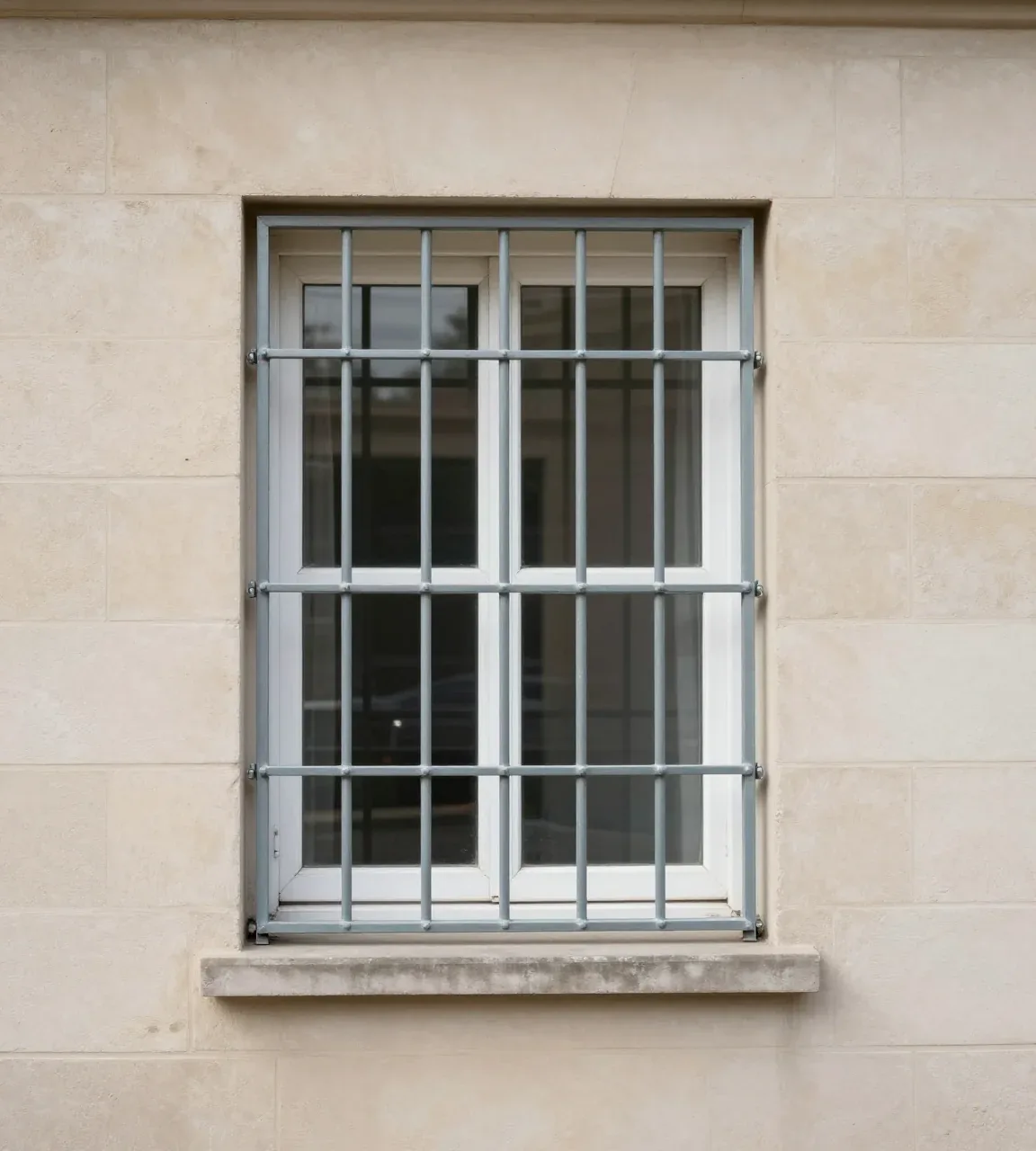
Welded grille
Standard pattern, strong steel. Price from 7500 ₸ per m². Suitable for ground floors and commercial premises.
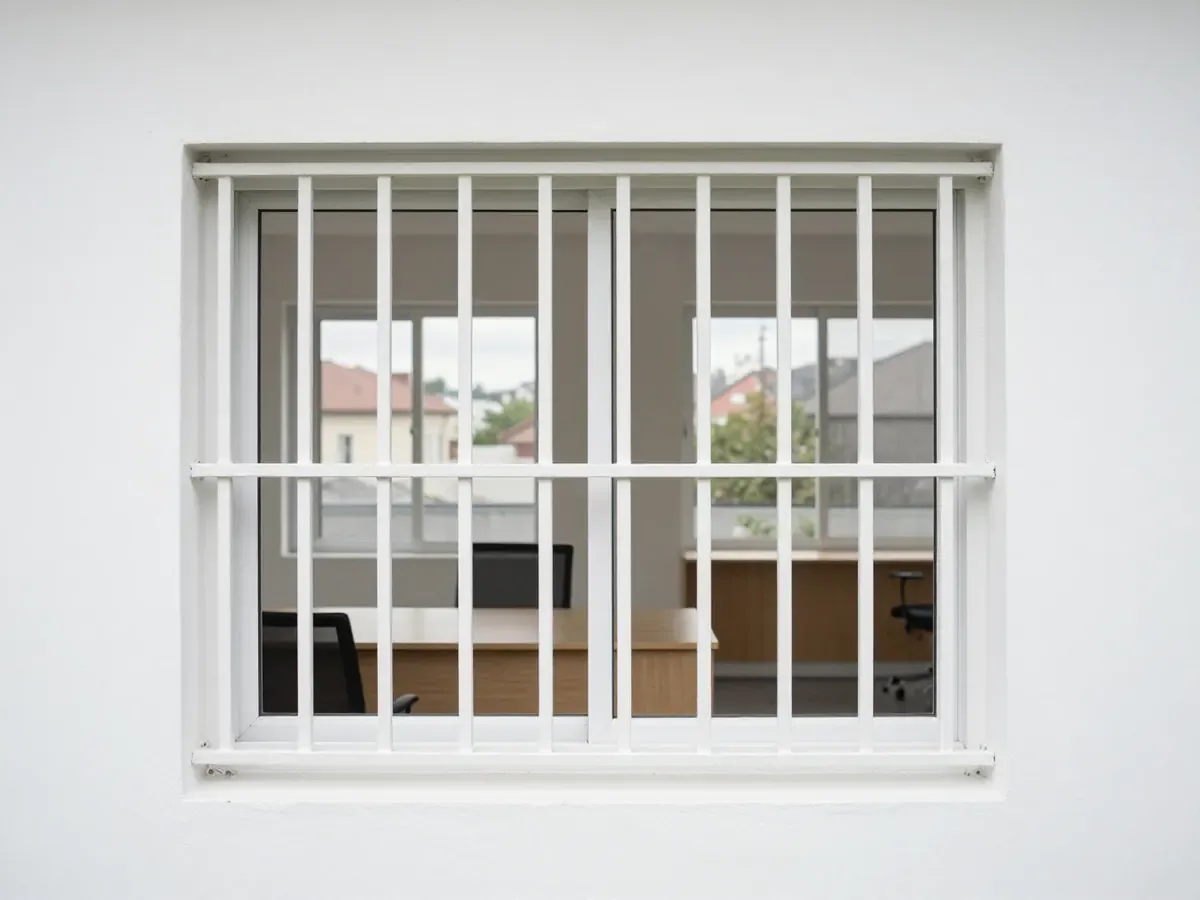
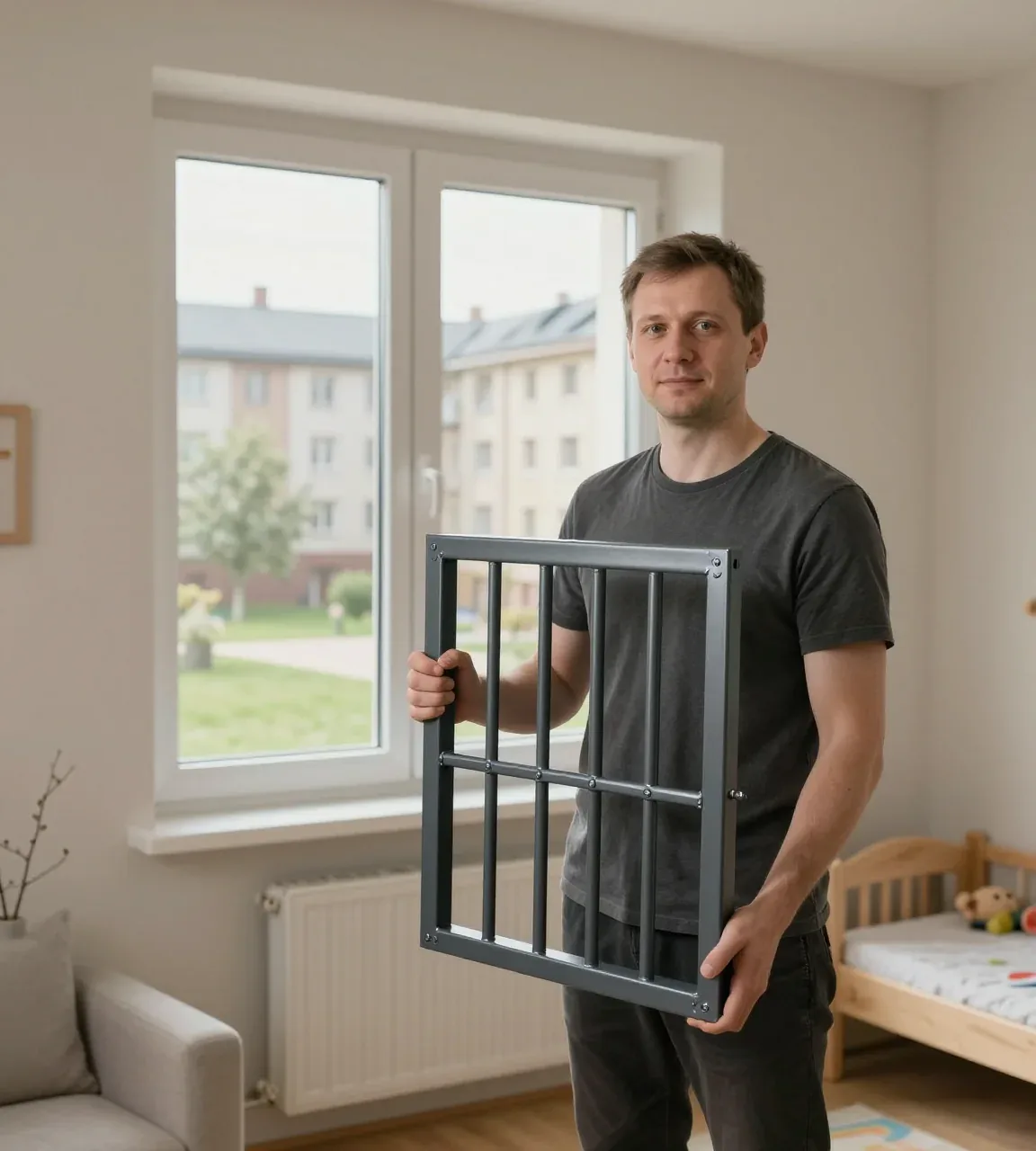
Welded grille
Standard pattern, strong steel. Price from 7500 ₸ per m². Suitable for ground floors and commercial premises.
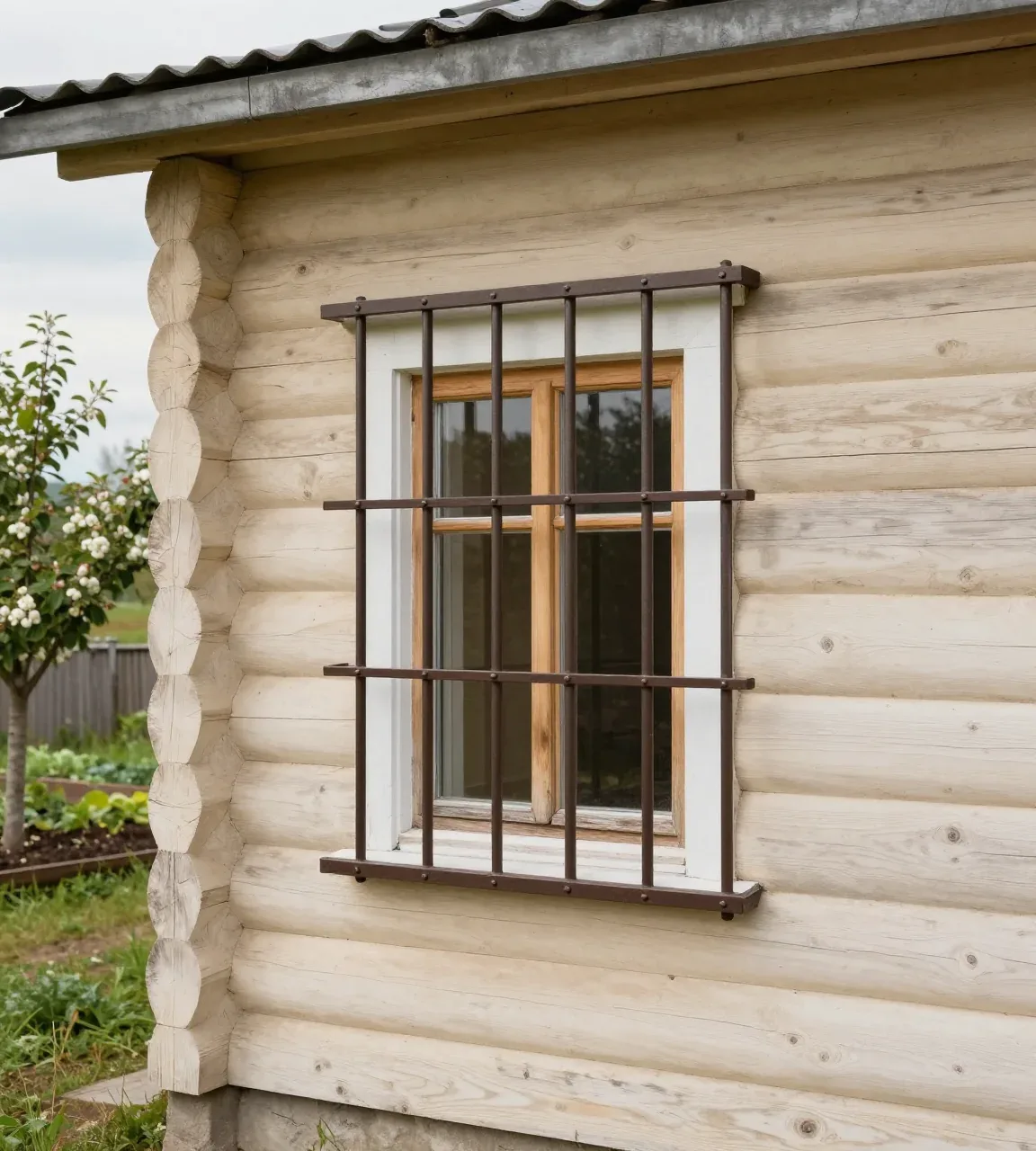
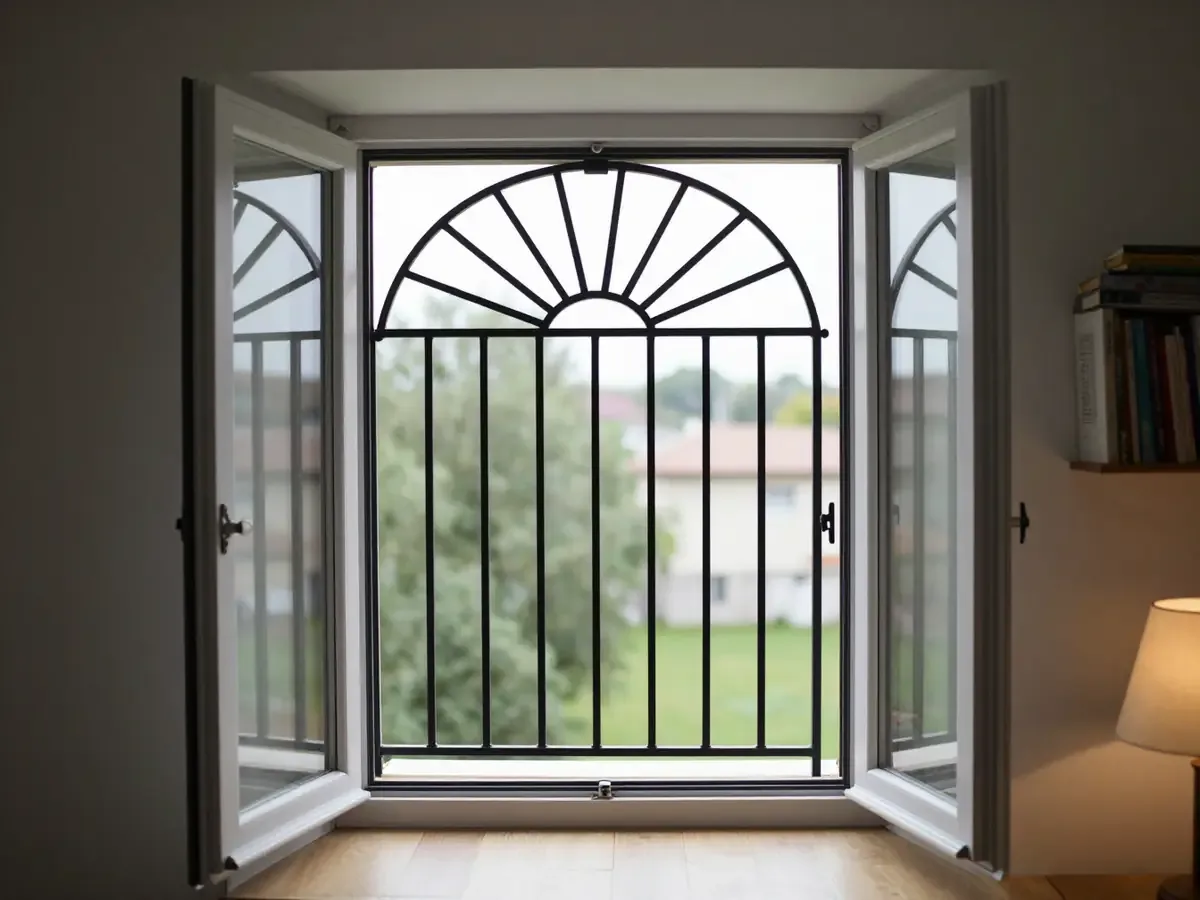
Wrought iron grille
Custom pattern, hand forging. Price from 26000 ₸ per m². Combines security and facade decoration.
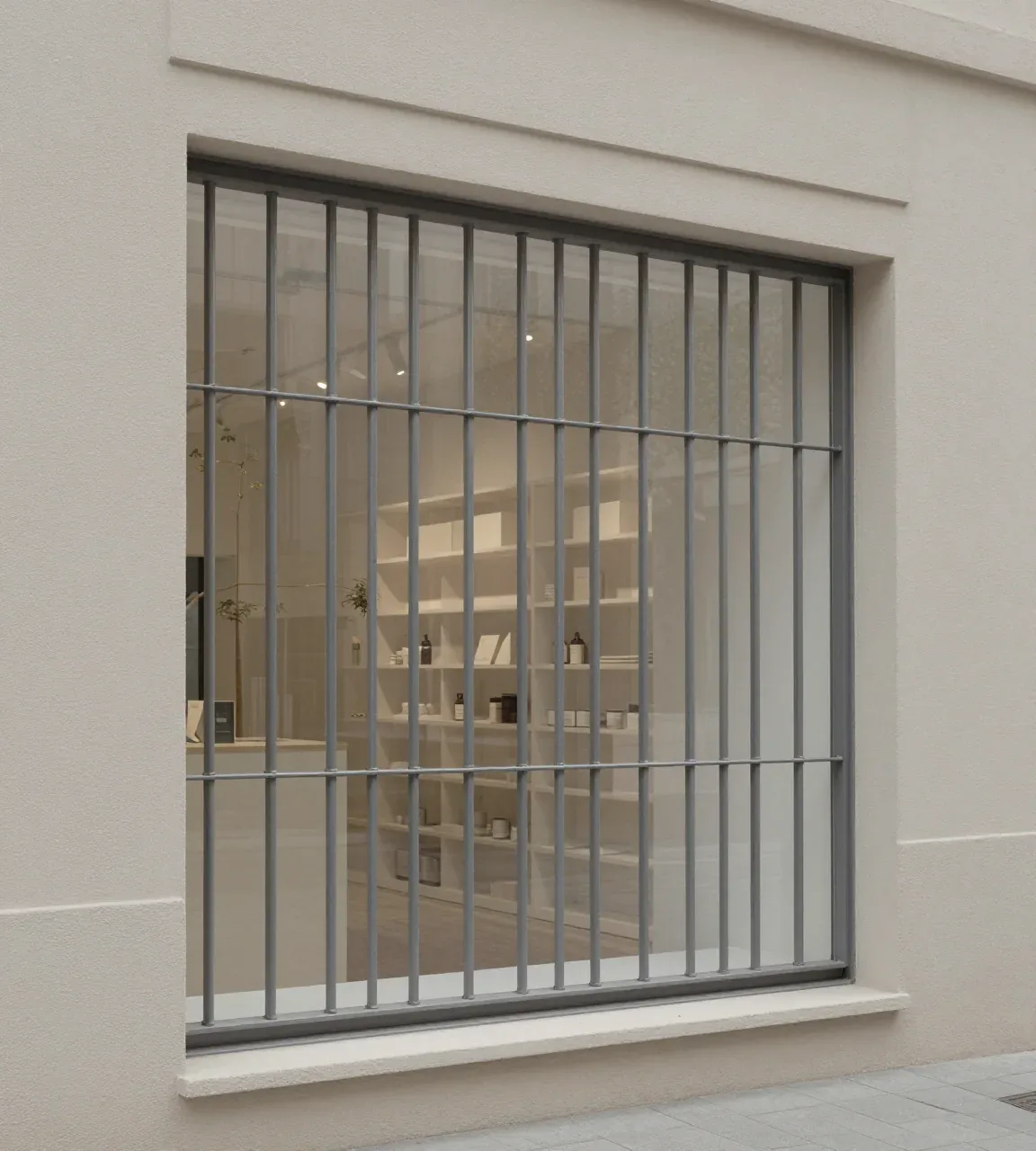
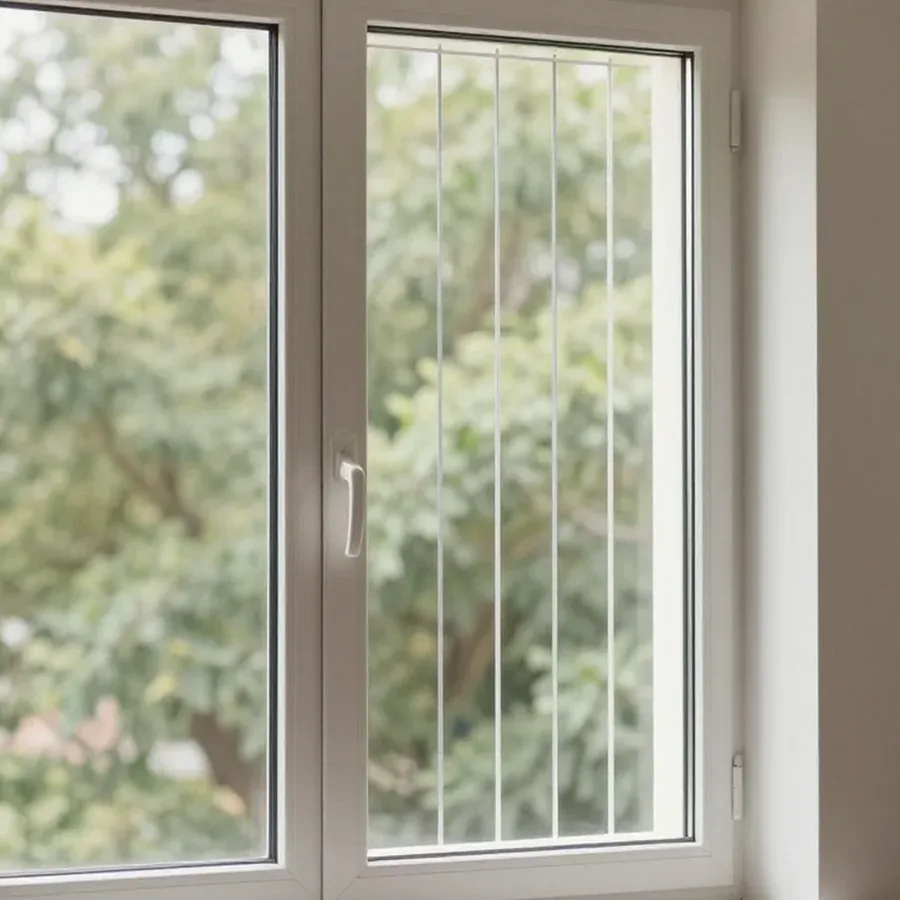
Clear grille
Polycarbonate keeps the view from the window. Price from 26000 ₸ per m². Often chosen for children's rooms and balconies.
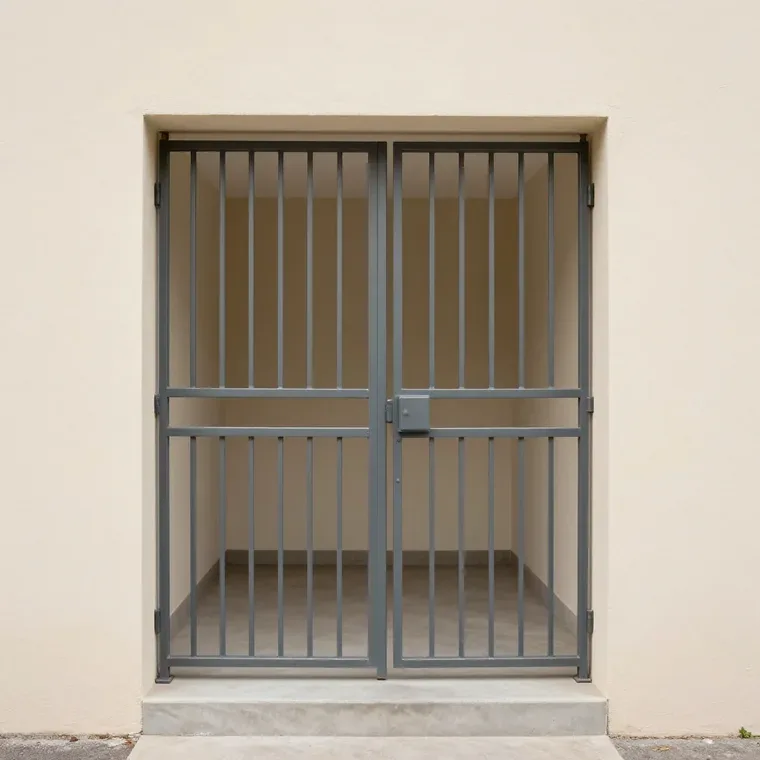
Hinged leaf
Opens on hinges with a lock. Extra from 15000 ₸ per leaf to the base price. Convenient for warehouses and offices.
Child safety grille
Lightweight aluminium fall-prevention design. Price from 12200 ₸ per unit. Installed on apartment windows.



5,097 reviews on review sites
A protective structure made of metal or polycarbonate, fixed outside or inside the opening
A window grille is a frame filled with steel bars, aluminium slats or polycarbonate. The frame follows the outline of the opening and is fixed to the wall or window profile. Inside there may be a lock and a hinged leaf for access.
The infill material is chosen for the task: steel bears load and protects against burglary, aluminium is lighter and suitable for children's rooms, polycarbonate keeps the view. The coating is powder paint, which protects the metal from corrosion and gives colour.
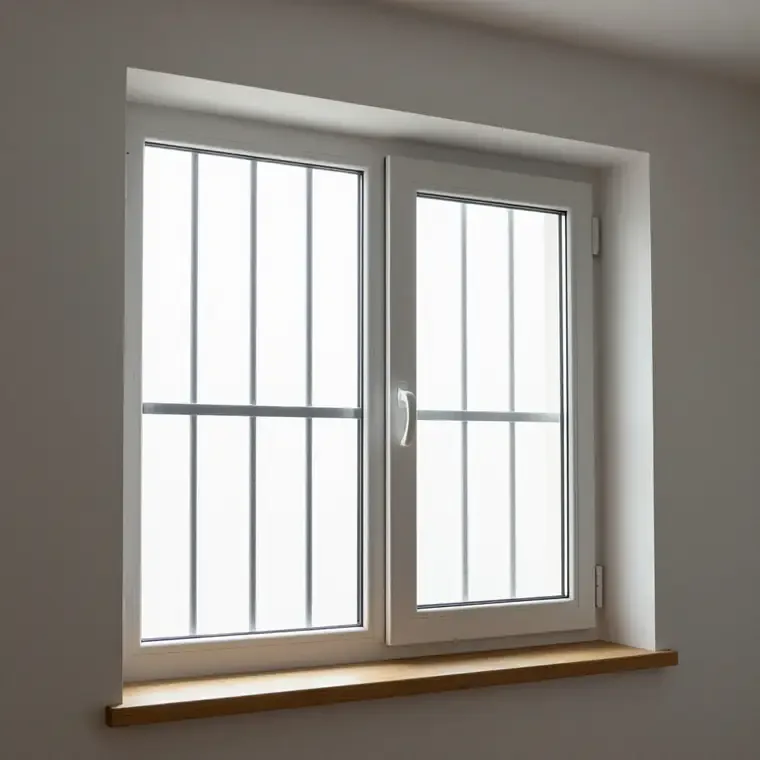
standard welded grille
making a framed mesh to size
the measurer will come at a convenient time
The fitting method depends on the wall material, window type and floor — the measurer selects the fixings
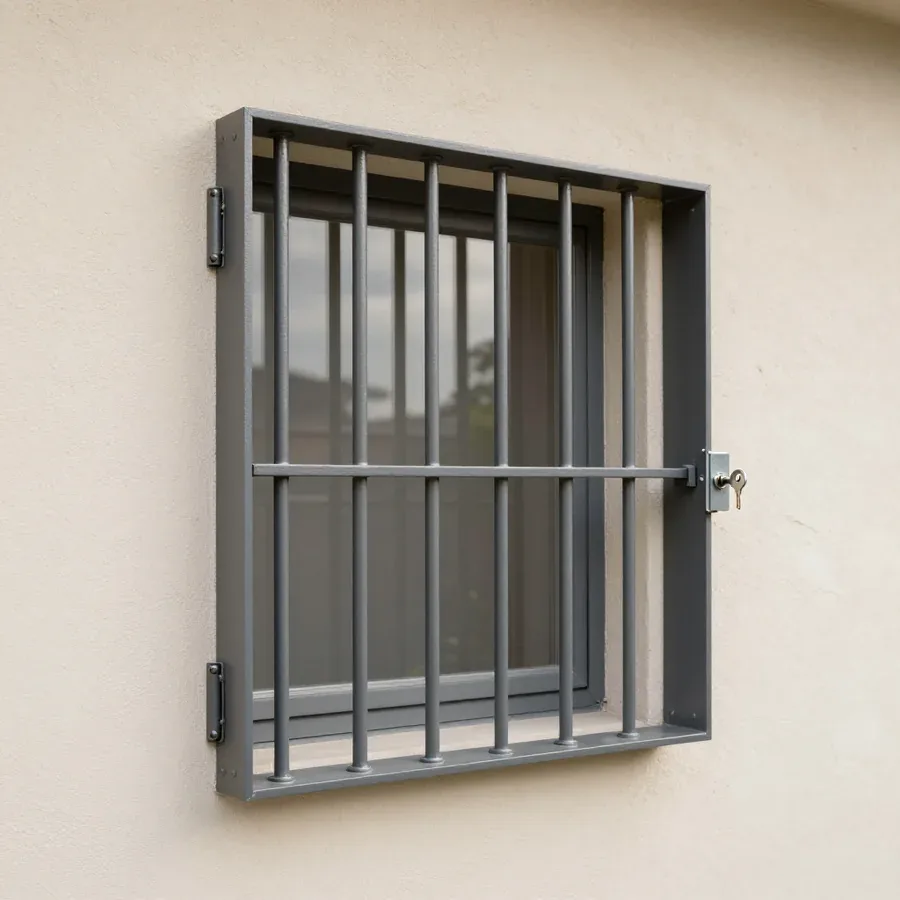
For brick and panel buildings: the grille is fixed to the wall with anchors, withstands wind load and attempts to pry it off.
Fixing to the window profile without drilling the wall. Suitable for plastic windows when it is important to preserve the reveals.
Part of the grille opens on hinges, a lock secures the leaf. Gives access for cleaning and ventilation.
The old fixings are removed, the holes in the wall are reused by selecting new fixings to match their diameter and depth. If the holes do not fit, new ones are drilled next to the old ones.
The cost depends on the design, area and additional work — the exact amount is fixed after measuring
| Type of item | Price |
|---|---|
| Standard welded window grillebasic design | from 7 500₸ per m² |
| Wrought iron grilleartistic forging | from 26 000₸ per m² |
| Convex stamped grilleraised for colour | from 26 500₸ per m² |
| Decorative laser-cut grillecustom pattern | from 25 000₸ per m² |
| Sliding accordion grillefolding design | from 28 000₸ per m² |
| Hinged grille leafextra to base price | from 15 000₸ per leaf |
| Clear polycarbonate grillekeeps the view | from 26 000₸ per m² |
| Aluminium fall-prevention grillelightweight design | from 12 200₸ per unit |
| 2-in-1 grille with mosquito screensecurity and insect protection | from 19 800₸ per m² |
| Powder coating for grillecolour of your choice | from 5 500₸ per m² |
| Grille fittingfixings matched to profile | from 4 500₸ per m² |
| Removal of old grilletake-down and disposal | from 4 000₸ per unit |
| Child safety window grillefall prevention | from 12 500₸ per unit |
The price is fixed in the order after measuringMeasuring and consultation — freePayment after installation: cash, card or Kaspi
Calculate the costFacts about the company: experience, production, warranty and terms
we work across Kazakhstan
the price is fixed after measuring
for work and replaced components
warranty on window installation — 5 years
we accept requests every day
we reply on WhatsApp within 5 minutes
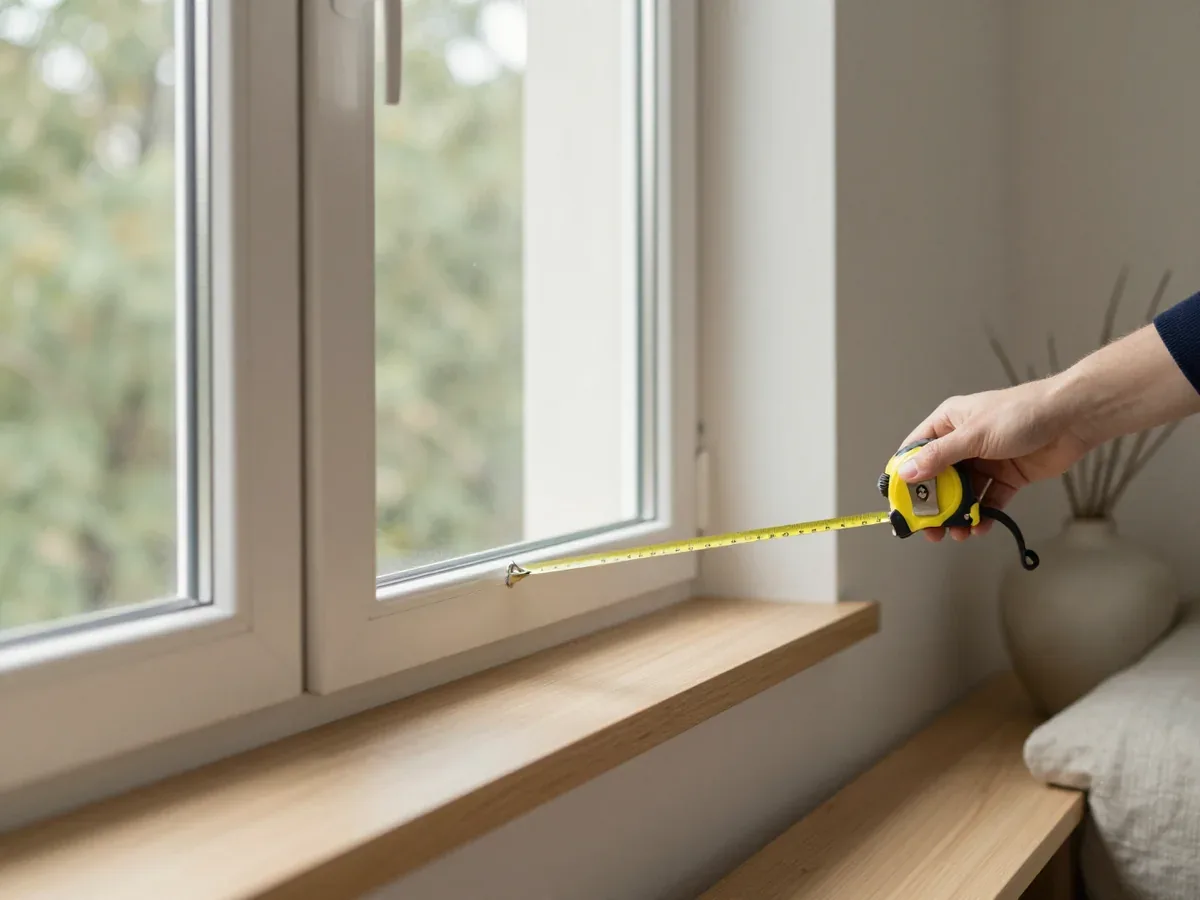
the measurer will come at a convenient time and take the measurements
you can order in 17 cities of Kazakhstan
Four steps from request to a finished structure on the window

You leave a request and the measurer arrives at a convenient time. Before the visit, clear access to the window, determine which side the sashes open and think about your preferences for pattern and colour — this speeds up measuring and helps choose the right structure and fixings.
Before production starts, approve the pattern and colour using samples: check the design, shade and position of the leaf on the sketch. This avoids rework and discrepancies with the expected look.
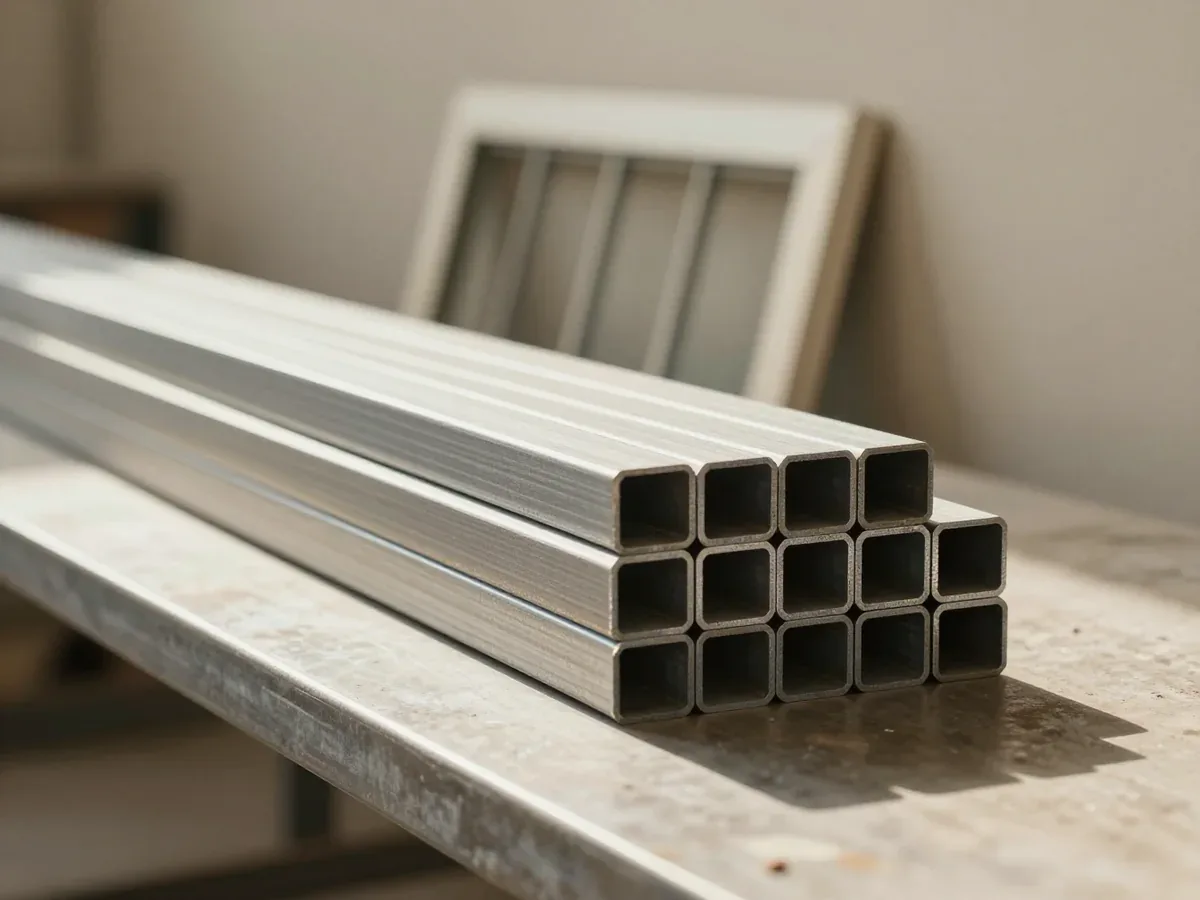
We deliver and install the grille, choosing fixings to suit the window profile and floor. We deliver and fit screens on windows and doors.
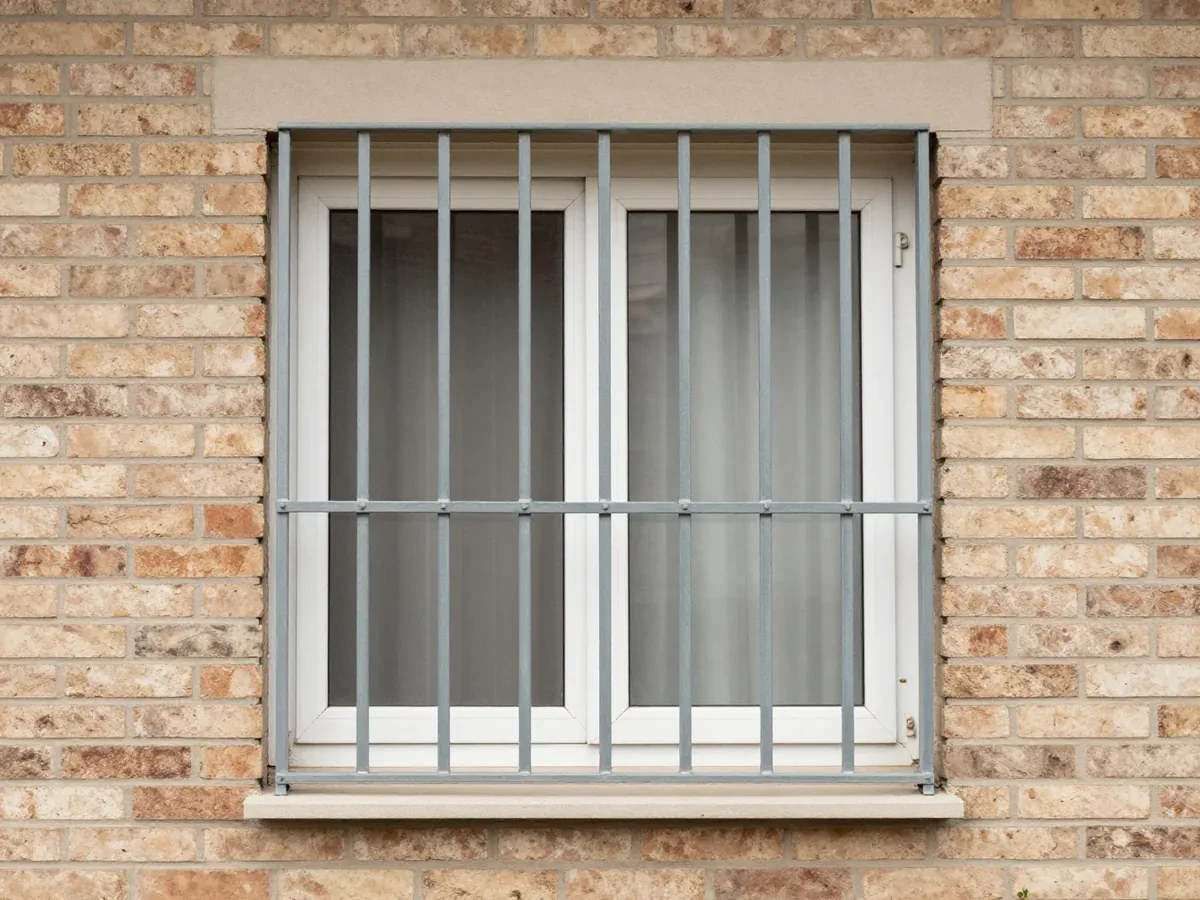
Check the finished structure: smooth hinge movement, lock operation, even gaps around the perimeter and paint quality. If you notice any issues, contact the installer — they will advise how to fix them.
Good to know

Senior mosquito screen specialist at moskitnyesetki.kz
We supply and fit window grilles in Taldykorgan as a direct contractor with our own fitters, not an agency. We bring the grille made to your window size, fix it to plastic, wood or aluminium without wrecking the profile, and take payment only after installation. Measuring and consultation are free.
A protective unit solves one task — keeping someone out, keeping a child in, or leaving the view open — and that task decides the construction. The first question is what the piece must withstand under load.
A protective unit is ordered for a single job — keeping intruders out, keeping a child in, or leaving the view clear — and each job points to a different construction. Security work calls for a rigid build with rods close enough together and anchors that reach into the wall, not just the surrounding profile. Child safety rests on spacing the body cannot pass and on a mount a determined toddler cannot work loose. A view-first unit trades metal thickness for transparency and takes a slimmer surround. A screen bought purely for looks often has thin rods spaced wide; if the real reason is security, ask what the spacing and the wall fixing actually resist, because a decorative panel and a load-bearing one look similar from the street.
| Type | How parts are joined | What it hides | Best for |
|---|---|---|---|
| Welded | Rods welded into a rigid unit | Most of the opening | Rear windows, utility rooms, ground floor |
| Forged | Metal shaped and joined by hand | A decorative share of the view | Front facades where the pattern is seen |
| Clear | Slim surround with a transparent infill | Almost nothing | Living rooms and windows people look through |
We fit grilles to plastic, wood and aluminium windows, and to the frames of loggias, gazebos and verandas, so a single order covers a flat window and a summer-house one. The material matters less than the mount: a PVC profile takes different anchors from timber, and an aluminium opening often needs its own bracket. On a first floor the unit is usually fixed into the wall rather than the surround, because the load belongs to the building; on an upper floor the same grille may hang from the frame, so the floor decides the fixing before the pattern does. In Taldykorgan the measurer sorts which opening gets which mount at the visit.
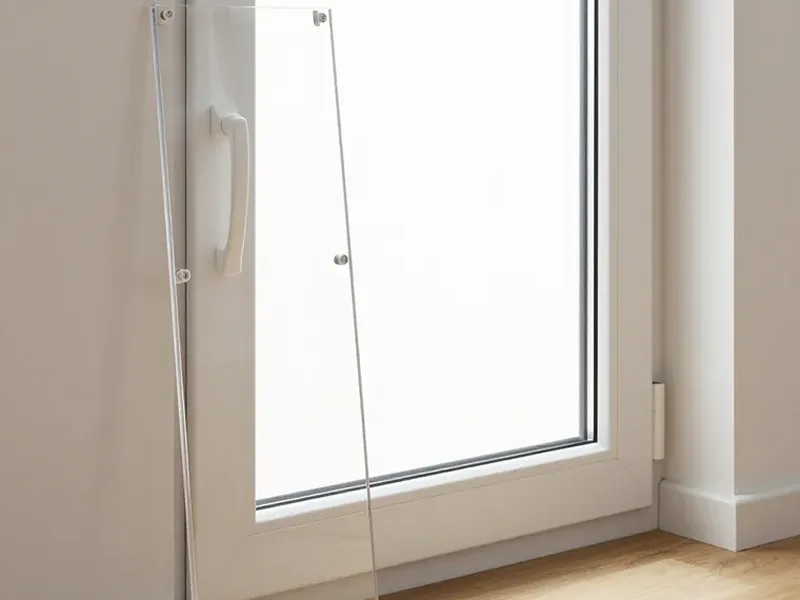
A transparent barrier is not glass standing in for metal. It is a slim frame with a see-through infill that keeps a gap guarded while the eye passes through. What you keep depends on the infill and the fixing.
Such a guard is a slim metal frame holding a transparent infill, so the aperture stays guarded while the eye passes through it. The bars carry the load and anchor to the wall or the window profile, while the infill is a rigid clear sheet set into that surround and held by clips, gaskets or a bead. The bar is usually powder-coated steel or aluminium, and the sheet is a polycarbonate or laminated type rather than ordinary glazing. Depth and bar spacing decide how much of the view the assembly eats, and a tighter spacing reads heavier from inside the room. The infill, not the frame, is what fails first under impact, so ask what the panel is made of and how it is held before judging a sample by how invisible it looks.
A transparent barrier guards against a fall and slows a casual break-in, but a determined intruder with tools meets less resistance than at a welded metal panel. The see-through sheet can crack, craze or be pushed out of its surround under a sustained attack, whereas a welded steel grid holds its shape and forces the intruder to cut through solid bar. Against a child leaning on the gap or a pet pushing at it, the infill performs well, because the load spreads across the whole surface instead of one bar. The honest limit is the tool test — a sheet that stops a shoulder will not stop a crowbar for long.
We suggest see-through guards for living rooms, balconies and openings people look through every day, and steer away from them where the guard is easy to reach from outside. On upper floors of a block the barrier is mostly a fall guard, so the see-through infill keeps the mountain view and the daylight that a welded grid would slice into strips. On loggia glazing and full-height glazing the same design reads almost as if the aperture were unguarded, which is exactly what the owner wants. The fixing matters as much as the infill: our measurer picks the anchor to suit the profile and the floor, and a shallow fixing on a ground-floor window undoes the point of a discreet guard.
Three different devices stop a child falling from a window — a grille, an opening restrictor and a window lock. They do not replace each other, and mixing them up is dangerous, so here is what each one actually does.
| Device | What it does | Works when window is open | Best for |
|---|---|---|---|
| Grille | Blocks the opening itself | Yes | Windows a child can reach |
| Restrictor | Limits how far the sash swings | Partly | Tilt-and-turn sashes |
| Lock | Stops the sash opening | No | Windows kept shut |
A fixed grille on the only window of a room removes the fire escape, so at least one aperture in the flat should stay clear or take a protective panel that opens from the inside. A room with one opening and a welded panel across it leaves an adult with no way out at floor level when smoke fills the stairwell. A hinged or sliding section with an internal release solves this at no structural cost — it is the same frame and the same mesh, only the opening mechanism changes. A barred opening with no internal release leaves no way out at floor level, and the fix is cheap at the ordering stage — decide which one stays openable before the panels are welded, not after.
At the measuring visit we look at the sill height, the sash type and how far it opens, then propose the grille, the restrictor or both together. Measuring and consultation are free, and the measurer comes at a time that suits you, takes the sizes and helps choose the mesh and the fixings. For a child's room we usually pair a protective panel with a restrictor on the same sash — the barrier holds the opening, the restrictor keeps the sash from swinging wide. The most common mistake is ordering a barrier for the opening the child uses and leaving the balcony door beside it unguarded, so we walk the whole room rather than the one opening. In Taldykorgan, most flats we visit have one balcony door and two or three windows in the same room, and the door is the one parents forget.
The fixing is chosen to suit the window profile and the storey, not the fitter's habit. It decides whether the frame stays whole and whether the unit carries its load.
A protective panel is either fixed into the ends of the window opening with anchor pins set in the wall, or laid over the frame and bolted from outside, and the two carry load very differently. The first method drills into the reveal and drives steel pins into the masonry, so the unit hangs on the building. The second sits the panel against the outer face of the profile and bolts through the frame, with the whole weight resting on the plastic. The into-the-opening method puts the load on the building, so it suits a ground floor and a heavy panel; the overlay method is quicker but hangs the weight on the frame, which is why it is chosen for lighter grilles and upper floors.
Yes, it can be fixed into the wall around the window so the plastic profile itself is never drilled, and we choose this where the frame must stay untouched. On plastic windows the reveal gives a solid anchor point, and the panel stands clear of the sash without a single hole in the profile. Drilling a plastic frame is not something we recommend on a new window, because every hole is a future leak point, so on a new window the wall fixing is worth the extra anchor even when the frame method would be faster. On a rented flat the same choice also keeps the window as the landlord handed it over, which matters when the deposit is checked at the end of the tenancy.
The measurer picks the fixing to match the window profile and the floor, from Z-brackets and pins to magnets, so the panel holds without stressing the frame. At the measuring visit for window grilles in Taldykorgan we look at how deep the reveal sits, what the profile is made of and how high the flat is, then match the anchor to all three. On a high floor the wind load on a large panel is the deciding factor, not the wall material, so a grille that is fine on the second floor may need deeper anchors on the ninth.
Ordering a barrier follows the same steps as any of our window work: measuring, making the panel to size, delivery and fitting, then payment once the unit is up. Here is what happens at each stage.
Measuring and consultation are free, the measurer comes at a time that suits you, takes the sizes and helps choose the design, the mesh and the fixings. The same visit covers the practical details that decide the order: which of the window types you have — plastic, wood or aluminium, a vent light, a loggia or a veranda frame — how the panel will be anchored, and whether the frame should be painted to match your windows. Because the measurer sees the opening and the floor, the fixing is chosen on the spot rather than guessed from a photo. The visit is also where the price is fixed in the order, so any change of mind about the pattern is cheapest to make before the measurer leaves, not after the panel is welded.
Every unit is made to the size taken at your opening, so it fits rather than being trimmed on site, and the frame is painted to match your windows. A framed screen made to your size takes 10–15 minutes to assemble, and the frame is painted any colour to match your windows, which is why the colour can be matched rather than picked from a short list. A grille cut down on site loses its coating at the cut and rusts first at that edge, which is why a made-to-size panel outlasts a stock one even when both look the same on the day of fitting. If the opening is an unusual shape, that is settled at measuring, before any metal is cut.
We deliver and install the grille, then you pay after installation by cash, card or Kaspi, and the price stays as fixed in the order after measuring. Fitting covers the anchors — Z-brackets, pins or magnets, whichever the measurer matched to your profile and floor — and a check that the panel opens, closes and sits square in the opening. Because payment comes after the fitting, the moment to inspect the anchors and the paint is while the fitter is still on the ladder, not the next week when a loose bracket is your word against the record. Ask the fitter to show you how the panel lifts out from inside before he packs up; it takes a minute and saves a call later.
A metal barrier is not the only way to close off a window. Roller shutters, restrictors and locks each cover a different moment, and an honest comparison keeps the owner from paying for something the home does not need.
| Option | Covers the opening | Needs space above window | Suits |
|---|---|---|---|
| Grille | Always, fixed | No | Flats and houses |
| Roller shutter | When lowered | Yes, a box | Country houses |
| Lock | Only when shut | No | Windows kept closed |
| Restrictor | Limits how far it opens | No | Child safety upstairs |
For a ground-floor flat we usually propose a fixed barrier into the wall plus a restrictor on the sash, while a house with a garden often takes such guards on the reachable windows only. A flat has one or two panes facing a yard or a walkway, so a welded barrier on those and a restrictor for daily ventilation covers the risk without darkening the rooms. A house spreads its exposure across a facade, a porch and a rear wall, and each of those needs its own decision. Protecting every window of a house costs more than it returns; the reachable ones — ground floor, above a porch roof, beside a drainpipe — are where such protection earns its place, and the rest can stay unguarded.
We can take an order for grilles together with mosquito screens, so one measuring visit covers both and the two are fitted to work on the same window. A framed screen and a metal barrier both sit in the frame, and fitted in the wrong order they foul each other; ordering them together lets the measurer set the clearances once instead of a fitter improvising later. The same visit also settles the mesh and the fixings, and a framed screen made to your size takes 10–15 minutes to assemble. A combined order means one measuring visit and one fitting visit for the same window.
The right choice follows from an honest answer about what the window needs, and the rest is detail. Five points carry the decision from start to finish.
Burglary protection, durability, child safety, handover
Konstantin Selenenkovsenior mosquito screen specialist, 10 years in the tradeOnline · replies within 5 minutes
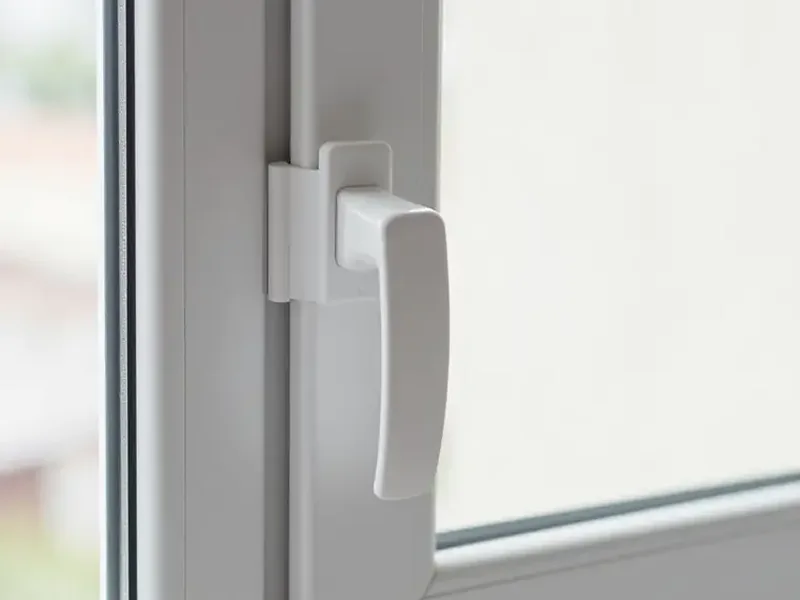
Ask a questionIt is the grille that protects against burglary: a blocker and a child lock only limit how far the sash opens and can be removed from inside. A lock on the hinged grille leaf adds a second line of defence. The choice depends on the floor and the specific window.
With powder coating the grille lasts a long time, but in a dusty climate it is worth wiping down and checking the welded seams periodically. Small paint chips are best touched up right away so corrosion does not start. There is no need to remove the structure to do this.
The leaf gets a key lock or a hidden latch that a child cannot reach from the windowsill. The key is kept near the window but out of children's reach, so an adult can open the leaf in a fire. The specific lock is chosen to match the pattern and weight of the leaf.
Check that the leaf opens without sticking, the lock engages, and the fixings are tight and do not wobble. Look over the coating for chips and scratches, and the gaps between the grille and the opening. It is best to raise any issues with the technician right away, before signing off.
Yes, but for damp spaces you choose a coating that resists corrosion, otherwise ordinary paint will peel quickly. The fixings are also chosen to suit the wall material. The measurer will advise on what suits your structure during a free measuring visit.
Thank you. We will call you back within 10 minutes!
Your order number is on the receipt or in the SMS. Choose where to leave your review.
Write a review on WhatsApp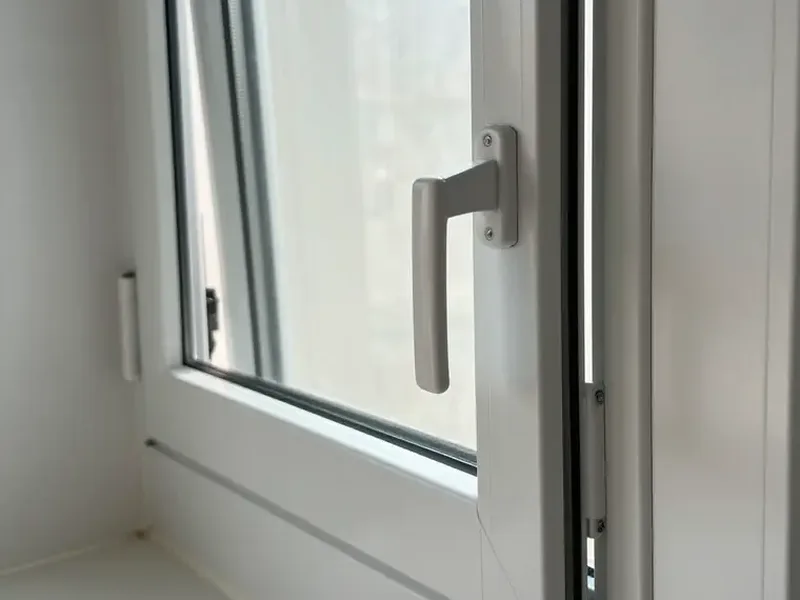 Window restrictors
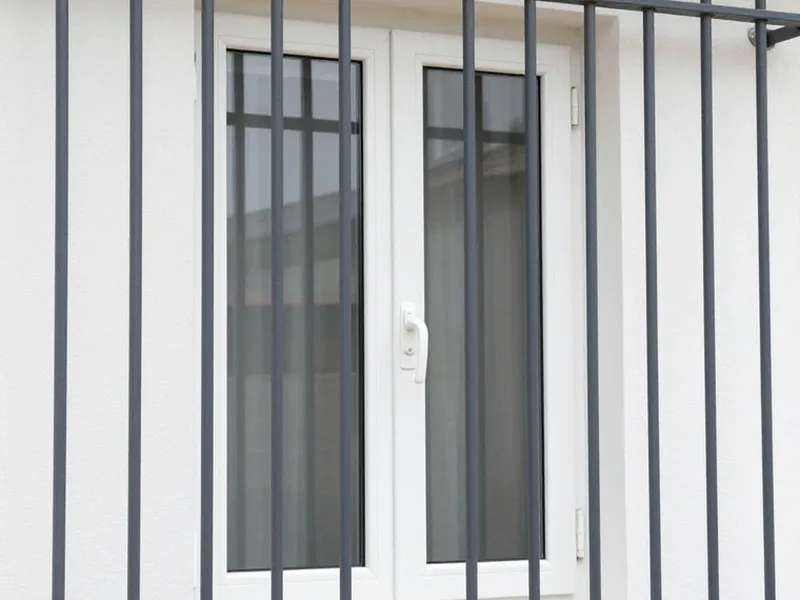 Metal grilles
 Transparent grilles
 Window blockers
 Penkid lock
