



Good to know
Veranda Mosquito Screens in Taldykorgan

Senior mosquito screen specialist at moskitnyesetki.kz
We make veranda mosquito screens in Taldykorgan to your exact opening, with free measuring and fitting by our own fitters. Choose framed, pleated, sliding or hinged door screens, a mesh for light, pets or pollen, and a frame painted to match your windows. You pay after installation, and every screen carries a 1-year warranty.
Matching veranda mosquito screens to your veranda opening type
A veranda is a window, a door and sometimes a wide span all at once. The type of mesh follows the way you cross that gap every day, not the model that looks best in a photo.
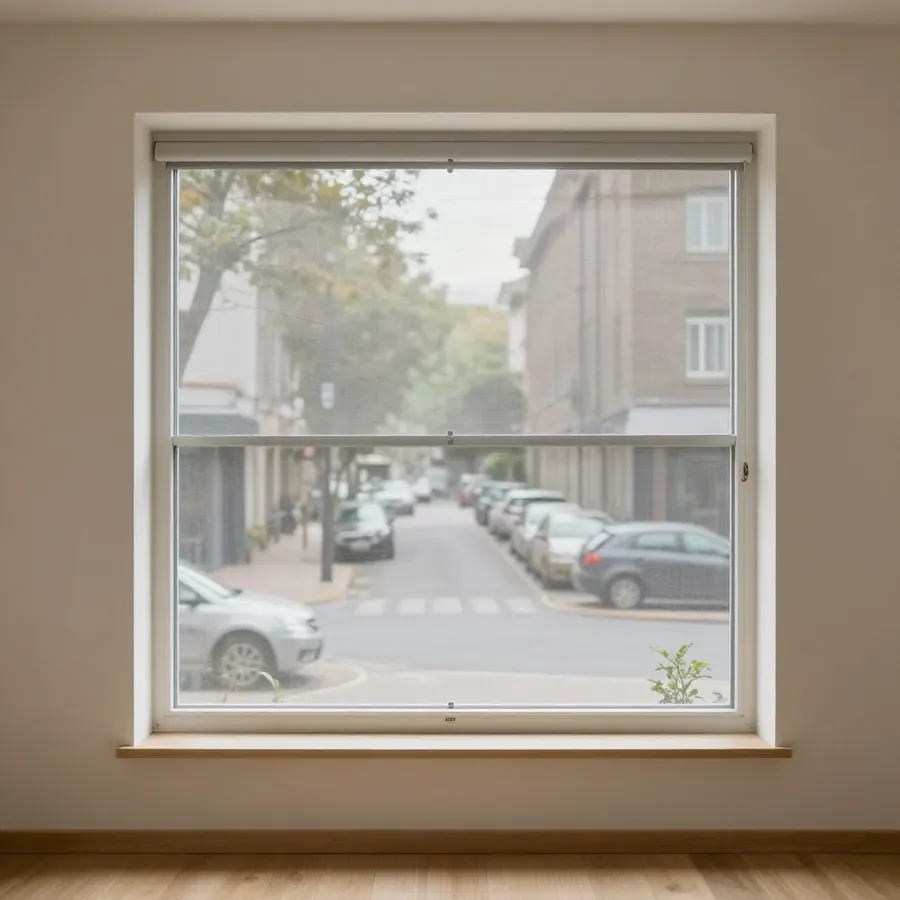
Framed, pleated or sliding for a window, a door and a wide span
| Opening on the veranda | Screen type | How it works |
|---|---|---|
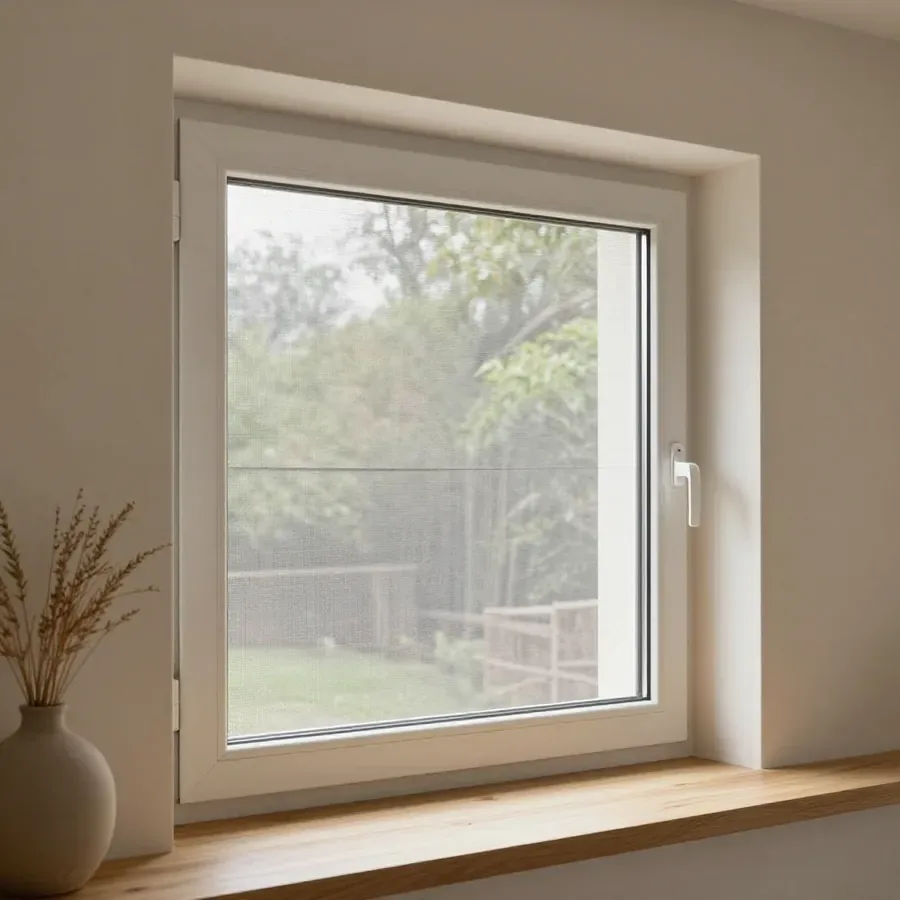
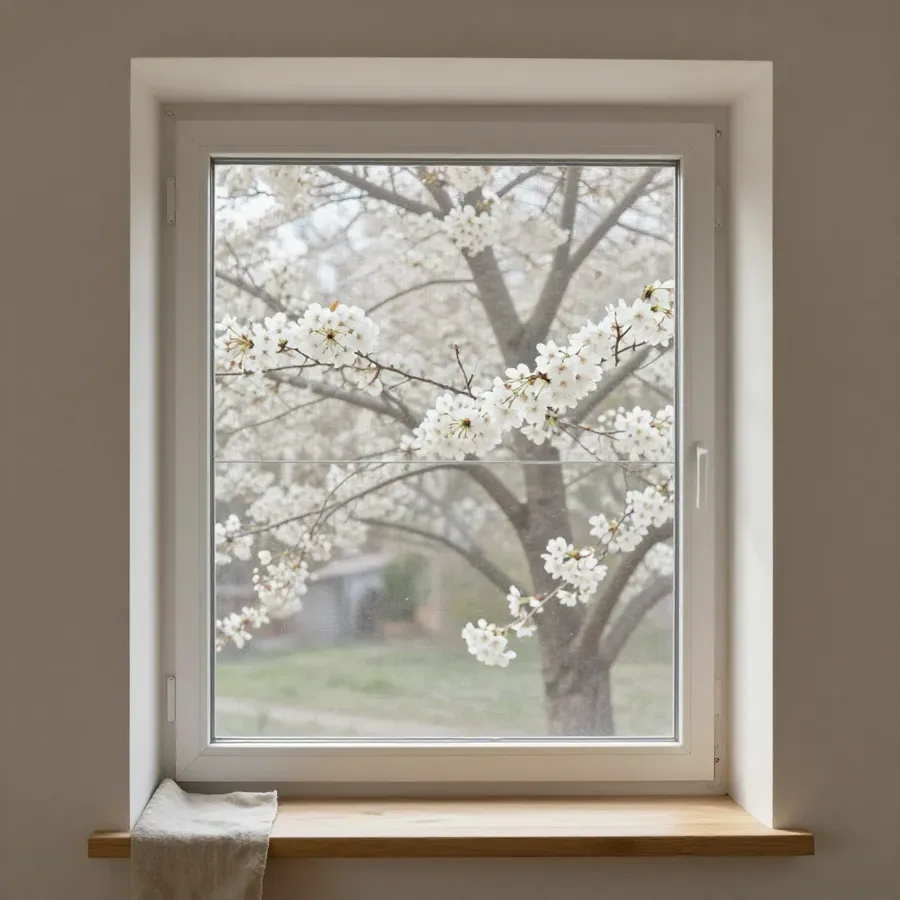
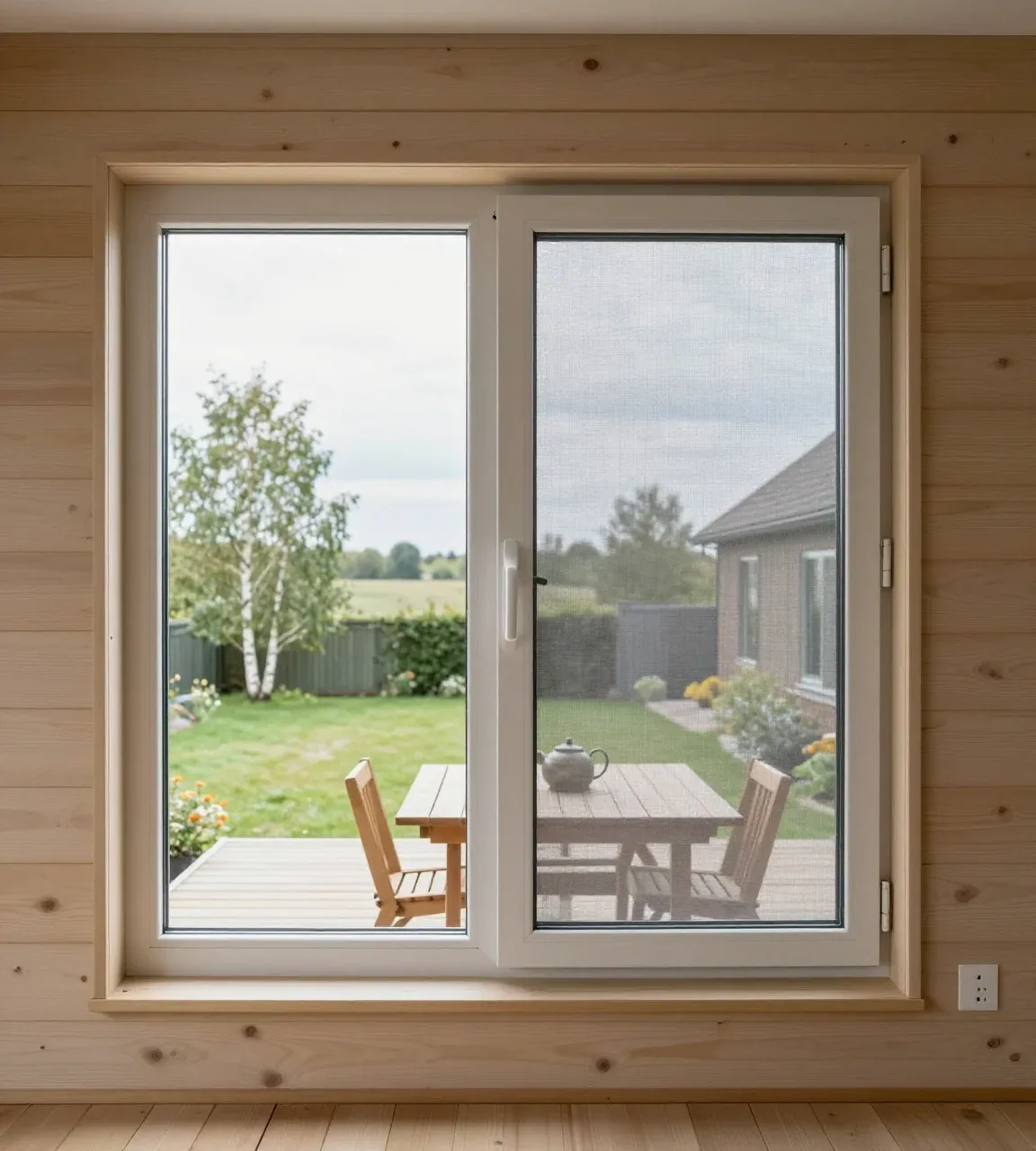
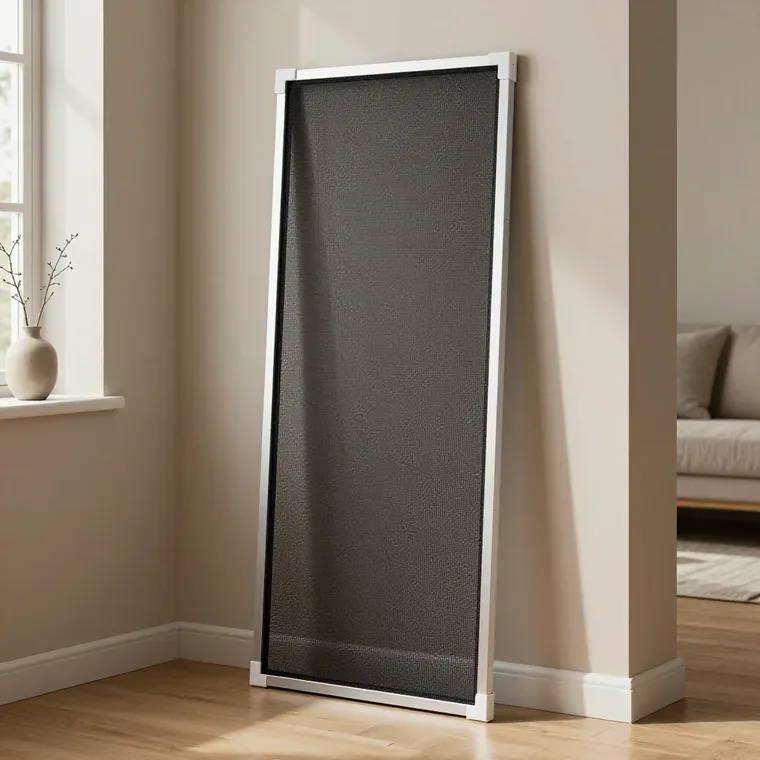
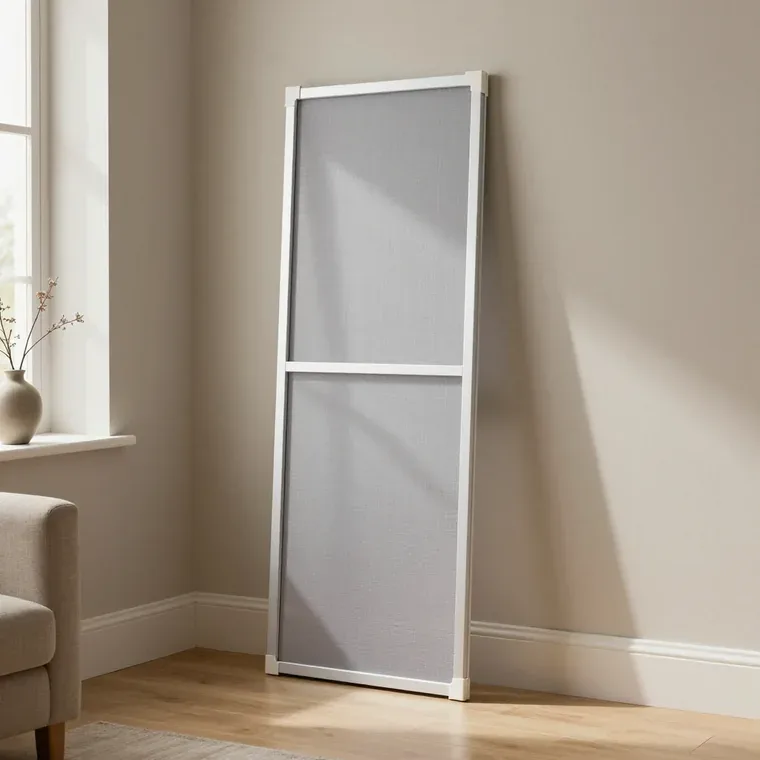
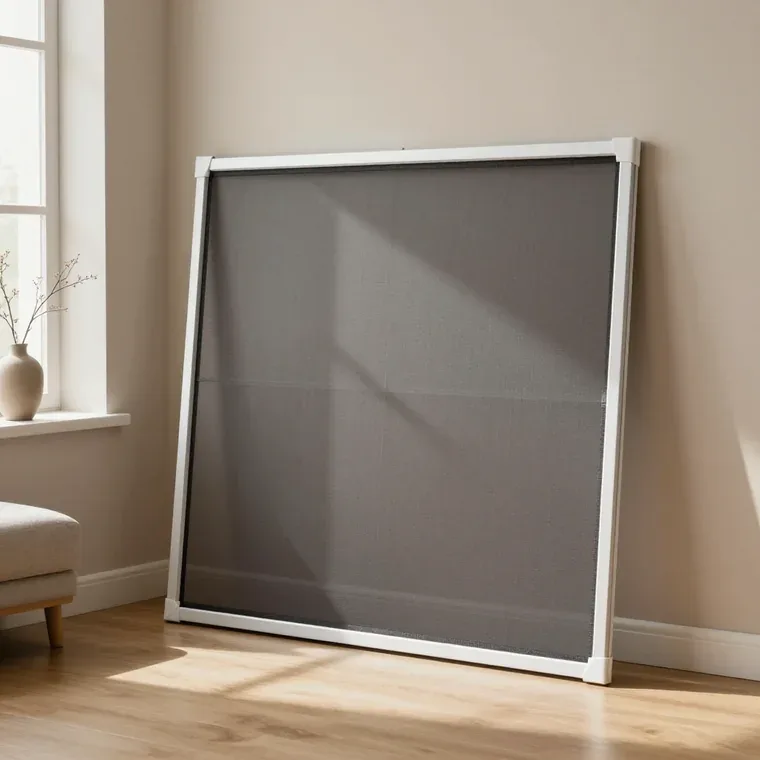
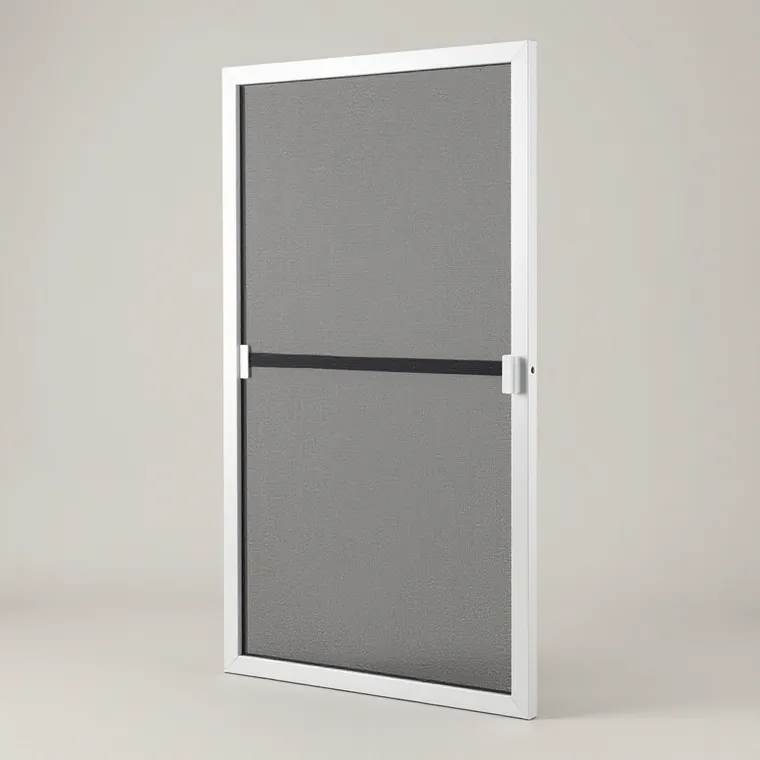
| Window or small fixed opening | Framed screen | Lifts off from inside in a minute |
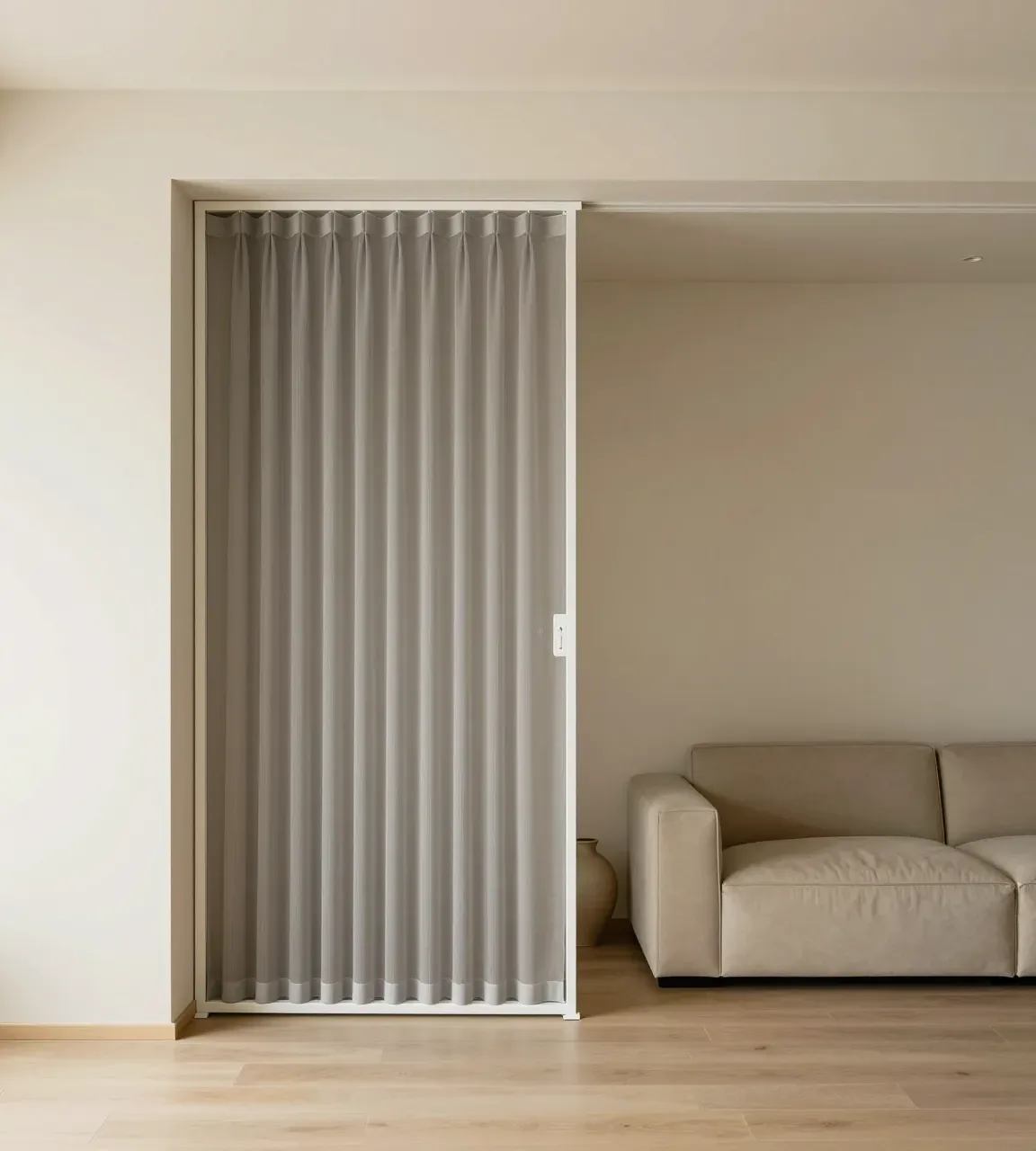
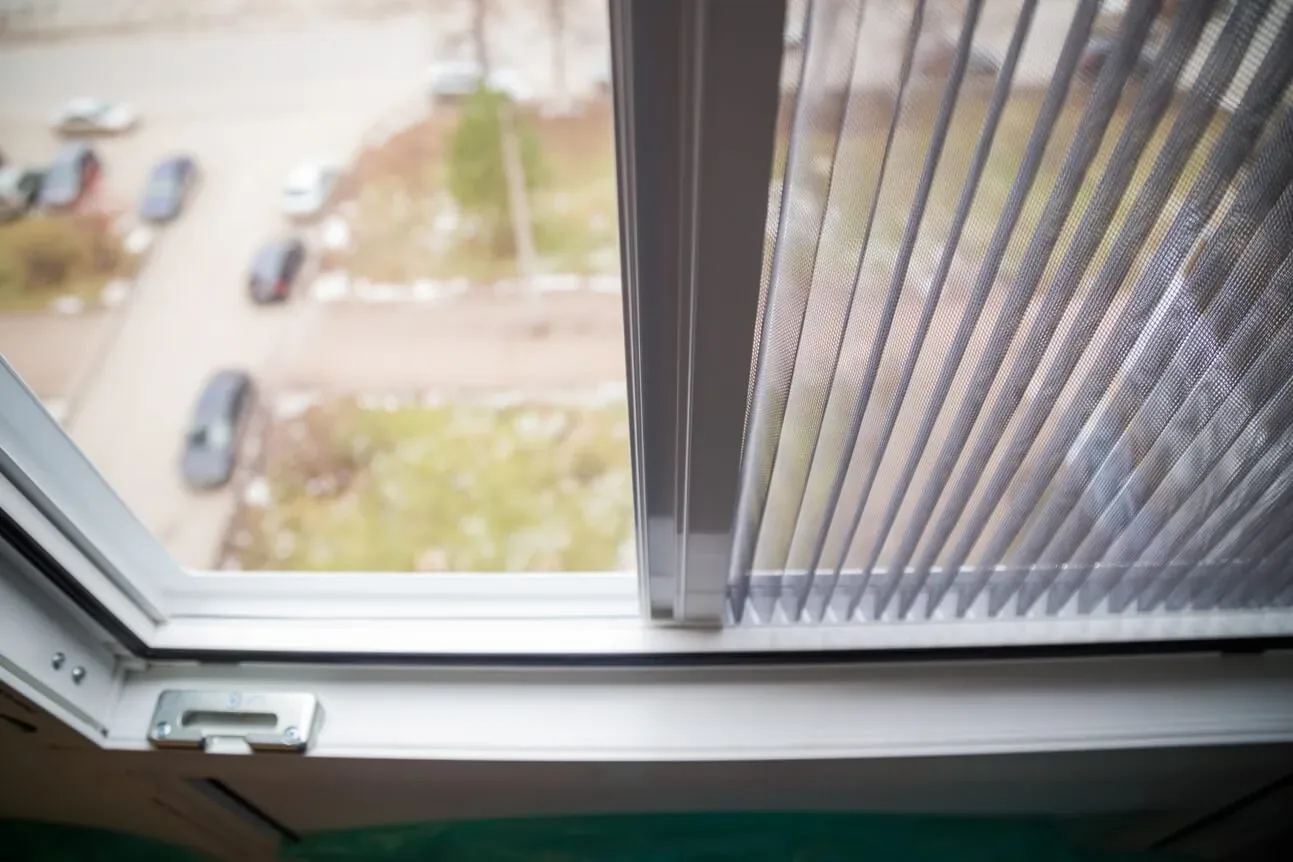
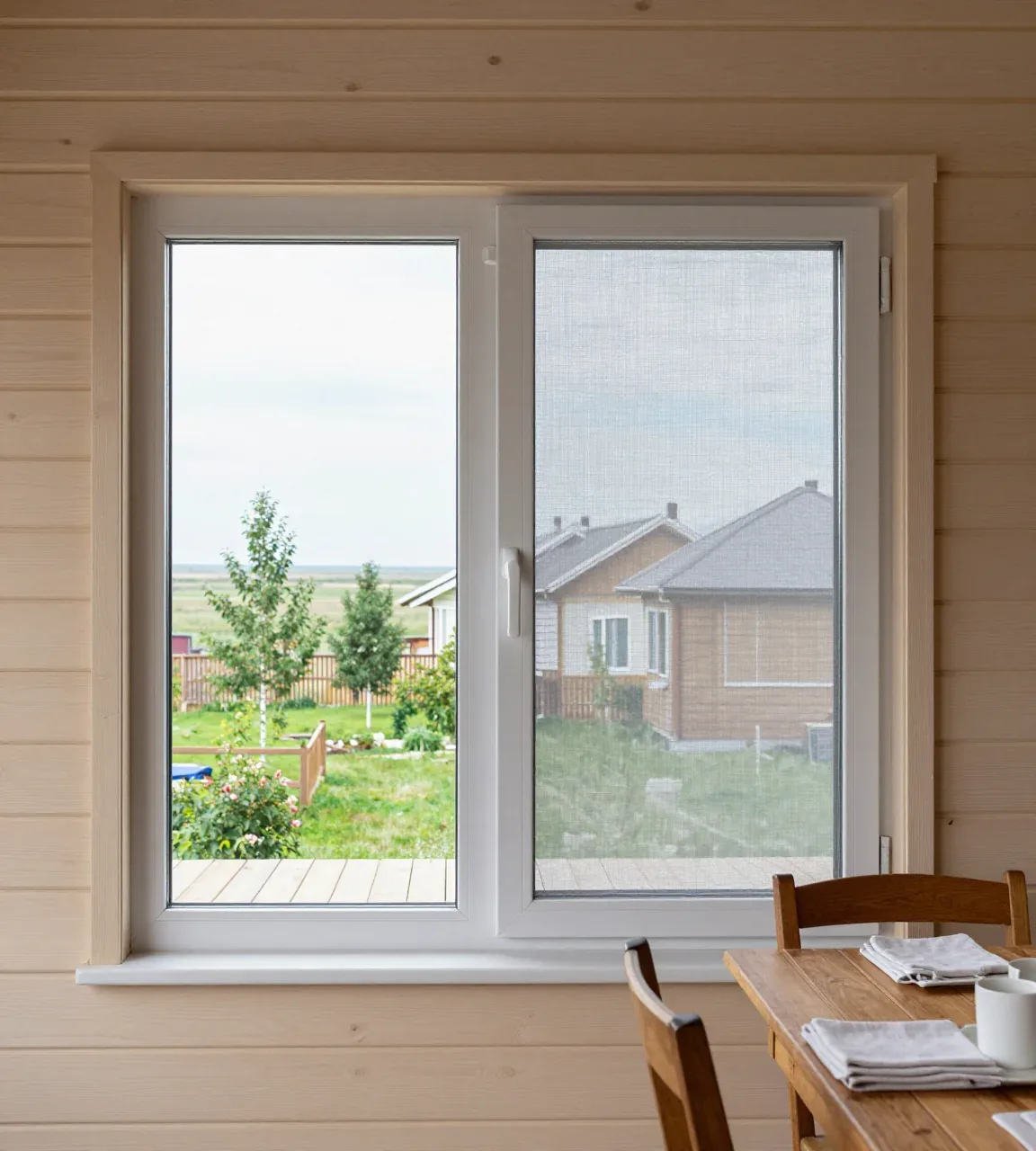
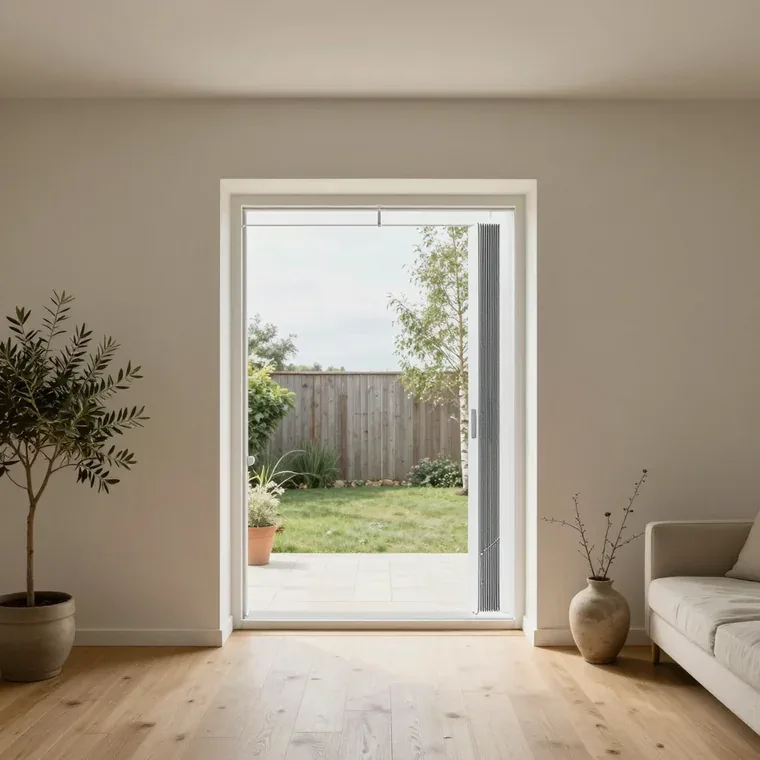
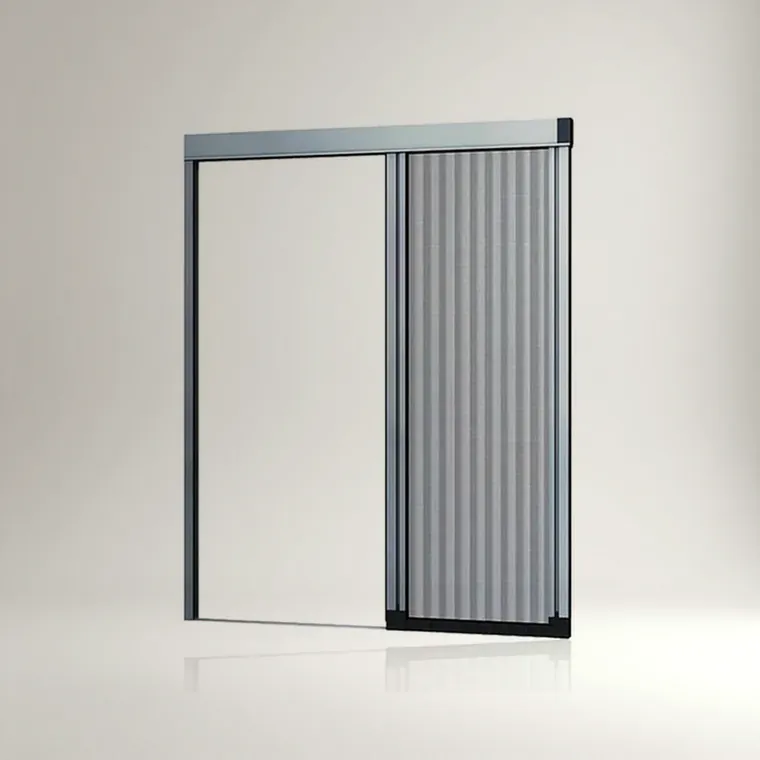
| Passage you cross daily | Pleated screen | Folds to the side as you pass |
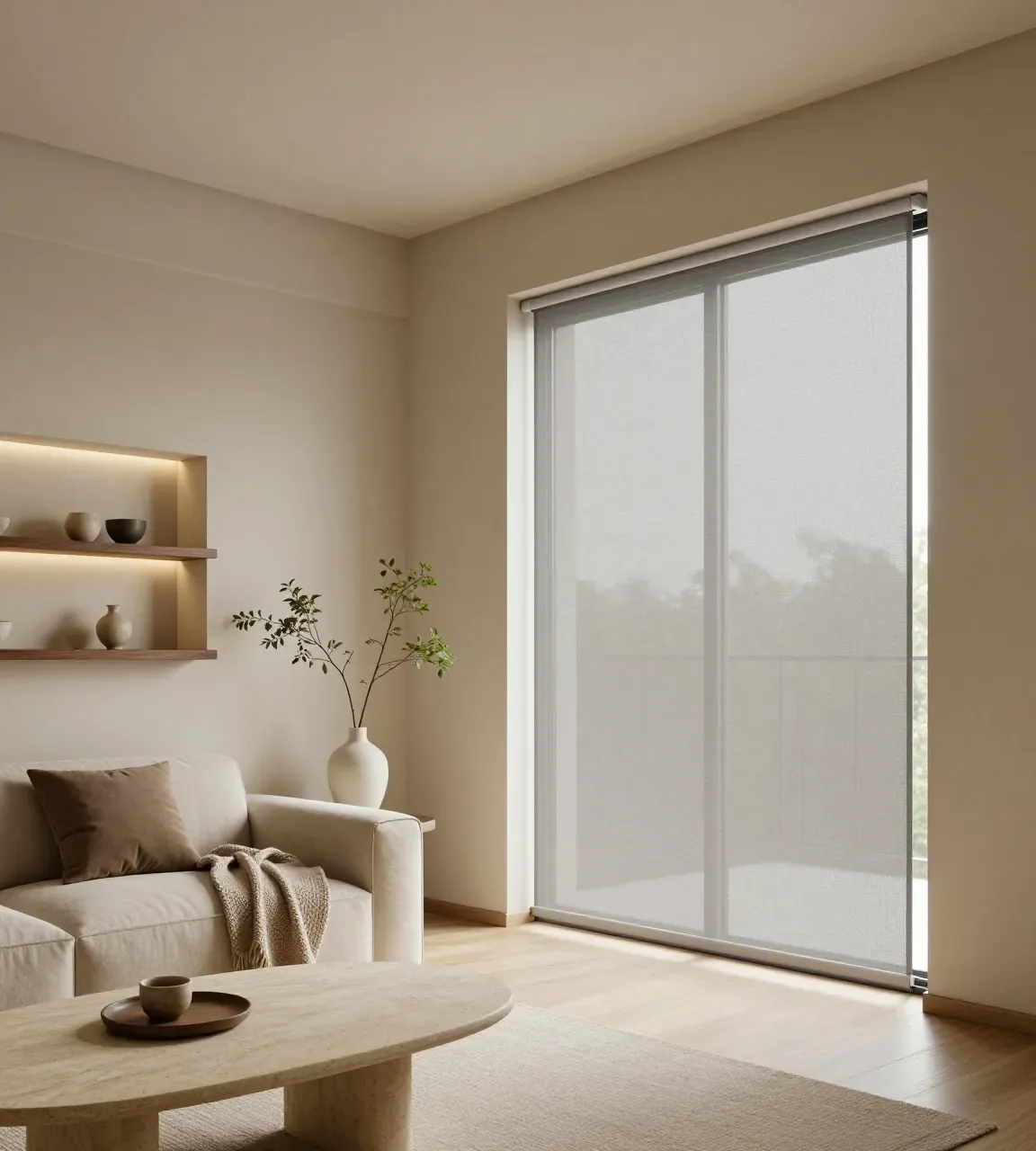
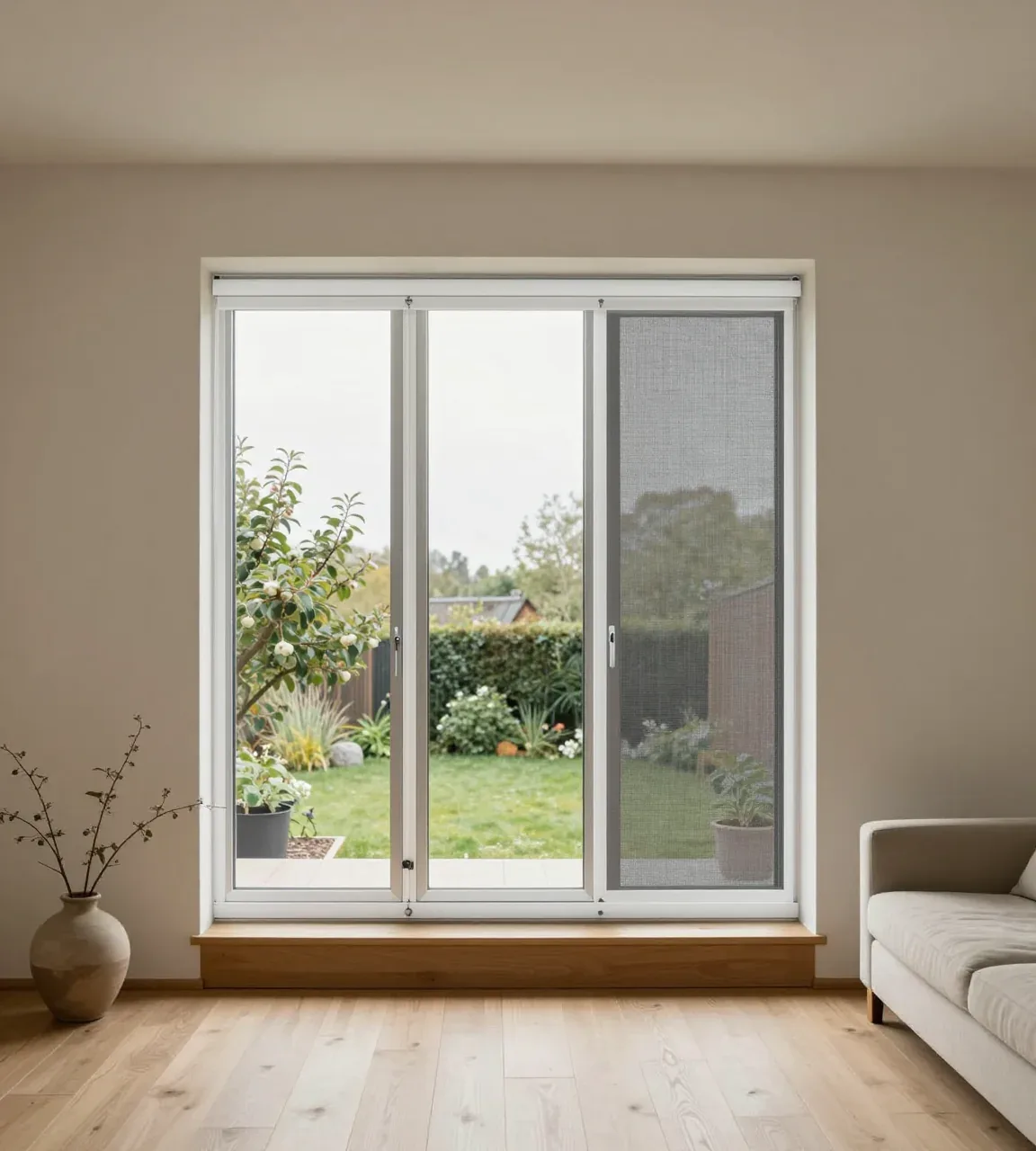
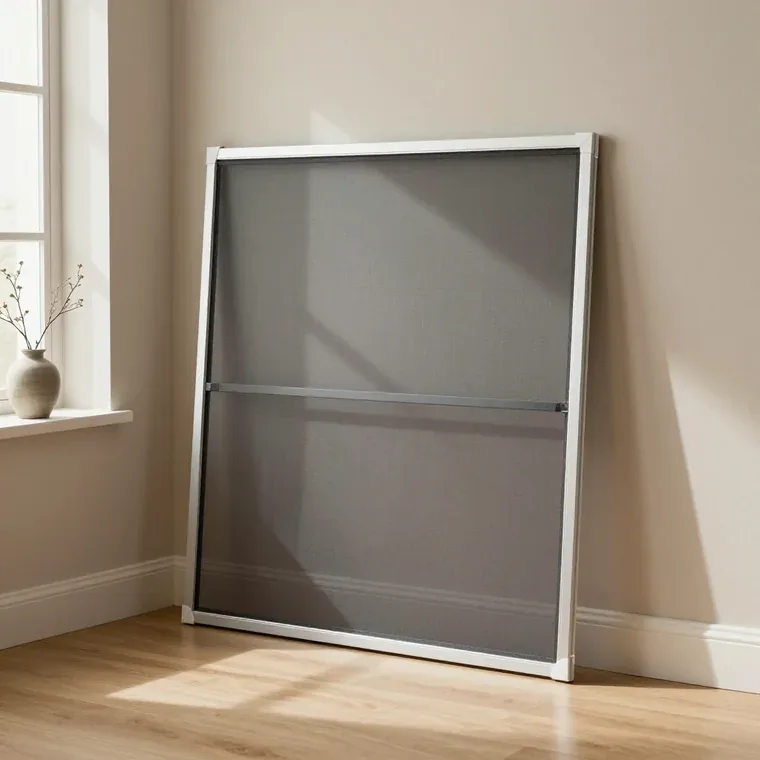
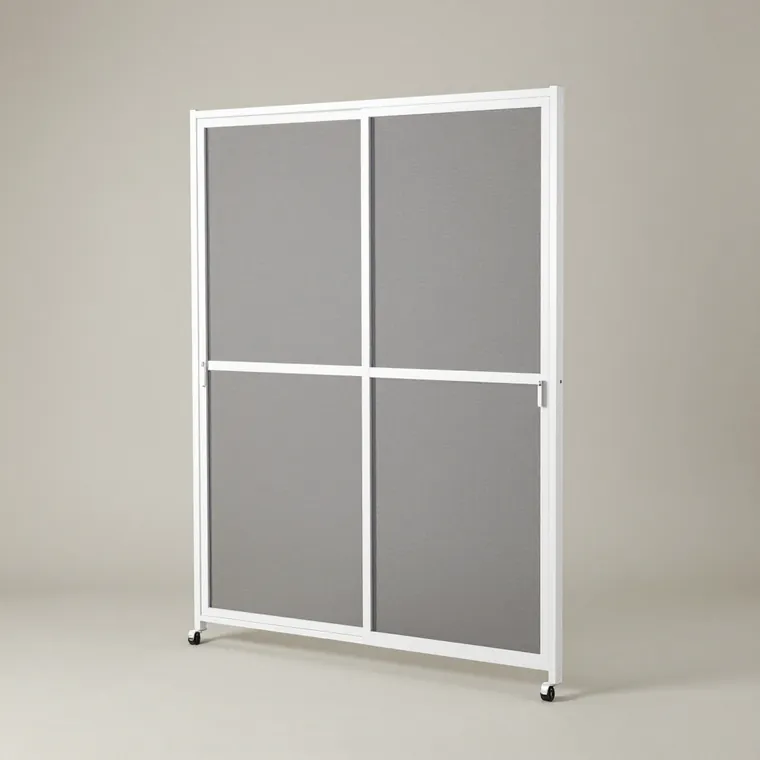
| Wide span or glazed wall | Sliding screen | Glides along the frame |
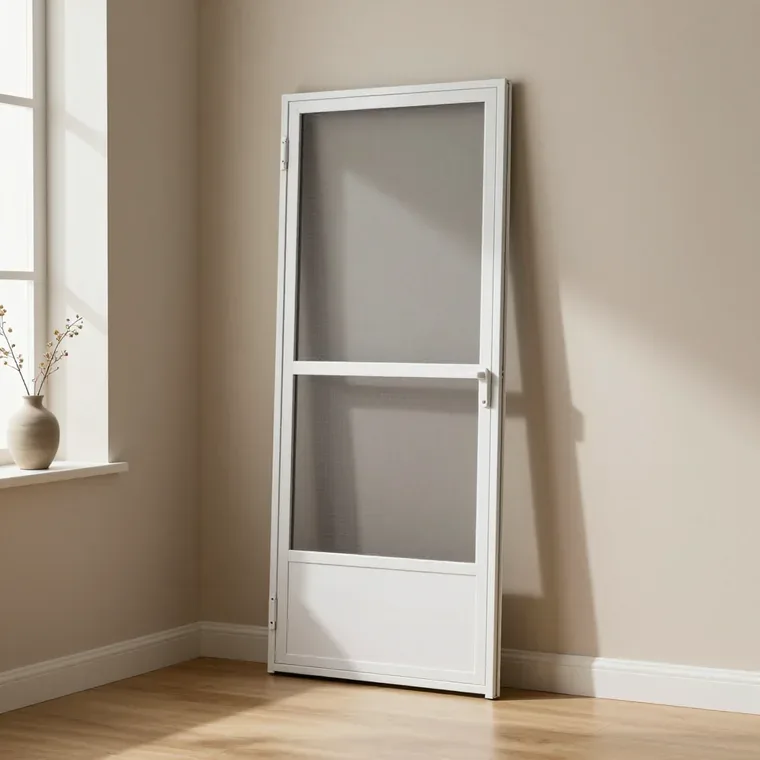
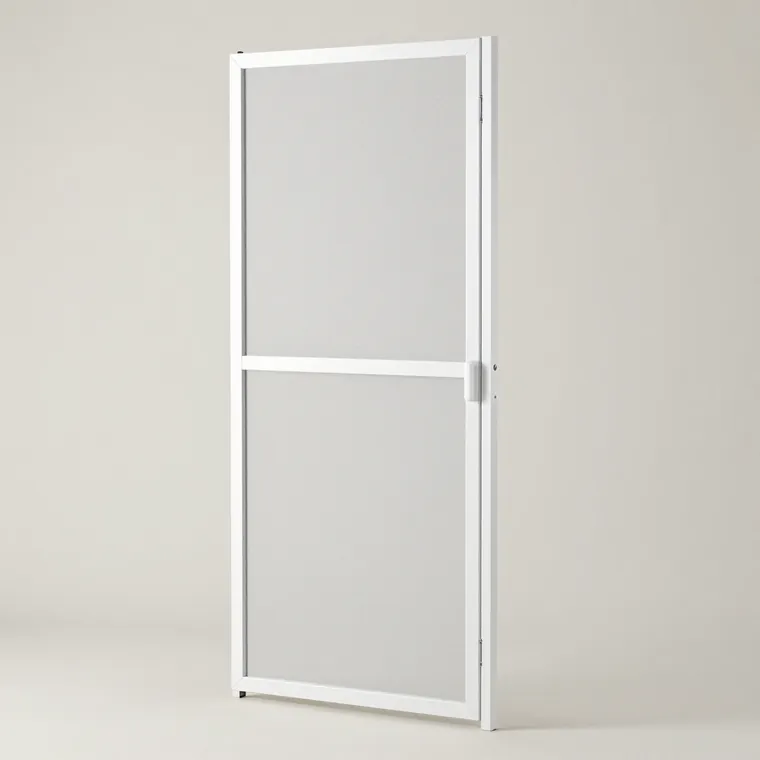
| Door that must close tight | Hinged door screen | Opens on hinges, Economy or Prestige profile |
What to do when the opening is wider or an unusual shape
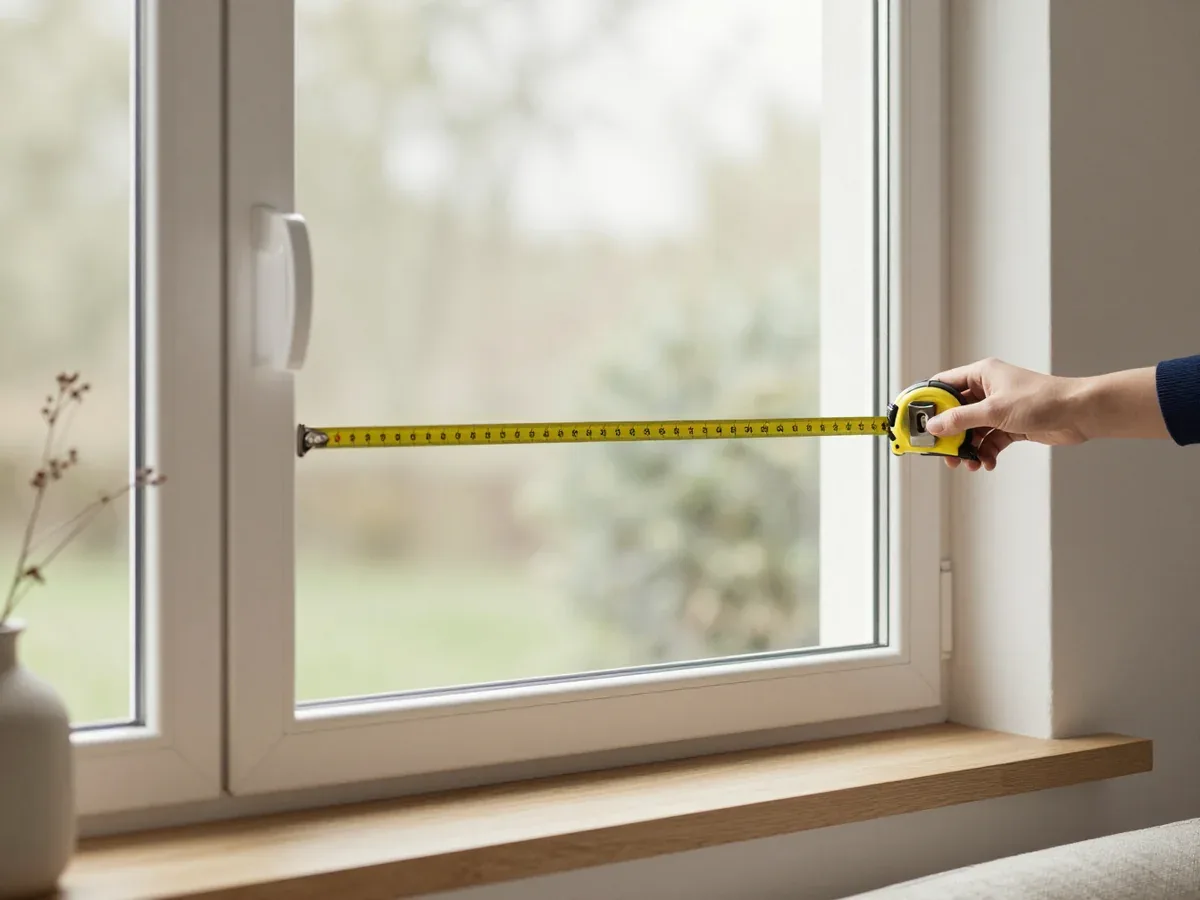
We make every mosquito screen to your measured size, so a span wider than a standard roll or an angled opening is not a problem. The measurer visits at a time that suits you, takes the dimensions of the frame, the sill and the reveal, and helps choose the design, mesh and fixings on the spot; measuring and consultation cost nothing. On very wide spans he splits the opening into sections or picks a sliding track, so no single panel is stretched past what it handles well. Veranda mosquito screens in Taldykorgan are ordered the same way as for any window in the house, and the finished frame is painted to match your windows. On an angled or arched opening, ask for the split at the measuring stage rather than after the frame is cut — a joint planned in advance sits flush, while one added later leaves a visible gap.
Choosing veranda mosquito screens for light, pets, pollen and dust
The frame carries the cloth, but the weave decides what your veranda feels like — how much daylight comes in, whether a cat can claw through, and what the air delivers.
UltraVue, Anti-Cat and Anti-Pollen for a veranda in daily use
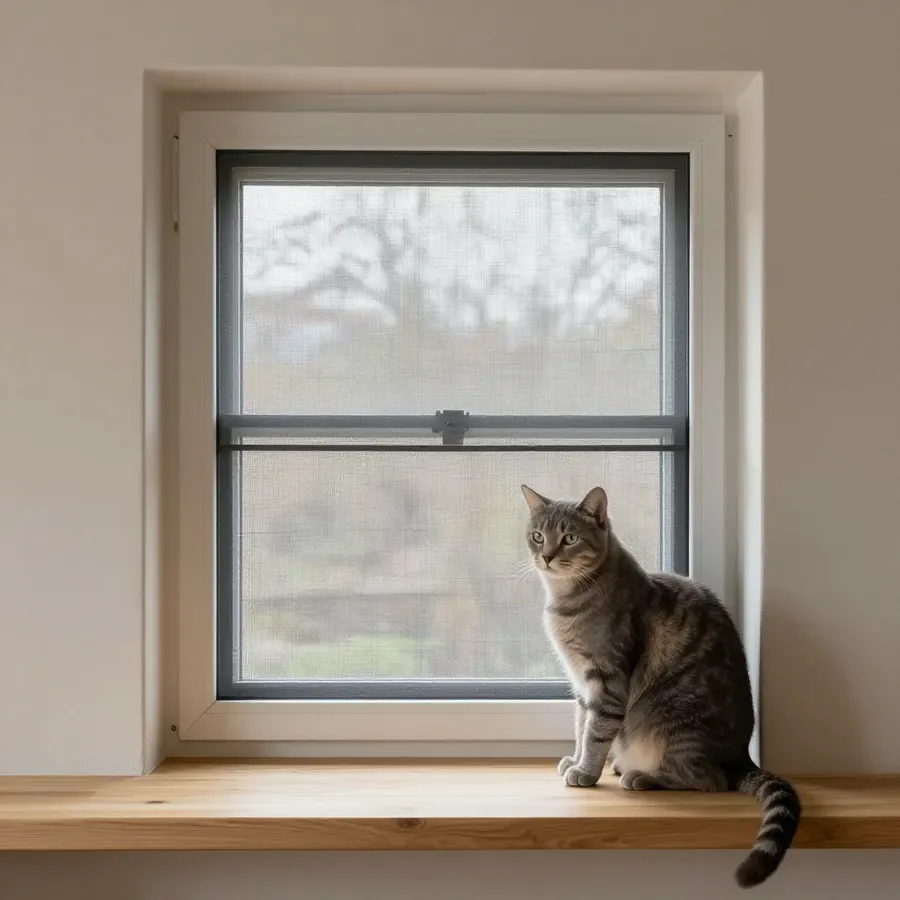
UltraVue lets in 25% more light and air than other meshes, Anti-Cat (Pet Screen) holds up to the weight of a small animal, and Anti-Pollen (Poll-Tex) has a 0.25×1 mm cell that traps fine pollen. We fit all three to veranda openings, and the pick depends on how the room is used. A garden-side veranda with evening sun loses brightness behind a dense weave, while a busy one beside a road pulls in grit and pollen through that same weave. The vinyl threads of the pet canvas let a small animal climb and push without tearing the cloth. A veranda facing a road gains most from Poll-Tex or the dust canvas, whereas a shaded spot where you sit after work gains most from UltraVue, because light matters more there than filtration.
Standard, Anti-Dust and metal mesh where the basics are enough
- Standard (Fiberglass): covers an ordinary veranda when the job is keeping insects out and budget decides.
- Anti-Dust: suits an opening near a road or unpaved yard, where grit arrives on windy days.
- Metal mesh: the pick when the cloth takes knocks — a door children push, a frame beside a walkway.
- Krylo: a canvas for openings that need a different feel, fitted to the same frames as our cloths.
- Fiberglass in heat and frost: resists ignition and temperature swings, so the weave holds without going brittle.
Fixings and profiles for veranda mosquito screens on wood or aluminium
A screen is only as good as the fixing that holds it, and the right one depends on your window frame, the material of the veranda and how high the opening sits.
Z-brackets, plungers or magnets and when drilling is needed
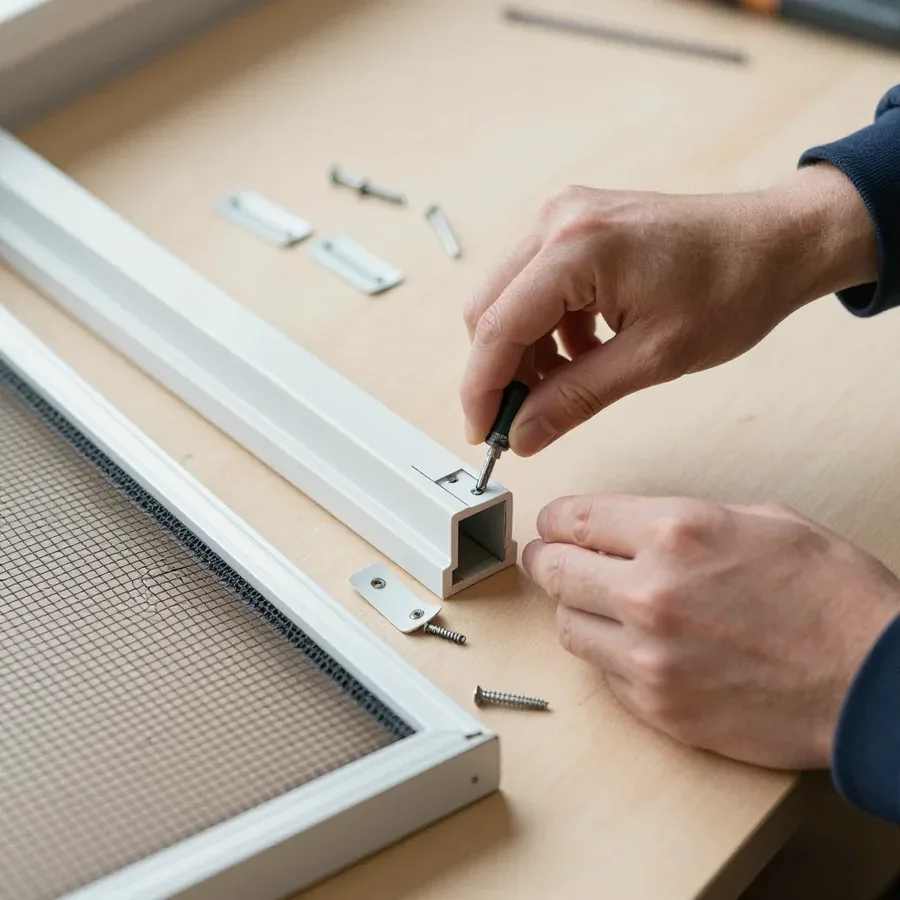
The measurer picks Z-brackets, plungers or magnets to match your window frame and floor, and on most aluminium and plastic units the panel goes on without drilling into the frame itself. Z-brackets hook over the edge and clamp the body firmly, which suits a wide span on an upper floor where wind load is higher. Plungers sit in the groove and hold with spring pressure, so nothing is screwed in; magnets work the same way on a steel or thin aluminium frame where a groove is too shallow. On older wooden frames the fitter may still drill pilot holes, because timber moves with the seasons and a clamp alone works loose. Plungers and magnets let you lift the unit off in seconds, which matters on a veranda you open all season, while Z-brackets give the firmest hold on a large or exposed span.
Economy or Prestige profile for a hinged veranda door
Hinged door screens come with the Economy 32×10 mm profile for a standard doorway or the Prestige 42×17 mm section for a wider, heavier leaf that gets constant use. Economy carries a light panel across a single leaf and stays flat on openings up to a typical balcony width. Prestige adds wall thickness and a deeper section, so the panel keeps its shape when pushed open with a shoulder or swung in the wind. We paint either one any colour to match your windows, and the hinge side is set by the measurer on site rather than guessed from a photo. A heavier leaf on a thin section starts to sag at the hinge over a season, so the measurer matches the section to weight rather than to the cheapest option.
Free measuring, fast making and payment after fitting
From the first message to the fitted product, mosquito screens for verandas follow a short, fixed path — measure, make, fit, then pay. Each stage has a set time and a clear outcome.
How the measurer works and how fast the screen is made
Measuring and consultation are free, the measurer comes at a time that suits you, and a framed unit made to your size takes 10–15 minutes while a pleated one takes 40–60 minutes. During the visit the measurer records the opening size, checks whether the mount sits on plastic, wood or aluminium, and looks at the floor level to decide between Z-brackets, plungers or magnets. He brings mesh samples so you can compare UltraVue, Anti-Cat and Anti-Pollen against the light before committing, and the profile for a hinged door is chosen on site from Economy 32×10 mm or Prestige 42×17 mm. Because the measurer takes the sizes and picks the mesh and fixings on the spot, the item arrives ready to fit rather than needing a second visit to correct a measurement.
Frame colour, fixed price and paying once the screen is up
We paint the frame any colour to match your windows, the price is fixed in the order after measuring, and you pay after installation by cash, card or Kaspi. The colour is matched against your window profile before the aluminium goes into production, so a white veranda and a brown one get an edge that reads as part of the opening rather than an add-on. Delivery and installation are handled by the same team that made the product, and the 1-year warranty on mosquito screens starts from the day it is fitted. Fixing the price at the order stage means the colour match and the profile choice are settled before making starts, so nothing changes the figure once the item is in production.
Winter removal, repairs and the 1-year warranty
A screen taken down for winter and repaired when it tears lasts far longer than one left up through snow and wind, and both habits are part of what we do.
Taking the framed screen off for winter and keeping it clean
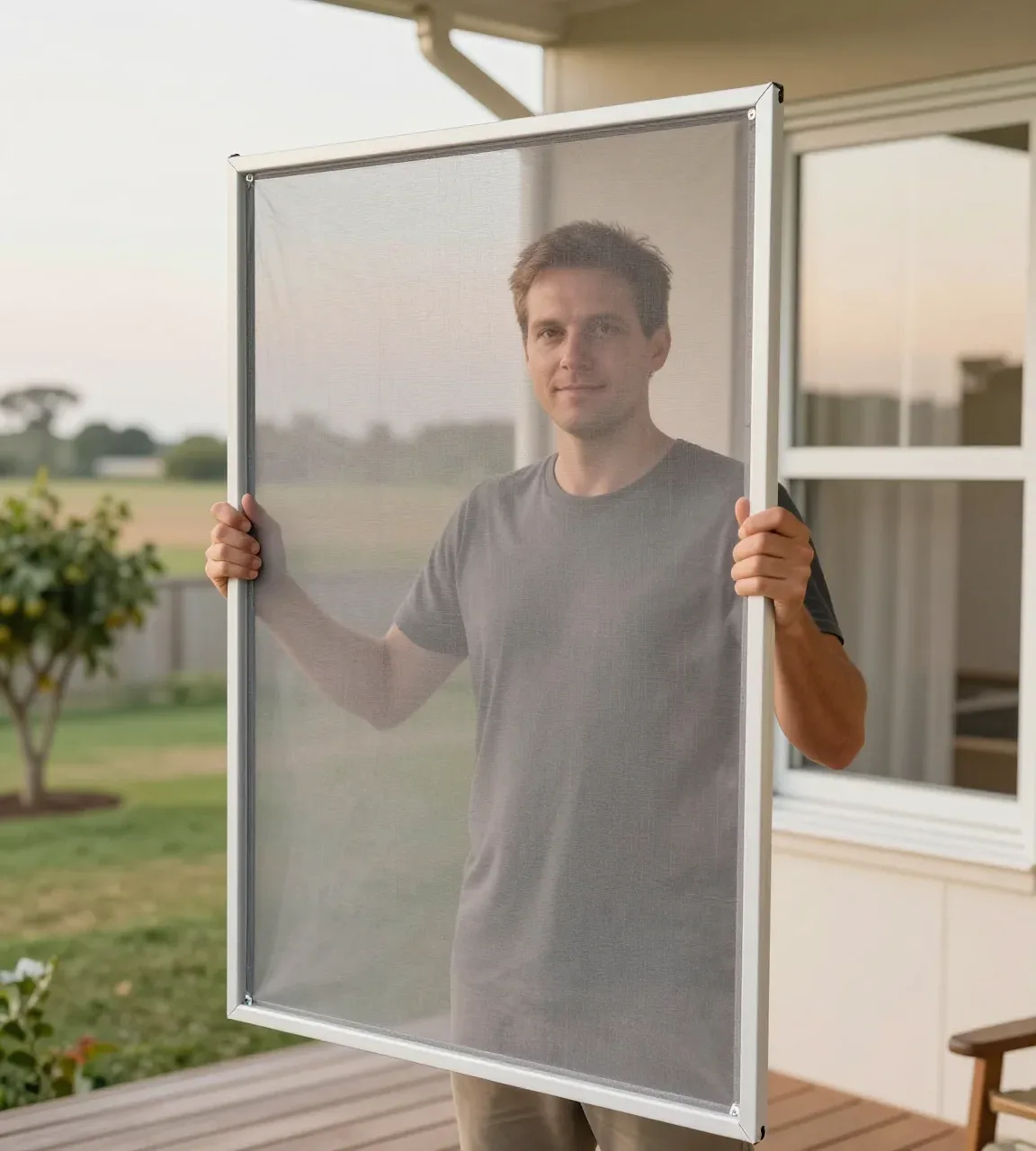
- Lift out from inside: a framed unit comes off the window in about a minute without tools, so store it flat and dry over the cold months.
- Do not fold it: folding creases the weave and leaves a permanent line that no brushing will straighten out.
- Brush, do not scrub: a soft brush in spring lifts settled dust before it works deeper into the threads.
- Check the fastenings: look at brackets, plungers or magnets while the mesh is down and note any that sit loose.
- Keep it out of damp: a dry cupboard or a shelf above floor level protects the metal from rust and the fabric from mildew.
Repair or replace when a pet tears the mesh
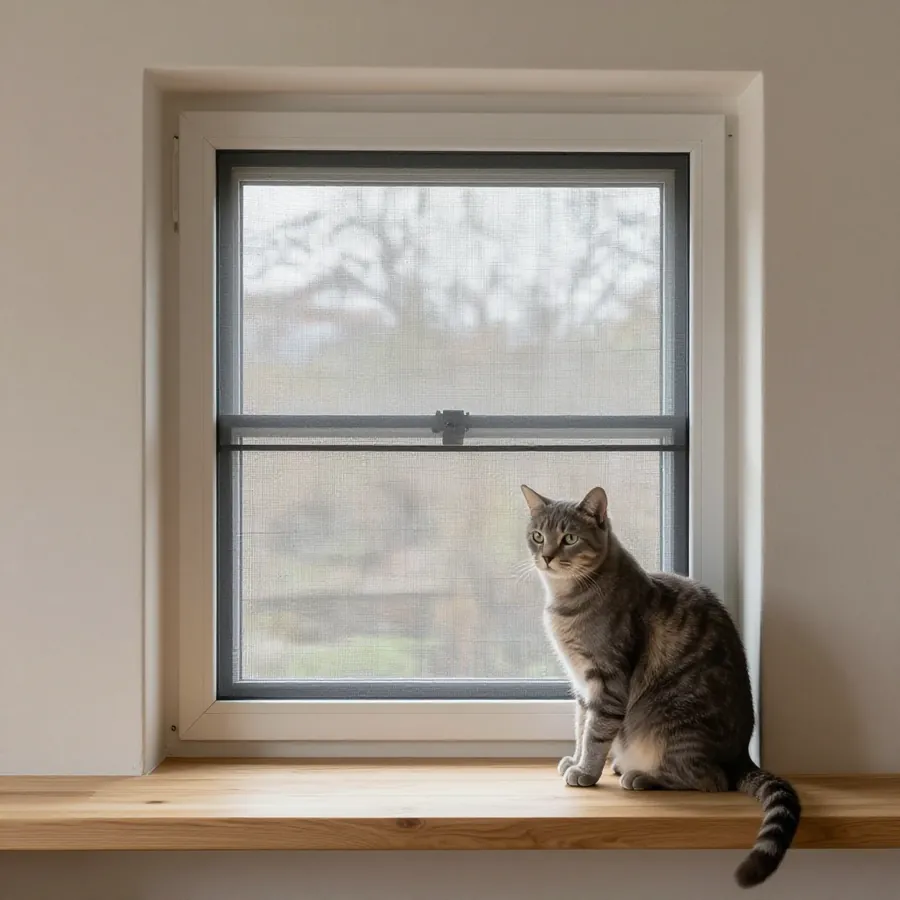
We repair screens and replace fastenings, and when a pet has torn the mesh itself we swap it for Anti-Cat (Pet Screen), which holds up to the weight of a small animal. The vinyl threads in that canvas are several times stronger than standard fiberglass, so a cat that has already climbed a unit will not simply tear the new panel. A torn sheet on an otherwise sound frame is usually a fabric problem, not a structural one, which is why replacing just the mesh keeps the fit you already measured and the colour matched to your windows. Fastener replacement covers the same visit: Z-brackets, plungers and magnets all wear or pull loose over time, and a fresh set restores a tight fit without touching the weave. Every unit we make carries a one-year warranty, and we handle the repair ourselves rather than sending the work elsewhere.
What keeps veranda mosquito screens serving longer
A veranda screen works well when the opening, the mesh and the fixing are chosen together. Here is what to settle before ordering.
- Screen type: match it to the opening you cross most — framed for a window, pleated or sliding for a doorway, hinged for a door that must close tight.
- Mesh: pick it for the job — UltraVue for light, Anti-Cat for pets, Anti-Pollen or Anti-Dust for a veranda near a road.
- Fixings: let them follow the window profile and floor, so the frame holds without drilling where it should not.
- Winter care: take a framed screen down and store it flat to get more seasons out of it.
- Repairs: fix a torn panel or a loose fastening first — a sound frame rarely needs replacing.
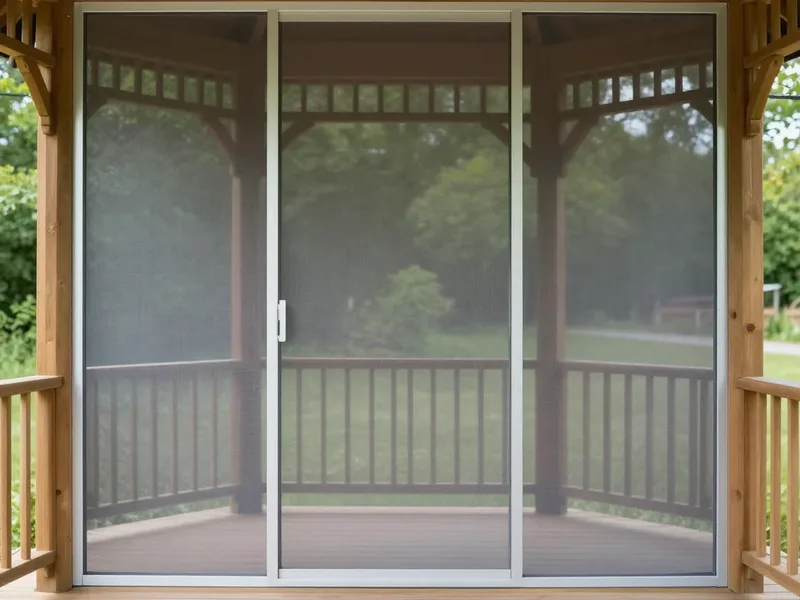 Gazebo screens
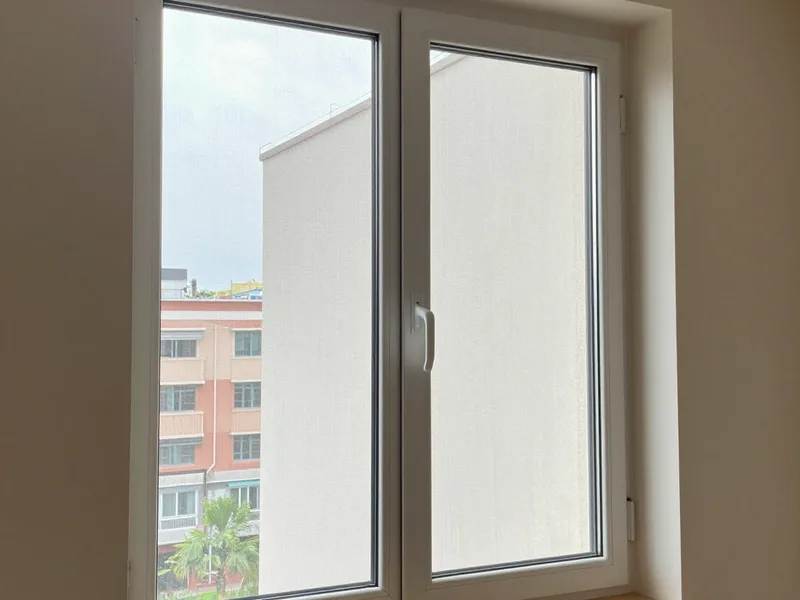 Balcony screens
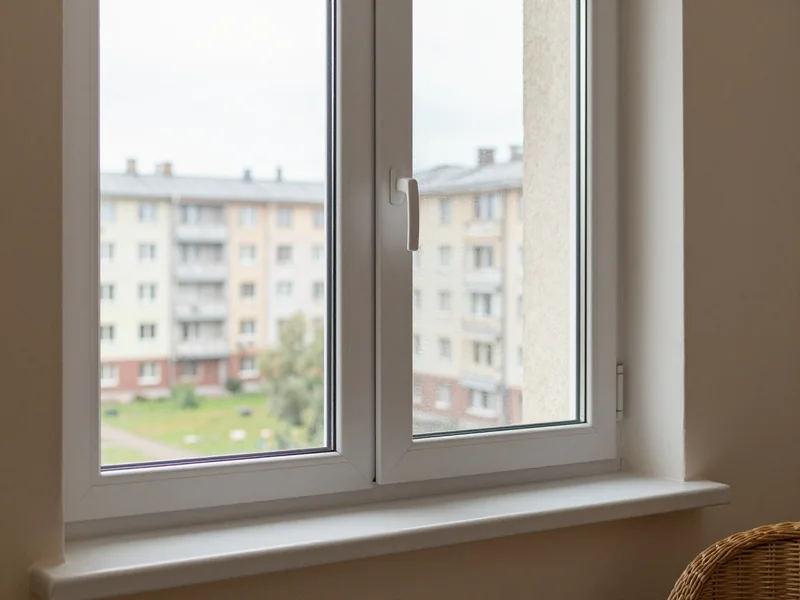 Loggia screens
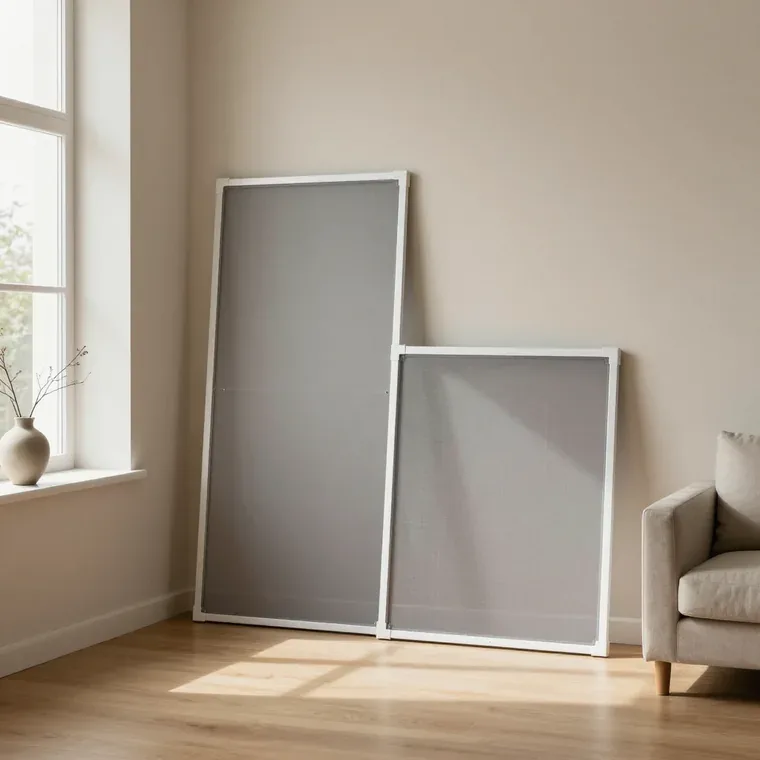 Ready-made screens