




Good to know
Clear Polycarbonate Grilles in Aktobe

Senior mosquito screen specialist at moskitnyesetki.kz
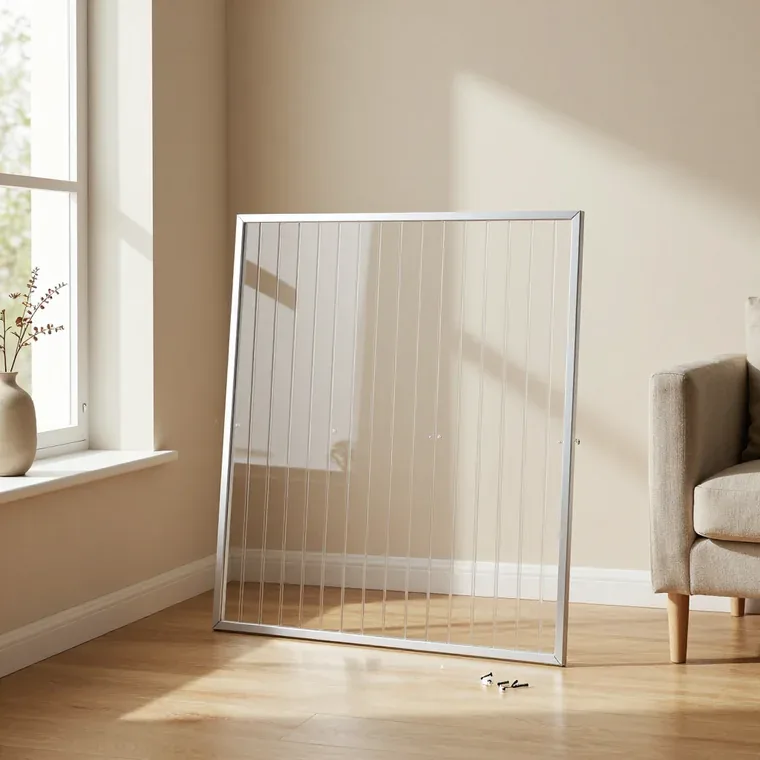
We make clear polycarbonate grilles to the exact size of your window in Aktobe. Our measurer comes free, picks the fixing for your profile and floor, and we paint the frame to match your windows. Our own fitters install it, and you pay only after installation.
Why a clear grille makes more sense than a welded bar or a window lock
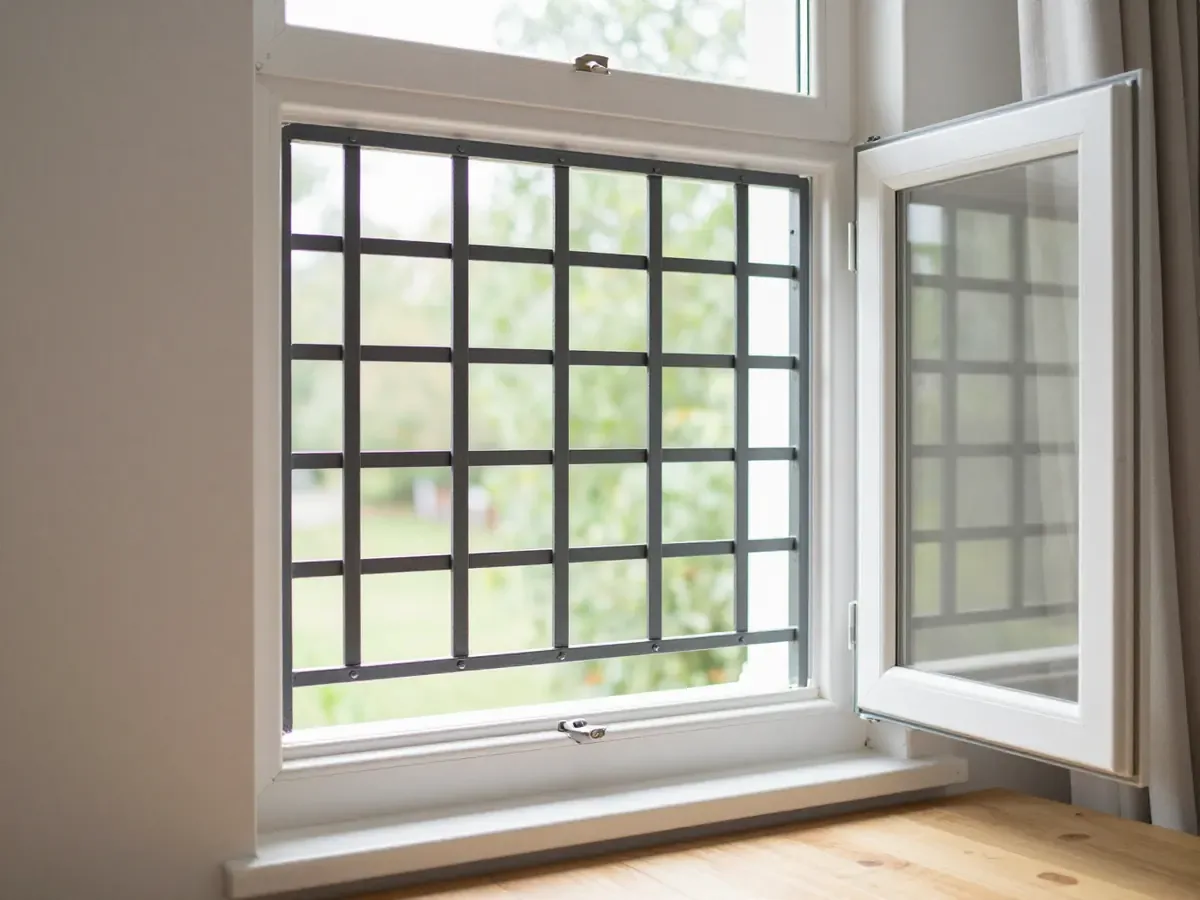
Look along any residential block and you see two extremes: black welded bars, or an open window with a small child lock. A clear grille sits between them, closing the gap without turning the flat into a cage.
How polycarbonate panels differ from welded metal bars
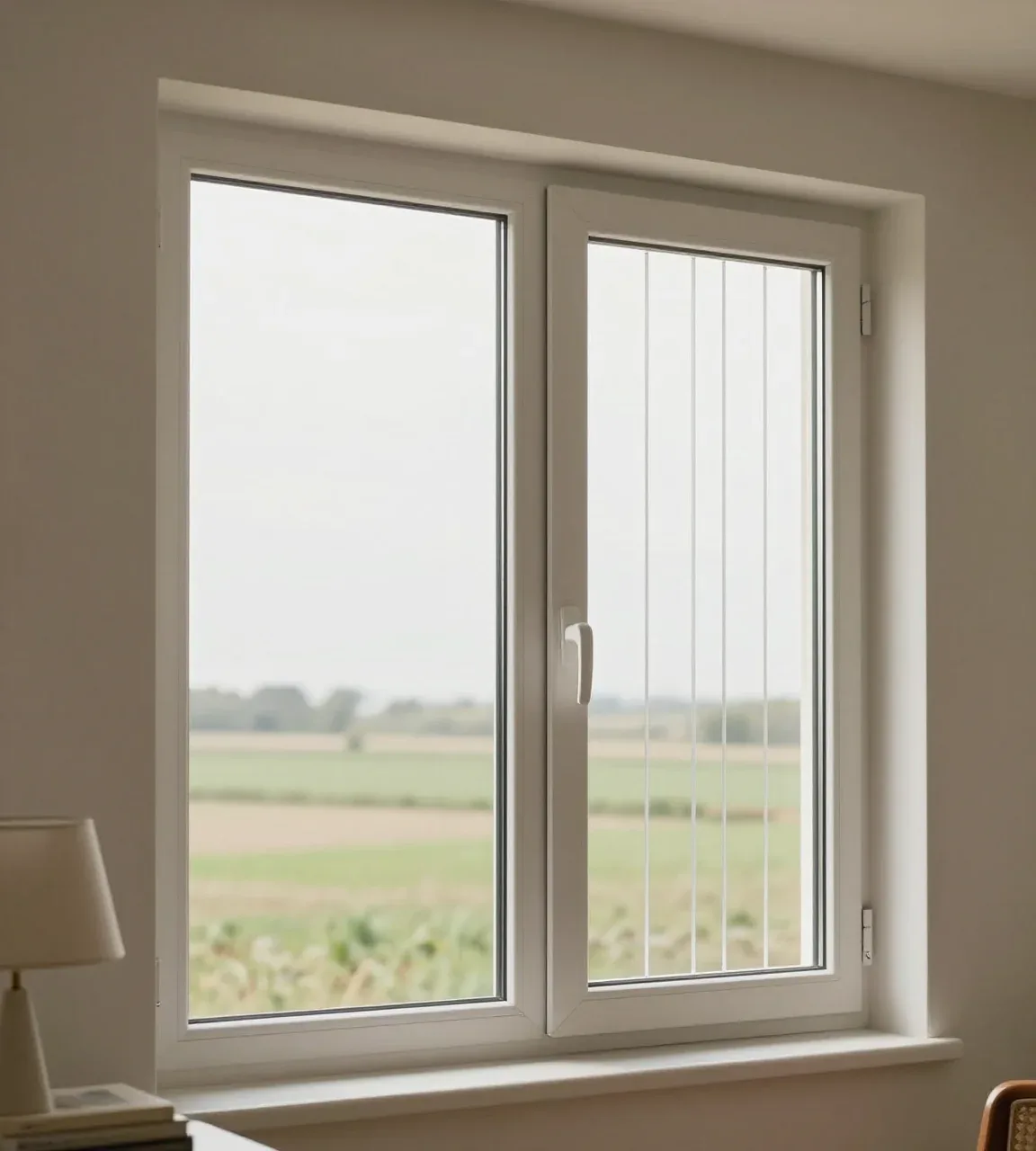
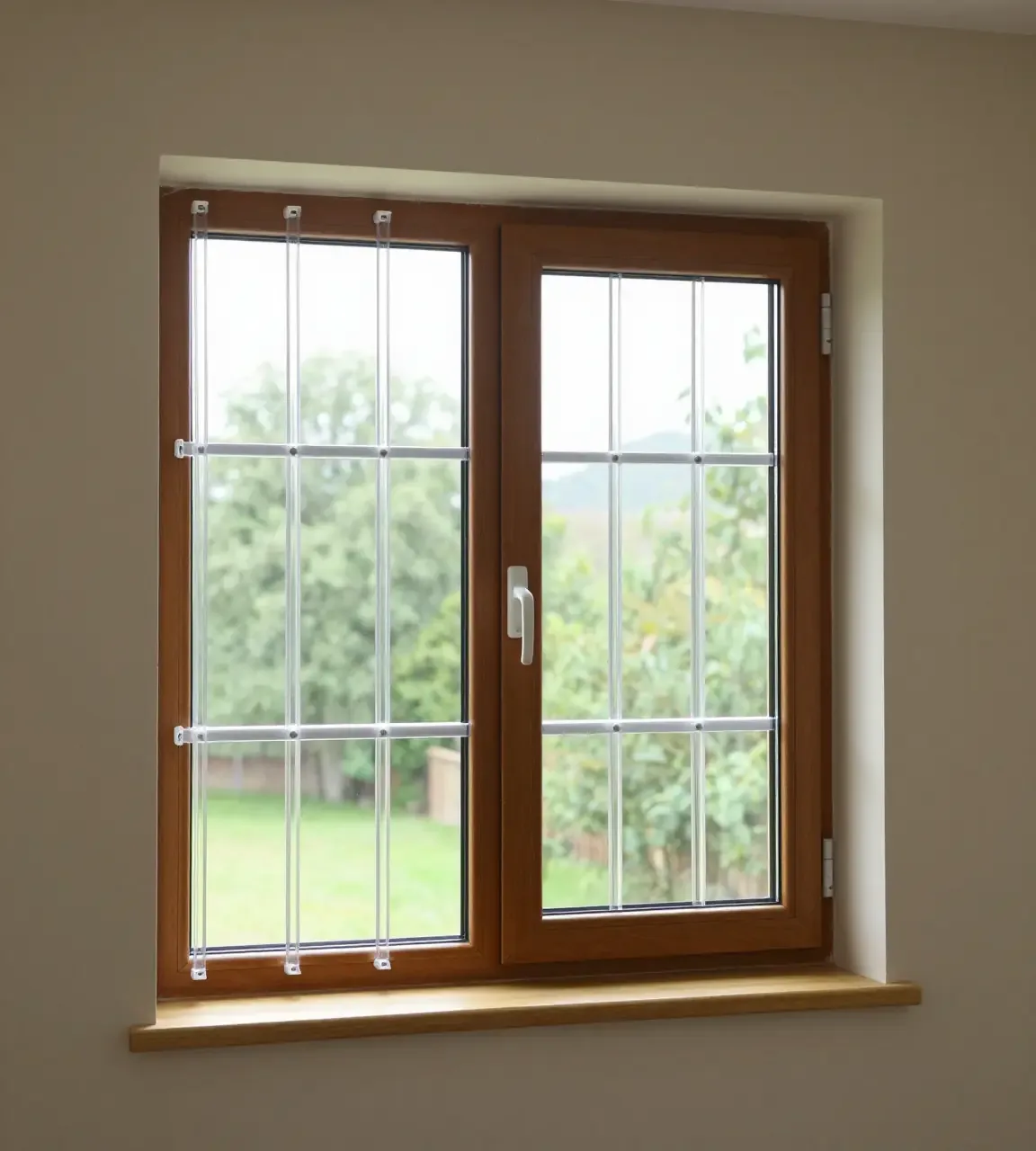
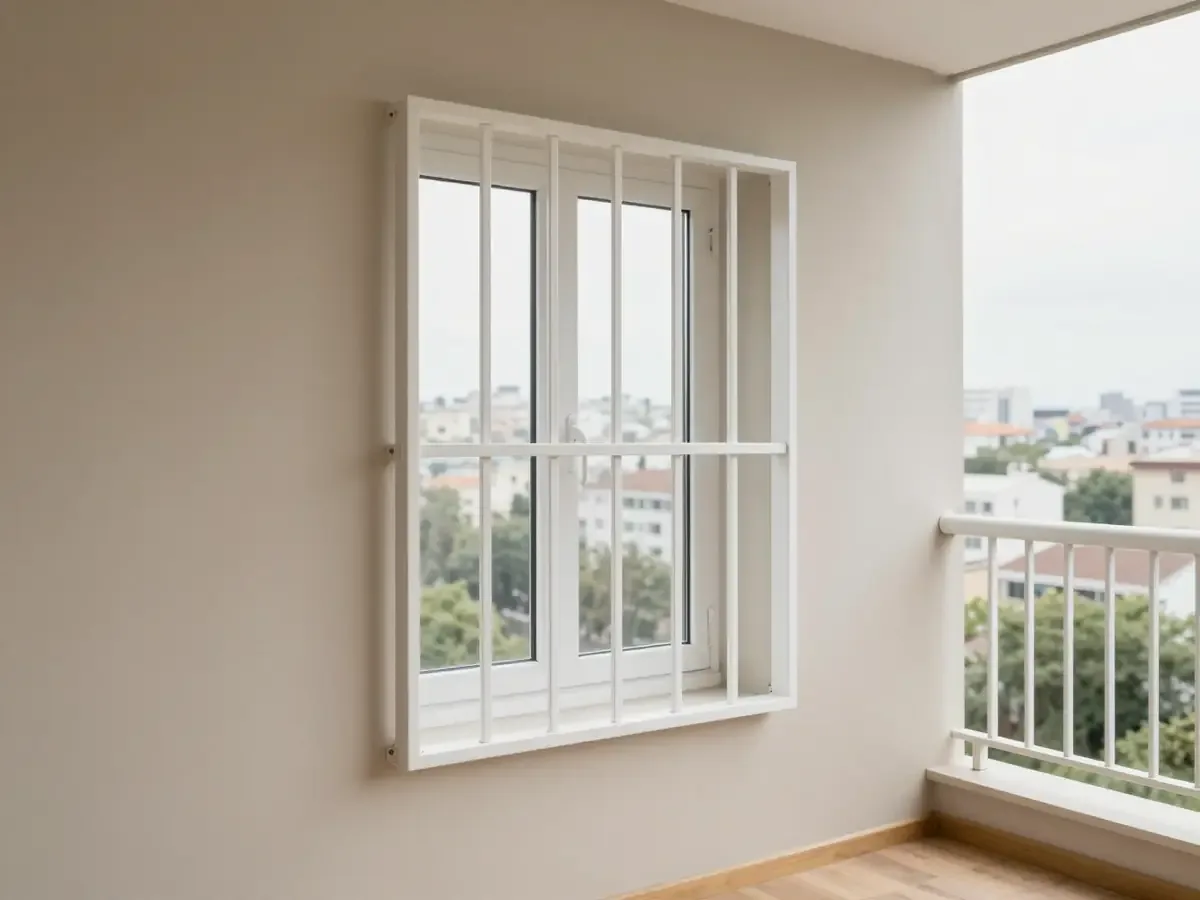
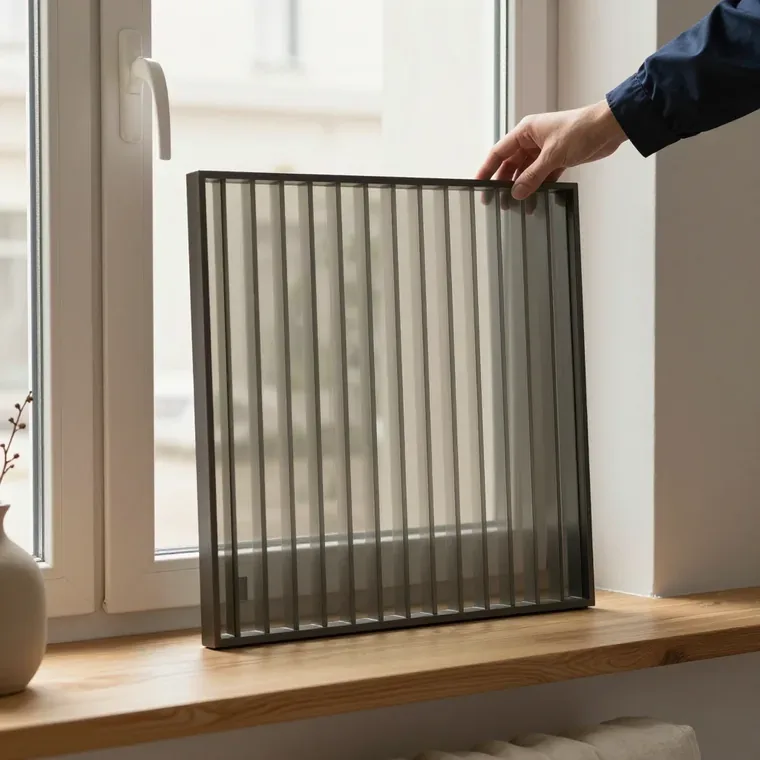
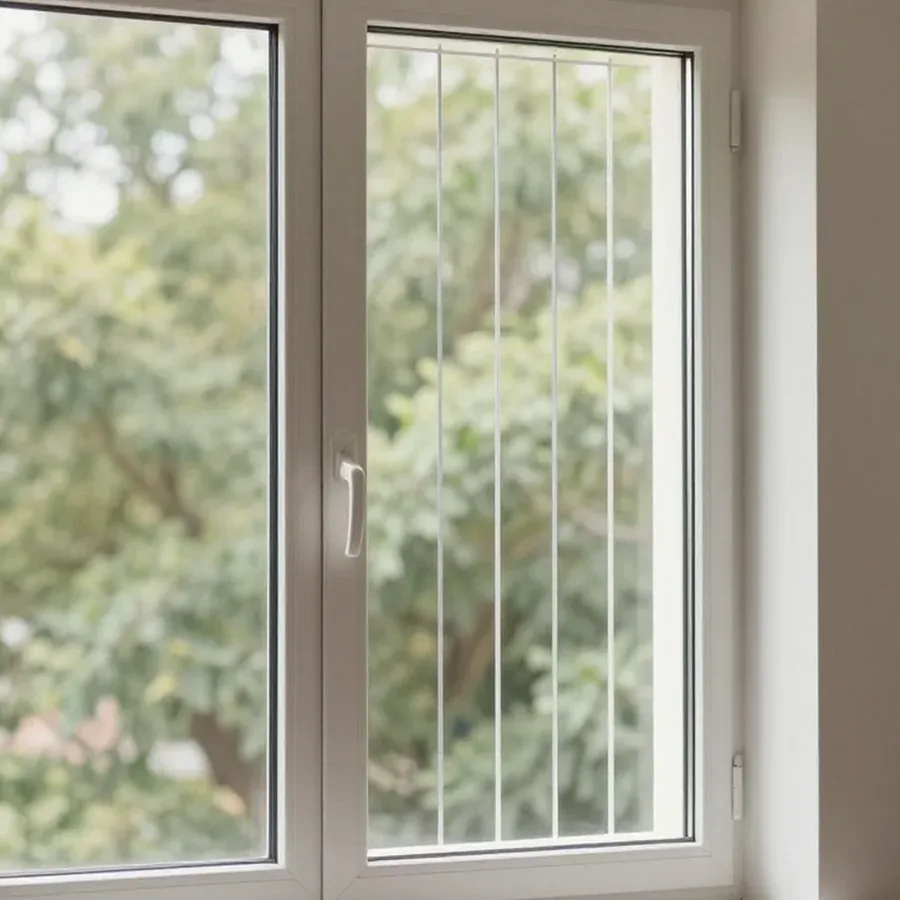
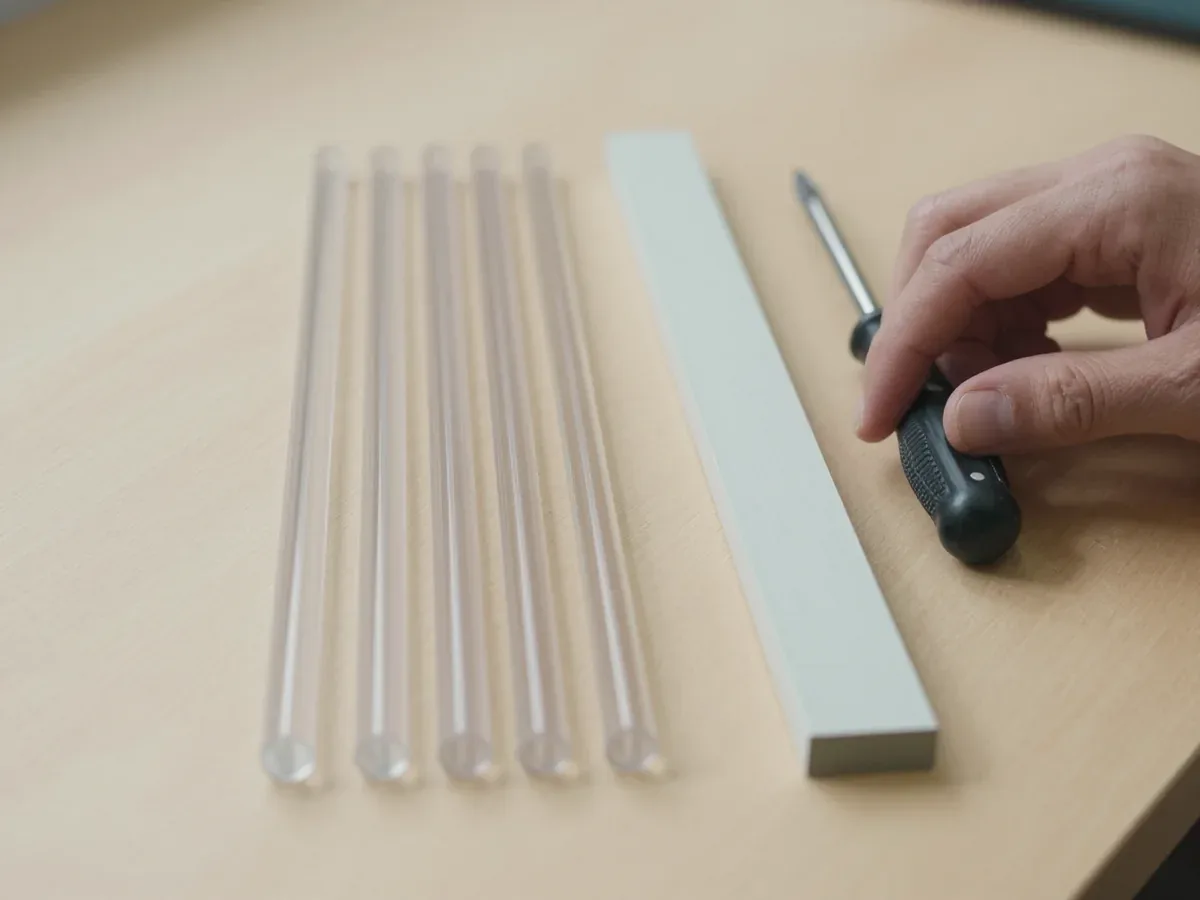
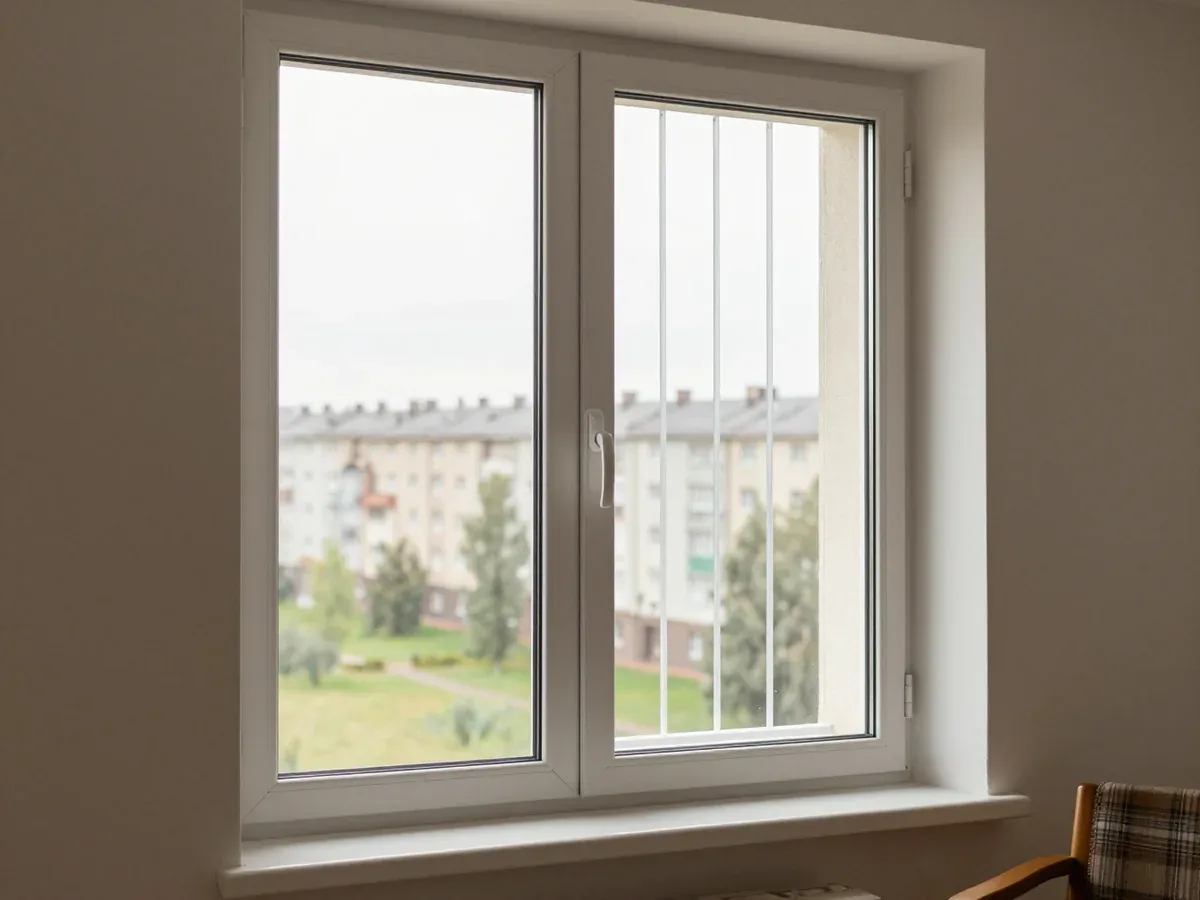
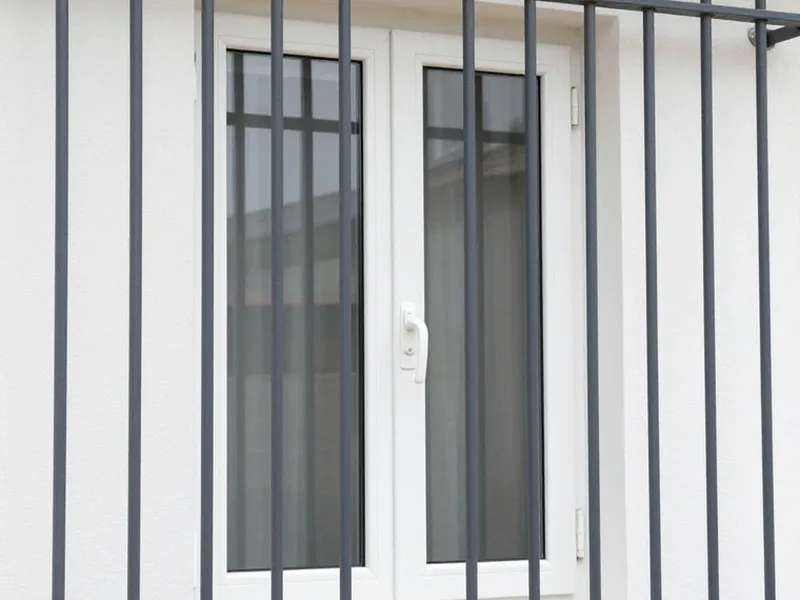
A transparent polycarbonate grille blocks the opening like a metal bar but keeps the daylight, because the sheet is see-through rather than a set of steel rods. Steel bars cut the light reaching the room and throw hard shadows across the floor all day, while a transparent panel passes the street view through almost unchanged. A welded construction is anchored to the wall with bolts and stays for years, so repainting becomes part of the household routine. A polycarbonate sheet weighs a fraction of a steel assembly of the same span, which is why it sits inside the reveal and lifts out from indoors in a minute. Visual weight matters more than material on upper floors, where a dark welded cage reads as a prison from the street and a transparent panel reads as part of the glazing.
Grille, window limiter or child lock, which one actually stops a fall
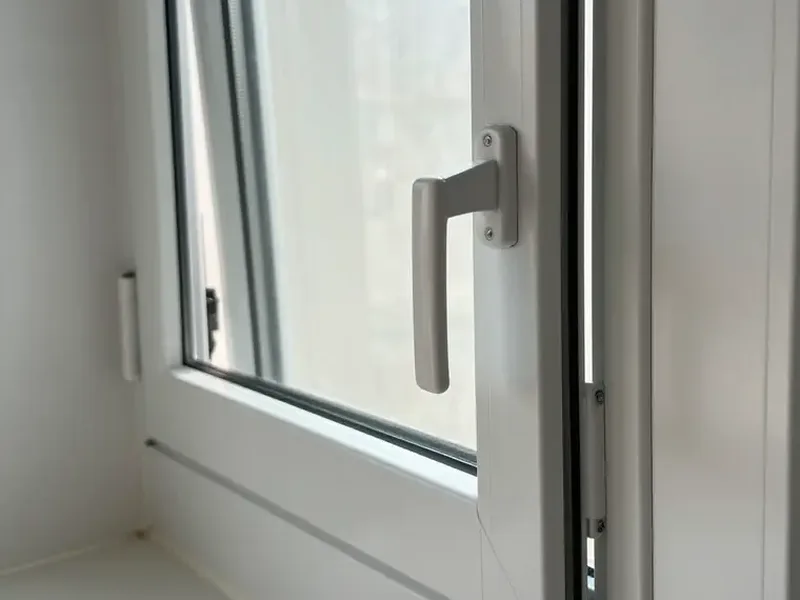
- Window limiter: a cable or arm letting the sash open a few centimetres for air; it holds the frame, not a body.
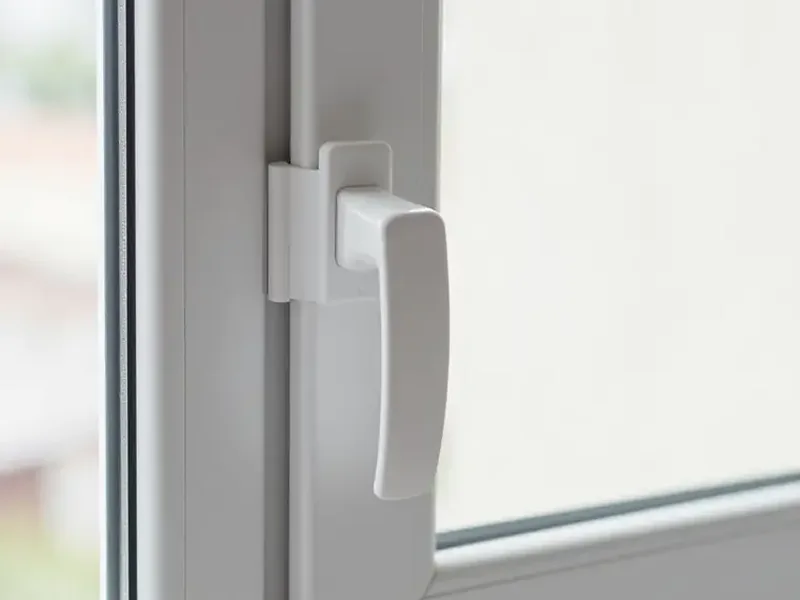
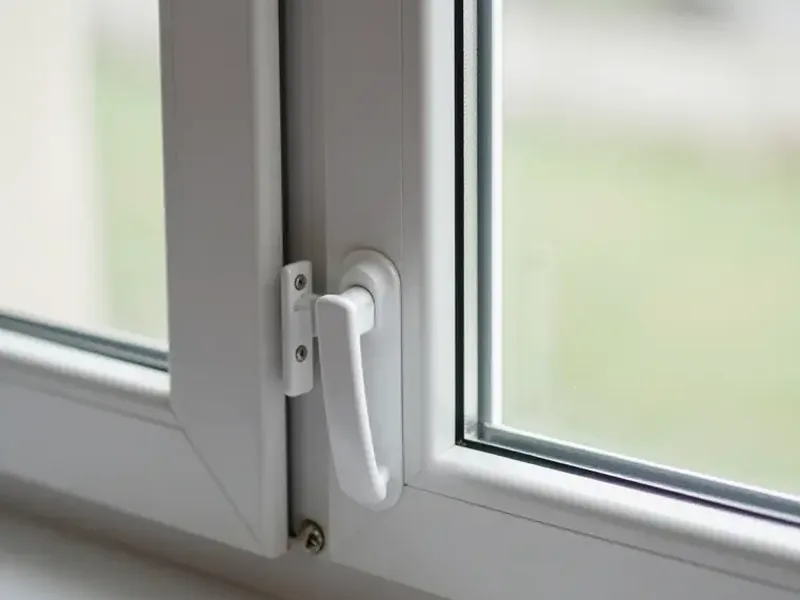
- Child lock: a key or button stopping a toddler from turning the handle; useless once an adult leaves the sash wide.
- Transparent barrier: a panel fixed across the reveal that carries the weight of a leaning child.
- Combined setup: a barrier for safety plus a limiter for ventilation, so the sash never swings wide by accident.
- Sash with no barrier: the usual risk in flats with small children, since insect nets carry no weight.
How clear polycarbonate grilles handle Aktobe heat, frost and dust
Summers here are hot and dry, winters bring hard frost, and spring winds carry grit. Below is how polycarbonate behaves in these conditions and how to keep it clear.
Will the panel yellow in the sun and crack in the cold
A quality polycarbonate panel is made to take UV and frost, so it stays transparent through Aktobe summers and does not crack from winter cold when it is fixed with the right clearance. A co-extruded UV layer absorbs the sun's ultraviolet instead of letting it break down the polymer — that breakdown is what turns cheap plastic yellow and brittle. Frost is the opposite test: the material keeps its impact strength well below zero, so a hard winter does not make it shatter like glass. The fixing matters as much as the sheet, because one clamped too tight has no room to expand in heat and is the usual reason a grille warps or cracks. Ask your fitter to leave the expansion gap the maker specifies.
Solid or cellular sheet, and how to wash it without streaks
| Type | Clarity | Weight | Care |
|---|---|---|---|
| Solid | Clearest view | Heavier | Wipe with water and soft cloth |
| Cellular | Slightly diffused | Light | Blow dust out of channels |
| Solid, thicker | Clearest, most rigid | Heaviest | Rinse, no scouring pad |
| Cellular, sealed ends | Diffused, dust-safe | Light | Seal open ends first |
Washing a panel without leaving it cloudy
Plain water and a soft cloth keep a transparent panel see-through, while a scouring pad leaves fine scratches that scatter light and make it look cloudy over months. Rinse off wind-borne dust before wiping, so the cloth does not drag particles across the surface. A mild soap solution lifts fingerprints and bird marks; solvent cleaners and ammonia attack the UV layer and dull the finish. On a cellular sheet, blow dust out of the open channels from the top down rather than pushing it deeper with a brush. Wash twice a season and the view stays sharp for years.
Measuring, making and fitting clear polycarbonate grilles to your window
From the first call to a finished grille, the work runs in three steps: the measurer takes sizes and picks the fixings, the panel is made to those sizes, and the fitter mounts it without touching the sash.
What the measurer checks and why the fixing depends on your floor
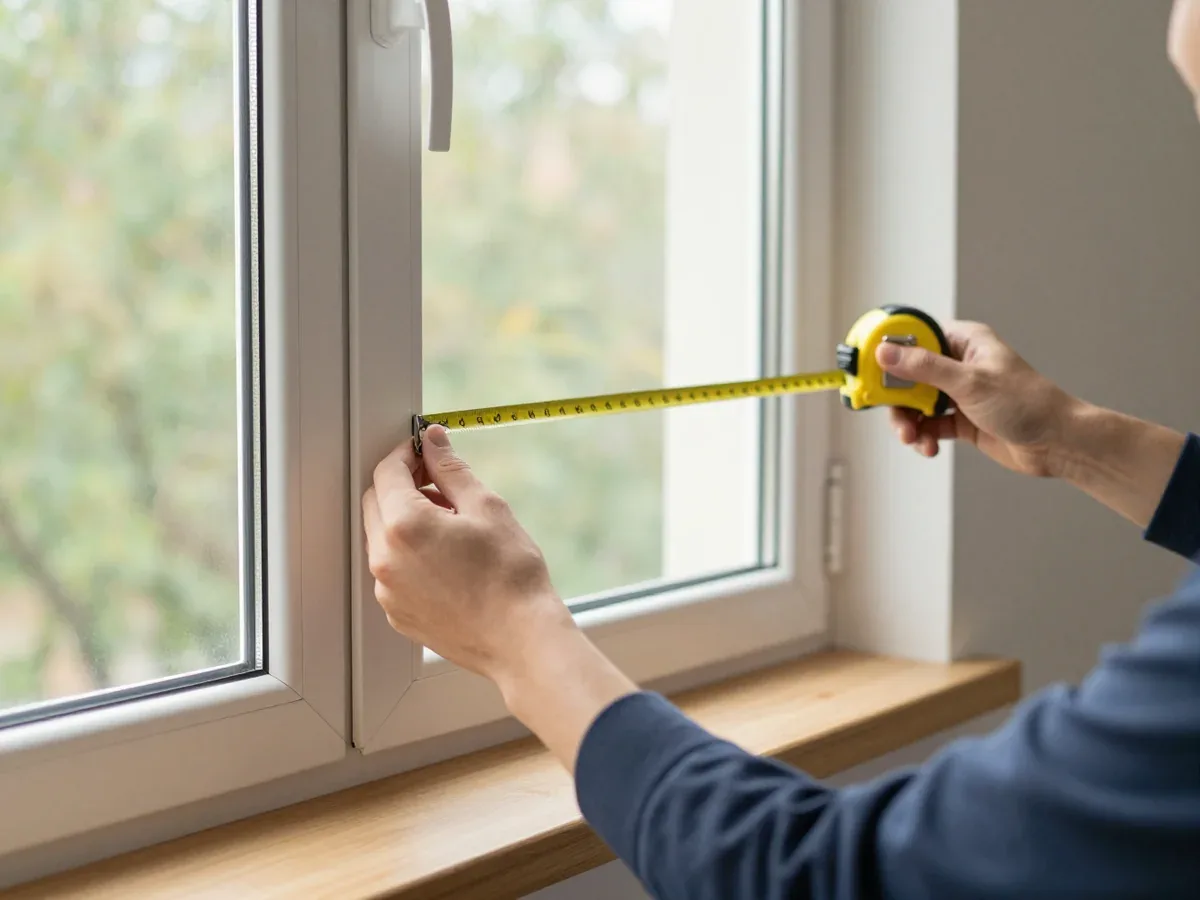
Our measurer comes at a time that suits you, takes the sizes, and picks the fixing for your window profile and floor, whether that is Z-brackets, pins or magnets. Measuring and consultation are free, and the measurer helps you choose the design, the mesh and the fastenings in one visit rather than leaving it to the day of fitting. He notes the profile depth, the sill clearance and how the sash opens, because a grille that fouls the handle or the sill has to be remade. The floor changes the choice, because a high window needs a fixing that holds against wind load while still releasing from inside, and that is decided at measuring, not on the day of fitting. Clear polycarbonate grilles Aktobe are measured the same way, with the fixing chosen for the profile and the floor.
Fitting a grille to a plastic window without drilling the frame
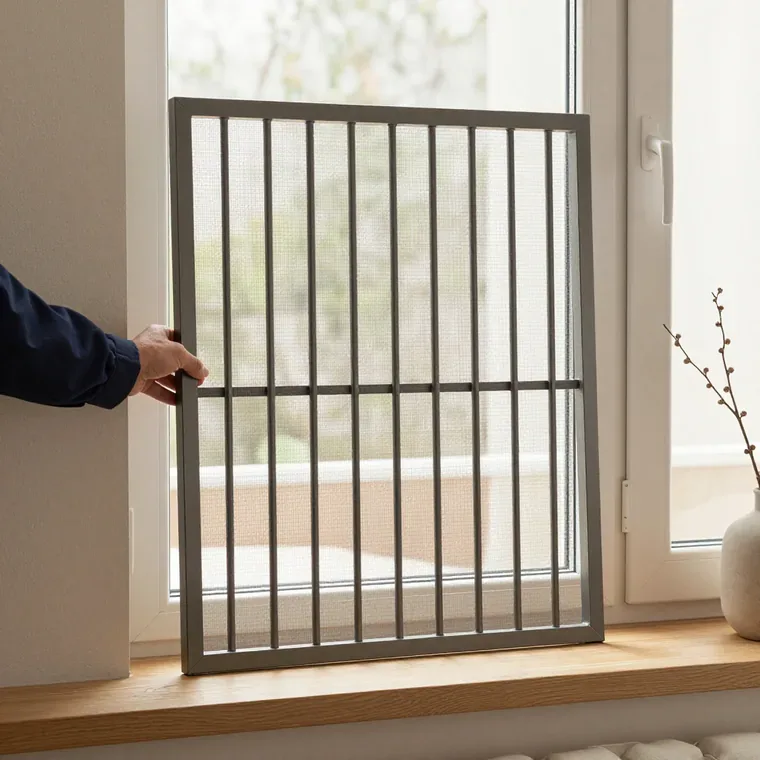
We fix the grille to the window frame with brackets and pins rather than drilling through the sash, and the same approach works on plastic, wooden and aluminium windows. On a plastic frame the brackets sit on the outer profile, so the sash keeps its full swing and the handle stays clear. A framed grille made to your size takes 10 to 15 minutes to assemble, and the mounting itself adds little on top of that. Keeping the fixings on the frame instead of the sash means the window still opens and closes freely and the seal is never broken, which is what protects the room from draughts. The grille lifts out from inside in a minute, which makes it easy to take down for the winter.
Doors, small vents and full-height windows
A polycarbonate grille is not only for a standard window. The same panel can be made for a balcony door, a small vent or a full-height opening, and each of these needs its own frame and fixing.
A grille on a balcony door or a small vent
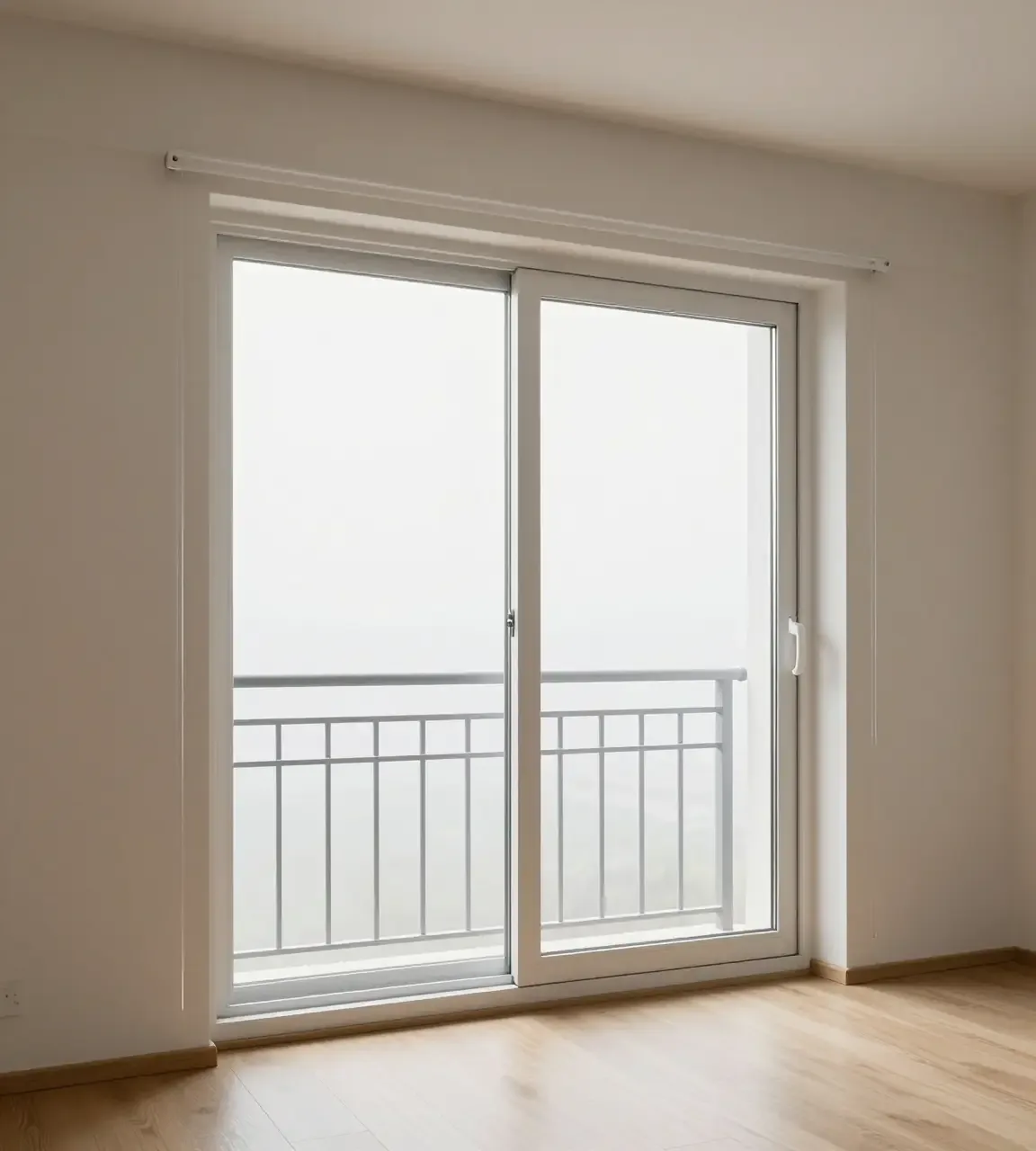
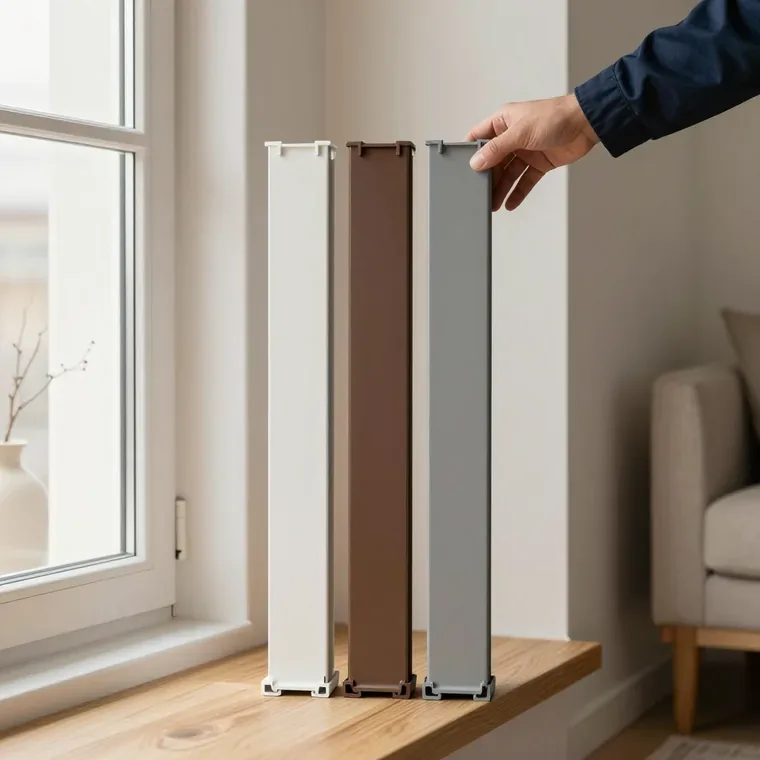
We fit grilles on balcony doors and small vents as well as standard windows, and for hinged door screens we use the Economy 32×10 mm or Prestige 42×17 mm profile. The frame is painted any colour to match your windows, so the grille does not stand out against the joinery. A vent grille is made to the exact size of the opening, which matters when the sash is narrow and a stock frame would not sit flush. A door needs a heavier profile than a window because it is opened and closed daily, so the profile is chosen for how the door is used, not just for its size — tell the measurer whether the door is a main exit or a rarely used balcony leaf.
Full-height and non-standard windows
We make grilles to measure for full-height and non-standard windows, including loggias, gazebos and verandas, so the sheet follows the real opening rather than a standard size. Measuring and consultation are free, and the measurer comes at a convenient time, takes the sizes and helps choose the design, mesh and fixings. A tall panel needs more fixing points than a small one, so the number of brackets is set at measuring to keep the sheet flat and quiet in the wind. For glazed loggias and summer verandas the same polycarbonate sheet works across several openings, which keeps the look consistent along the whole run.
Warranty, payment and service after the grille is up
Once the screen is fitted, what matters is how the paperwork, the payment and the aftercare work if something needs attention later. Here is what we commit to and how to reach us.
What the warranty covers and when you pay
We give a 1-year warranty on mosquito screens, and you pay after installation by cash, card or Kaspi, with the price fixed in the order after measuring. The warranty covers the frame, the mesh and the fixings we supplied, so a torn panel or a loose fastener is our job to put right within that period. Payment only happens once the screen is on your window and you have checked the fit and the colour against your sill and frame. Kaspi, cash and card are all accepted on the spot. Settling up at the end means you see the fit and the colour on your own window before any money changes hands.
Repairs, replacement fixings and reaching us
- Screen repairs: we repair screens and replace fixings after installation, so a bent pin or a torn panel is handled as a service job.
- WhatsApp replies: we answer on WhatsApp within 5 minutes during working hours, and you can send a photo with your message.
- Seven-day service: we are open seven days a week, so a weekend call about a loose screen does not wait until Monday.
- Fixings on record: we note which bracket, pin or magnet went onto your window, so a replacement matches without a second visit.
What to consider when choosing clear polycarbonate grilles
A short recap of what decides whether a clear panel works on your window — the barrier itself, the mount, the sheet type and the way you look after it.
- Barrier first: polycarbonate keeps daylight and the view while still acting as a physical guard across the opening, not just a restriction on the sash.
- Two jobs, two parts: the barrier stops a fall, while a limiter or lock only restricts the sash, so the pair works best together.
- Decide at measuring: the mount and the frame colour are chosen at measuring, before the sheet is cut, since both depend on your profile and floor.
- Clearest and easiest: a solid sheet stays clearest and washes without streaks, so take the panel off for winter and clean it once a season.
- Keep the record: pay after installation with the price fixed at measuring, and note the mount type so a repair later is quick.
 Metal grilles
 Window restrictors
 Window blockers
 Penkid lock
 Ready-made mosquito screens
