
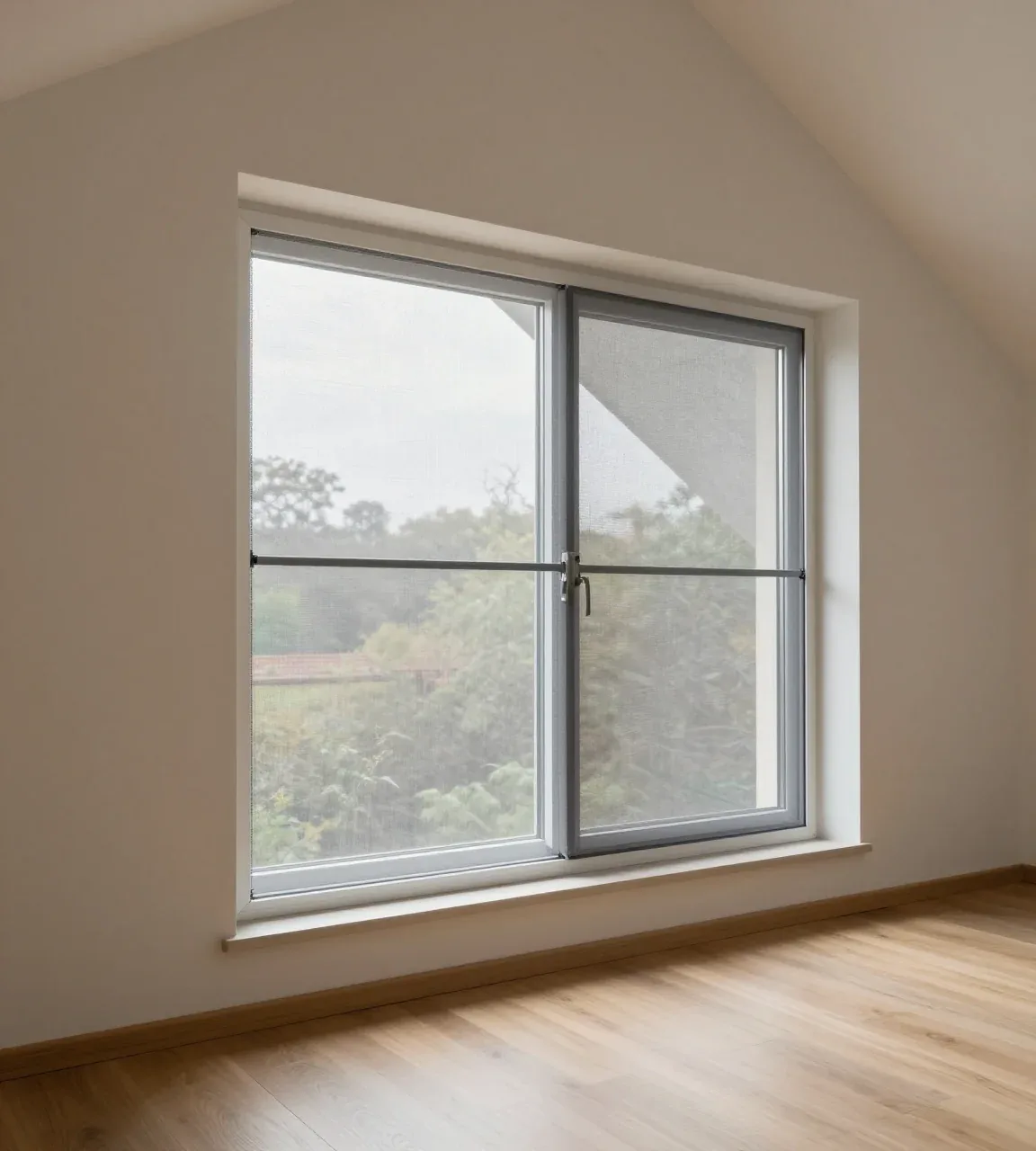
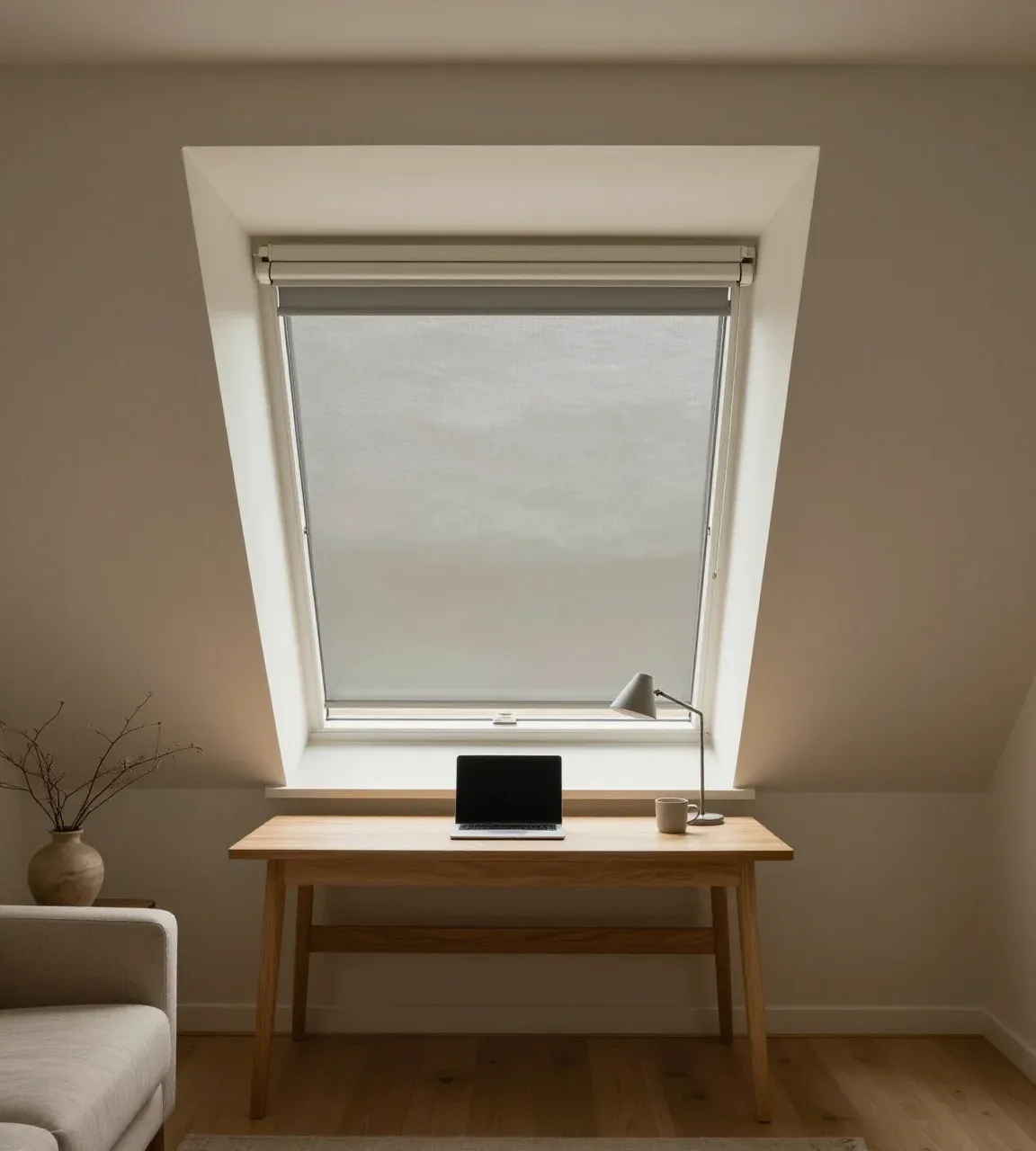
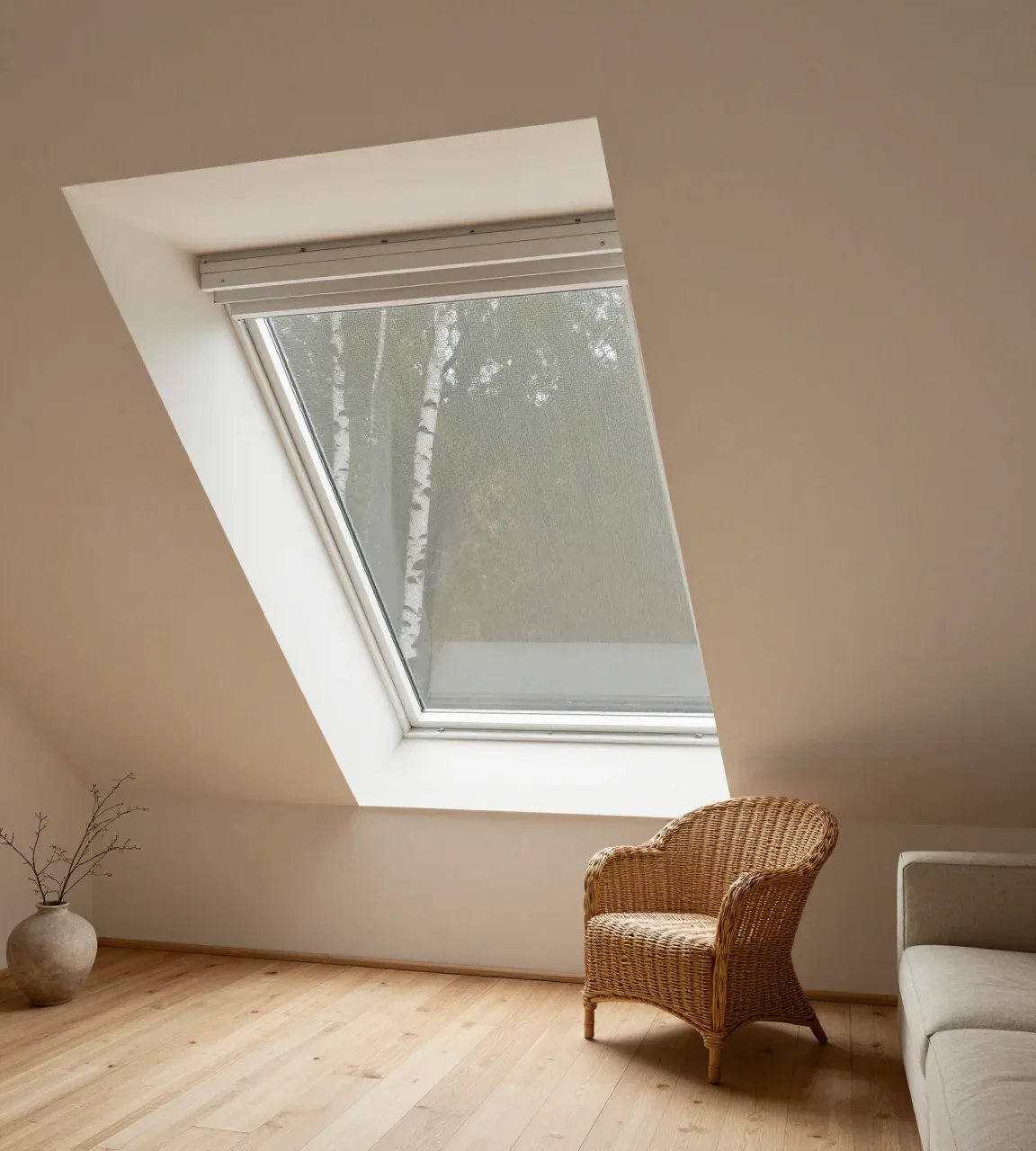
Pollen · Poll-Tex
Anti-Pollen
The 0.25×1 mm mesh traps pollen. Hypoallergenic mesh for a bedroom under the roof. from 50 500 ₸ per item
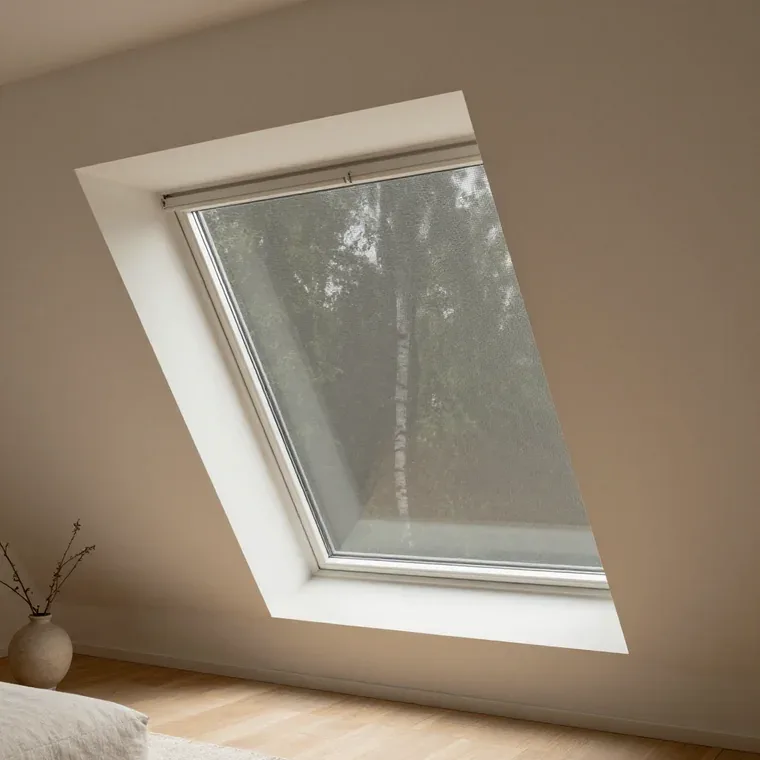
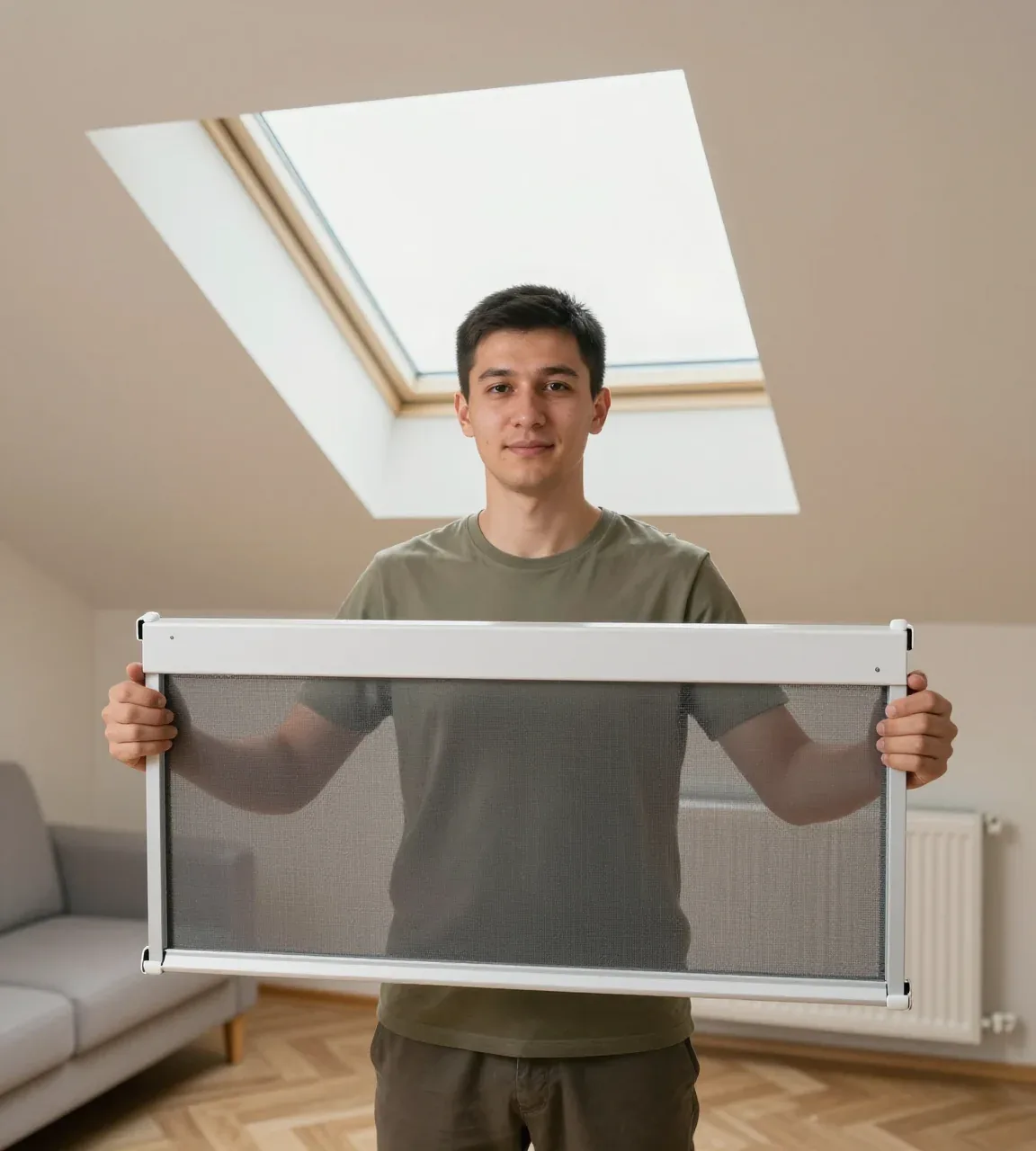
Anti-Pollen
The 0.25×1 mm mesh traps pollen. Hypoallergenic mesh for a bedroom under the roof. from 50 500 ₸ per item
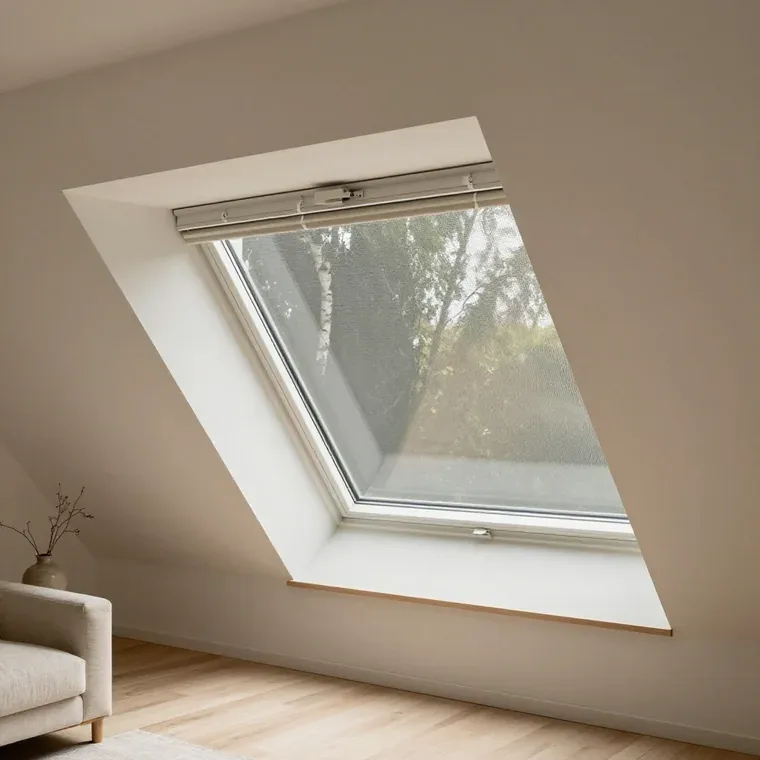
UltraVue
Lets through 25% more light and air than other meshes. For dark attic rooms. from 50 500 ₸ per item
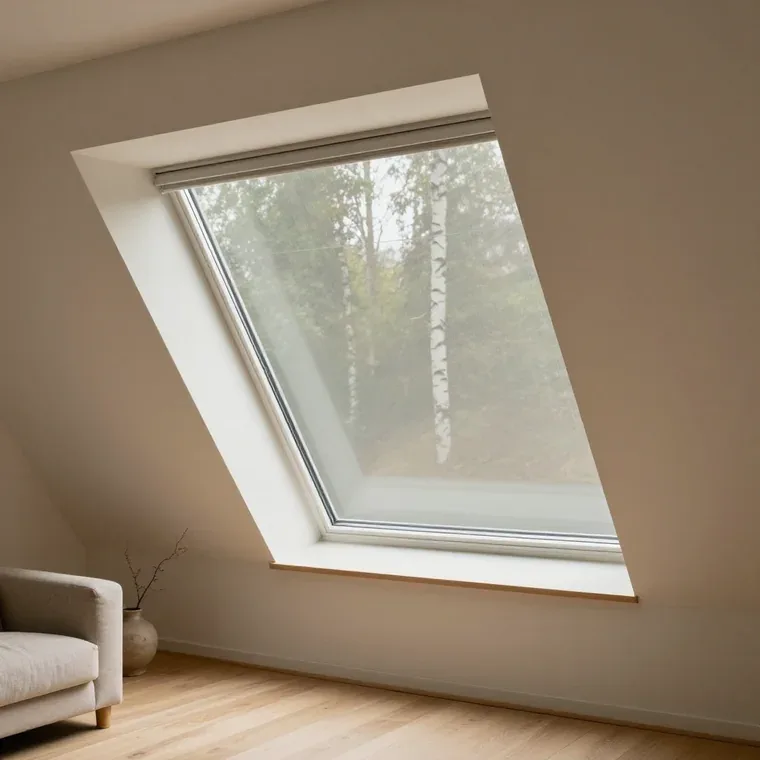
Anti-Cat
Vinyl threads withstand the weight of a small pet. Several times stronger than standard. from 50 500 ₸ per item
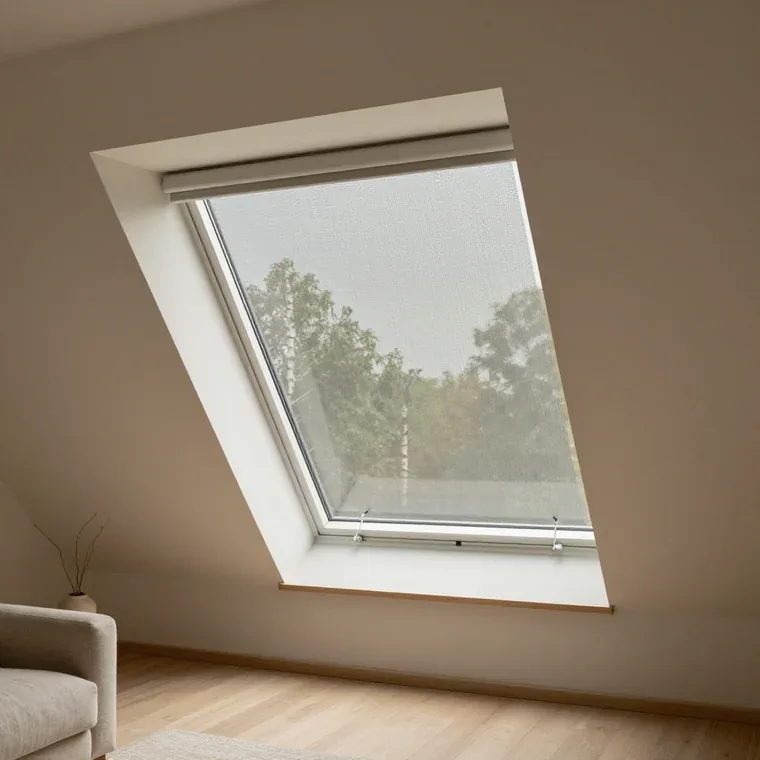
Roller
Cassette in the reveal, operated with a rod for high windows. Rolls up smoothly. from 93 000 ₸ per item
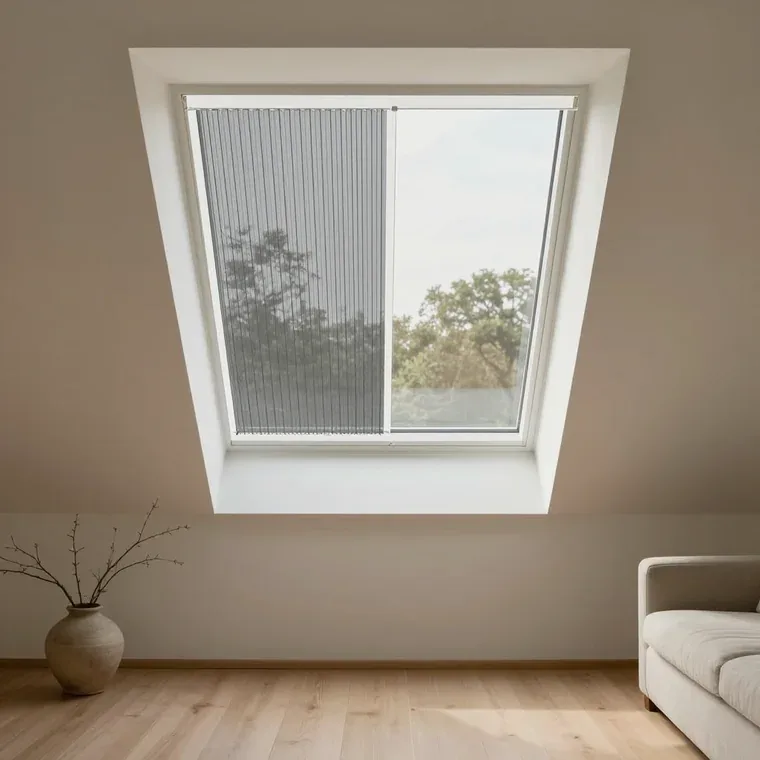
Pleated
Compact in the depth of the reveal. Suitable for sloped Velux and Fakro windows. from 50 500 ₸ per item



5,097 reviews on review sites
Guides in the reveal, mesh and operation — a design for a sloped window that opens outwards.
A skylight window opens outwards and is installed at an angle, so a standard framed screen blocks the sash. Protection is installed in the reveal: guides hold the mesh along the frame, and the cassette or accordion is hidden at the side.
The mesh moves along the guides and does not interfere with the sash. Operation is by rod or handle to reach a high window. This design protects against mosquitoes, wasps and pollen without blocking ventilation.
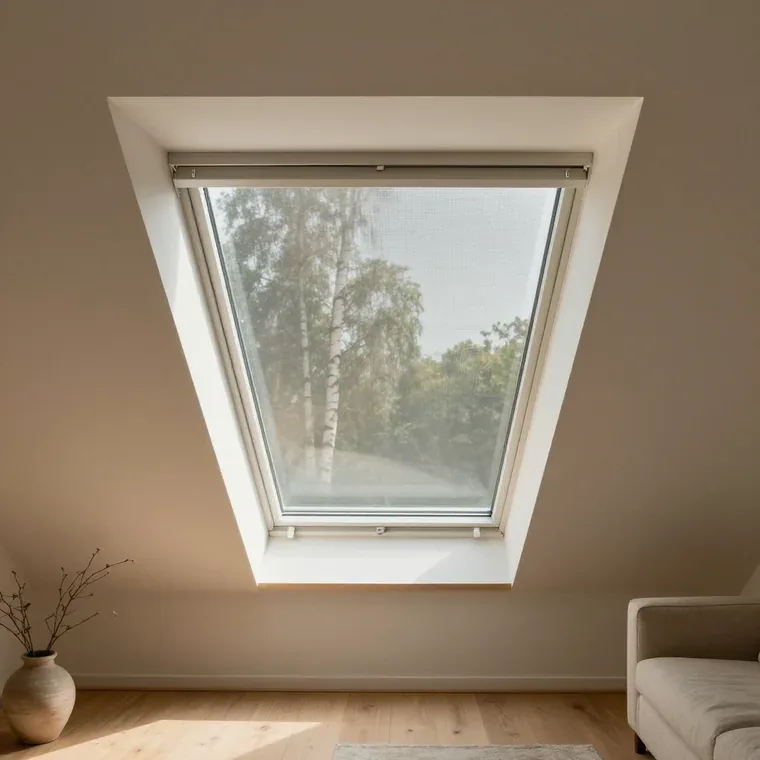
making a framed screen to your dimensions
warranty on mosquito screens
Fiberglass, Ultravue, Pet Screen, Anti-Dust, Poll-Tex
The measurer selects the fixing for the window profile and floor: guides in the reveal, brackets, plungers or magnets.
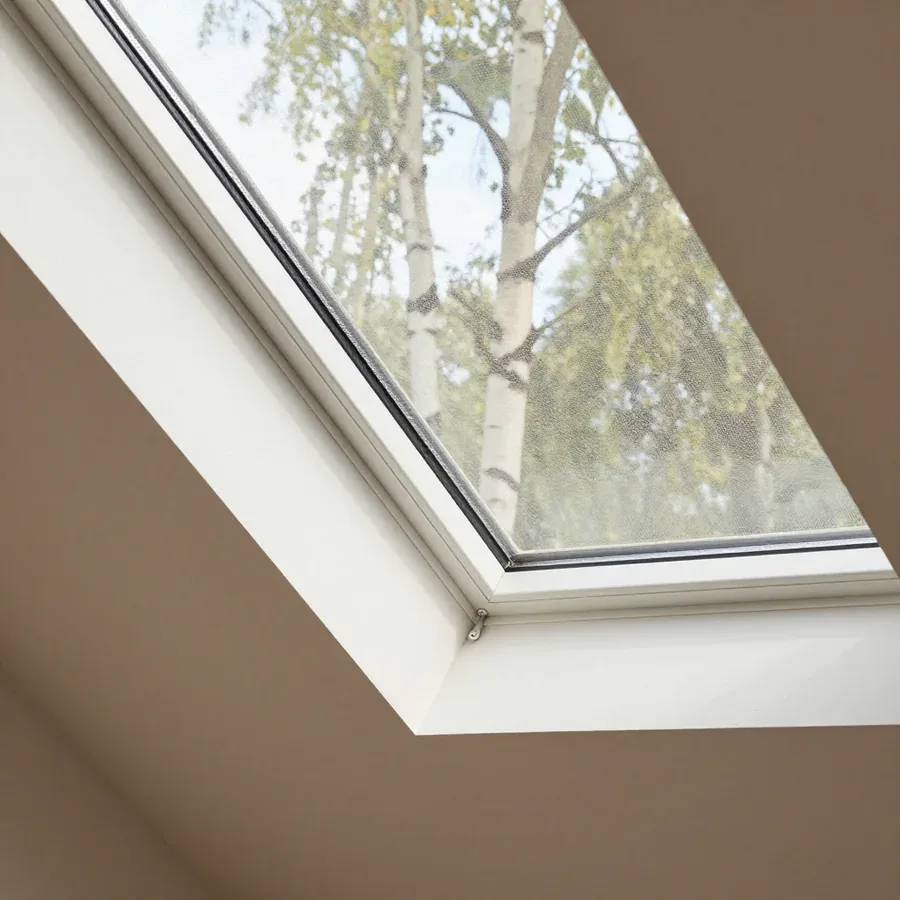
The mesh moves along the frame on guides. The design does not prevent the sash from opening outwards.
Hold the cassette or frame on the window profile. Suitable for plastic and aluminium frames.
Point fixing for lightweight structures. The measurer checks whether the profile can take the load.
The larger the opening and the higher the floor, the greater the wind load on the mesh. For wide sashes on upper floors, guides are chosen; for small openings, point fixing is sufficient.
If the screen comes away from the reveal or the mesh is torn, the technician will replace the fixings or the mesh. Minor repairs — from 2 500 ₸ per item.
Five meshes for different tasks: from standard protection to hypoallergenic and reinforced. Price is per square metre.
Fiberglass · standard
Fiberglass resists fire and temperature changes. The basic option for a loft.
Ultravue · light
Lets through 25% more light and air than other meshes. For dark lofts.
Pet Screen · strength
Vinyl threads are several times stronger than standard mesh. Withstands the weight of a small pet.
Fine mesh
Traps fine dust and fluff. The mesh is denser than standard, ventilation is maintained.
Poll-Tex · 0.25×1 mm
0.25×1 mm cell, hypoallergenic mesh. For bedrooms and children's rooms under the roof.
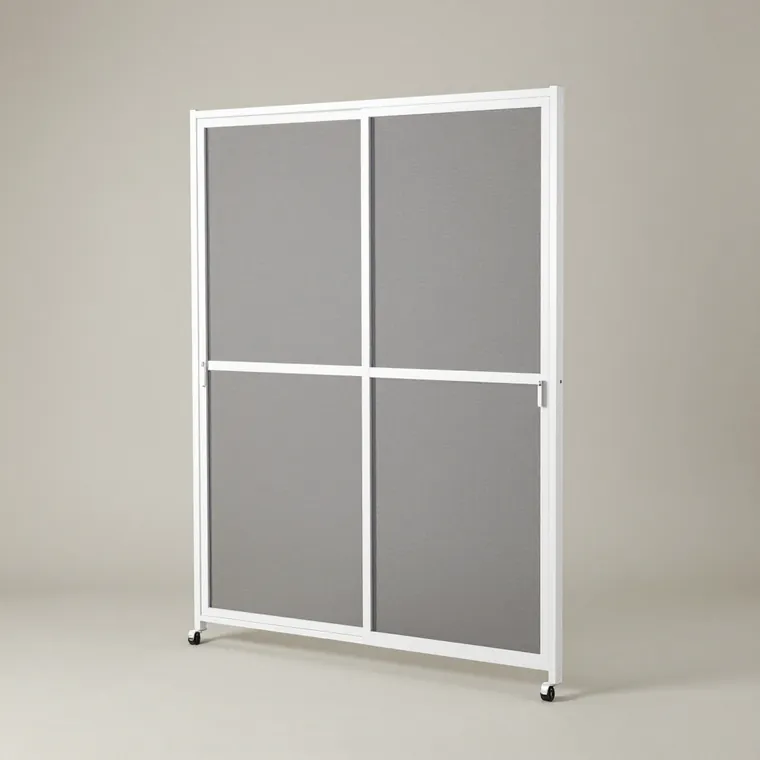
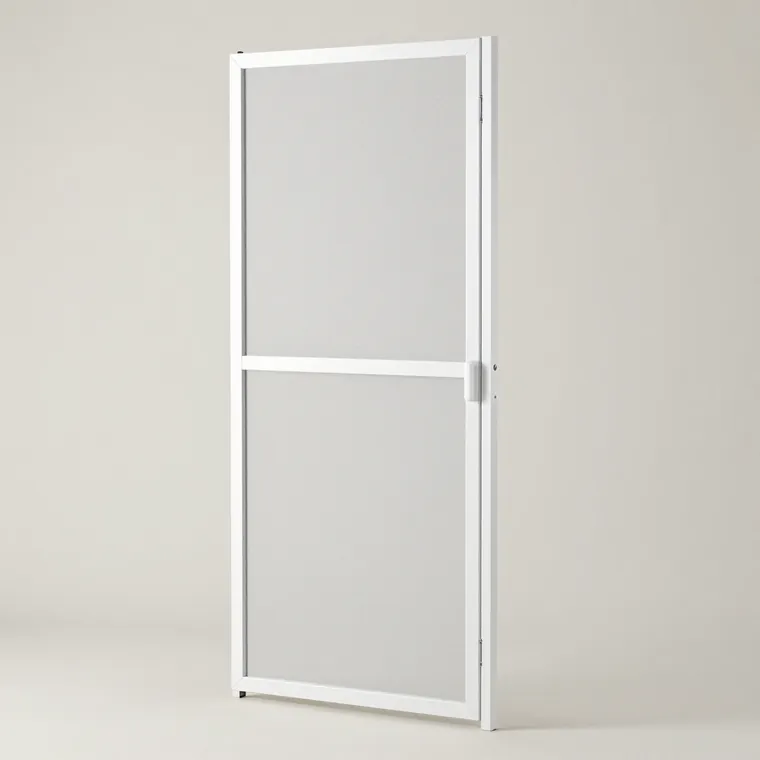
Framed, sliding, door and pleated screens. Our measurer will choose the right design for your opening free of charge.
Full price listProducts, fitting and repair — prices are fixed in the order after measuring.
| Screen type | Price | Fitting | Options and prices | |
|---|---|---|---|---|
| Roller mosquito screen for skylight windowscassette in the reveal, operated with a rod | from 93 000₸ per item | 3 350 ₸ | Roller mosquito screen for windows · 16 200 ₸ per m² | |
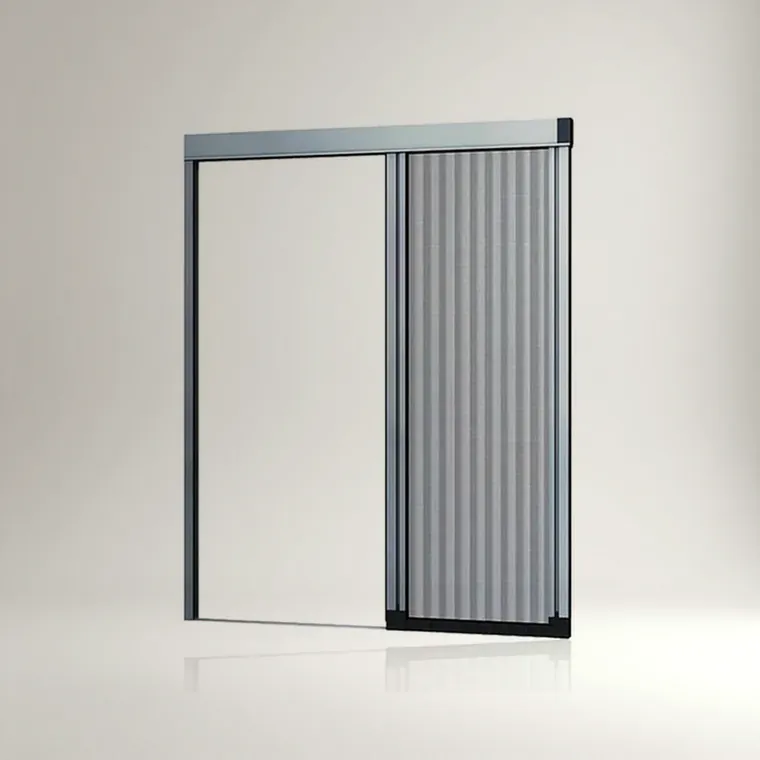 Pleated mosquito screen for skylight windowsfolds like an accordion | from 50 500₸ per item | — | Pleated mosquito screen, standard mesh · 29 500 ₸ per m²Pleated mosquito screen for windows · 25 000 | |
| Pleated mosquito screen fittinginstallation into the reveal | from 3 450₸ per item | — | ||
| Pleated cord replacementrepair of the folding mechanism | from 8 500₸ per job | — | ||
| Mosquito screen repairminor repairs to fixings and mesh | from 2 500₸ per item | — | ||
| Measuring visit if the order is cancelledif cancelled after measuring | from 2 500₸ per job | — |
The price is fixed in the order after measuring.Measuring and consultation are free.Payment after installation: cash, card or Kaspi.
Calculate the costEnter the width and height of the opening — the calculator will show an approximate cost.
1. Screen type
2. Mesh and design
3. Opening size, cm
Our own production in Almaty, manufacturing in minutes, warranty and profile painting.
We have been making mosquito screens since 2012 at our own production facility in Almaty.
Warranty on mosquito screens — 1 year.
We make a framed screen to your dimensions in 10–15 minutes.
We make a pleated screen in 40–60 minutes.
We paint the profile white, brown, grey or another colour to match the windows.
Fiberglass, Ultravue, Pet Screen, Anti-Dust, Poll-Tex, as well as metal mesh.
We select fixings for the window profile and floor: Z-brackets, plungers or magnets.
Mosquito screens can be ordered in 17 cities of Kazakhstan.
From request to a finished screen on the window — four steps.
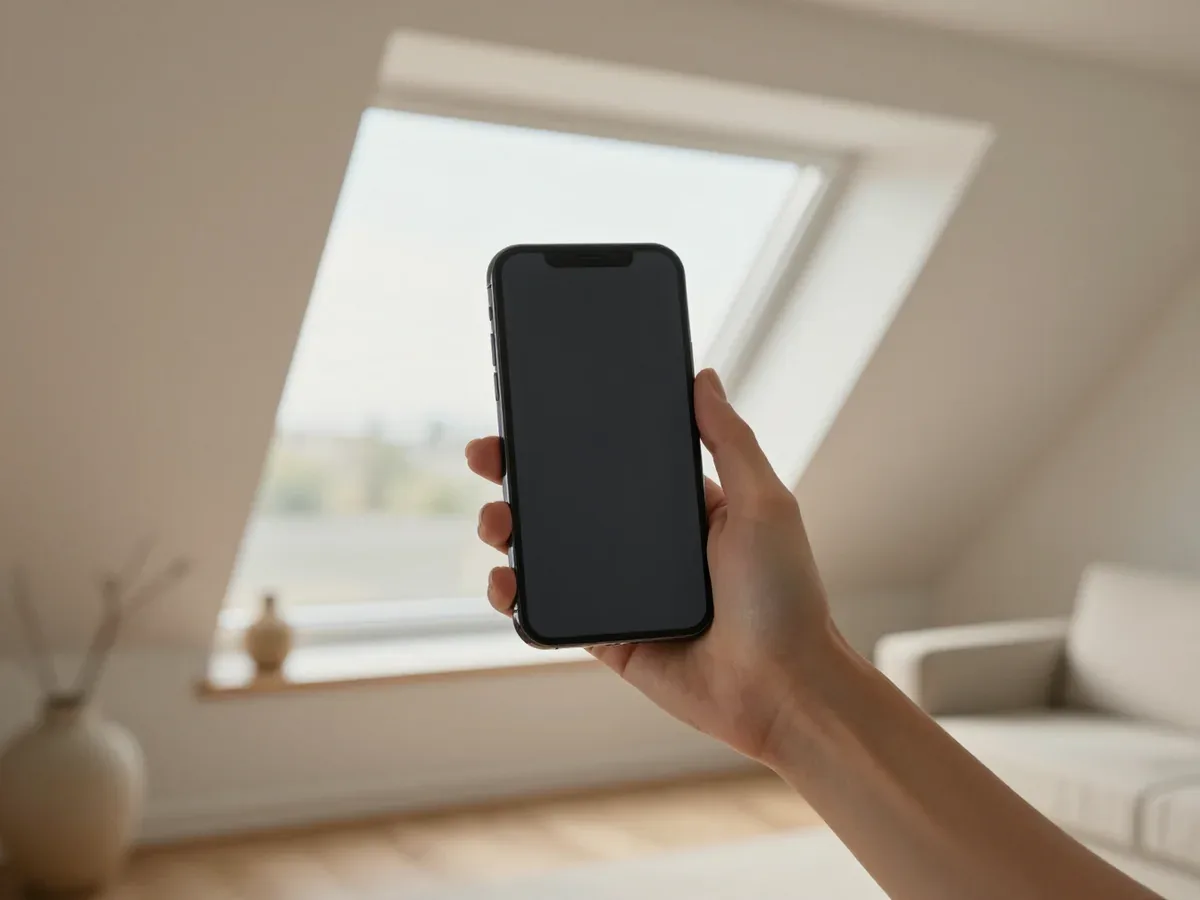
You write on WhatsApp — we reply within 5 minutes. We clarify the window model and a convenient time.
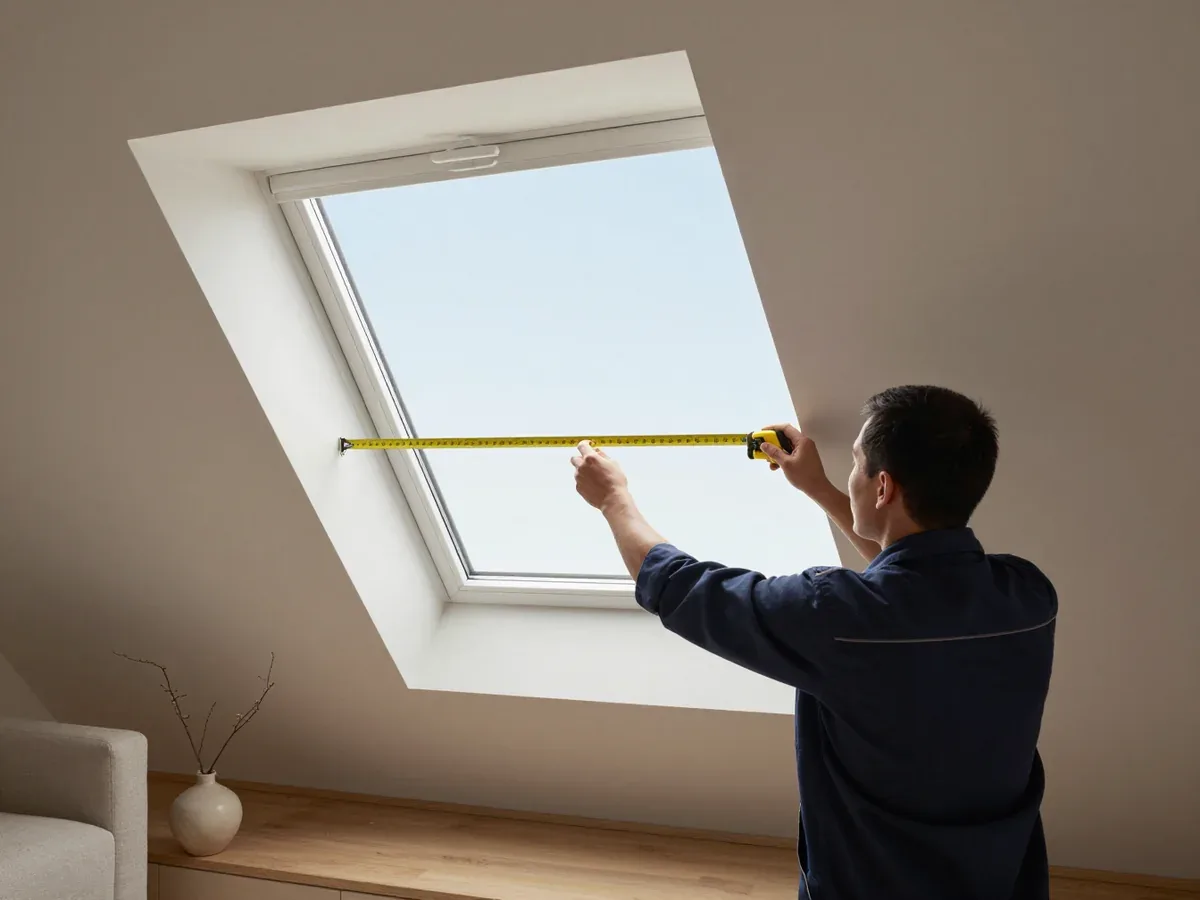
The measurer measures the depth of the reveal, the window tilt angle and the opening side of the sash — these parameters determine which design will fit and how to fix it.
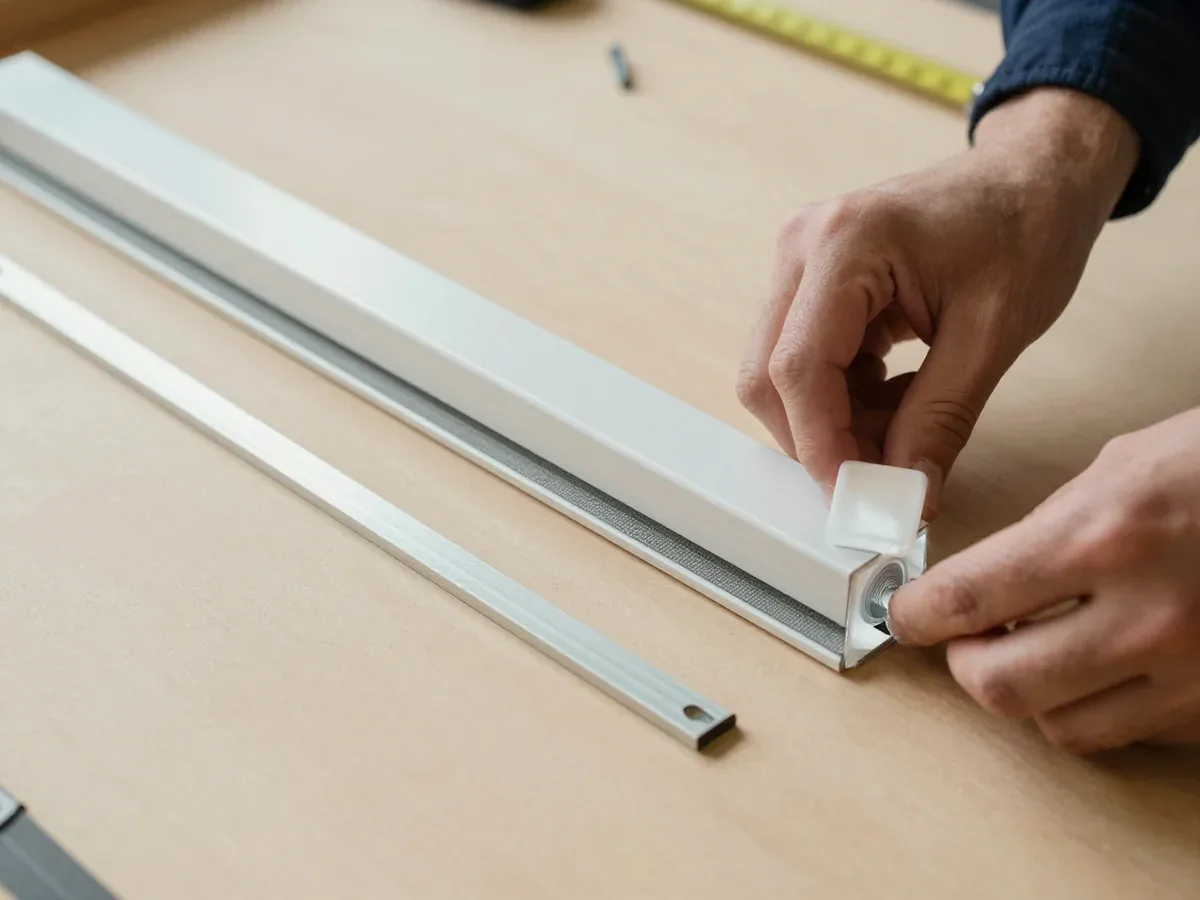
Before fitting, the technician cleans the reveal from dust and checks that the sash moves freely so the guides do not interfere with opening.
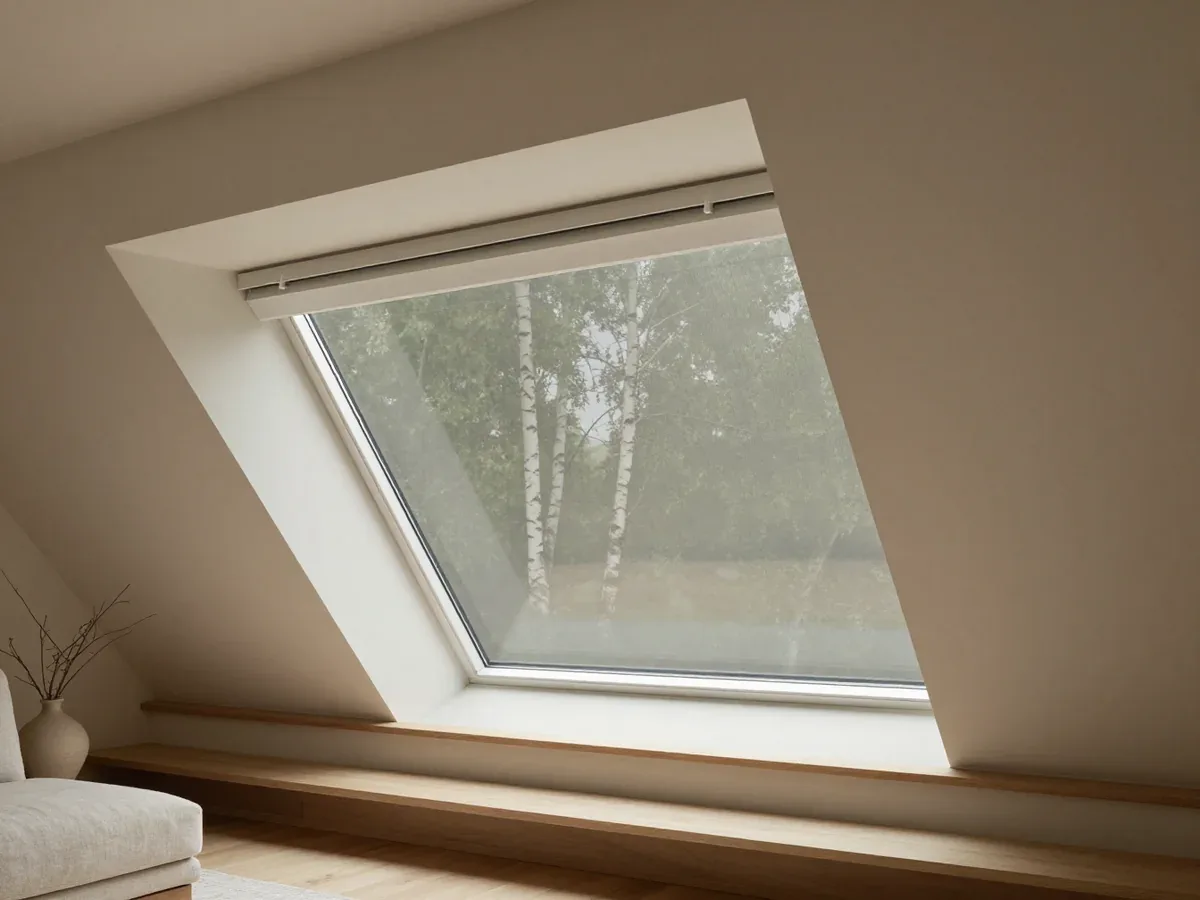
After installation, check it yourself: the mesh moves smoothly without jerking, the gaps at the edges are even, and the control rod reaches the handle.
Good to know

Senior mosquito screen specialist at moskitnyesetki.kz
We make roof window mosquito screens in Aktobe to your exact size, with a free measuring visit and fitting by our own fitters. We supply pleated and roller systems that work on a sloped, top-hinged sash, help you pick the mesh, and back every screen with a 1-year warranty. You pay after installation.
A sloped sash and a top-hinged opening change the physics of screening: the mesh must follow the window through its swing rather than sit flat. Here is why an ordinary frame gives up.
A tilted window pivots around a top axis, so a screen has to follow the sash through its swing instead of sitting flat against a vertical profile. On a standard upright window the sash travels toward you and the surround stays put; on a sloped one the top-hinged sash rotates outward and upward, and the whole opening plane moves with it. That is why the fixing point shifts to the inner reveal, the flat surface inside the opening that does not travel with the sash. A framed mesh built for an upright profile has no such anchor: it is designed to clip onto an outer surround that never moves. Because the sash opens outward and upward, the screen must be fixed to the inner reveal and move with the window, not clip onto the outer surround. Check which face of the reveal is load-bearing before ordering.
On a tilted opening a rigid frame has nothing to rest against, so the fabric loses tension, bows at the middle and leaves gaps at the edges. Gravity pulls the unsupported lower edge away from the sash, and the fabric, stretched across a rectangle that is no longer held square, slackens along the diagonal. Gaps appear first at the corners, where the fabric meets the profile, and widen every time the window is opened. Insects do not need a wide gap: a slack mesh that lifts a few millimetres off the profile is enough for mosquitoes and midges to slip through at dusk. Even a correctly sized frame will not stay tight on a slope, so the fix is a system that keeps constant tension rather than a bigger one. Measure the diagonal of the opening, not just its width and height.
Two systems genuinely work on a sloped sash — pleated and roller — and each keeps insects out while the window still opens. Here is how they differ in mechanics, ventilation and the windows they suit.
| System | How it moves | Ventilation position | Best for |
|---|---|---|---|
| Pleated | Folds into a stack at the edge | Holds any half-open point | Frequent partial opening |
| Roller | Winds into an aluminium cassette | Fully open or closed | Clean look, wide panes |
| Framed | Fixed rigid panel | None on a slope | Vertical windows only |
We measure the reveal of a window that is already installed and build the screen to that opening, so a non-standard or older sloped unit is no obstacle. The measurer checks the reveal depth and the sash swing before choosing the design, because a shallow reveal rules out a bulky cassette and points to pleated instead. On a narrow dormer the roller box can crowd the glass, while a pleated stack tucks into the side frame and leaves the full pane clear. We also match the frame colour to your windows, so a screen fitted later does not stand out against the original joinery. The deciding question is simple — how often you crack the window open for air. Tell the measurer your routine and the choice follows from it.
The mesh decides how bright your attic stays and whether the screen survives a cat, road dust or summer pollen. Here is how the options map to real rooms and real windows.
We stock five meshes, and for a sloped window the usual picks are UltraVue for a dark attic, Anti-Cat (Pet Screen) for a cat, and Anti-Pollen (Poll-Tex) near a road. UltraVue lets in 25% more light and air than other meshes, which matters most on a sloped window that already cuts daylight, while Poll-Tex uses a 0.25×1 mm cell to hold back fine dust and pollen. Standard (Fiberglass) covers everyday use and resists heat and flame, and Anti-Dust catches the grit that blows in from a busy street. Anti-Cat (Pet Screen) has vinyl threads several times stronger than ordinary cloth and holds the weight of a small pet. The choice usually comes down to one question: what bothers you most, a dark room, a scratching cat or dust on the sill.
| Mesh | Main benefit | Good when |
|---|---|---|
| Standard (Fiberglass) | Basic, heat and flame resistant | Everyday use |
| UltraVue | 25% more light and air | Dark attic room |
| Anti-Cat (Pet Screen) | Vinyl threads resist claws | Cat in the house |
| Anti-Pollen (Poll-Tex) | 0.25×1 mm cell | Road or allergy nearby |
| Anti-Dust | Holds back fine dust | Dusty street |
| Metal mesh | Rigid, long service | High-traffic sash |
From the first call to a finished guard on the window, the route is short: a free visit, a unit cut to your exact dimensions, then fitting. Here is what happens at each step and how long it takes.
Our measurer comes at a time that suits you, takes the sizes of the reveal and helps you choose the system, mesh and fixings, and the visit costs nothing. He checks the slope, the depth of the opening and the handle position, because an attic window rarely has square, plumb edges. For roof window mosquito screens aktobe homeowners order most often, the fixing choice matters as much as the mesh: Z-brackets clamp onto the profile, plunger pins slot into the groove, and magnets hold a light unit on a smooth surface. On a high attic window the measurer usually avoids drilling the sash and picks a bracket that grips the outer profile instead. Ask him to show you the fixing on your own window before he leaves — it decides how neatly the guard sits.
A framed screen made to your size takes 10 to 15 minutes and a pleated screen 40 to 60 minutes, and you pay after installation by cash, card or Kaspi. The frame is made to the dimensions taken at the visit, so the unit goes onto the window the same day, with no second trip. We paint the frame any colour to match your windows, and the fitter checks the opening and closing before he packs up. Because the price is fixed in the order after measuring, the figure you agree at the visit is the figure you pay once the unit is on the window. Keep the order sheet — it lists the mesh type and fixing, which saves time if you later need a replacement part.
A window screen lasts for years when it is taken off before the cold season and mended in time. Here is how we look after framed and pleated models, where to store them and what a tear really means.
A framed screen lifts out from inside in a minute, and we recommend taking it off for the winter so snow and frost do not stress the weave. The frame stays straight on the sash all summer, then comes away without tools when the first frost is forecast. Dust the fabric with a soft brush or vacuum it on the low setting, and wipe the surround with a damp cloth rather than a soaking one. Store it flat, because a crease in the mesh weakens the weave and shows up as a bright line once the unit is back on the window. A pleated model folds into its own cassette, so it needs no separate storage. The ones that come back each spring in good shape are kept flat on a shelf, not stacked behind a wardrobe.
We repair existing units and replace fixings, and every product we make carries a 1-year warranty, so a torn panel or a loose bracket is dealt with rather than written off. A tear along the edge, a sagging corner or a frame that no longer sits tight usually points to worn fasteners, and swapping Z-brackets, plungers or magnets restores the fit. Where the weave itself has gone, we fit a new panel into the existing frame and keep the surround. A small tear near the edge is usually a mounting problem, not a fabric problem, so it is worth having the bracket checked before ordering a whole new unit. Send a photo on WhatsApp and we reply within five minutes with what the damage looks like from our side.
A window screen for a sloped sash is a small part of the house, yet it has to survive a steep slope, a hot summer and a snowy winter. Here is what matters most when you order one.
Ordering, choosing and fitting a mosquito screen for a roof window
Konstantin Selenenkovsenior mosquito screen specialist, 10 years in the tradeOnline · replies within 5 minutes
Ask a questionOur workshop makes screens for inclined window sashes, and measuring and consultation are free. A surveyor will come at a convenient time, take measurements and help you choose the design and mesh.
Instead of a rigid frame, a pleated or roller system with guides in the reveals is installed for roof windows. They hold on the slope, do not sag and do not interfere with opening the sash.
An internal one is suitable for a roof window: an external screen cannot be securely fixed to an inclined sash and will interfere with opening. Pleated and roller systems are installed from the inside, to the frame or reveals.
A roller screen is easier to use: it rolls up smoothly and takes up little space. A pleated screen folds compactly and looks neat on an inclined sash. The surveyor will help you choose based on the window profile and the angle of inclination.
Yes, some pleated and roller systems are fixed to the reveals with brackets or magnets without drilling the frame. The surveyor will check your window and suggest the best fixing method.
A pleated screen folds like an accordion along guides in the reveals and does not interfere with the sash turning on its axis. A rigid frame holds poorly on a slope and interferes with opening, so it is not used for roof windows.
 Care
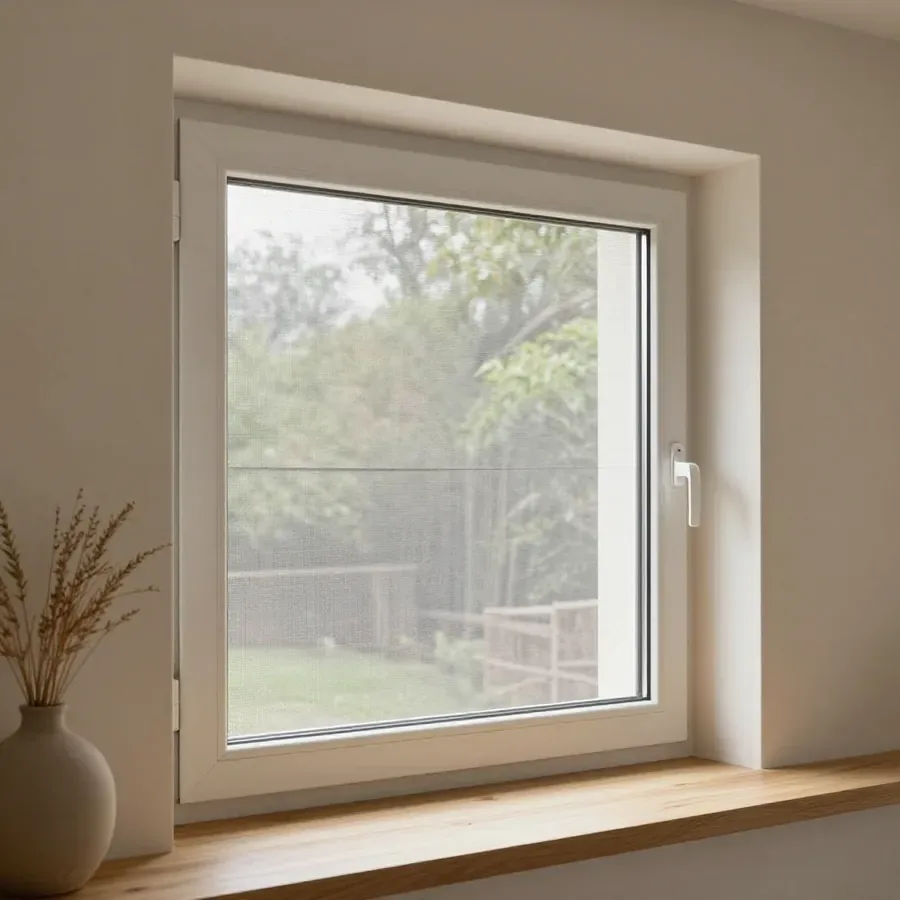
A frame screen comes off in a minute: we show how not to bend the frame or lose the fixings.
April 15, 20268 min read
 Choosing
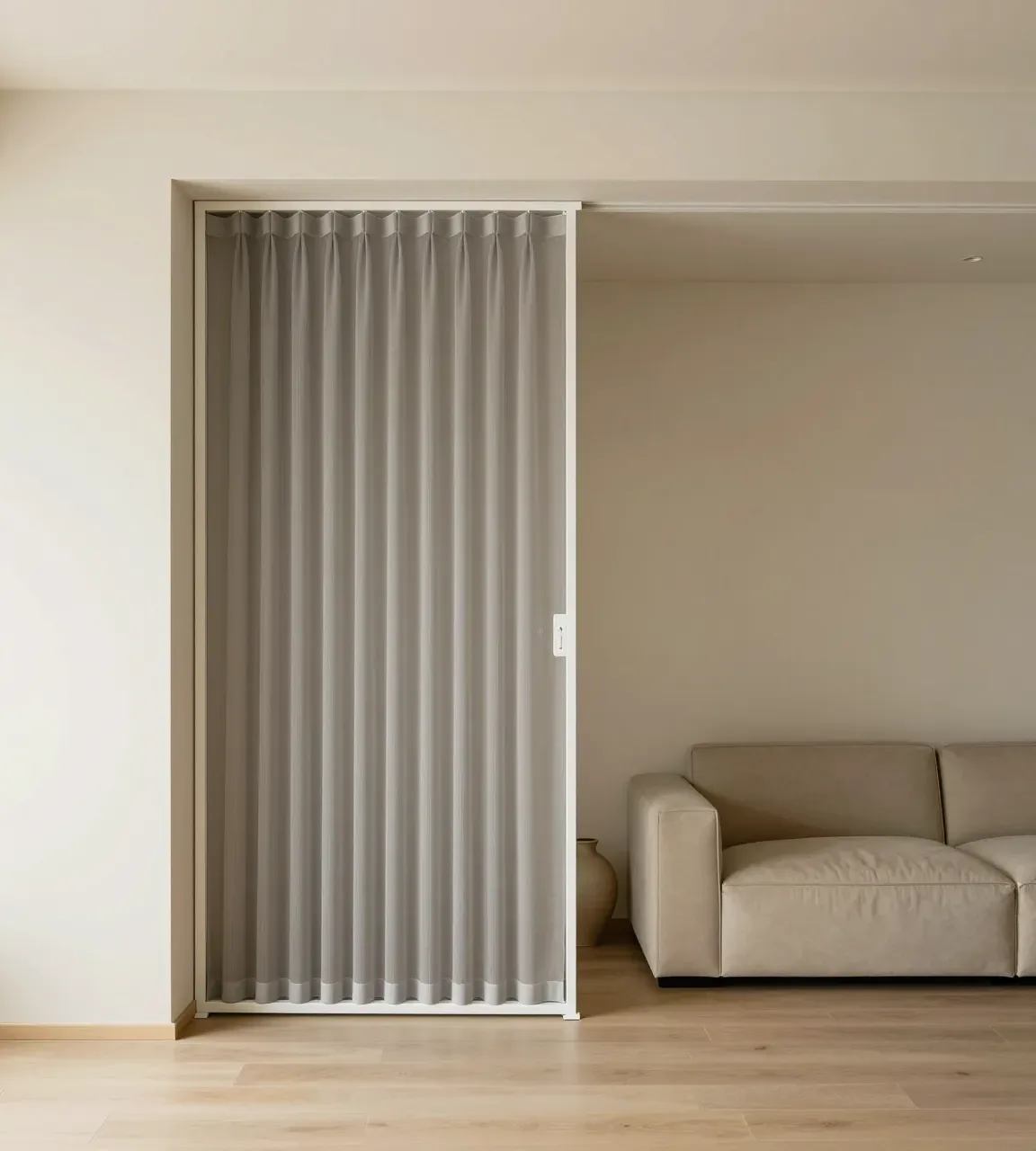
We compare the price, lead time and how each screen performs on a door that you walk through every day.
March 2, 20268 min read
 Mesh types
How Poll-Tex mesh with a 0.25×1 mm cell works and who it helps in pollen season.
February 17, 20268 min read
 Prices
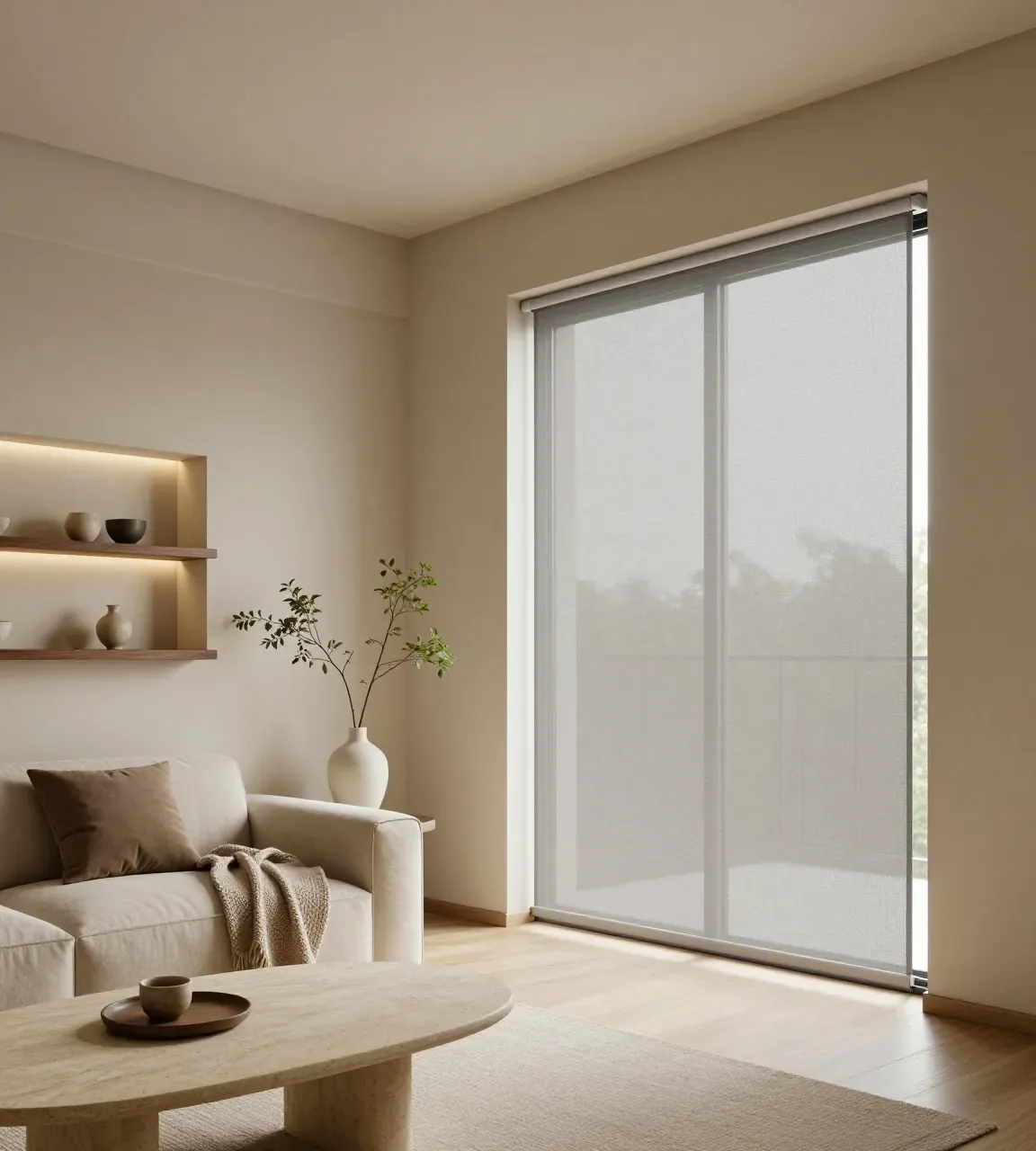
Price list breakdown: frame screen from 2 000 ₸ per m², installation 1 750 ₸, pleated from 28 000 ₸. Costing a 70×140 cm window.
February 1, 20268 min read
 Repair
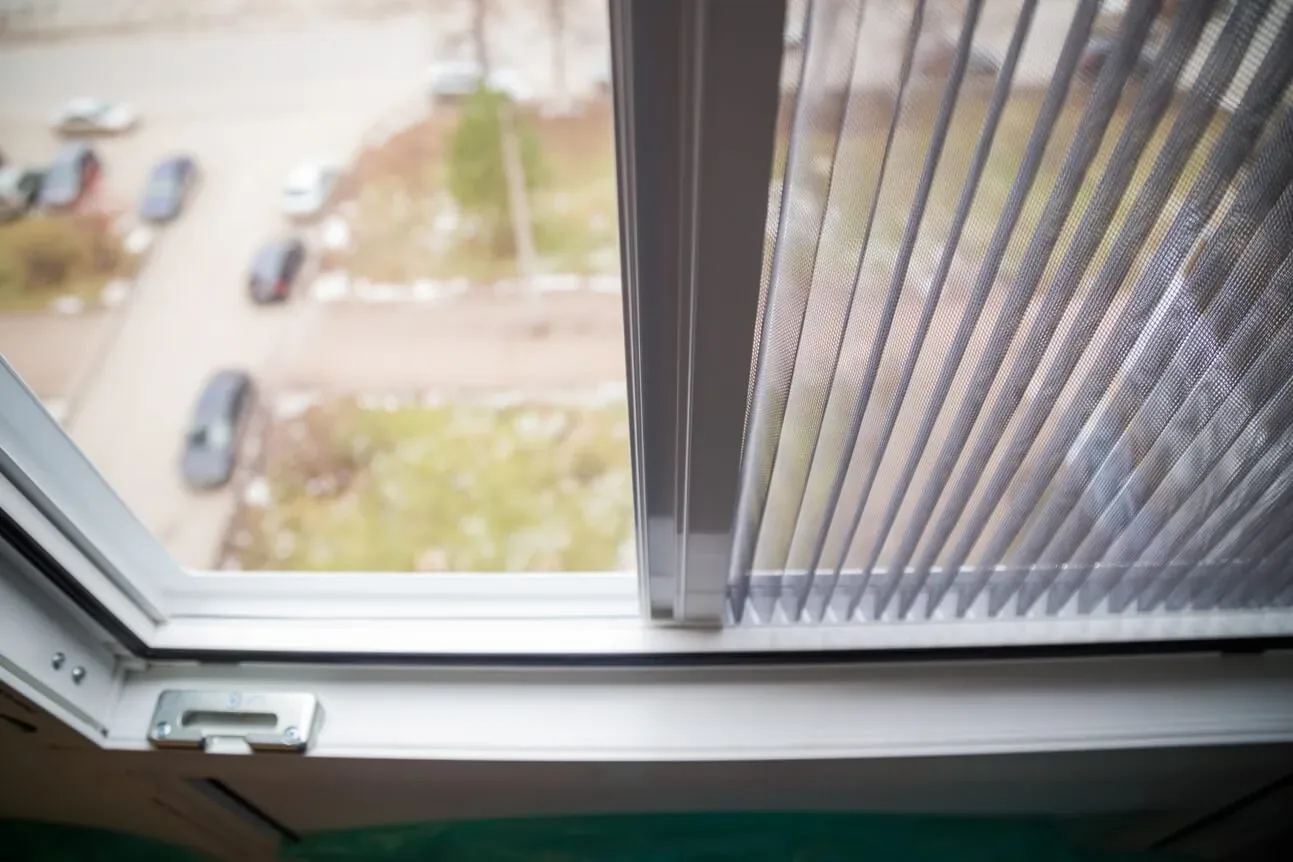
Worn fixings, a wrong measurement, wind on high floors. A set of fixings costs 290 ₸, installation 871 ₸.
January 14, 20268 min read
 Choosing
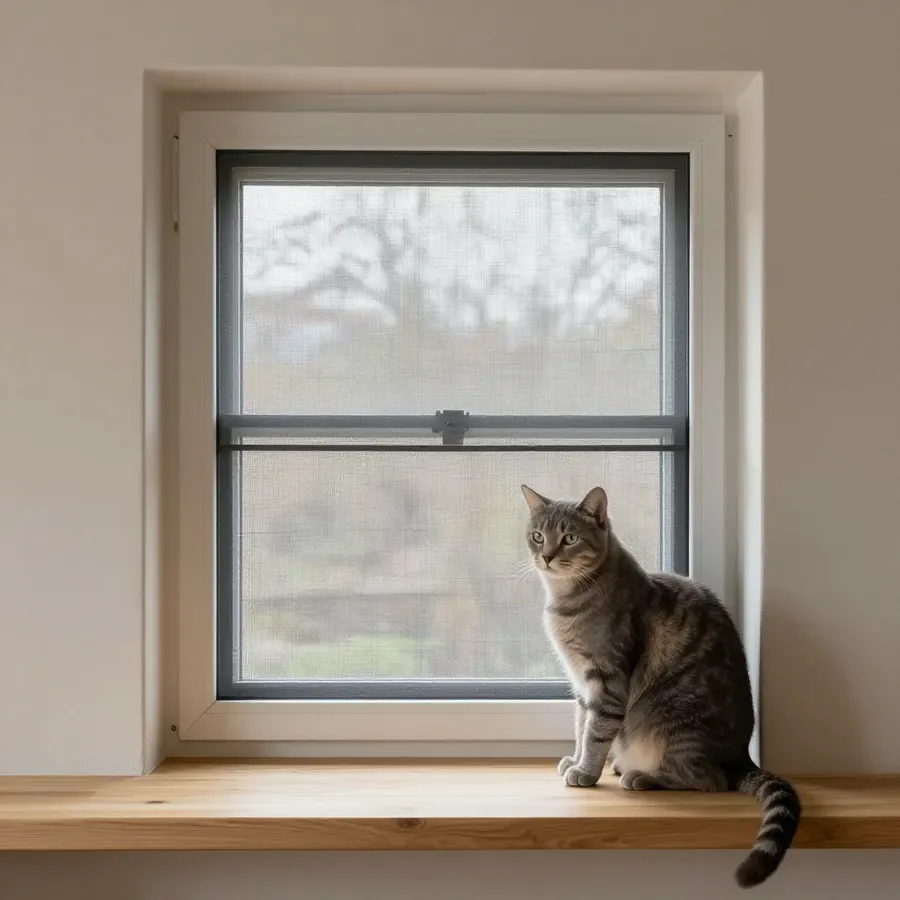
Anti-Cat mesh on vinyl threads, the fixings and what to do about gaps around the window opening.
December 23, 20258 min read
 Mesh types
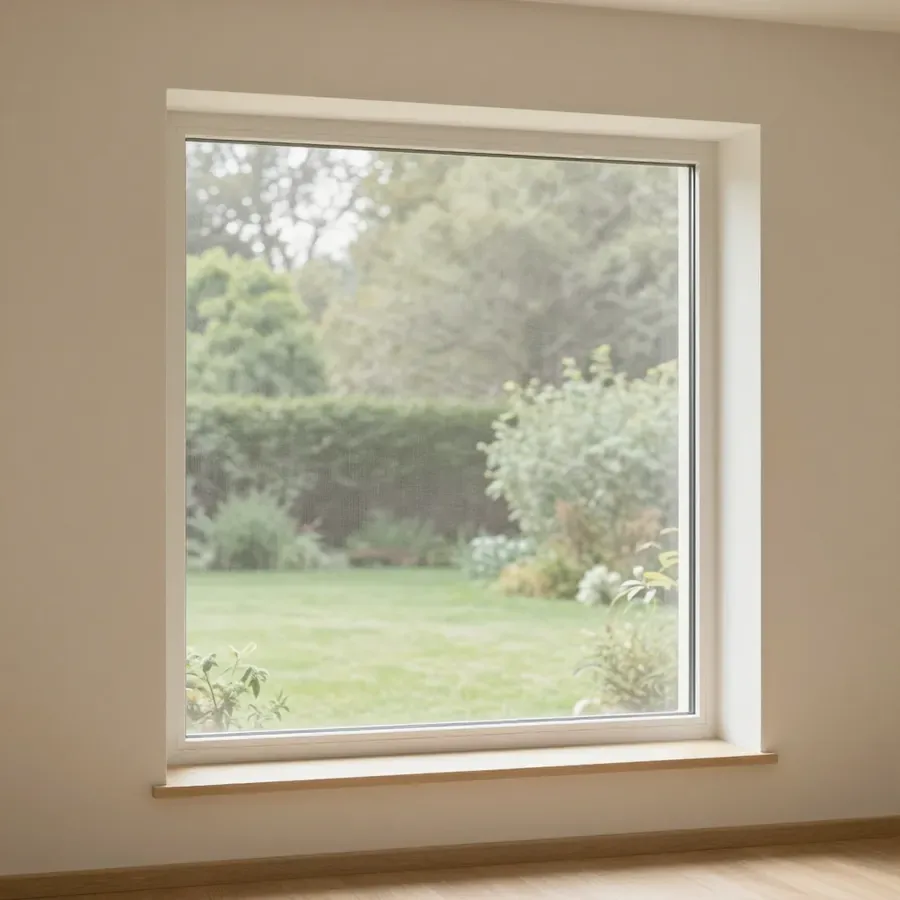
The mesh lets in 25% more light and air. Where the difference shows and where paying extra is not worth it.
December 11, 20258 min read
 Choosing
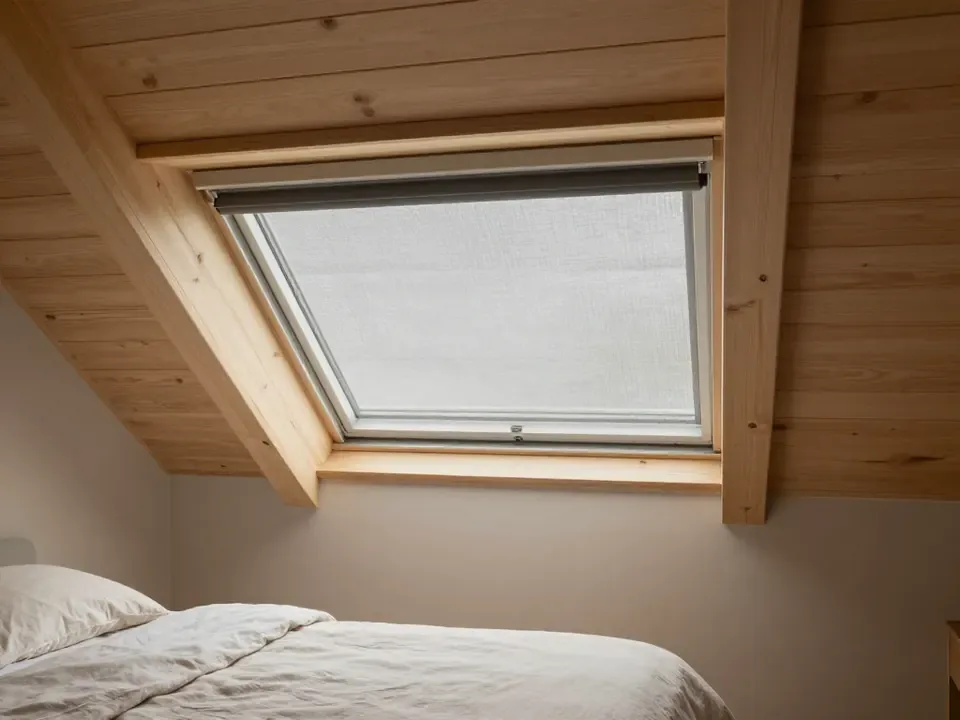
A tilted sash, outward opening and a roller screen at 15 000 ₸ per m²: what will suit your window.
November 21, 20258 min read
 Mesh types
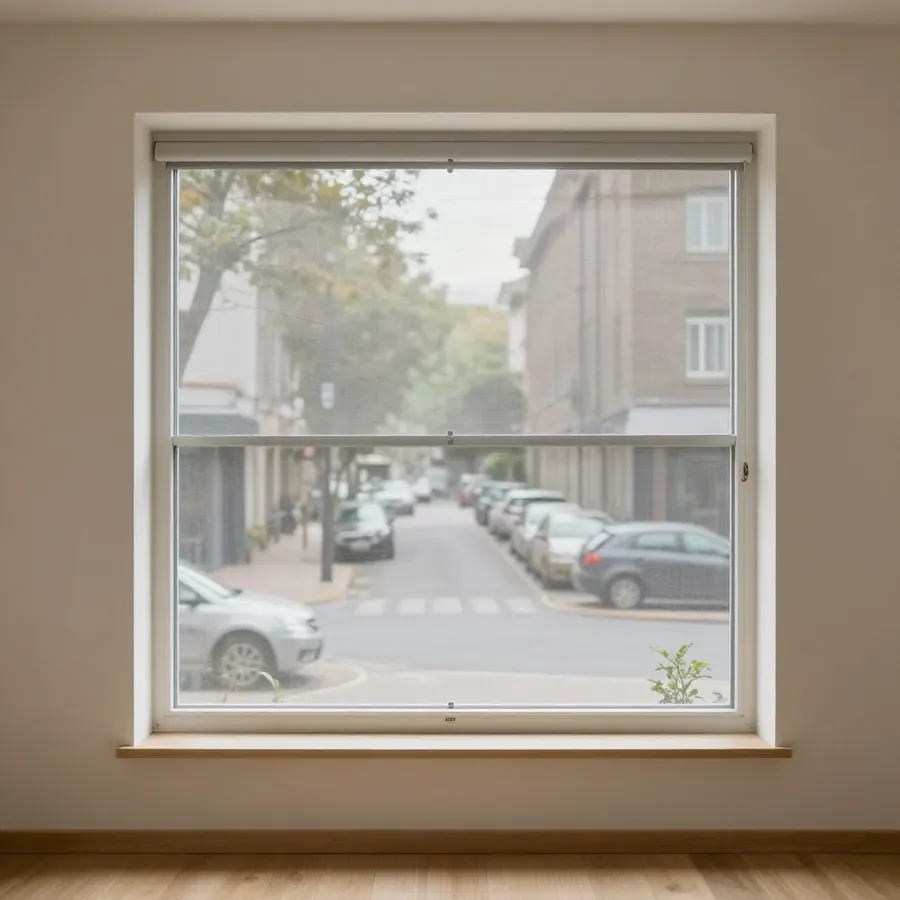
The mesh stops coarse and fine dust along with mosquitoes. When it is worth the price of 8 500 ₸ per m².
October 20, 20258 min read
Thank you. We will call you back within 10 minutes!
Your order number is on the receipt or in the SMS. Choose where to leave your review.
Write a review on WhatsApp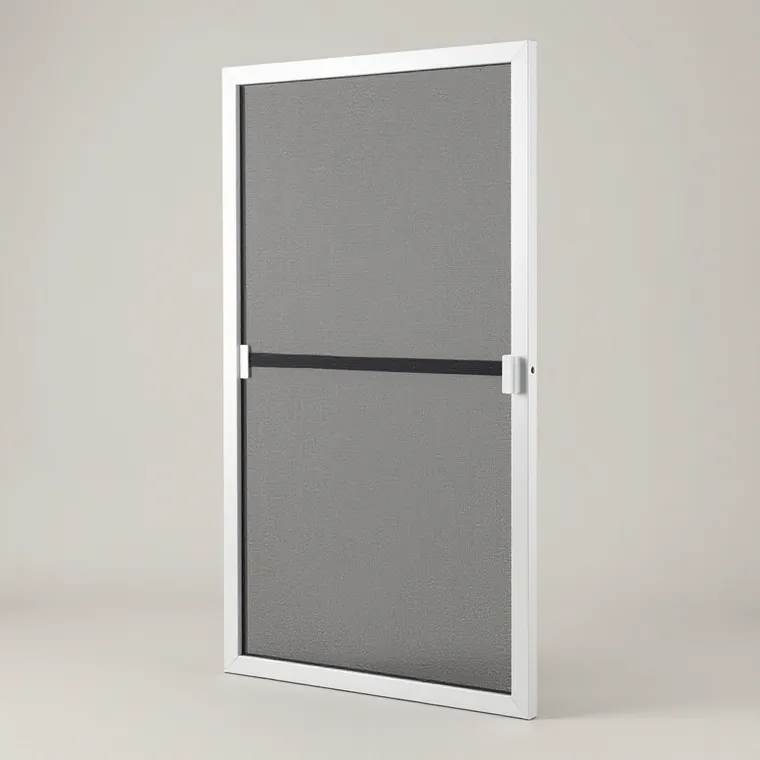
 Balcony screens
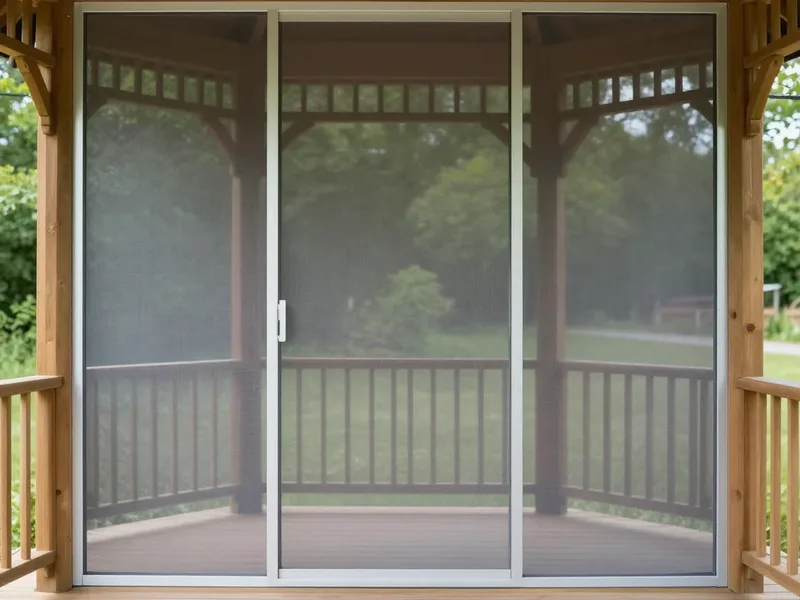 Gazebo screen
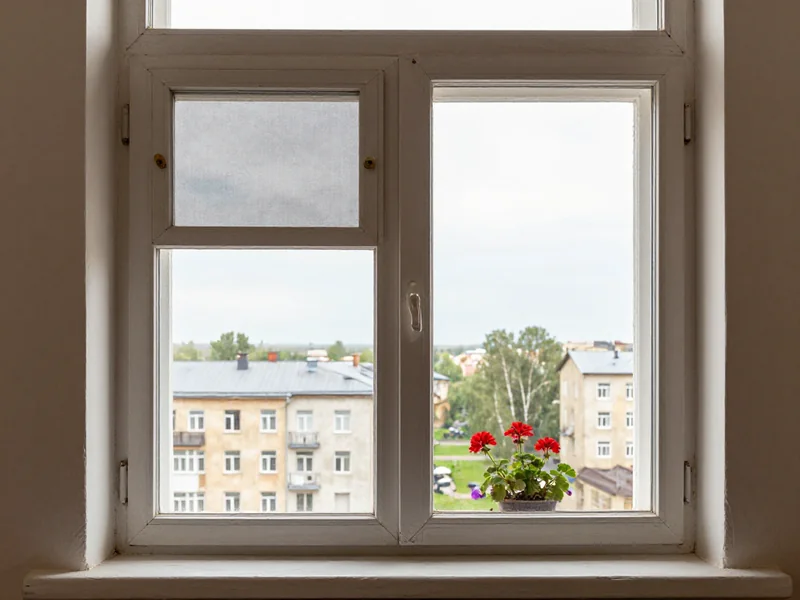 Vent window screen
 Loggia screen
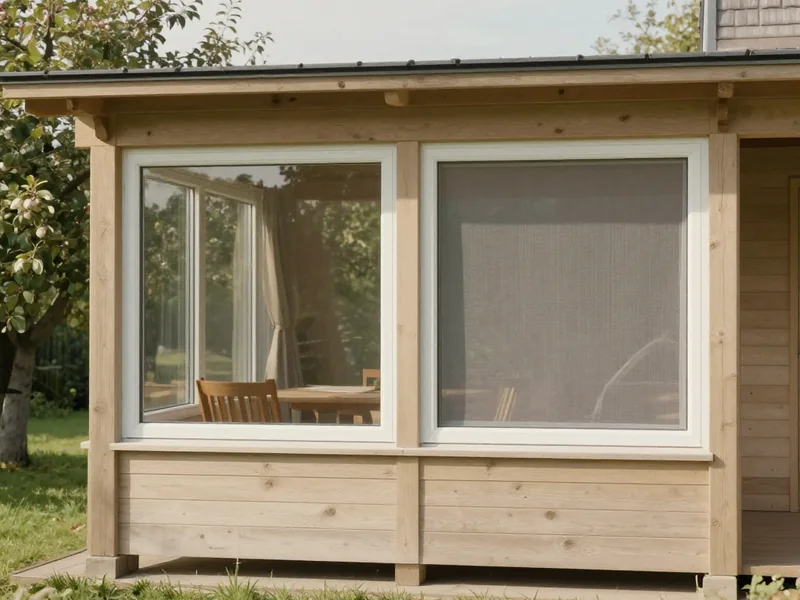 Terrace screen
