


Good to know
Pleated Mosquito Screens in Aktobe

Senior mosquito screen specialist at moskitnyesetki.kz
We make pleated mosquito screens to your exact opening and fit them across Aktobe, with free measuring, a frame painted to match your windows and a 1-year warranty. A pleated screen is made in 40–60 minutes, and you pay only after installation by cash, card or Kaspi.
Pleated mosquito screens for your window, door or opening
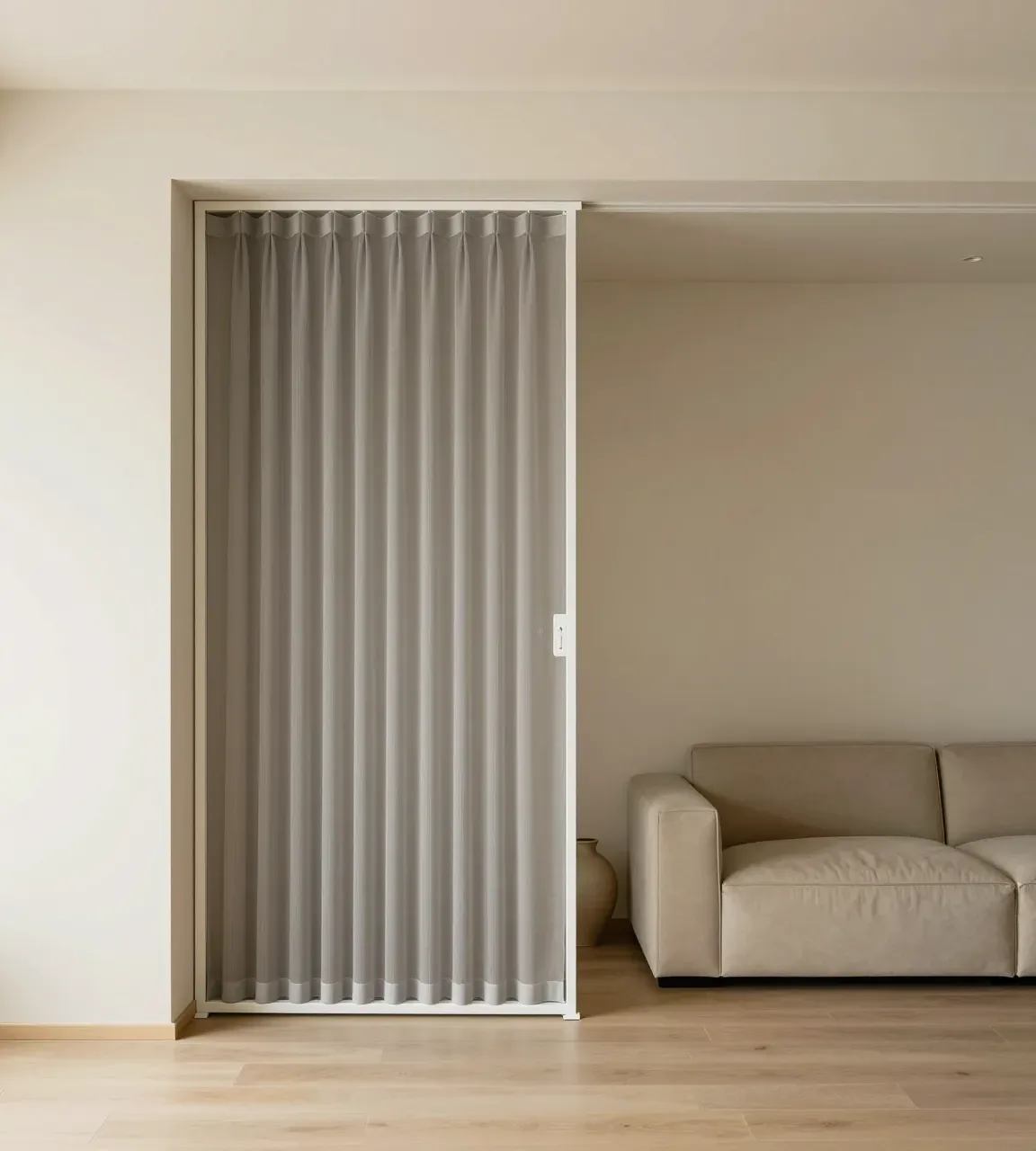
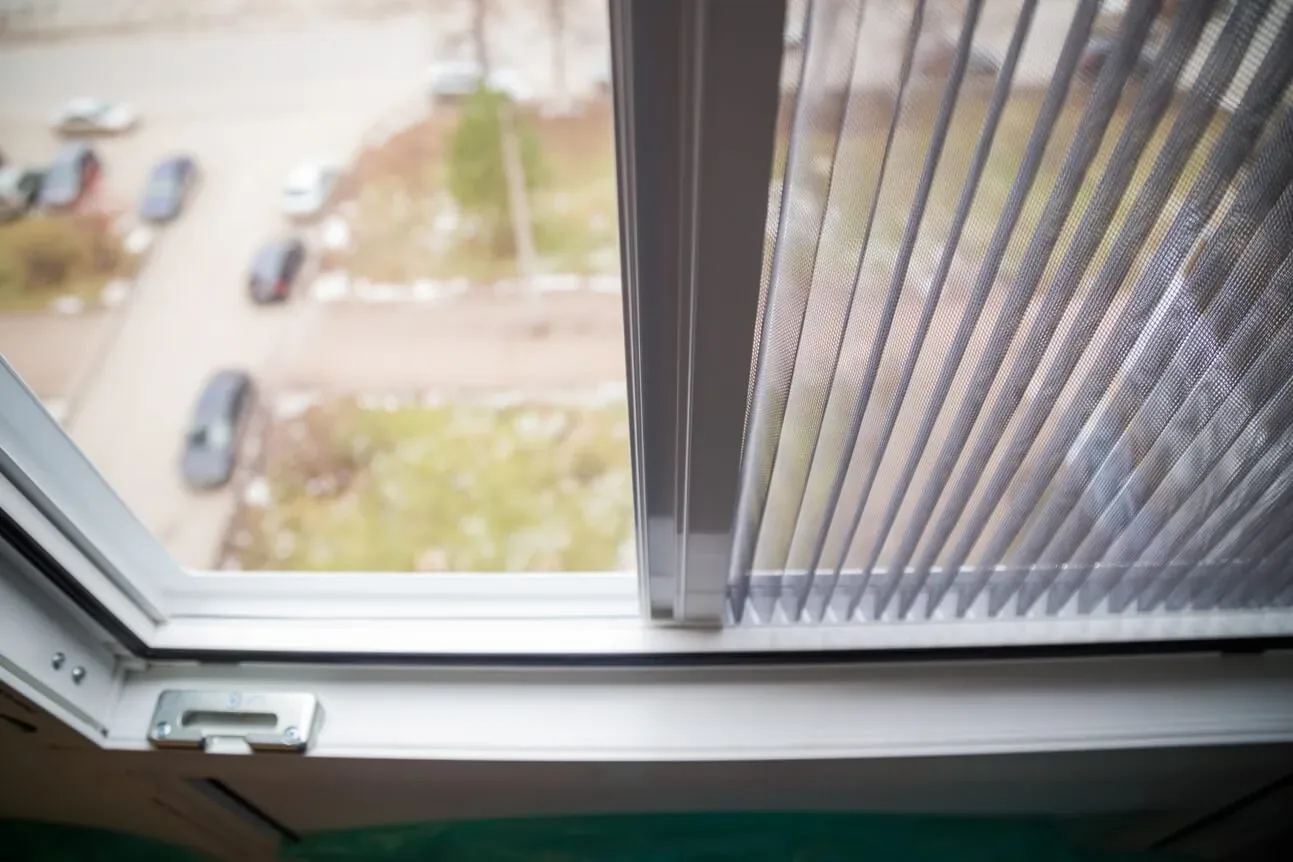
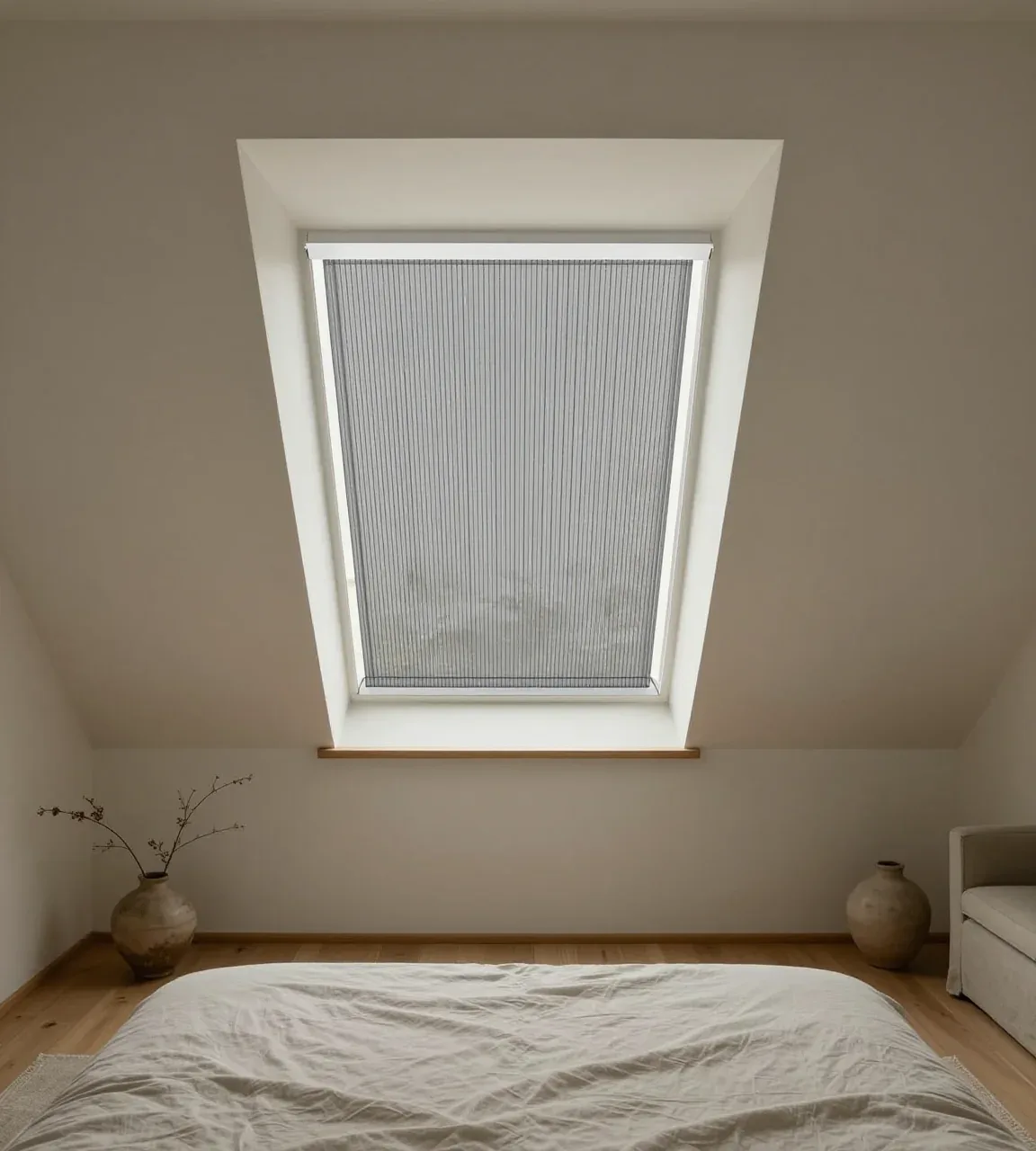
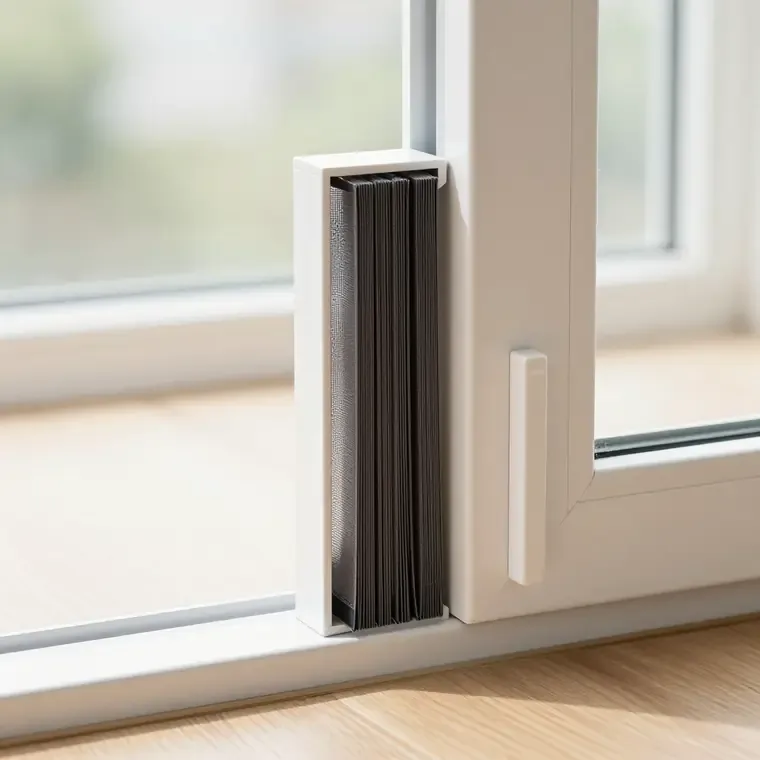
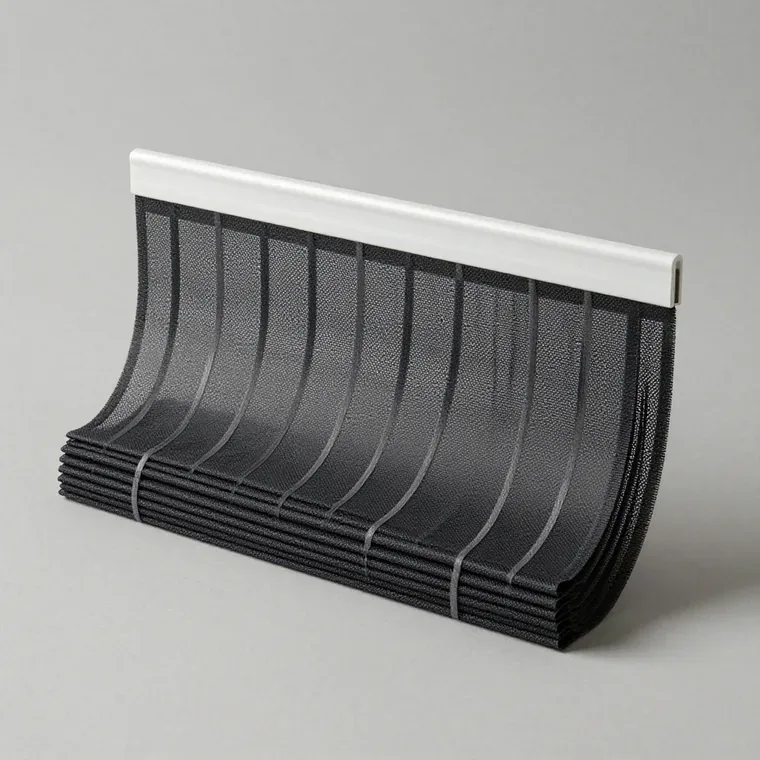
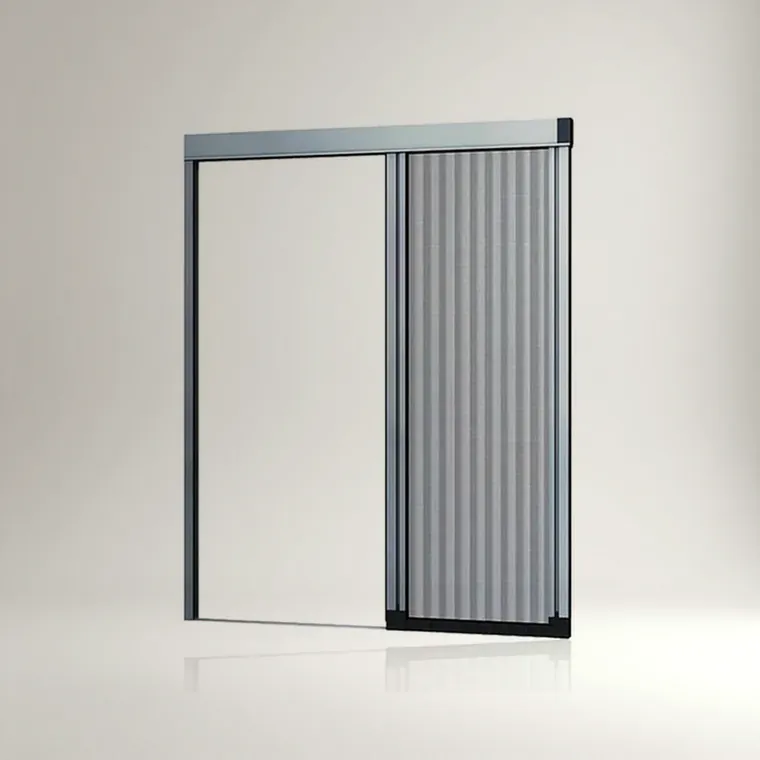
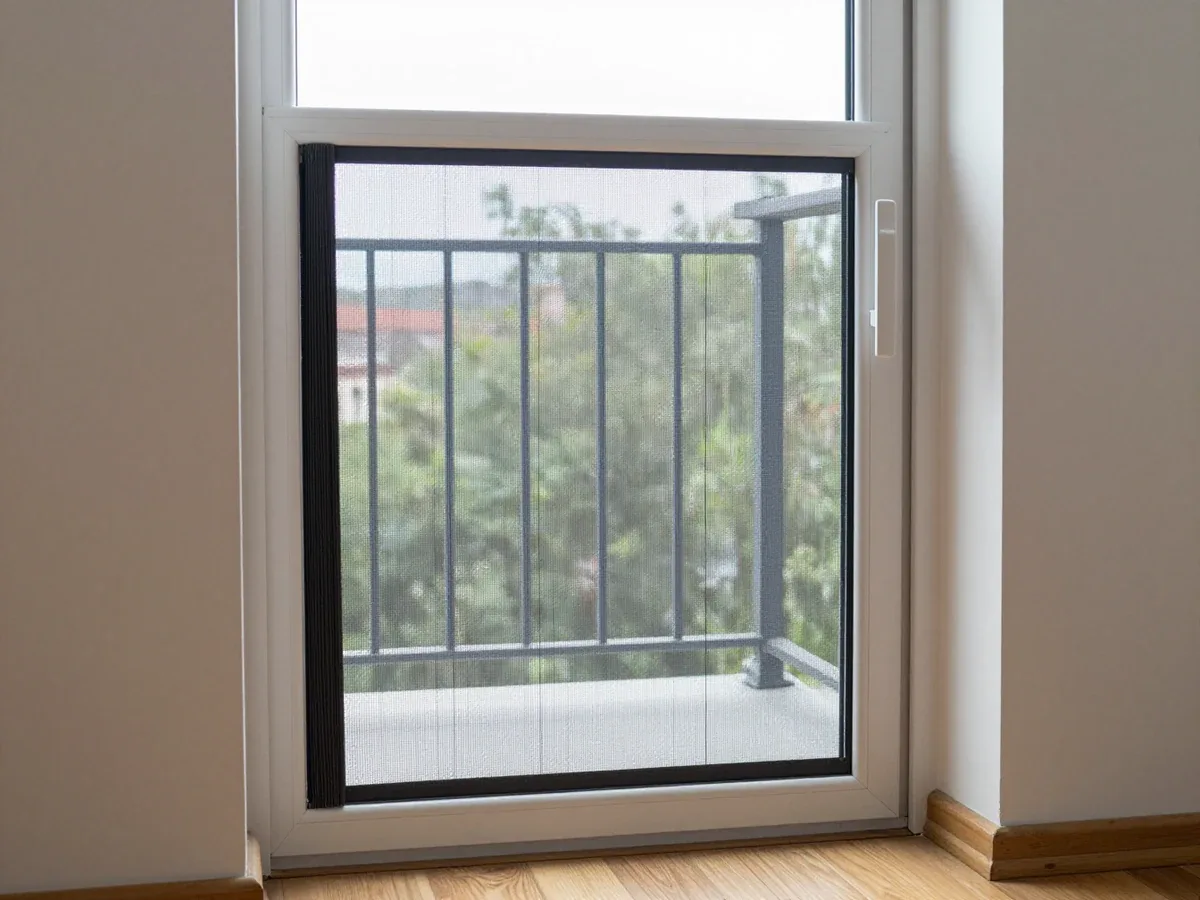
A folding model collapses into a slim stack and slides aside, so it suits openings where a fixed frame would get in the way. Here is how to tell which type fits your window, door or portal.
How a pleated screen differs from a framed one
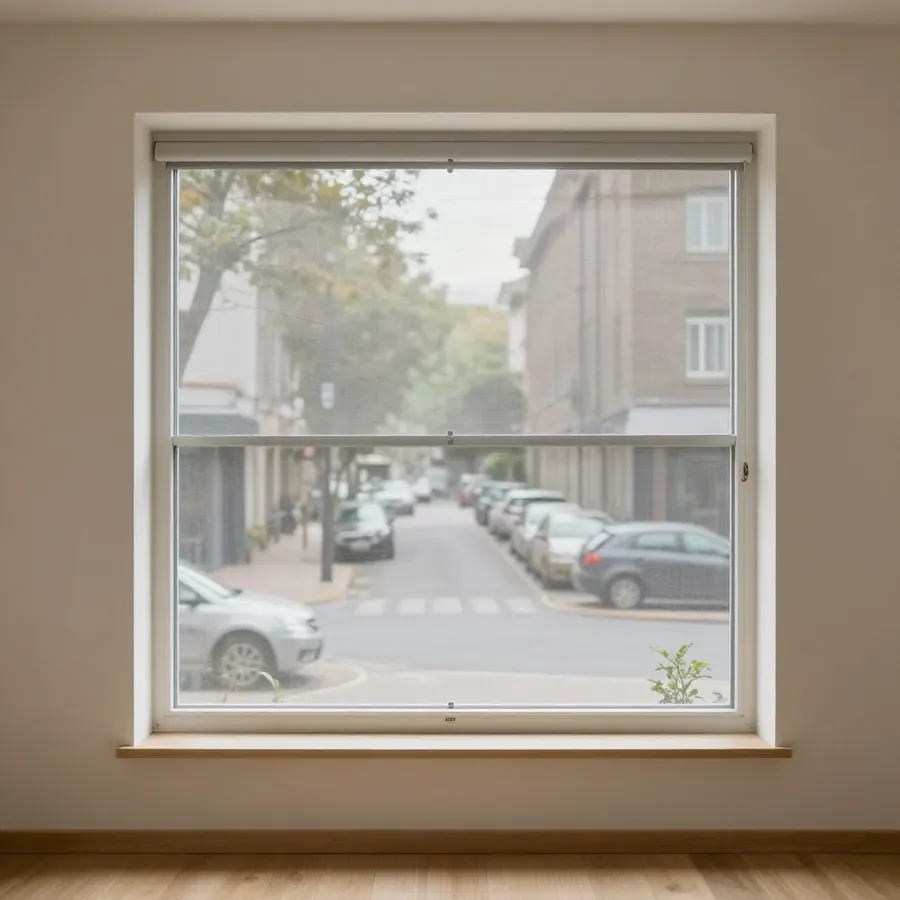
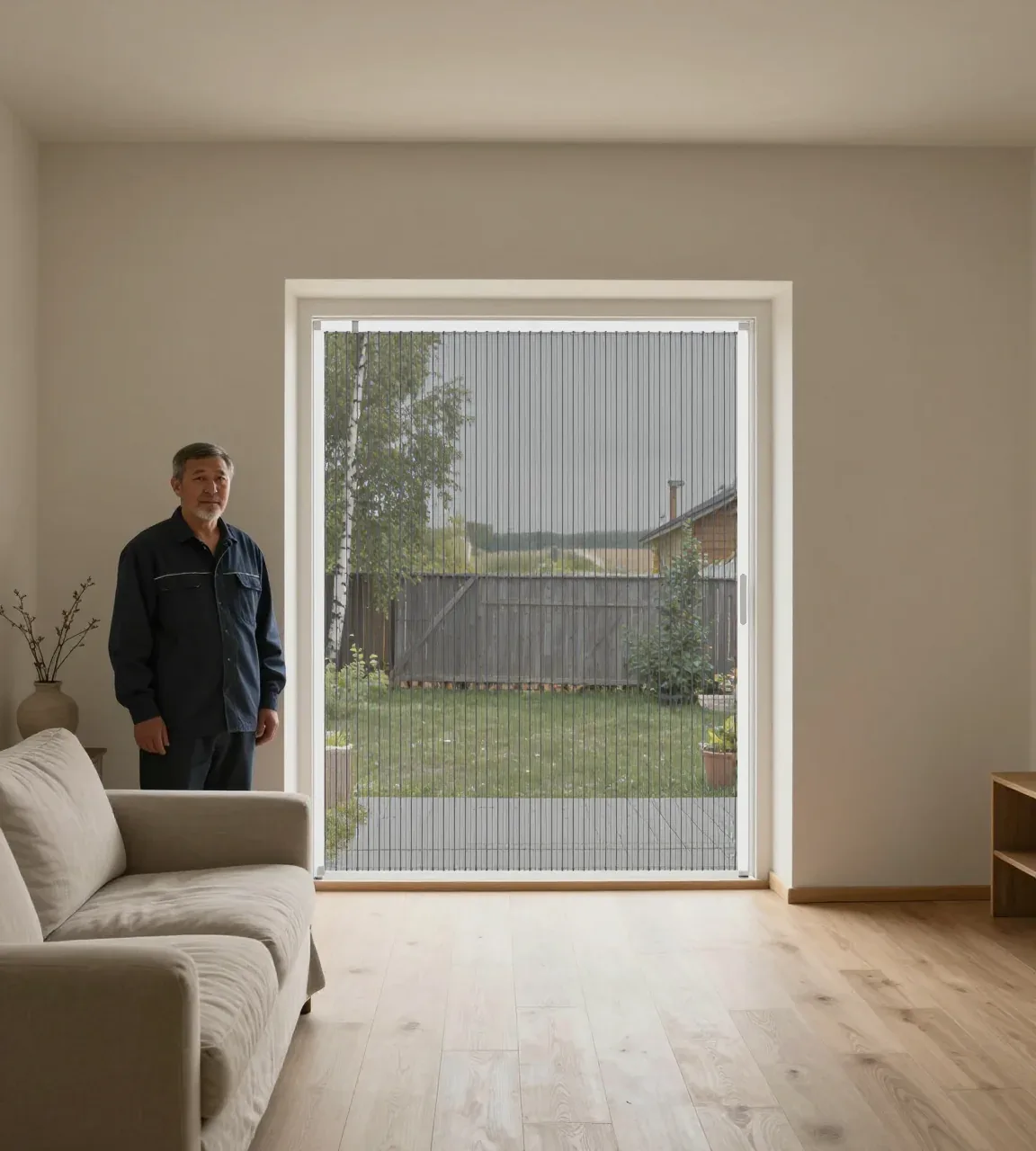
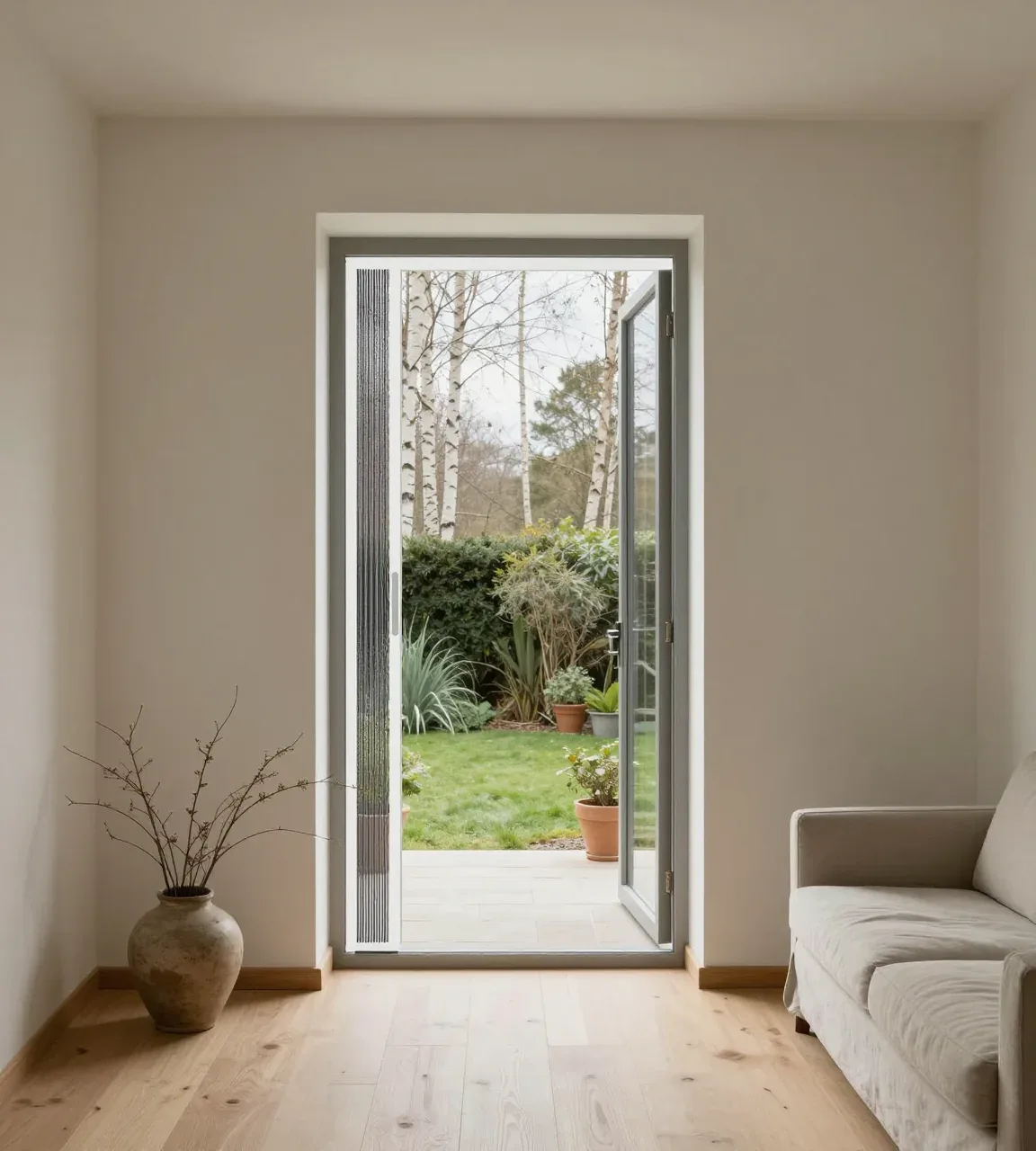
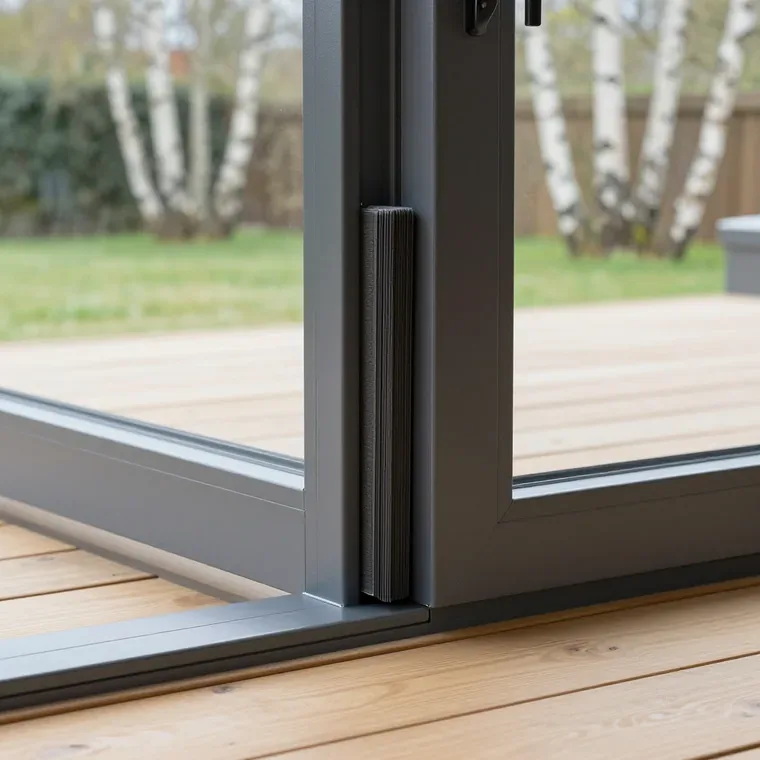
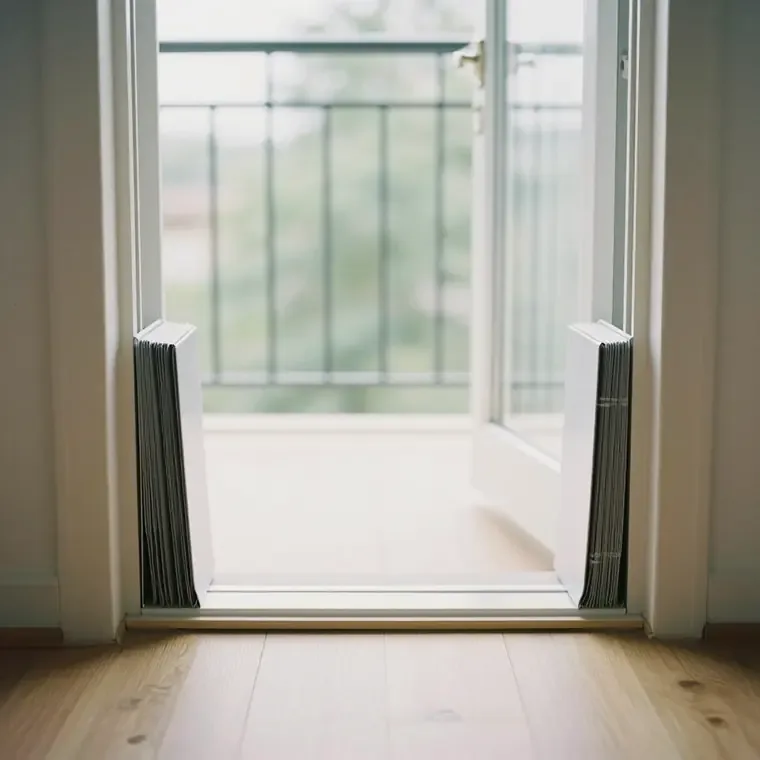
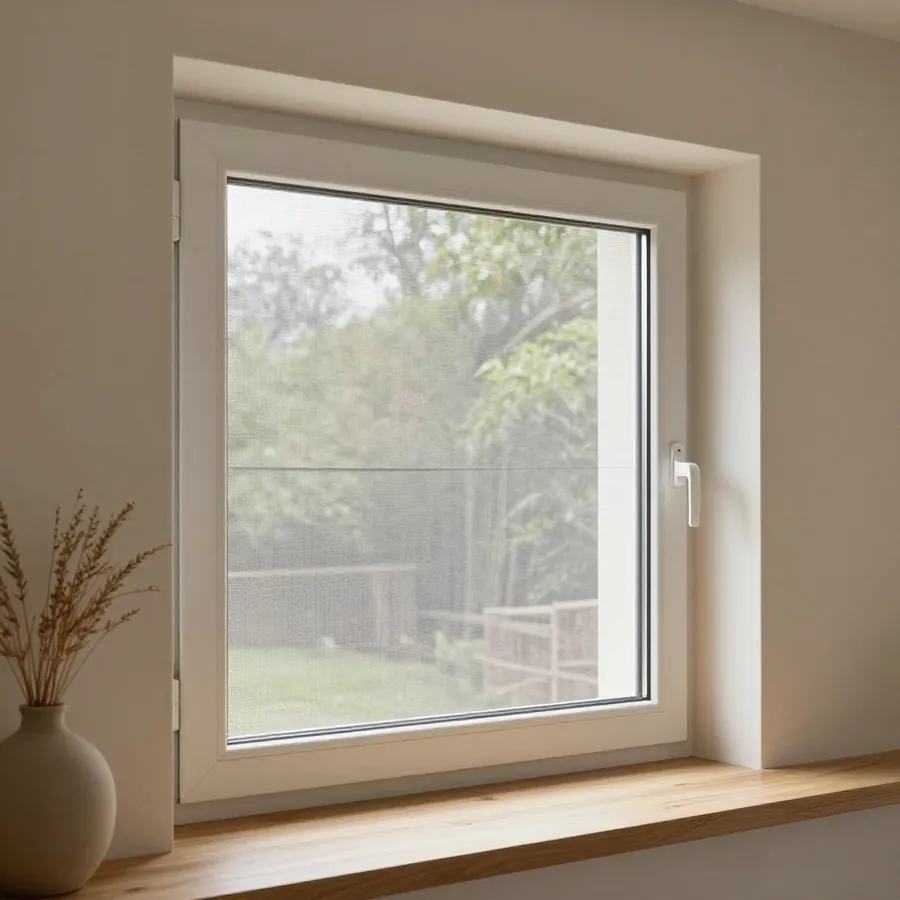
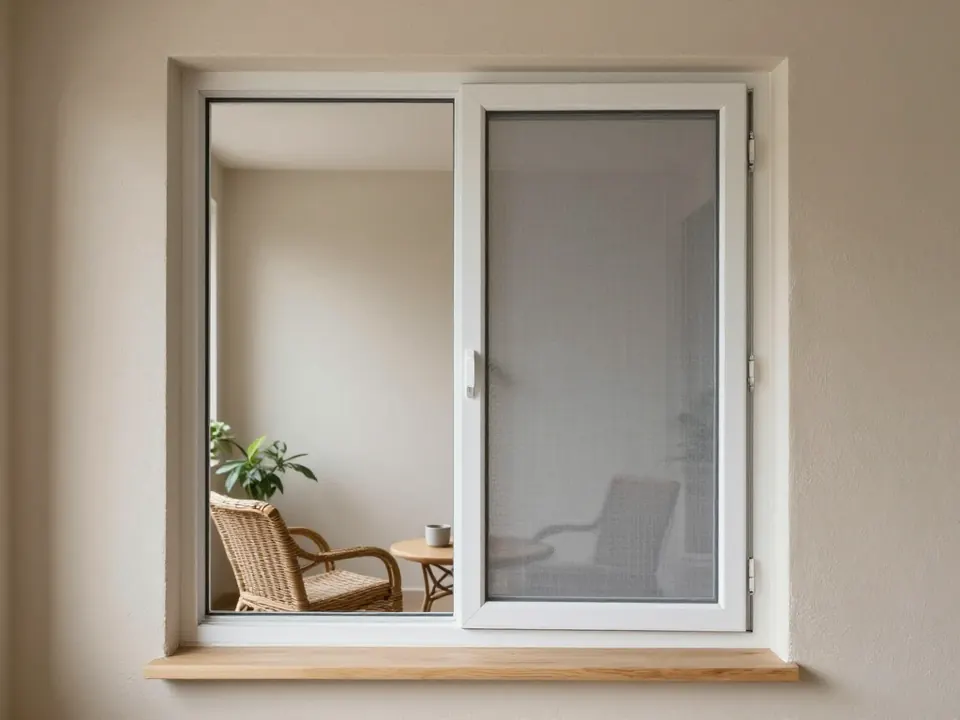
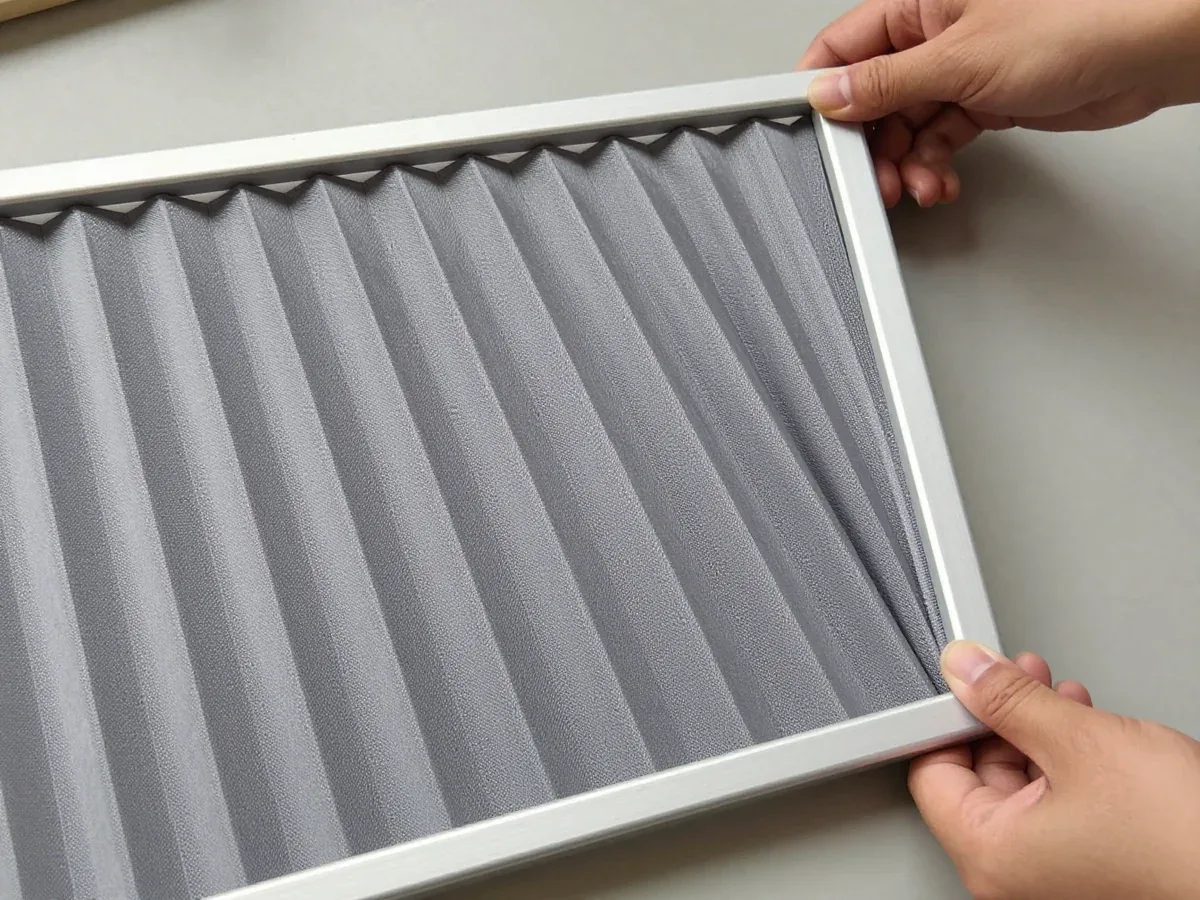
How a pleated screen differs from a framed one A framed model sits fixed over the opening, while a folding unit collapses into a slim stack and slides aside, so the window or door stays fully usable. The framed version is a rigid aluminium profile with mesh stretched inside it, held by Z-brackets, pins or magnets and lifted off to clear the opening. The folding version runs on top and bottom guides: the fabric gathers into an accordion and travels sideways along the track, taking up almost no depth. On a balcony door a fixed frame must be removed and stored every time you step out, while the sliding one just moves back. Used daily, the accordion design saves space and never needs taking down.
Where pleated screens fit best in an Aktobe home
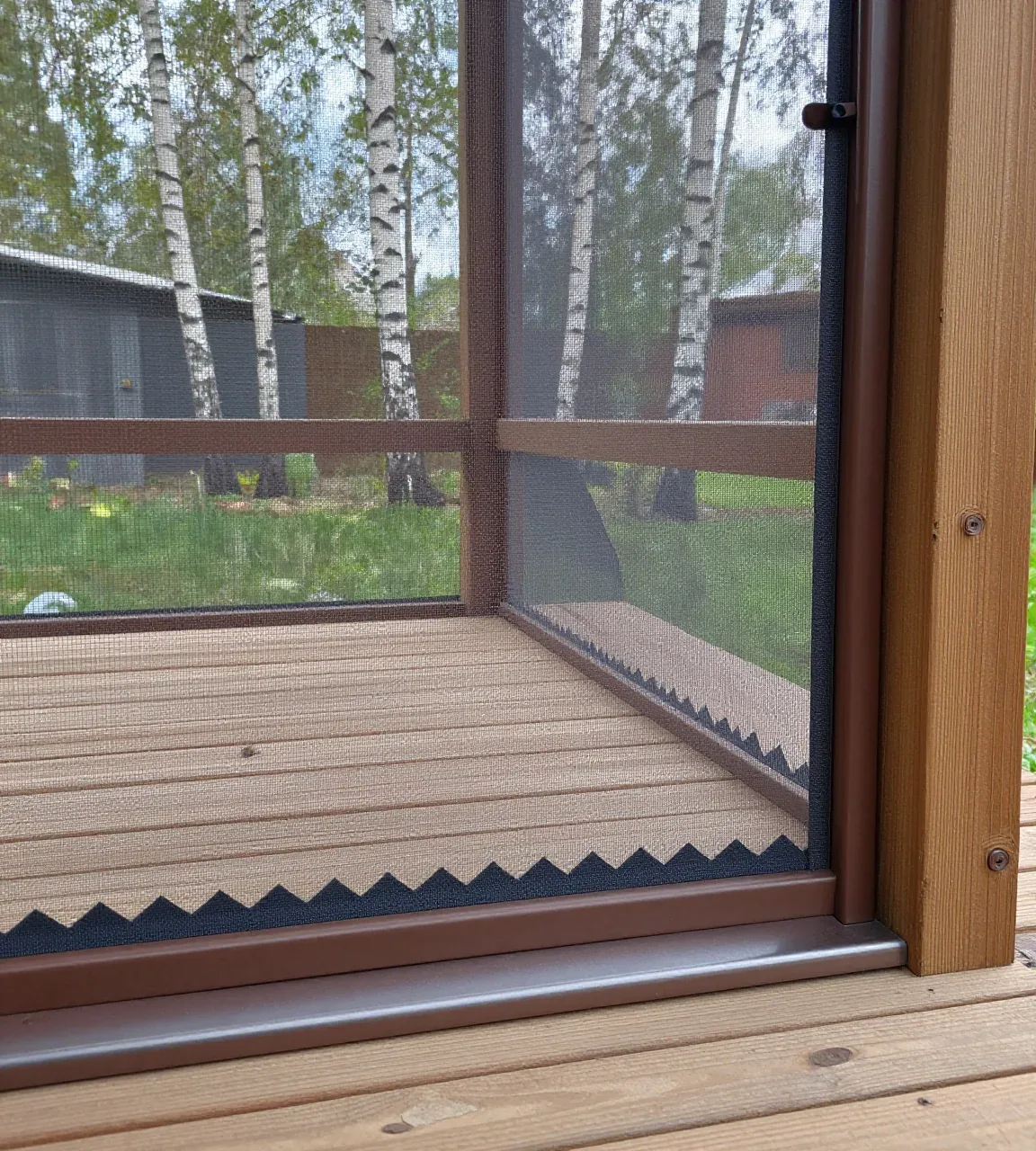
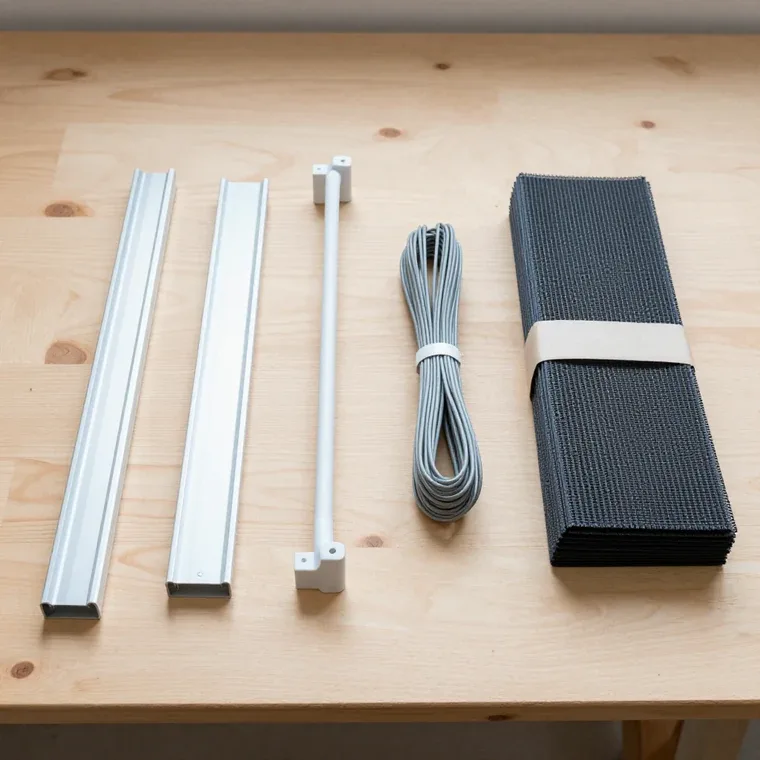
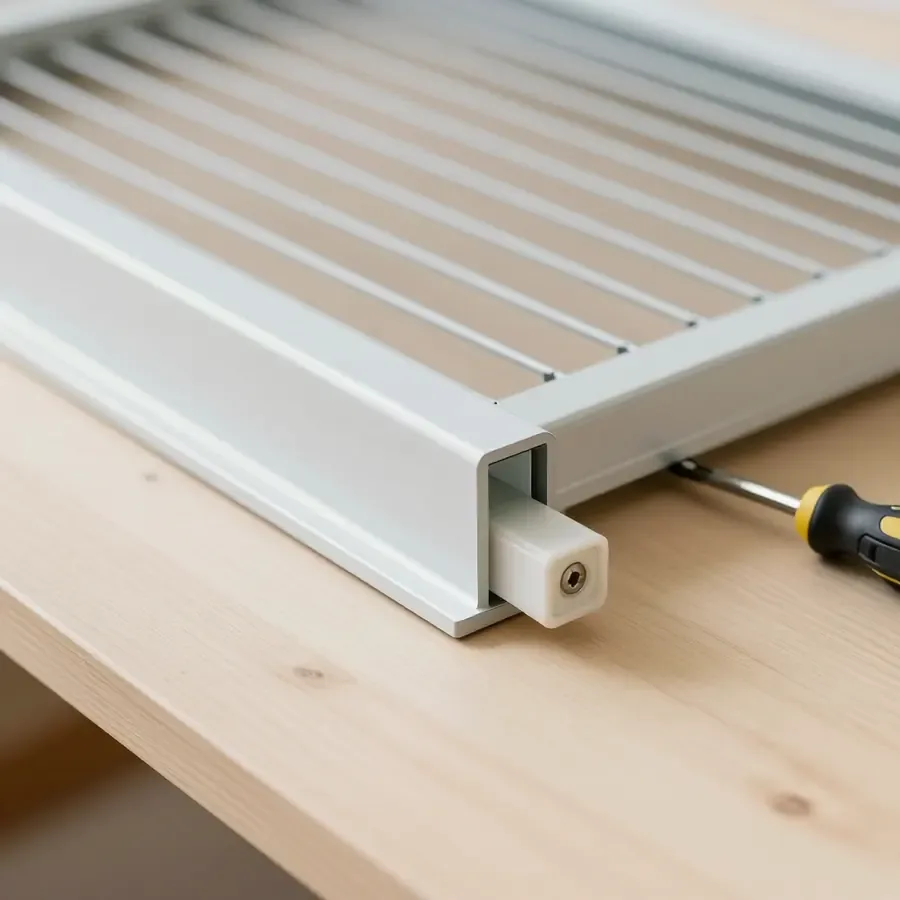
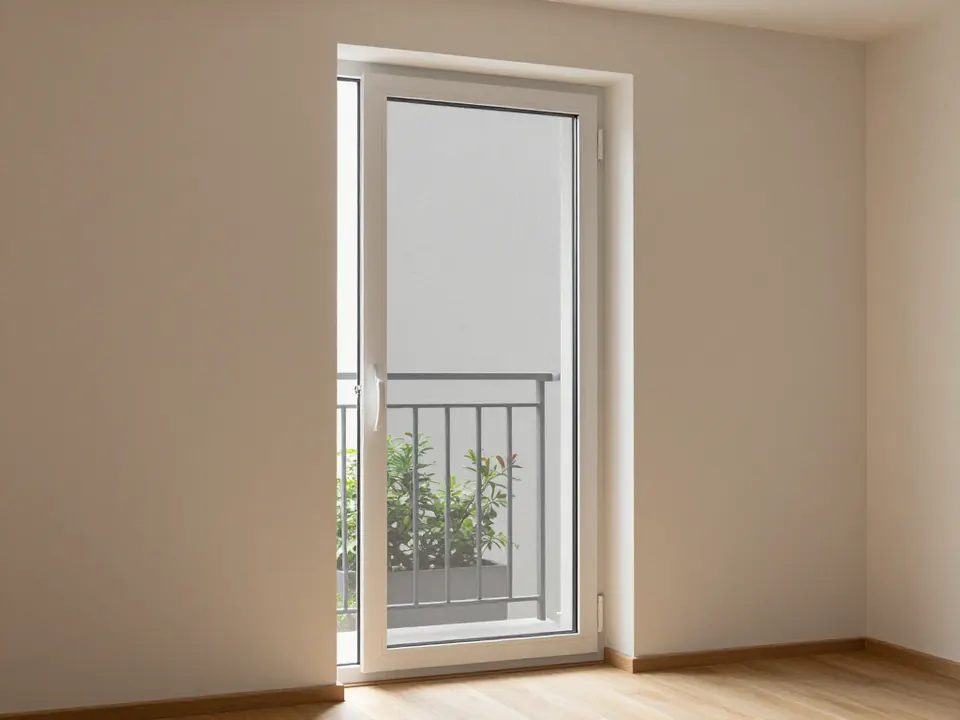
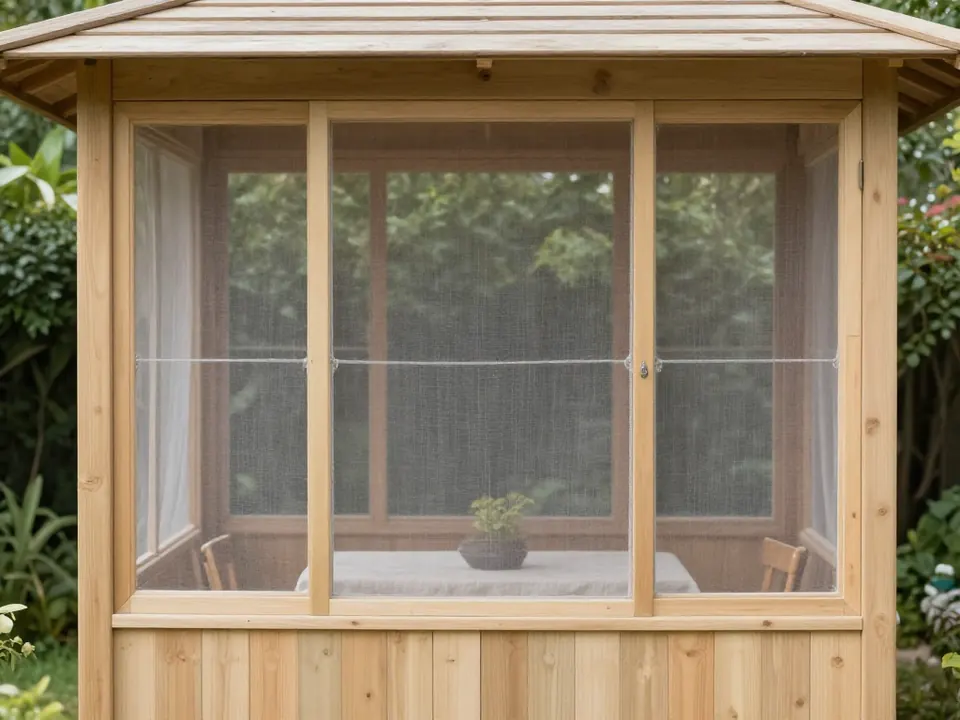
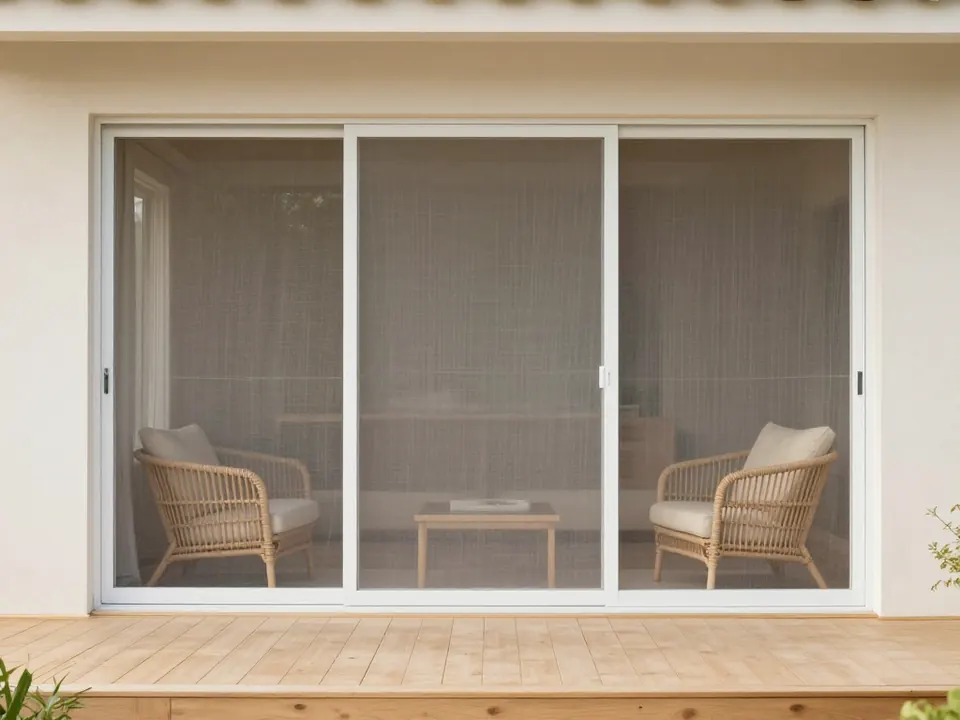
We fit folding screens on balcony doors, loggias, gazebos and verandas, and on plastic, wooden and aluminium windows, including wide portal openings. A door model takes the heavier Economy 32×10 mm or Prestige 42×17 mm profile, because the leaf travels on the track every day and needs a frame that holds its shape. For a panoramic opening the priority is not the width of the fabric but an even run along the guides, so the measurer checks the opening before the order is placed, not after. We paint the frame any colour to match your windows, and the measurer helps choose the design, mesh and fixings on site.
When a framed screen still makes more sense
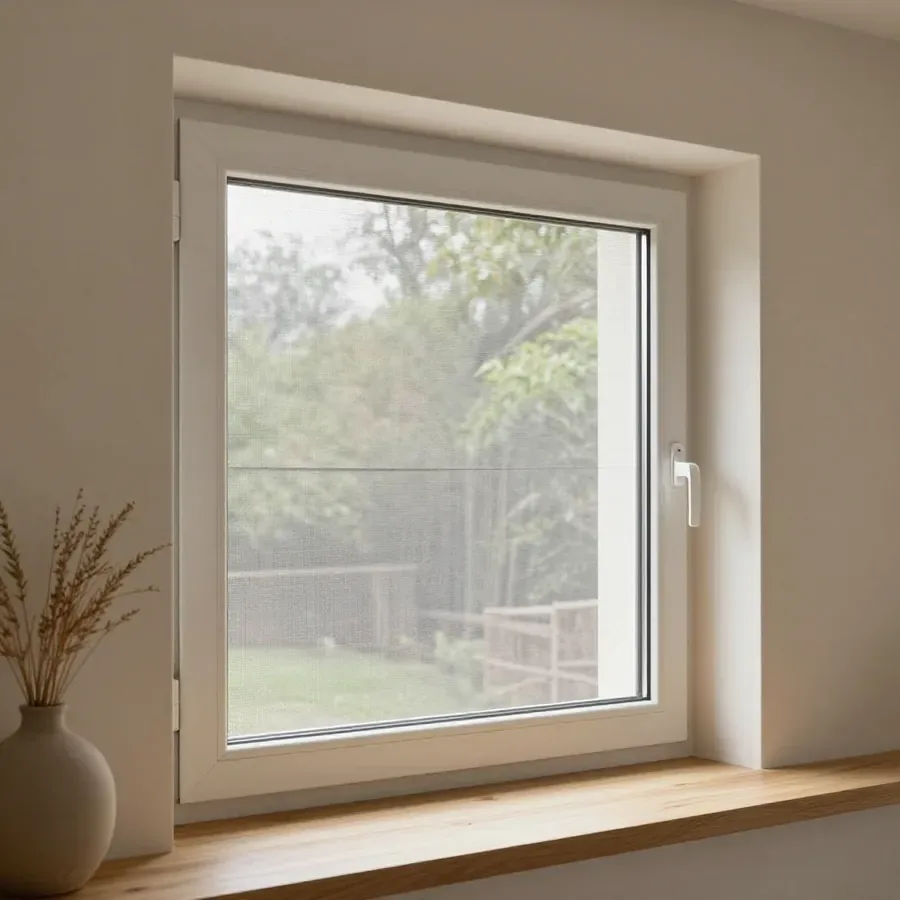
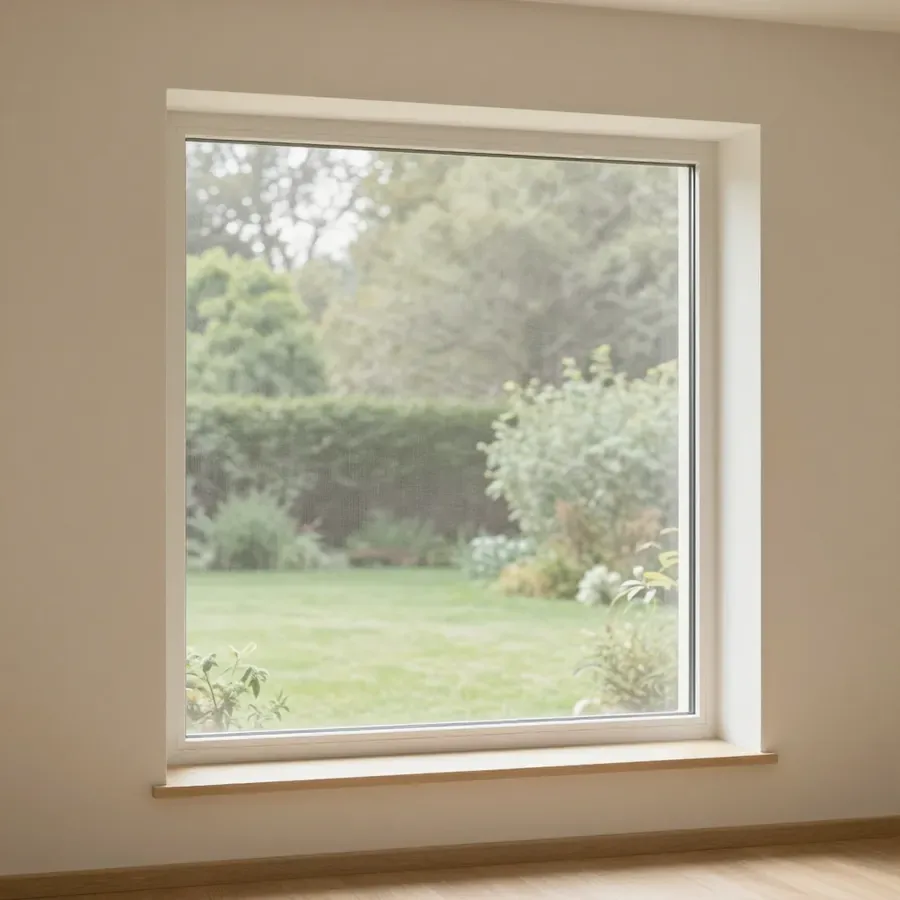
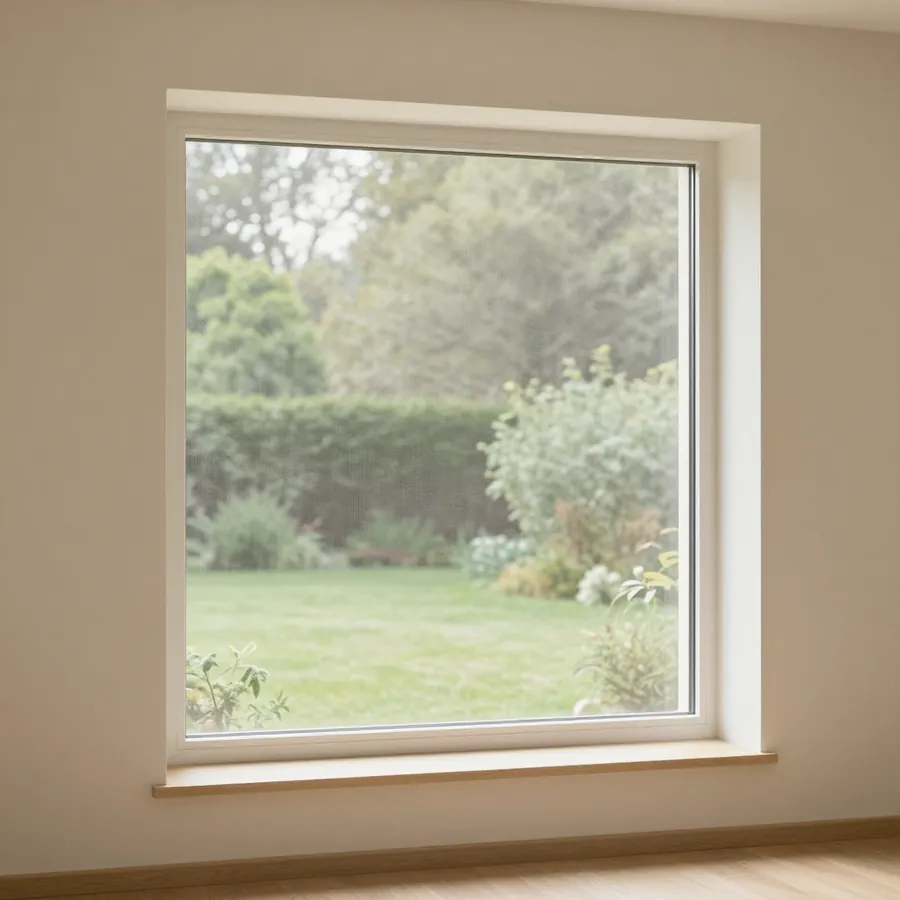
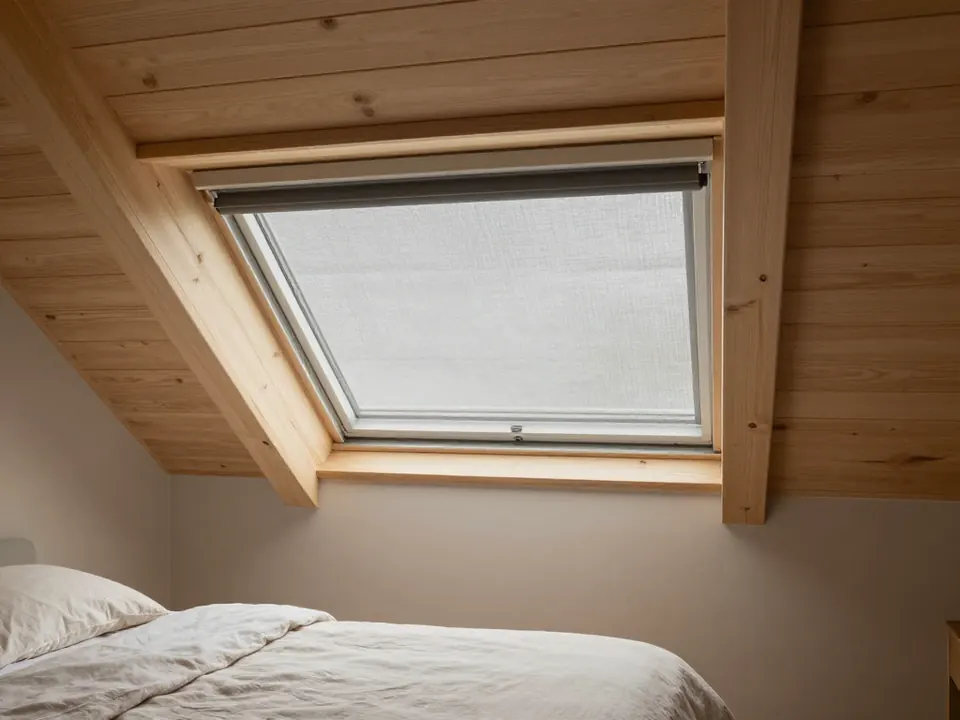
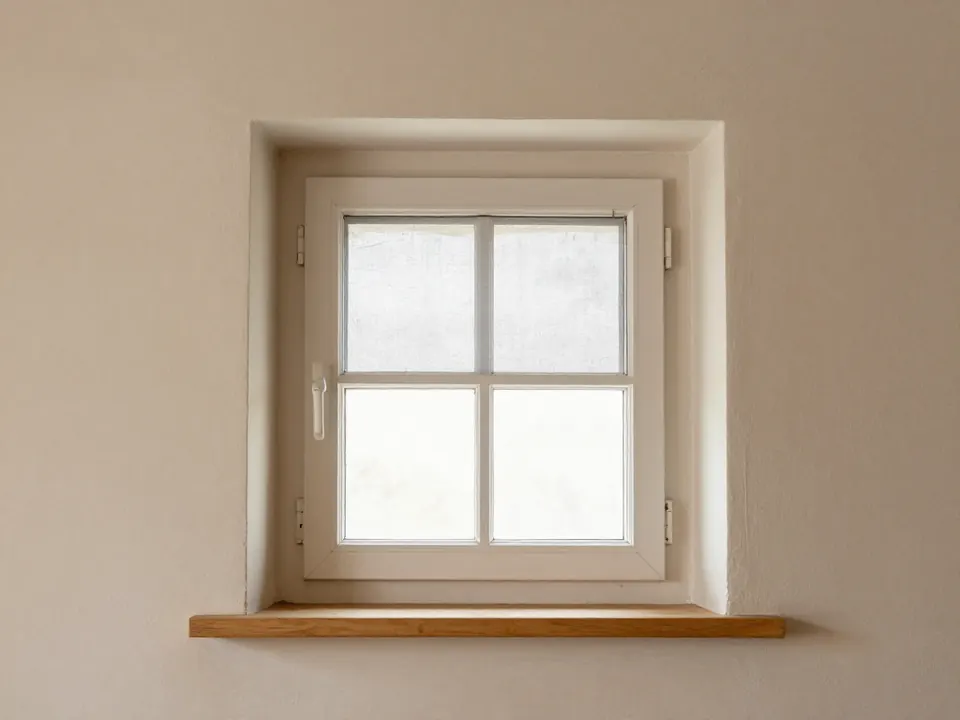
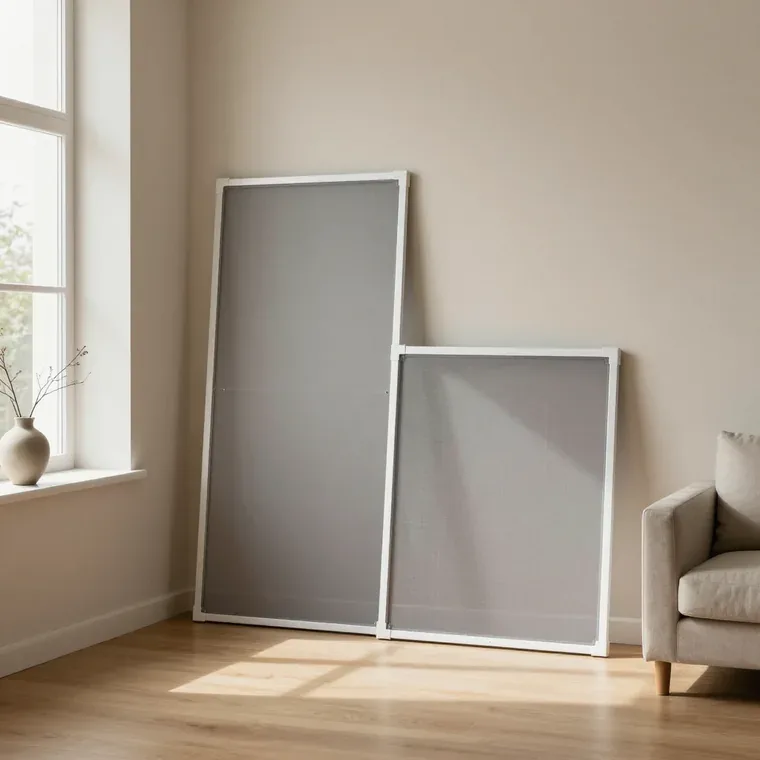
A framed model is the simpler, lighter option for a small window opened rarely, where a folding mechanism adds cost without real benefit. It is one rigid panel with mesh stretched inside, fixed over the opening with Z-brackets, pins or magnets, and it covers standard plastic, wooden and aluminium windows and small vents without any track to align. A framed unit made to your size takes 10–15 minutes to produce, against 40–60 minutes for a folding one, so for a single kitchen vent the faster route wins. It also comes off from inside in a minute and is worth removing for the winter, keeping the mesh clean and the frame straight. If a sash is almost never opened, the fixed panel does the same job with less hardware to service.
Choosing the profile, colour and fastening for your pleated mosquito screens
The profile sets how rigid a pleated door screen feels, while the fastening depends on your window profile and floor. Here is how the measurer settles both before anything is cut.
Economy or Prestige profile for a door screen
| Profile | Size | Best for |
|---|---|---|
| Economy | 32×10 mm | Light doors, occasional use |
| Prestige | 42×17 mm | Heavy doors, daily traffic |
| Economy | 32×10 mm | Narrow openings, slim sash |
| Prestige | 42×17 mm | Wide leaves, steady panel |
How the measurer picks the fastening and frame colour
The measurer chooses Z-brackets, pins or magnets to suit your window profile and floor, and we paint the frame any colour to match your windows. Z-brackets hold on deep plastic and aluminium sashes, pins sit into narrow grooves, and magnets work on light leaves that open often. On upper floors the fixing is picked with extra wind load in mind, since a large folding leaf catches gusts. Colour is matched against a sample of your sash rather than a photo, because daylight shifts the shade and a unit made from a picture can read warmer or cooler than the real edge. Measuring and consultation are free, and the measurer brings the samples to your flat. Ask to see the shade against the glass in daylight before you approve it.
Which mesh suits pets, pollen, dust and daylight
The cloth decides how much light reaches the room and what the weave keeps out. We compare options by the job they do, not the name on the roll.
Matching the mesh to light, pollen, dust and cats
| Cloth | What it gives | Best for |
|---|---|---|
| UltraVue | 25% more light and air | Living rooms, dark rooms |
| Poll-Tex | 0.25×1 mm cell | Allergy season |
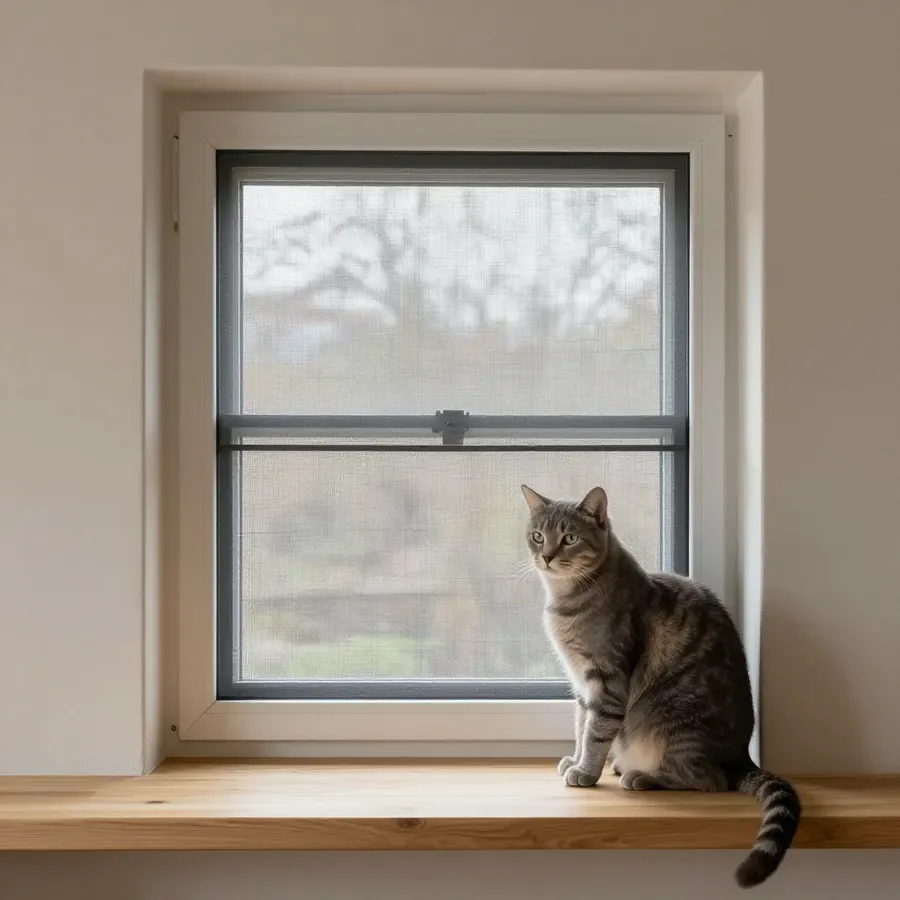
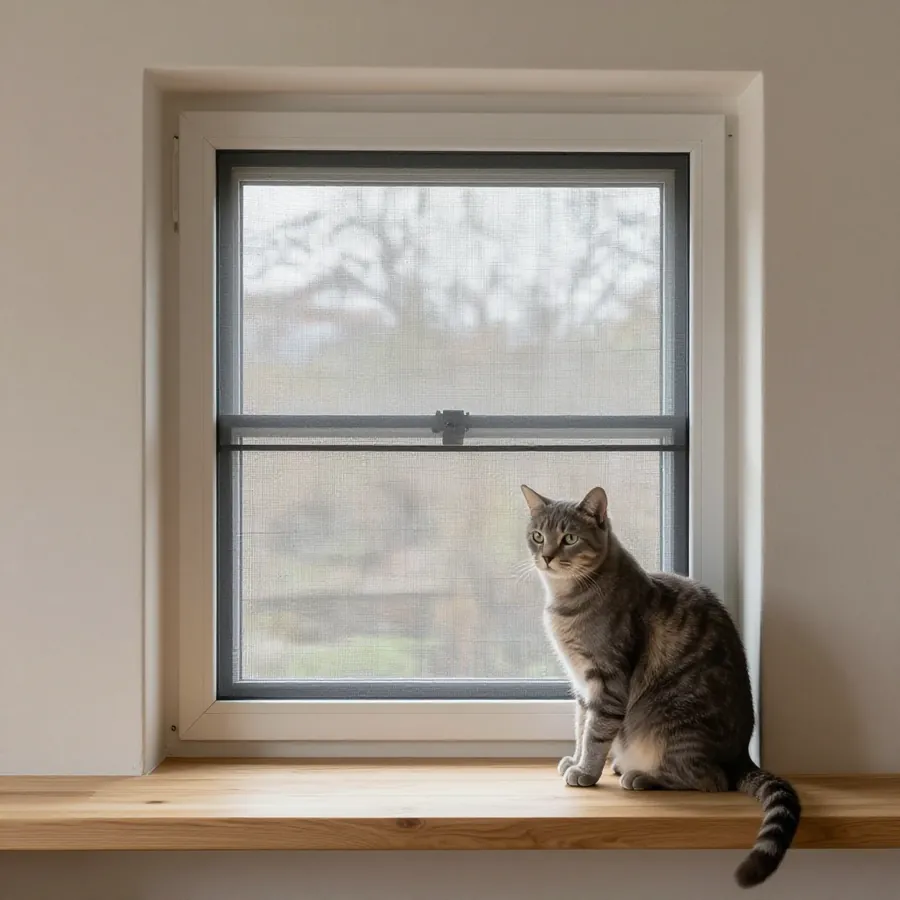
| Anti-Cat (Pet Screen) | Vinyl threads, high strength | Homes with cats |
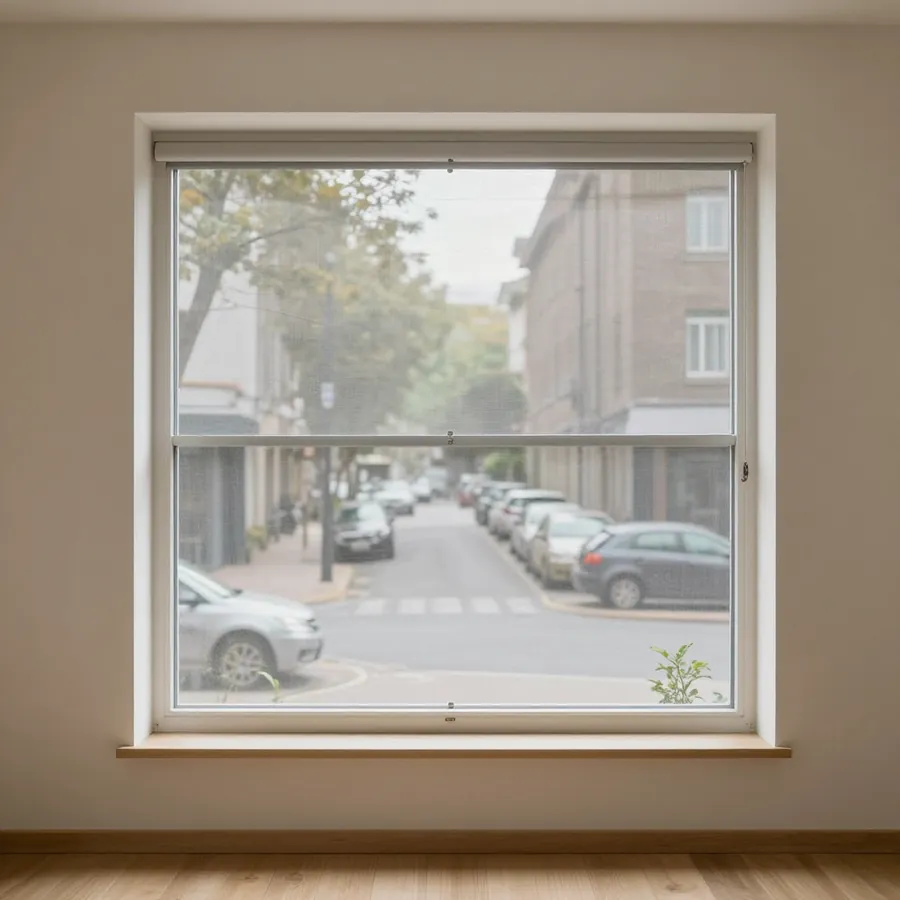
| Anti-Dust | Traps fine street grit | Lower floors, busy streets |
| Standard (Fiberglass) | Ignition and temperature resistant | Most windows |
| Krylo | Reinforced weave | Doors, heavy use |
| Metal mesh | Maximum wear resistance | Ground floors, workshops |
Standard and Krylo mesh for everyday use
Standard fiberglass cloth resists ignition and temperature swings, making it a dependable base choice for most windows. Its weave holds shape through hot summers and cold winters, so the cloth does not sag between frame edges after a season of use. Krylo carries a reinforced weave for doors and openings with constant traffic, where lighter cloth would stretch at the handle side. Anti-Dust keeps fine grit from settling on the sill without cutting daylight like a dense pollen screen. On a ground-floor flat facing a busy road, the sill collects grit within a week, and this cloth holds it back while the room stays bright. The measurer brings a sample of each weave, so you can judge the light against the glass before ordering.
Measuring, making and fitting your pleated screen
An order starts with a free visit and ends with the unit fixed to your window and payment after installation. Below are the steps, their timing and what is agreed beforehand.
From free measuring to a screen made in 40–60 minutes
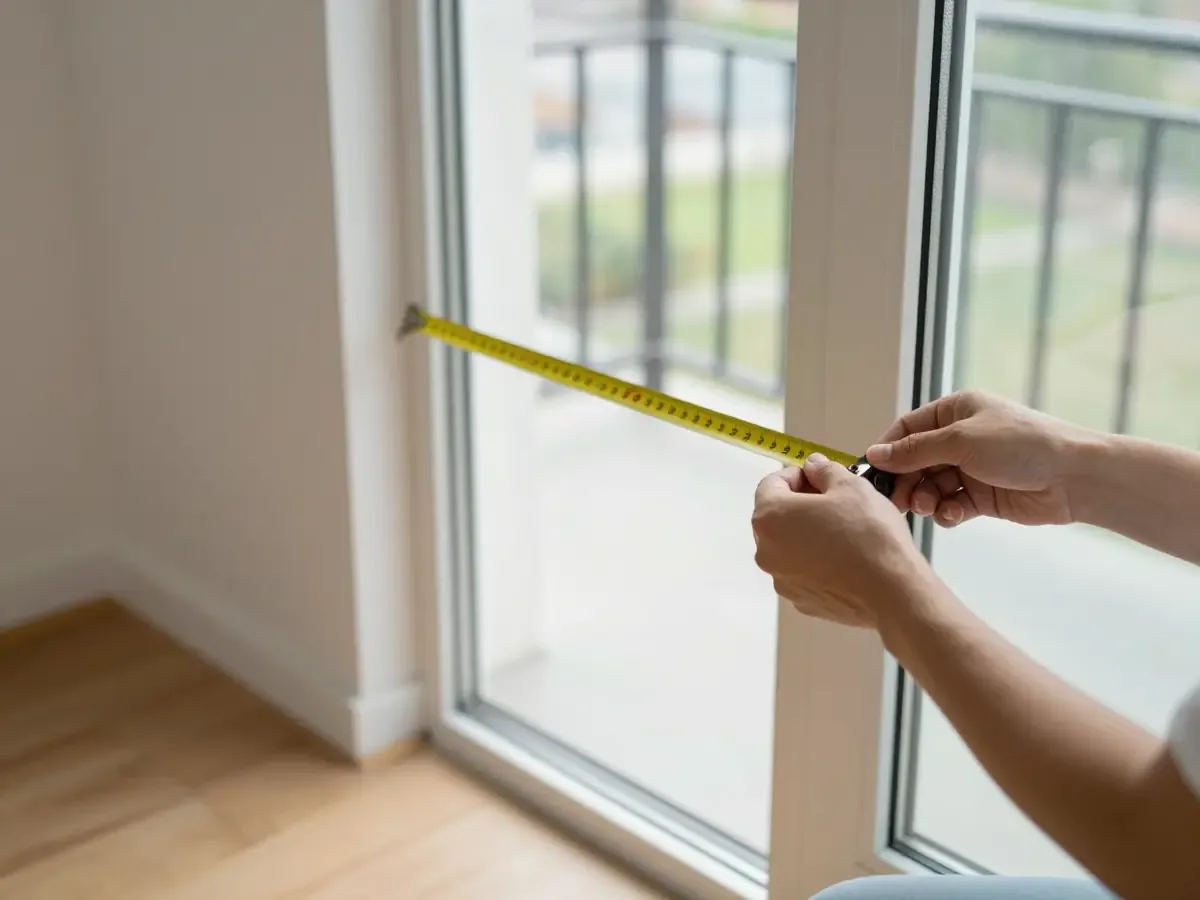
Measuring and consultation are free, and a folding screen made to your size takes 40–60 minutes, while a framed screen takes 10–15 minutes. The measurer comes at a time that suits you, takes the sizes of the opening, checks the profile and the floor, and helps choose the design, the mesh and the fixings. We paint the frame any colour to match your windows, so the finished unit reads as part of the window. Pleated mosquito screens in Aktobe are assembled to the millimetre, because a folding leaf has to run cleanly in its guides from the first pull. The price is fixed in the order after measuring, so the figure you agree on the day of the visit is the figure you pay.
Fitting without damage and paying after installation
We fit the unit without damaging the window profile, and you pay after installation by cash, card or Kaspi. The fitter works with the elements already on your window, so nothing is drilled through the sealed chamber that keeps the glass insulated. Fastenings are chosen for the profile and the floor: Z-brackets, pins or magnets, whichever holds the leaf steady without play. We deliver and install units on windows and doors across the city, and the same visit covers a repair or a change of fastenings if an older one needs it. Paying at the end matters here: you see the leaf slide, check the tension and only then settle the order.
Care through the seasons, repairs and the warranty
A pleated screen stays in place for winter, yet its sliding mechanism needs careful cleaning. Below we cover routine care, parts that wear out first, and warranty coverage.
Cleaning the mesh and the sliding mechanism
- Soft brush or low suction: vacuum on the lowest setting or use a dry brush; never scrub pleats flat.
- Guides before the fabric: wipe rails and cord channels first, as packed dust wears the mechanism faster.
- Damp cloth on aluminium: a slightly damp lint-free cloth lifts the grey film; dry the channel straight away.
- No pressure washing: a jet pushes dirt into folds and stretches cords; a brush works better.
- Cold-season check: clear grit from the lower rail so sand and ice do not jam travel.
Repairs, replacement parts and the 1-year warranty
We repair mosquito nets and replace fastenings, and every unit carries a 1-year warranty. Our team does the work directly, so a worn plunger, a bent Z-bracket or a snapped cord becomes a service call rather than a reason to order a new unit. On such a model the fastenings and the guide rail fail first, not the fabric: when the panel sags or the travel starts to catch, we usually swap the fastening or the guide, and the frame stays in place. If the canvas is torn beyond patching, we re-mesh the existing frame. Describe the exact window and symptom when you call, because a sticking slide and a loose bracket need different parts.
What to consider before ordering pleated mosquito screens
A pleated model is a considered purchase, so the decision rests on four things: window opening, room mesh, frame fixing, and after-fitting outcomes.
- Match the model to the opening: folding models vanish on balcony or terrace doors; framed units suit standard inward-opening windows.
- Choose the mesh by room: Ultravue for darker rooms needing 25% more light, Poll-Tex with its 0.25×1 mm cell against pollen, Pet Screen where a cat leans.
- Fix the fastening to the profile and floor: Z-brackets, plungers or magnets are decided at measuring; the wrong choice shows up as rattling or a loose frame within weeks.
- Plan for the seasons: a framed unit lifts out from inside in a minute for winter storage; a folding one's sliding mechanism needs occasional cleaning.
- Keep the paperwork: the 1-year warranty covers the unit, so hold on to the order sheet recording exact size and mesh.
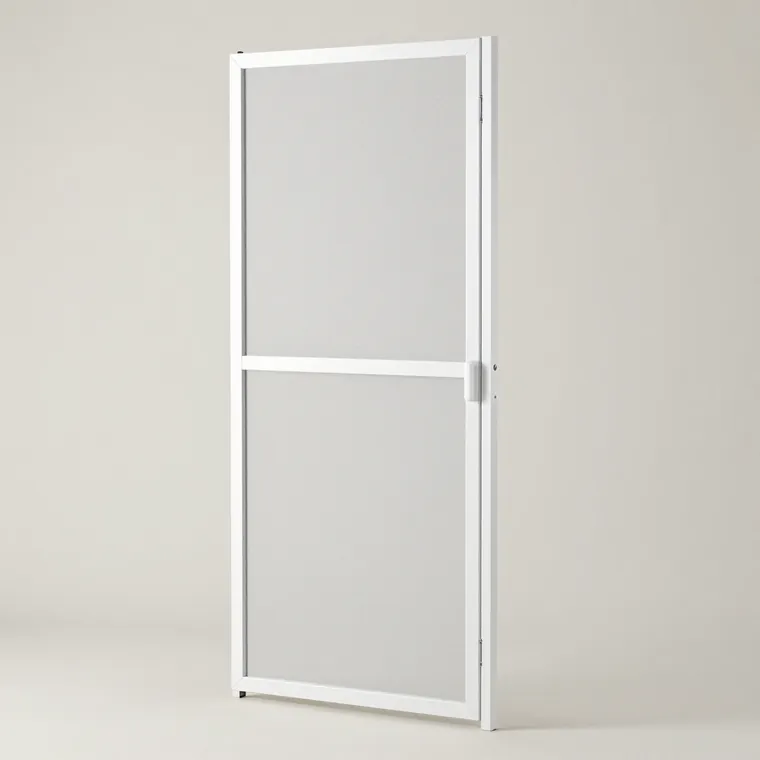 Door mosquito screens
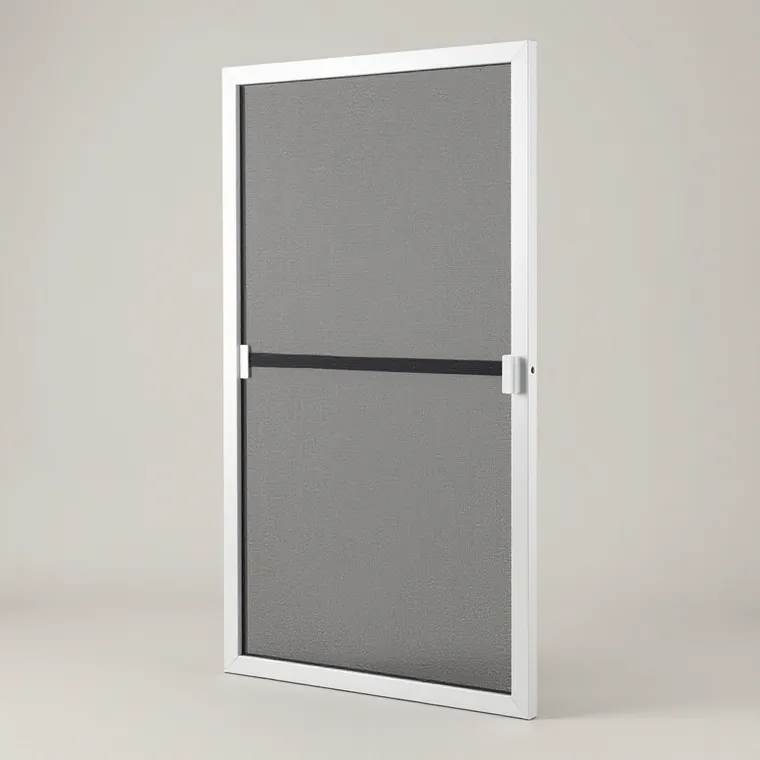 Framed screens
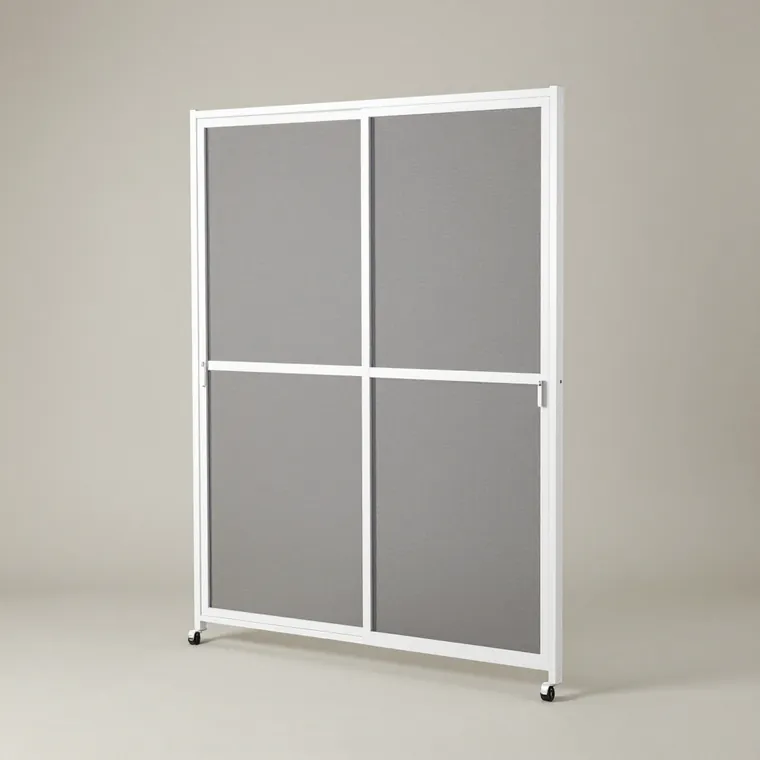 Sliding screens
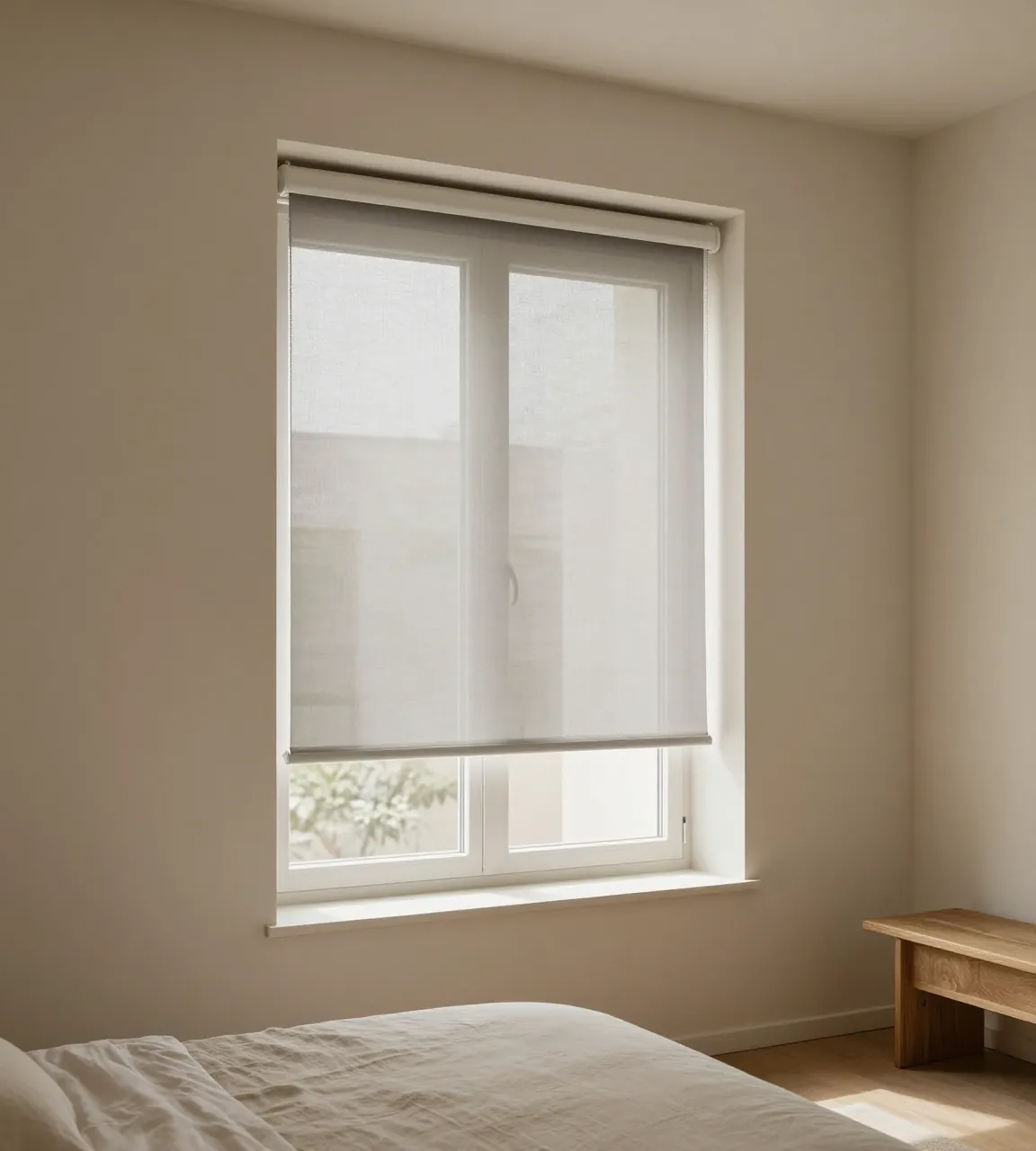 Roller screens
 Ready-made screens