
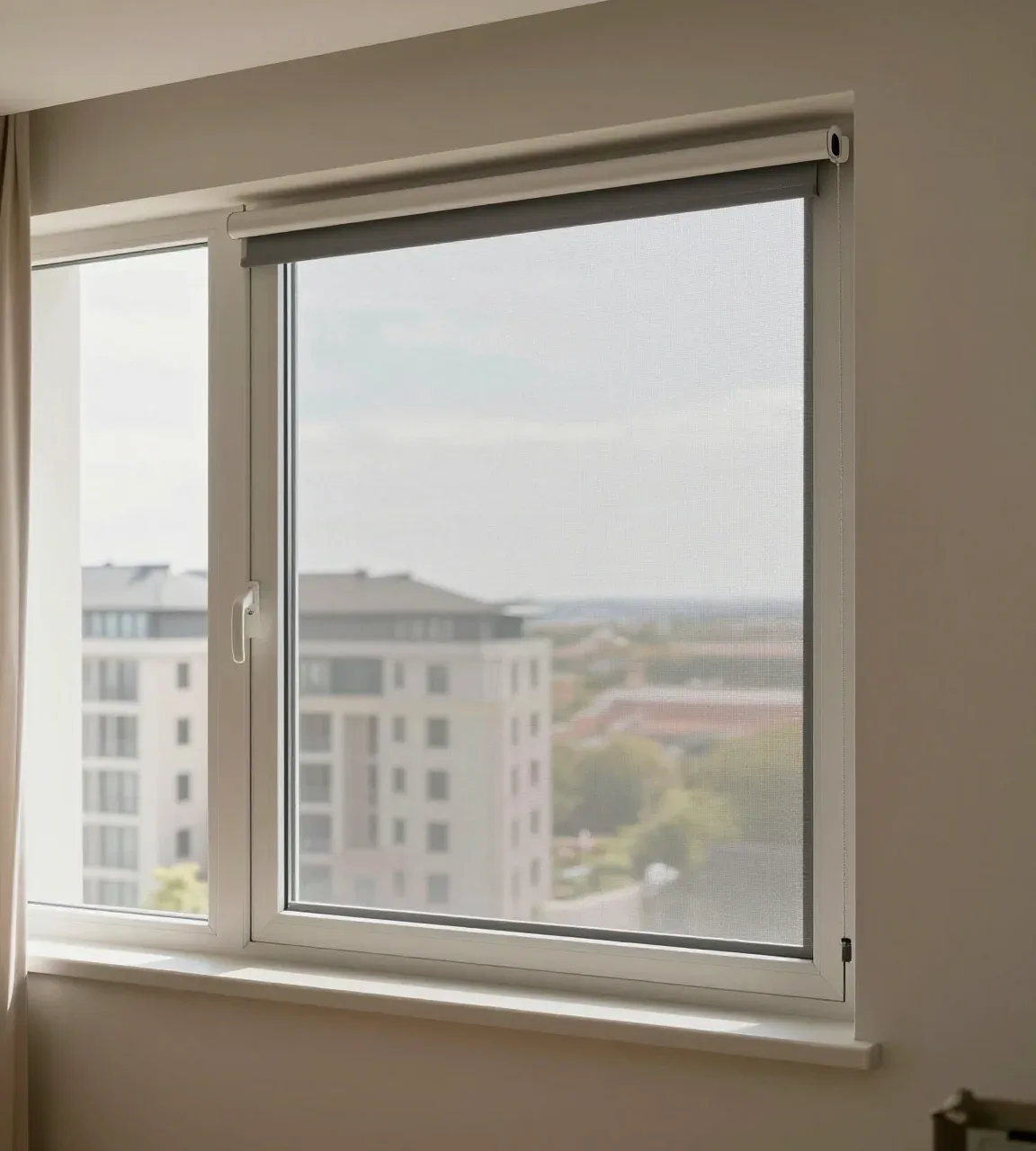
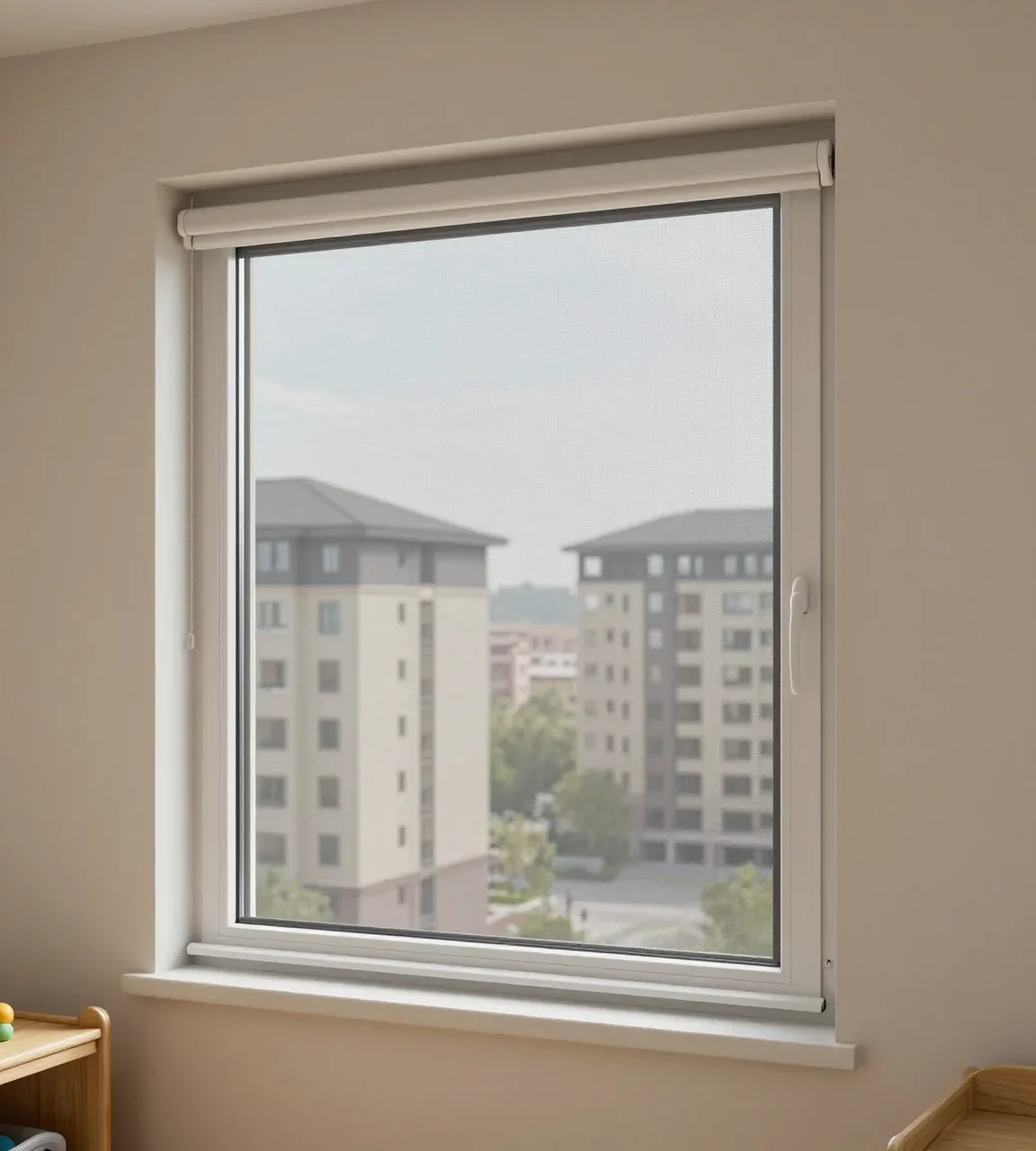
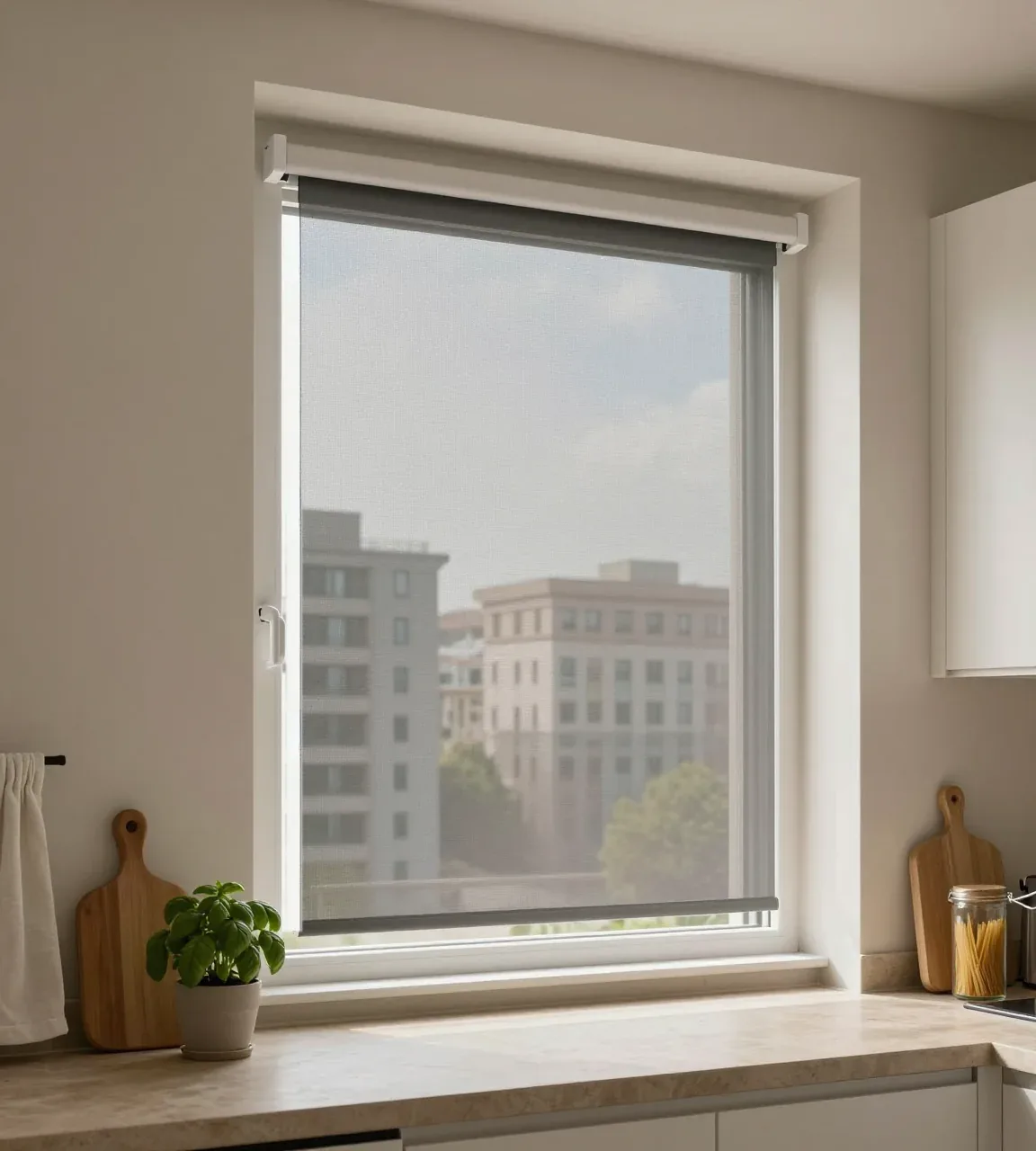
Mosquitoes and flies · Fiberglass
Standard mesh
Standard fiberglass mesh, resistant to fire and temperature changes. Price from 16 200 ₸ per m².
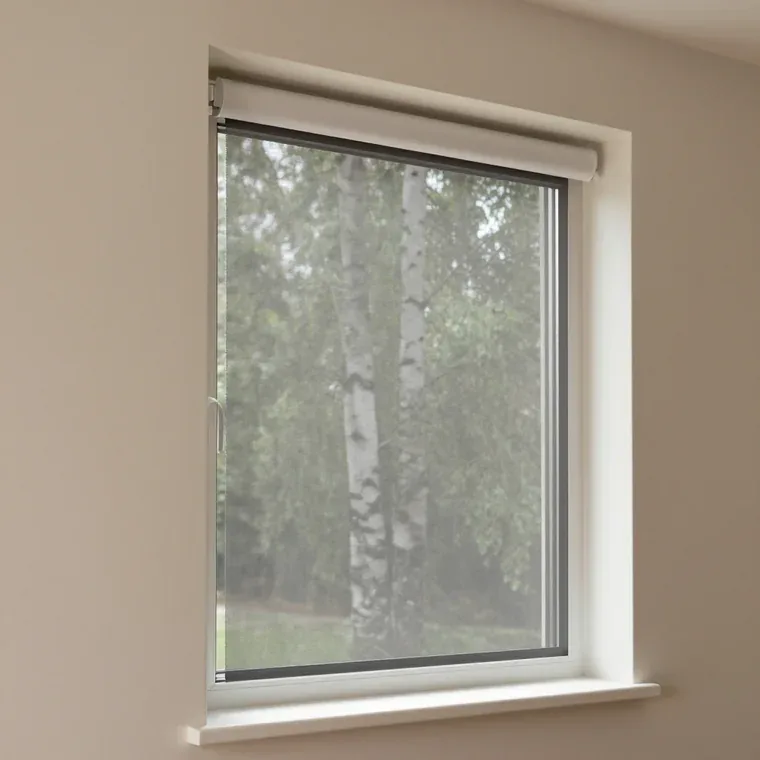
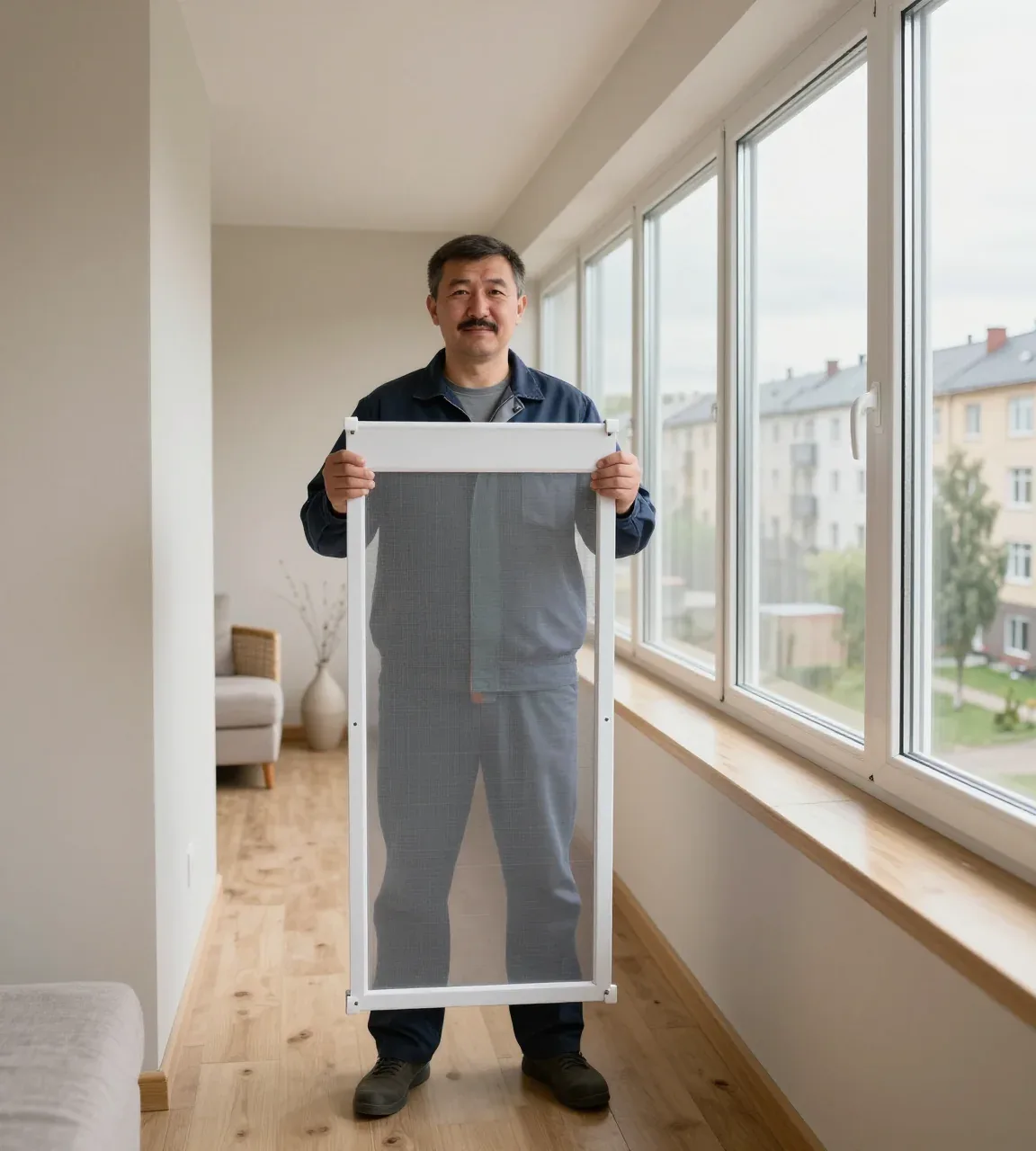
Standard mesh
Standard fiberglass mesh, resistant to fire and temperature changes. Price from 16 200 ₸ per m².
UltraVue
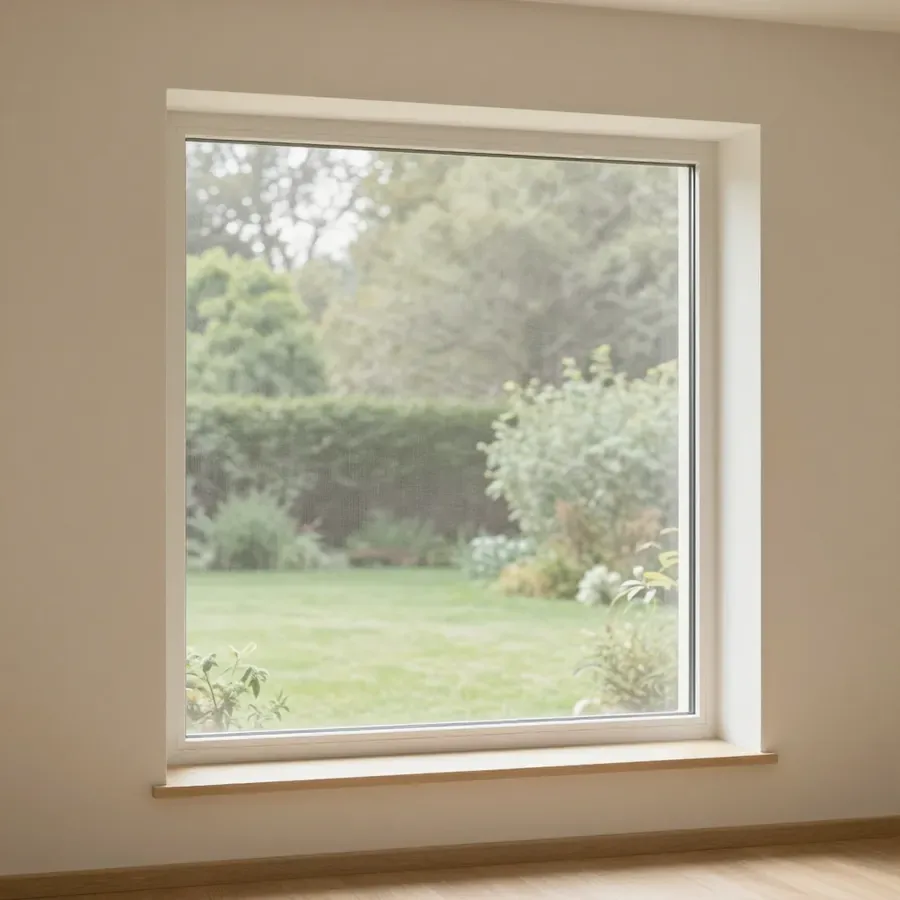
Lets through 25% more light and air than other meshes. Price from 16 200 ₸ per m².
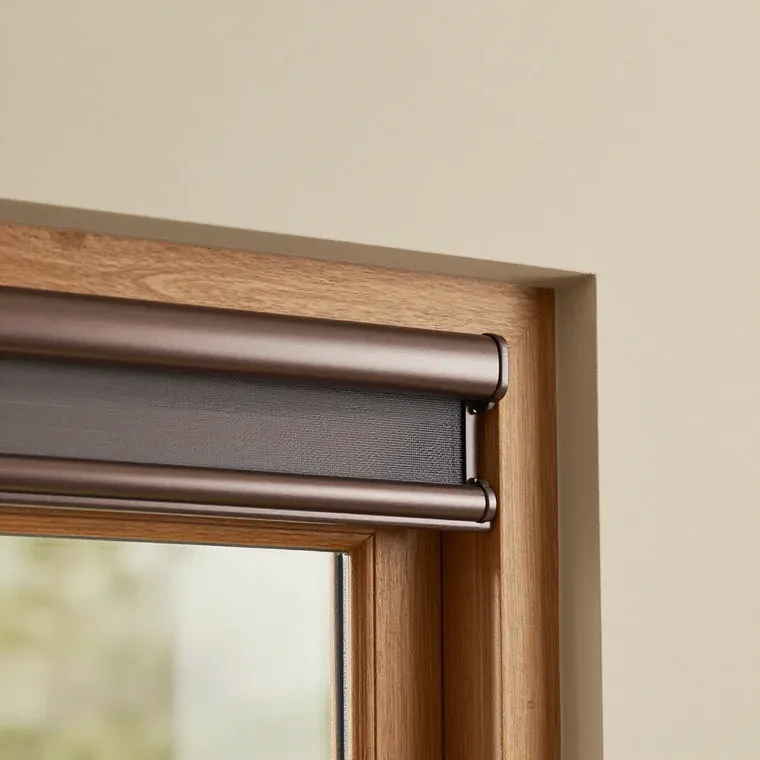
Anti-Cat
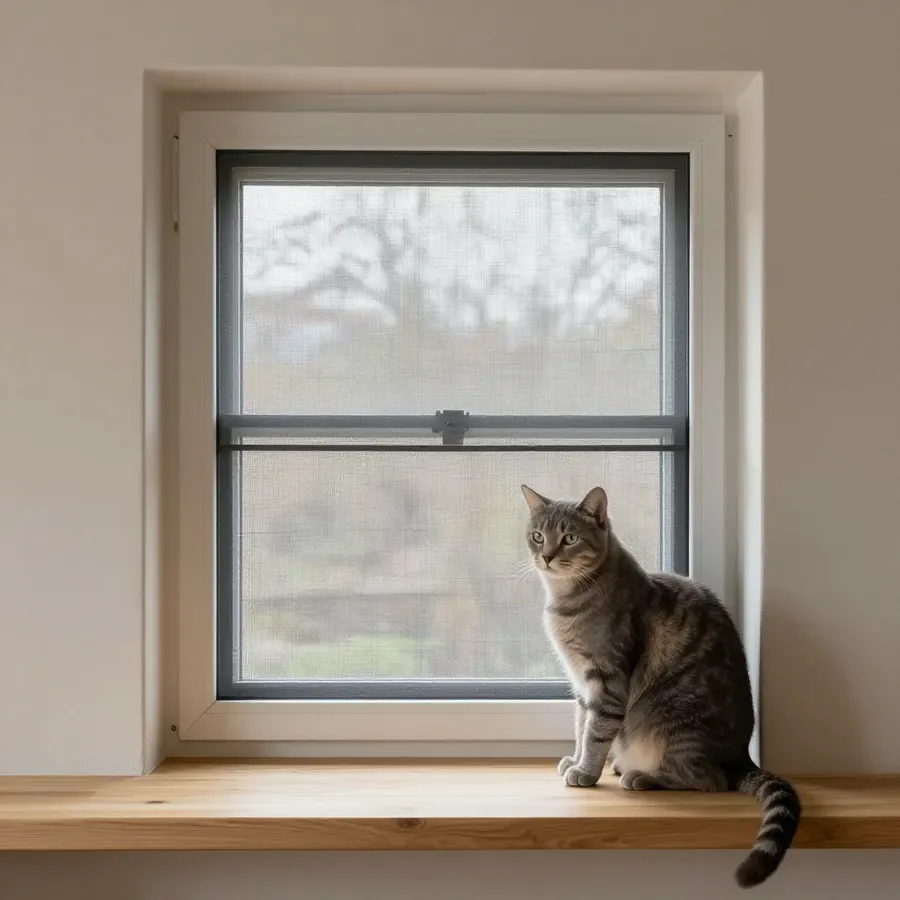
Vinyl threads are several times stronger than standard mesh and withstand the weight of a small pet. Price from 16 200 ₸ per m².
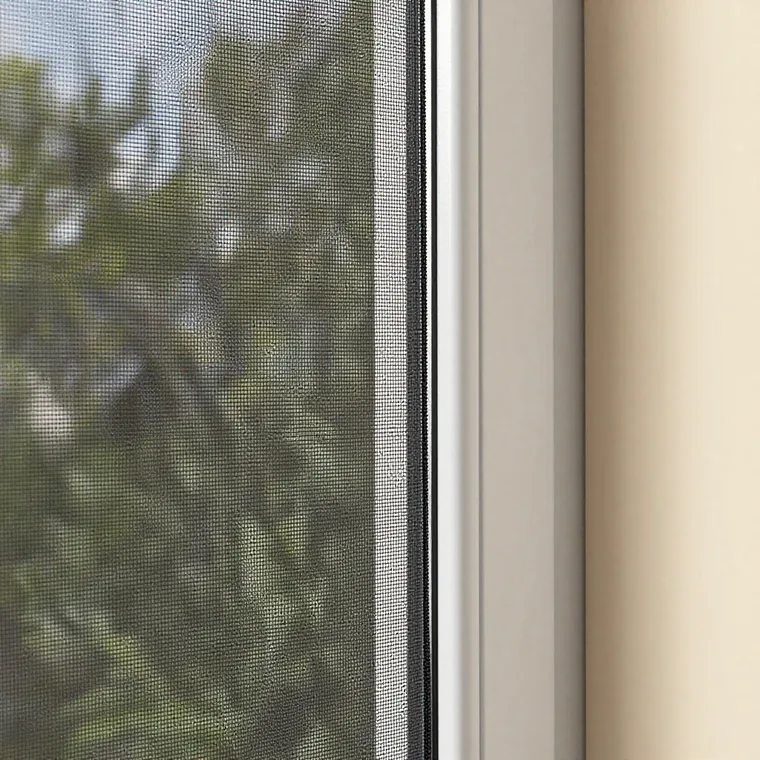
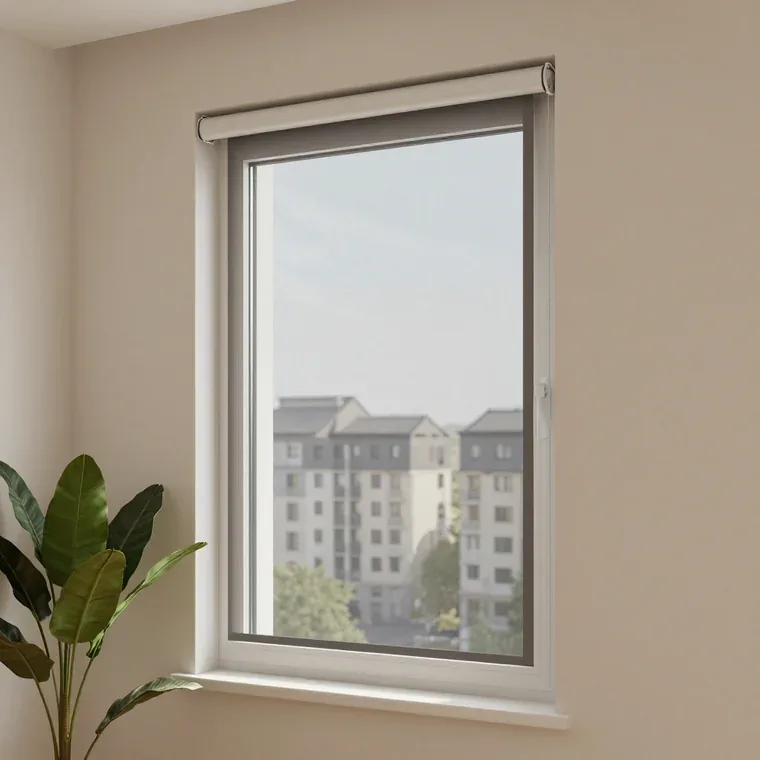



5,097 reviews on review sites
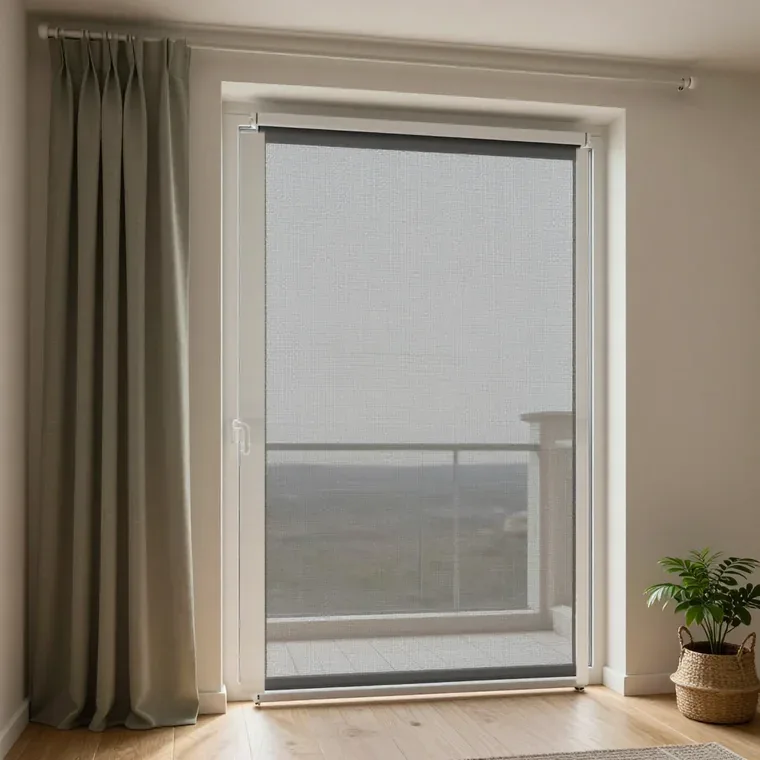
A cassette with mesh and guides that rolls up and takes no space on the window.
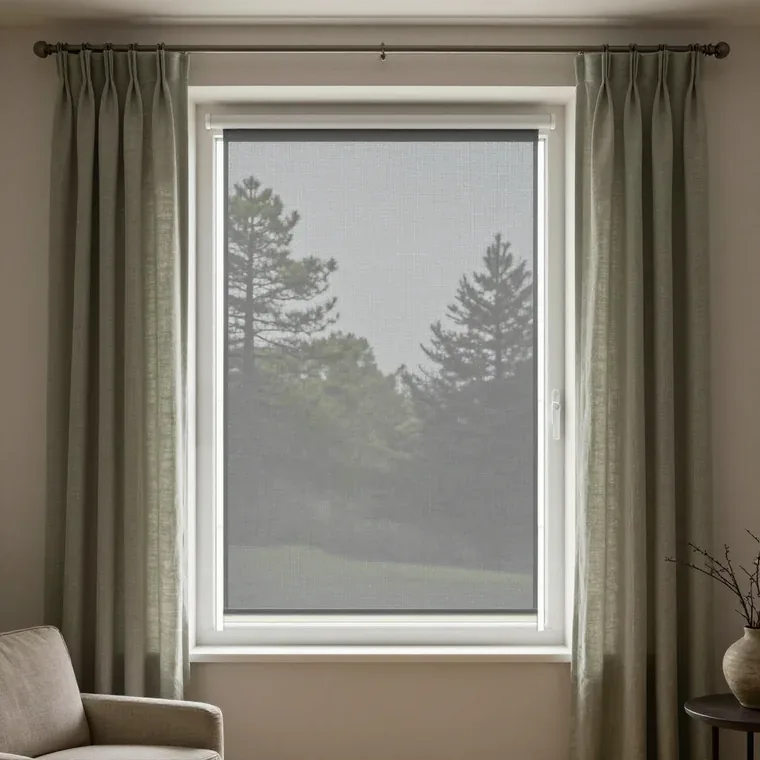
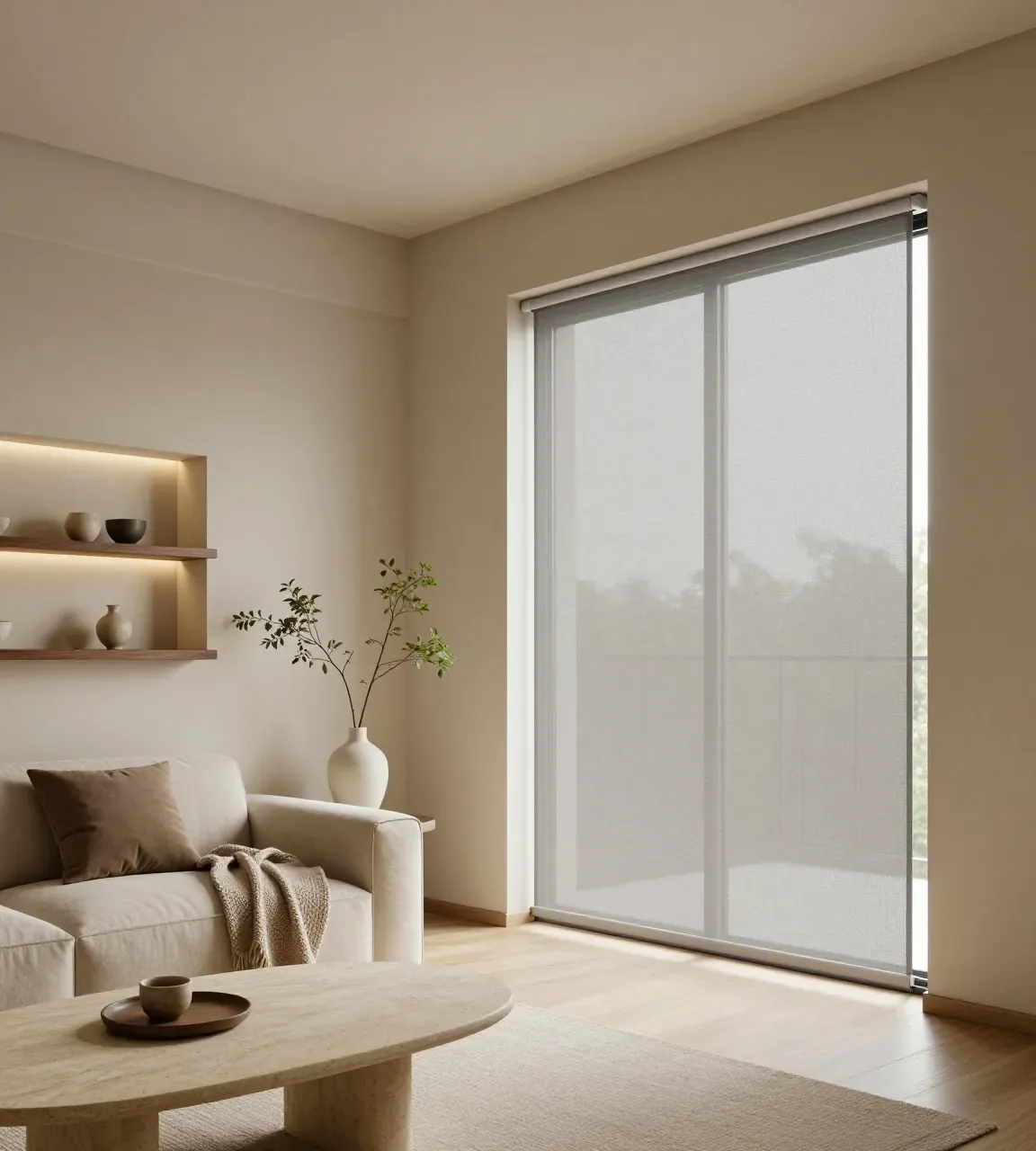
A roller screen is a mesh made of fiberglass or another material wound on a shaft inside a cassette. The cassette is fixed to the window frame or into the opening, and the mesh moves along side guides and rolls up when opened.
The design has a spring mechanism that tensions the mesh and returns it to the cassette. The guides keep the edges of the mesh from sagging. It is operated by a cord or a handle on the bottom bar.
price per m² of standard mesh
production of a framed screen to size
fitting to a prepared opening
Fixings are chosen for the window profile and floor: brackets, plungers or magnets. If the mechanism is worn out, it is repaired.
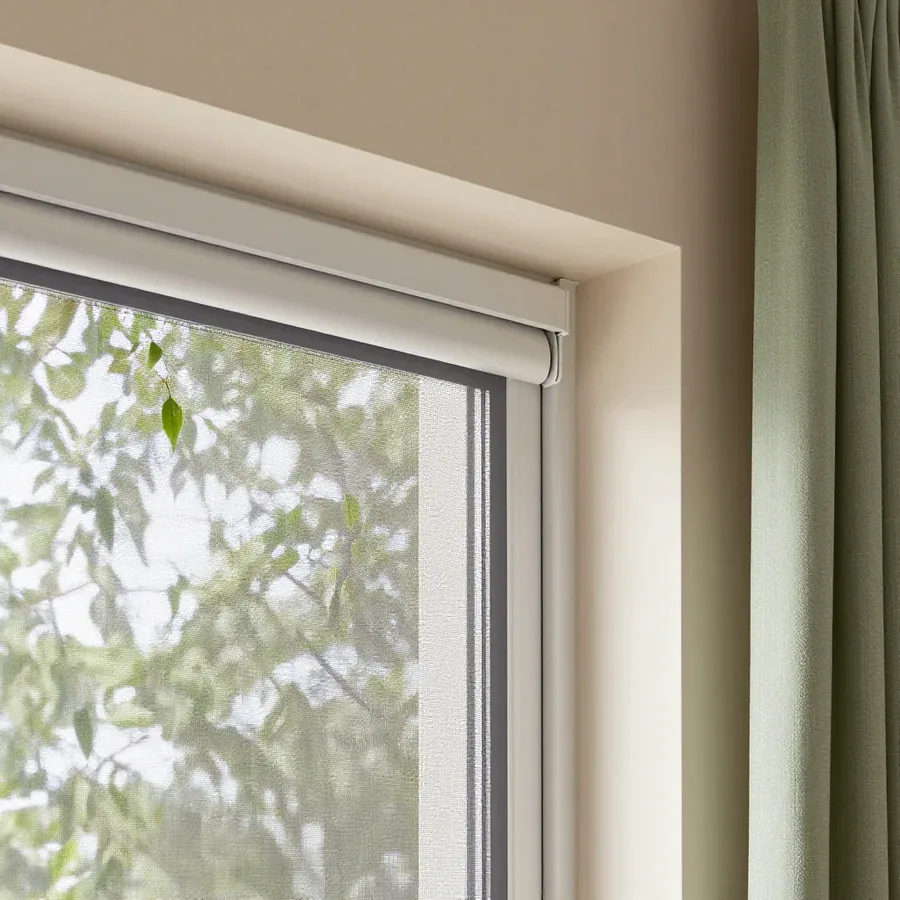
Suitable for most plastic windows. Fixed to the frame with screws, the cassette is placed on the brackets.
Inserted into holes in the frame without through drilling. Convenient for removable structures.
Hold the cassette with magnetic force. Suitable for thin profiles and frequent removal.
If the facade cannot be drilled, the cassette is mounted inside the opening. Screen repair from 2 500 ₸ per item.
Five fabrics for different needs: from standard insect protection to a barrier against dust and claws.
Fiberglass
The basic option for most windows: fiberglass withstands heat and frost.
Ultravue
The mesh cell is wider than standard, so the room gets a quarter more daylight.
Pet Screen
Dense weave of vinyl threads resists claws and the weight of a small pet.
Fine mesh
The fine mesh blocks street dust, ideal for windows near roads.
Poll-Tex
Fabric with 0.25×1 mm cell retains pollen and suits allergy sufferers.
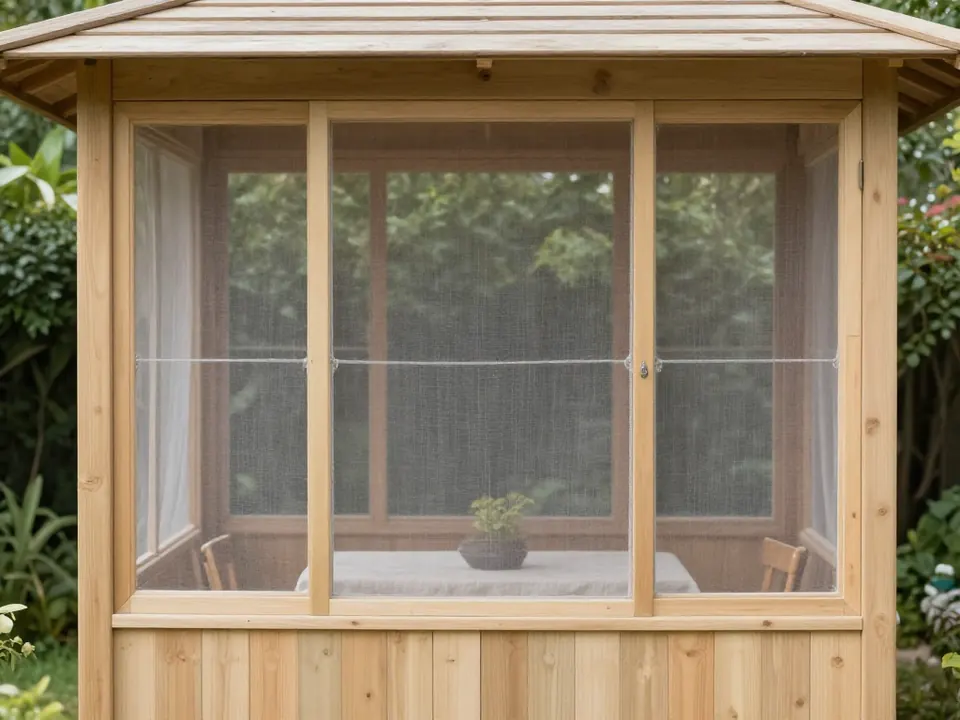
Plastic, wooden and aluminium windows, vents, loggia, gazebo and veranda windows. The measurer chooses the fixing.
Balcony door: hinged, sliding or pleated screen
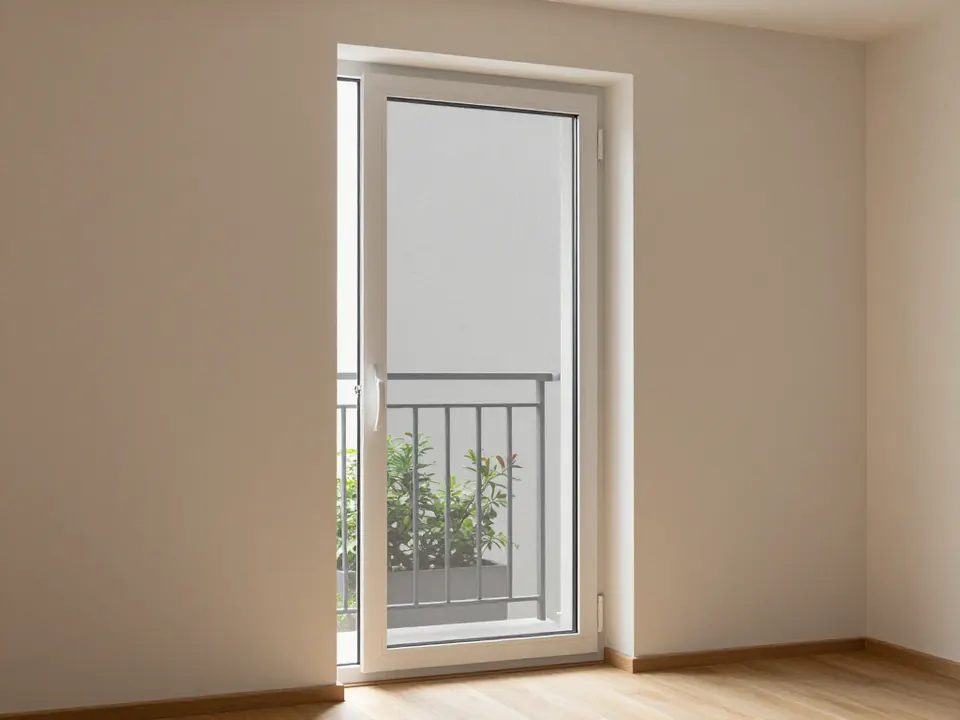
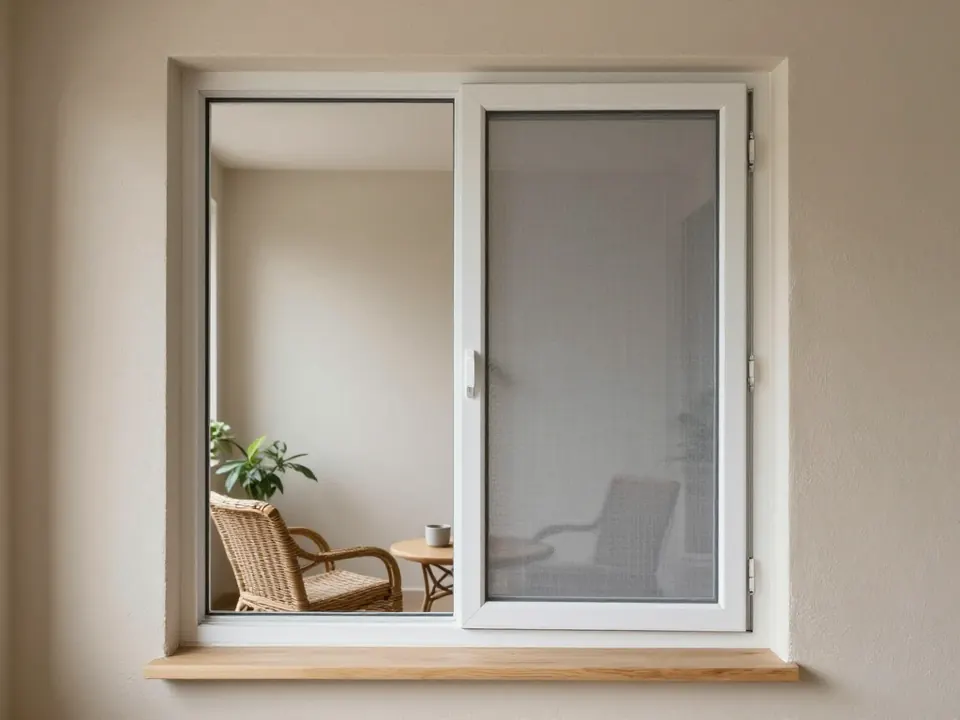
Framed screens for opening sashes
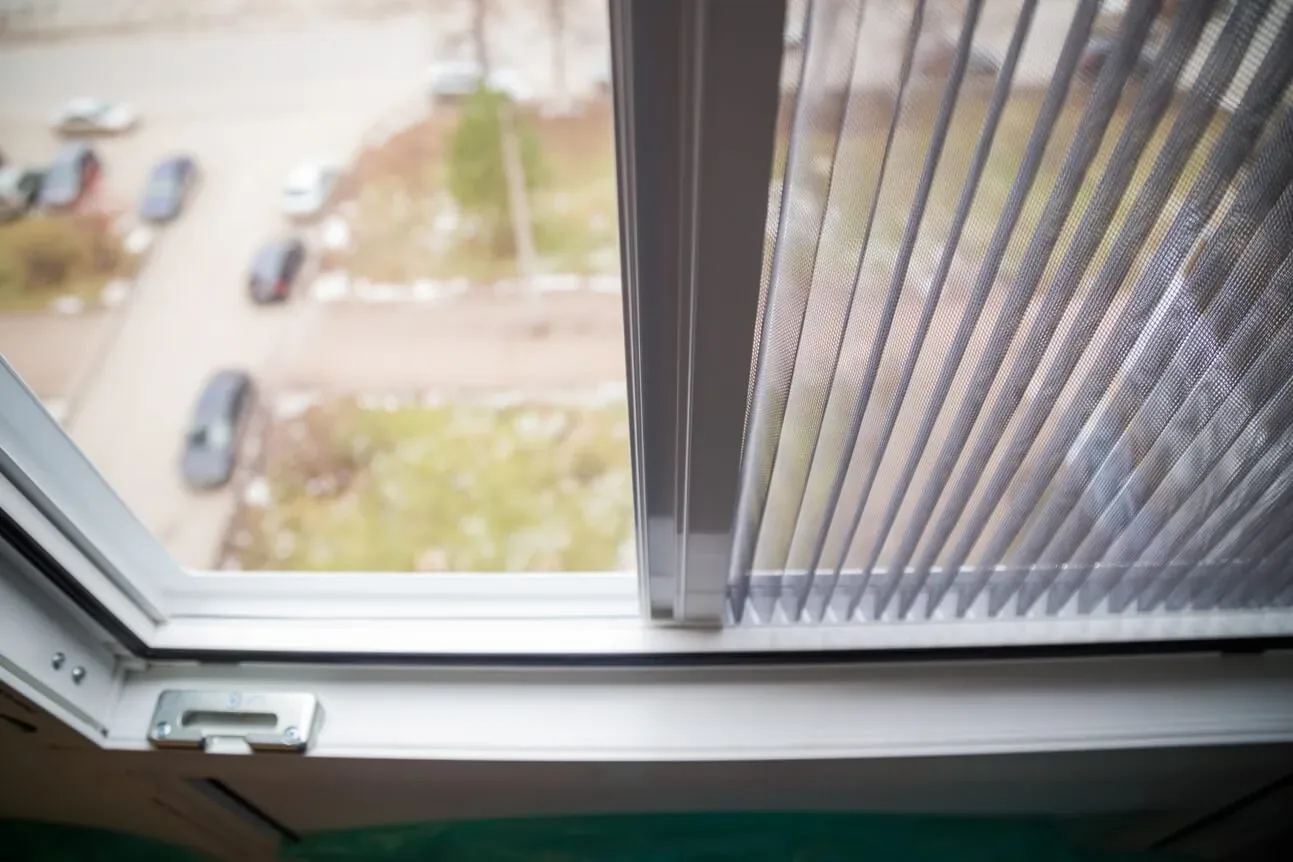
Wide openings: sliding and pleated screens
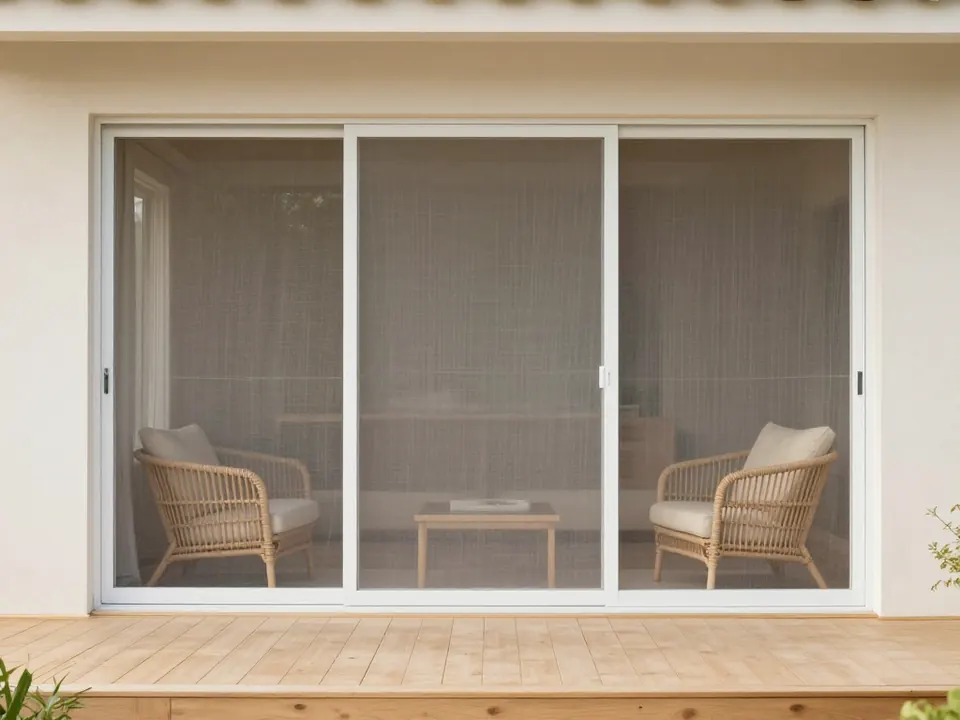
Large windows and doors to the terrace
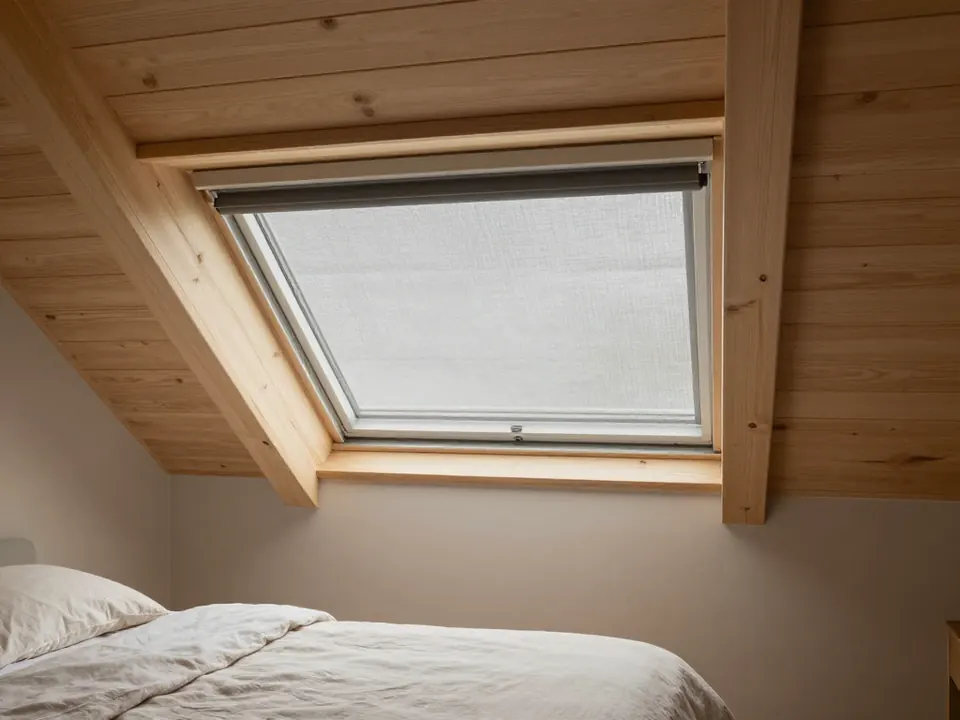
Sloped windows: the measurer chooses the fixing
Framed screen made to the exact size of the transom
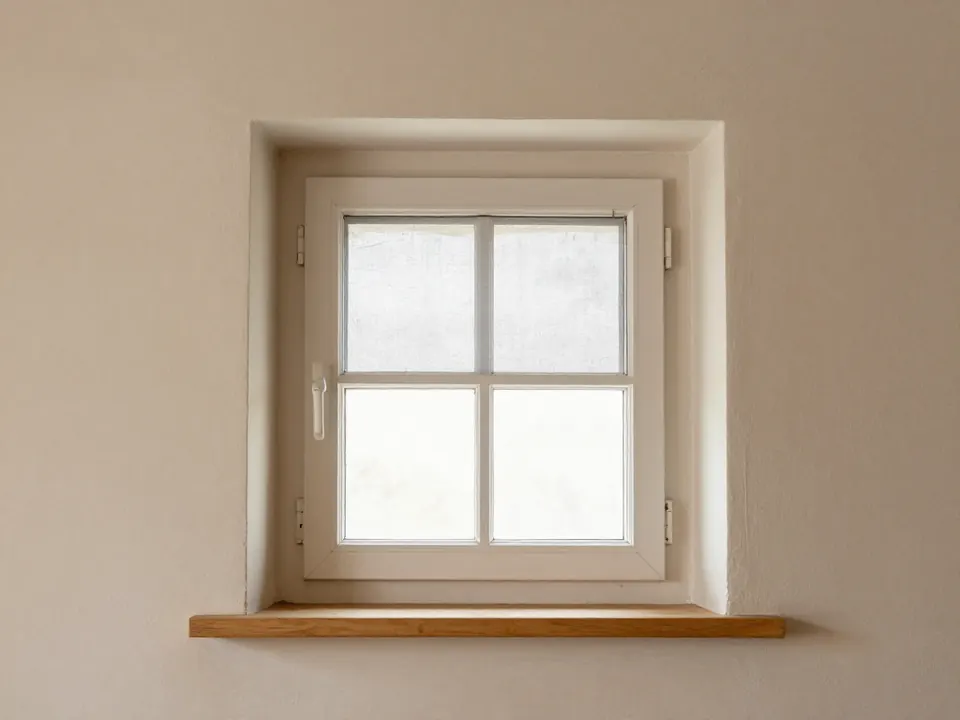
The cost depends on the opening size, fabric and fixing method. The exact price is confirmed after measuring.
| Screen type | Price | Fitting | Making | Options and prices |
|---|---|---|---|---|
| Roller mosquito screen for windowsstandard mesh, white profile | from 16 200₸ per m² | 3 350 ₸ | 10–15 minutes | Roller mosquito screen for doors · 18 400Roller mosquito screen, ready-made · 31 000 ₸ per item"Anti-Dust" · 30 000Roller mosquito screen for skylight windows · 93 000 ₸ per itemRoller mosquito screen for wooden windows · 22 000 ₸ per item |
| Repair of roller mosquito screenspring or latch replacement | from 2 500₸ per item | — | — | |
| Measuring visit if order is cancelledfree measuring with an order | from 2 500₸ per job | — | — | |
| Delivery of ready-made screens in the cityto an address within the city | from 4 500₸ per job | — | — |
The price is fixed in the order after measuring.Measuring includes opening width, box height, profile type and fabric winding side.The final amount is affected by guides, box colour and door construction for non-standard openings.
Book a measuring visitEnter the opening width and height, choose the fabric — the calculator will show a preliminary cost.
1. Screen type
2. Mesh and design
3. Opening size, cm
Own production since 2012, 1-year warranty and profile painting in any colour.
We have been making mosquito screens since 2012 at our production facility in Almaty.
We give a 1-year warranty on mosquito screens.
We paint the screen profile white, brown, grey or another colour to match your windows.
"UltraVue" lets through 25% more light and air.
Own production in Almaty: the screen is made, delivered and fitted without intermediaries.
We fit screens on plastic, wooden and aluminium windows, vents, loggias, gazebos and verandas.
Mosquito screens can be ordered in 17 cities of Kazakhstan.
We reply on WhatsApp within 5 minutes.
From request to finished screen on the window — four steps.
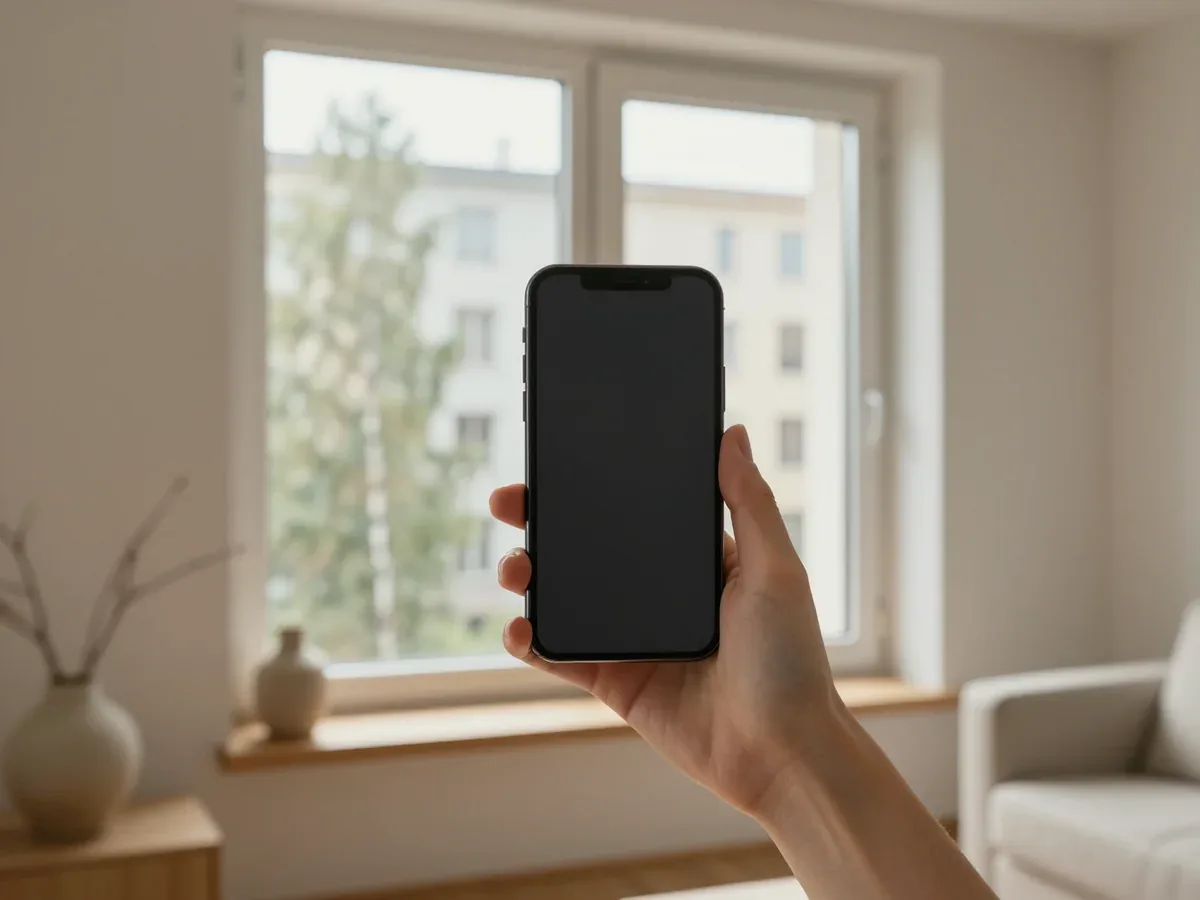
Leave a request or message us on WhatsApp. We will reply within 5 minutes and clarify the details.
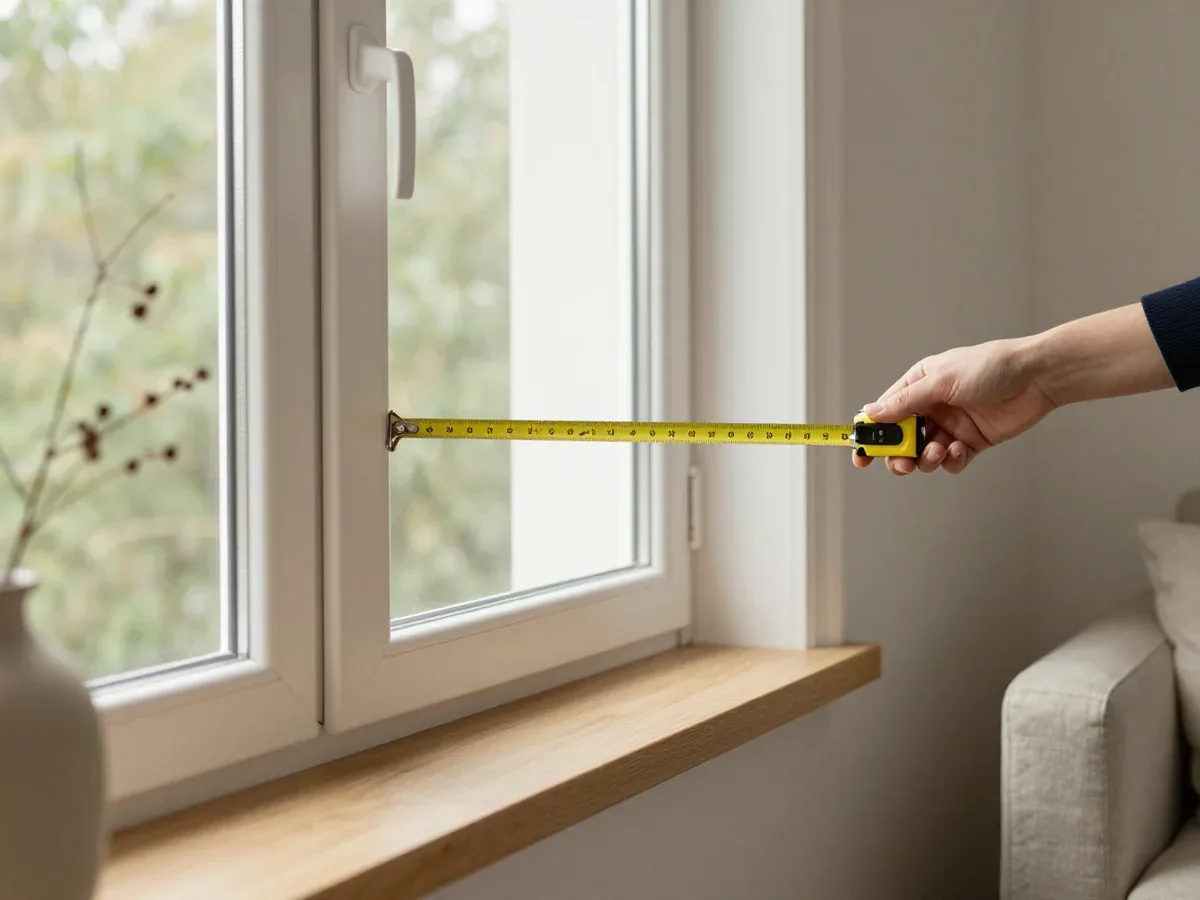
The measurer will come free of charge, take the opening dimensions and help choose the fabric and fixings.
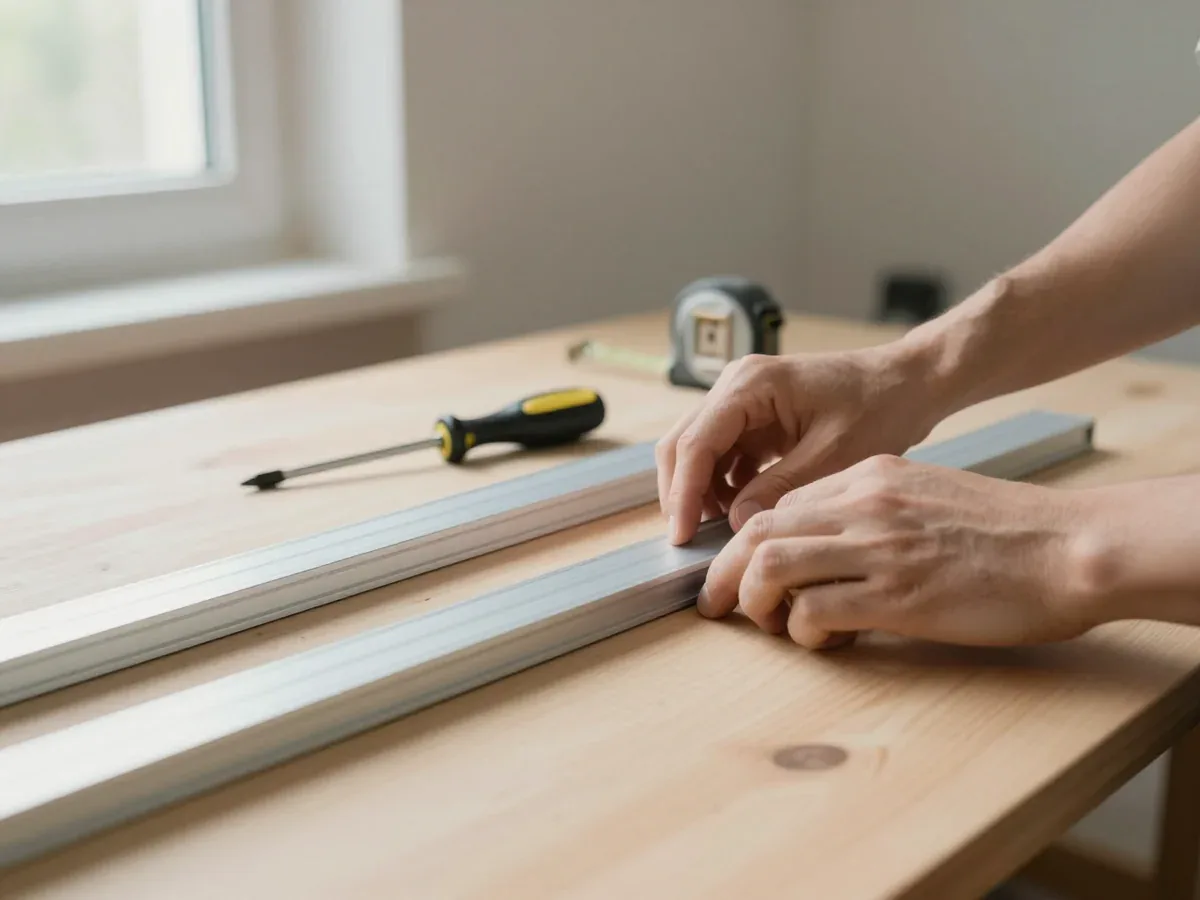
We make a framed screen to your dimensions in 10–15 minutes, a pleated one in 40–60 minutes.
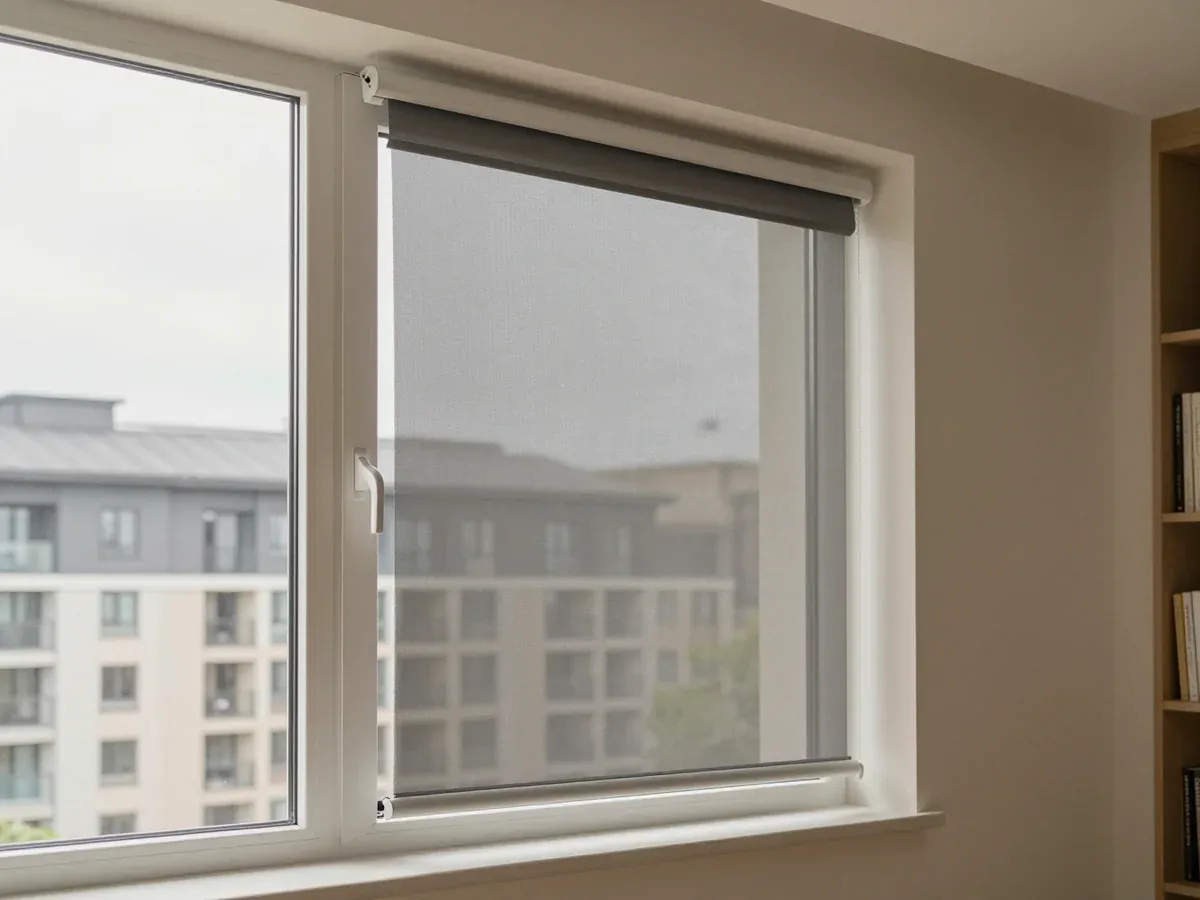
We will fit the screen on the window or door. Payment after installation: cash, card or Kaspi.
Good to know

Senior mosquito screen specialist at moskitnyesetki.kz
We make roller mosquito screens to your exact opening in Petropavlovsk, with free measuring, a frame painted to match your windows and a 1-year warranty. The mesh rolls into a box on a spring mechanism, so a window you open every day stays clear. We fit windows, balcony doors and loggias, and you pay after installation.
A roller mosquito screen is a mesh panel that winds into a slim box above the opening and slides down along side rails instead of being lifted out whole. Below is how the mechanism works and where it fits best.
The mesh is fixed to a spring roller inside a slim box at the top, and guide rails on the sides keep it taut as it slides down and rolls back up. Pull the bottom bar and the fabric unrolls along the rails; release it and the spring winds the panel back into the housing. A roller mosquito screen for Petropavlovsk windows uses the same principle on plastic, wooden and aluminium frames, with the box mounted above the opening and the rails running down each side. Tension is set at assembly, so the mesh tracks straight rather than sagging into the frame. A screen that stays under constant spring tension works best when the opening is used daily, because the mesh never has to be lifted out and stored by hand.
| Screen type | Best for | How the mesh is handled |
|---|---|---|
| Roller | Windows and balcony doors used daily | Rolls into a top box on a spring |
| Framed | Fixed windows and infrequent use | Lifts out whole and leans aside |
| Pleated | Wide or angled openings, loggias | Folds sideways like a concertina |
We keep five canvases plus metal mesh and Krylo, and each one answers a different problem: daylight, a climbing cat, pollen season or street dust. Here is how to match the weave to your room.
UltraVue lets in 25% more light and air than other meshes, while Standard fiberglass resists fire and temperature swings, and Krylo covers the in-between. UltraVue suits south-facing rooms and top floors where the sun hits the glass for most of the day, and it keeps the view sharp because the weave is finer than a standard canvas. Standard is the workhorse option for stairwells, storage rooms and windows you rarely open, since it tolerates frost and heat without sagging. Krylo sits between the two: sturdier than plain fiberglass, more open than a dense protective weave. Metal mesh is the heaviest of the set and goes where abrasion is constant, such as a ground-floor window beside a walkway.
Anti-Cat (Pet Screen) uses vinyl threads several times stronger than standard mesh and holds the weight of a small pet, while Anti-Pollen (Poll-Tex) has a 0.25×1 mm cell and Anti-Dust traps fluff and street dust. Pet Screen is the pick for ground-floor flats and any window a cat reaches from a sill or balcony rail, because the vinyl core stretches before it tears. Poll-Tex works through late spring, when poplar fluff and flowering grasses load the air, and its fine cell stops the particles a standard weave passes straight through. Anti-Dust handles the opposite case: a window facing a road or yard where grit and lint collect on the sill within days.
Measuring is free, and the measurer comes at a time that suits you. Below is how the fastening is chosen for your window and how the box is painted to match.
Measuring and consultation are free, the measurer comes at a convenient time and takes sizes on site, and the price is fixed in the order after measuring. He checks the opening, the window profile and the reveal, then helps you choose the design, the mesh and the fixings in one visit. In our practice, a non-standard or out-of-square opening is where self-measured orders usually fail, because the box and the guide rails need a true line to run straight. A window that looks square to the eye can be off by a centimetre on the diagonal, and that is enough for the mesh to catch or leave a gap at the edge. Send a photo of the window on WhatsApp and we reply within five minutes to set a time — residents of Petropavlovsk can book a visit any day of the week.
The measurer picks the fastening for your window profile and floor, choosing Z-shaped brackets, pins or magnets, and we paint the frame any colour to match your windows. Z-brackets suit most plastic profiles and leave the mesh easy to lift out; pins hold a lighter box tight to the sash; magnets let you take the screen off without tools. On upper floors the fixing has to hold against wind pull as well as weight, so the bracket choice is made on site rather than from a catalogue. We paint the frame to your sample, so the screen reads as part of the window rather than an add-on.
A made-to-measure item is a short job, and payment comes only after fitting. Below are the making times, the ways to settle up, and why one crew handling survey and fit keeps the result in safe hands.
A framed screen made to your size takes 10–15 minutes and a pleated screen 40–60 minutes, and you pay after installation by cash, card or Kaspi. We have been making mosquito screens for years, so cutting and assembling a made-to-measure frame is a routine bench job rather than a factory wait. A pleated model runs longer because the cords, the tension and the folded stack are set by hand before the unit goes into the opening. The price is fixed in the order after measuring, so the figure agreed on the day of the visit is the figure you pay.
We work directly with our own measurers and fitters, so the same crew that surveys your opening installs the unit and answers for it. Roller mosquito screens in Petropavlovsk are a short chain — measure, cut, fit, adjust — and every step sits with the same people instead of being handed along. Our measurer records the profile, the sill and the floor level, and the fitter works from those notes, which is why a frame arrives the right size rather than close to it. With a listing or a request board, the person who surveys and the person who fits may never meet, and a small sizing error becomes nobody's job. We also repair screens and swap fastenings, so the same crew stays with the product after it is up.
Every roller mosquito screen we make carries a 1-year warranty, and seasonal care keeps the mechanism free and the spring from stretching. Here is how to look after it through winter and what happens if something needs repairing.
A framed screen lifts out from inside in a minute and is best taken off for winter, while a roller model is cleaned with a soft brush and its rails kept free of grit so the spring is not overworked. A quick pass with a brush along both rails a few times a season does more than any later adjustment, and it keeps the fabric running evenly for longer. On framed versions the mesh stays taut on its own frame, so the winter break is about protecting the weave from ice and snow load rather than the mechanism. Wiping with a damp cloth rather than a pressure washer keeps the weave intact and the painted frame even.
Every mosquito screen carries a 1-year warranty, and we repair screens and replace fastenings, swapping the fabric on its own where the mechanism is sound. A sticking unit, a bent Z-bracket or a pin that no longer holds are all fastener-and-mechanism jobs; a torn or sagging mesh is a fabric job, and on a roller model the two are handled separately because the box and coil stay in place when only the weave is renewed. Replacing a fastener or a single panel is quicker than a full new screen, and the same visit can cover a second window if you mention it when booking.
A roller screen suits inward-opening windows and loggia doors, and the recap below keeps the key decisions in one place.
Installation, mechanism, fitting and care of roller mosquito screens
Konstantin Selenenkovsenior mosquito screen specialist, 10 years in the tradeOnline · replies within 5 minutes
Ask a questionIt can be fitted to a sash too, but not every one: the housing needs space at the reveal, and the canvas needs free travel. The measurer will check your profile and tell you whether a roller screen can be fitted to this particular sash.
For a standard window, a spring mechanism is sufficient: the canvas retracts into the housing on its own and does not sag. Cord mechanisms are more often used on wide openings and doors, where the screen needs to be fixed in any position. The choice depends on the size and how you use the window.
The housing along the edge of the sash shades a narrow strip, while the canvas determines most of the light. For a dark room, choose UltraVue: it lets in 25% more light and air than standard canvases.
Usually the spring in the shaft has weakened or the canvas has come off the guides. Do not disassemble the housing yourself: a technician will inspect the mechanism and replace the worn part. We provide a 1-year warranty on the work.
Yes, if the housing is mounted detachably: the screen is carefully removed and stored in a dry place. Keep the canvas rolled up, without creases, away from radiators and damp, so the spring doesn't fatigue over the winter.
You can order by your own dimensions, but with a roller screen, the evenness of the opening and the space for the housing are important, and an error of a couple of millimetres causes skewing. The measurement visit and consultation are free, and the price is fixed in the order after the visit.
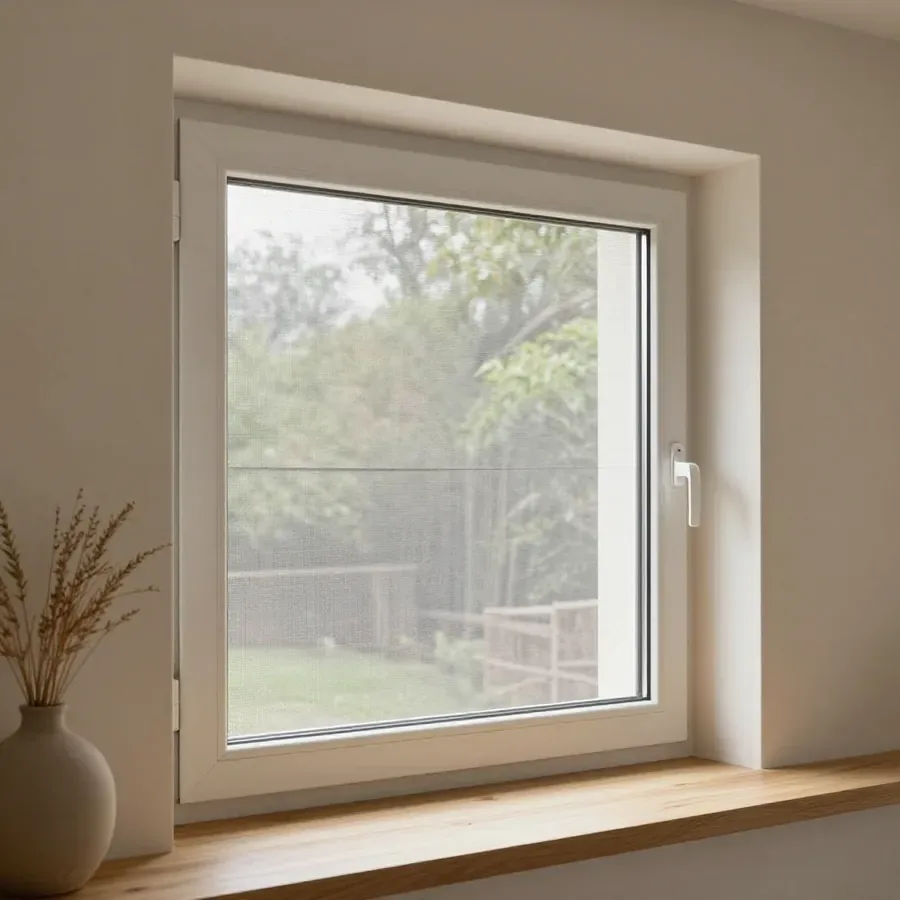 Care
A frame screen comes off in a minute: we show how not to bend the frame or lose the fixings.
April 15, 20268 min read
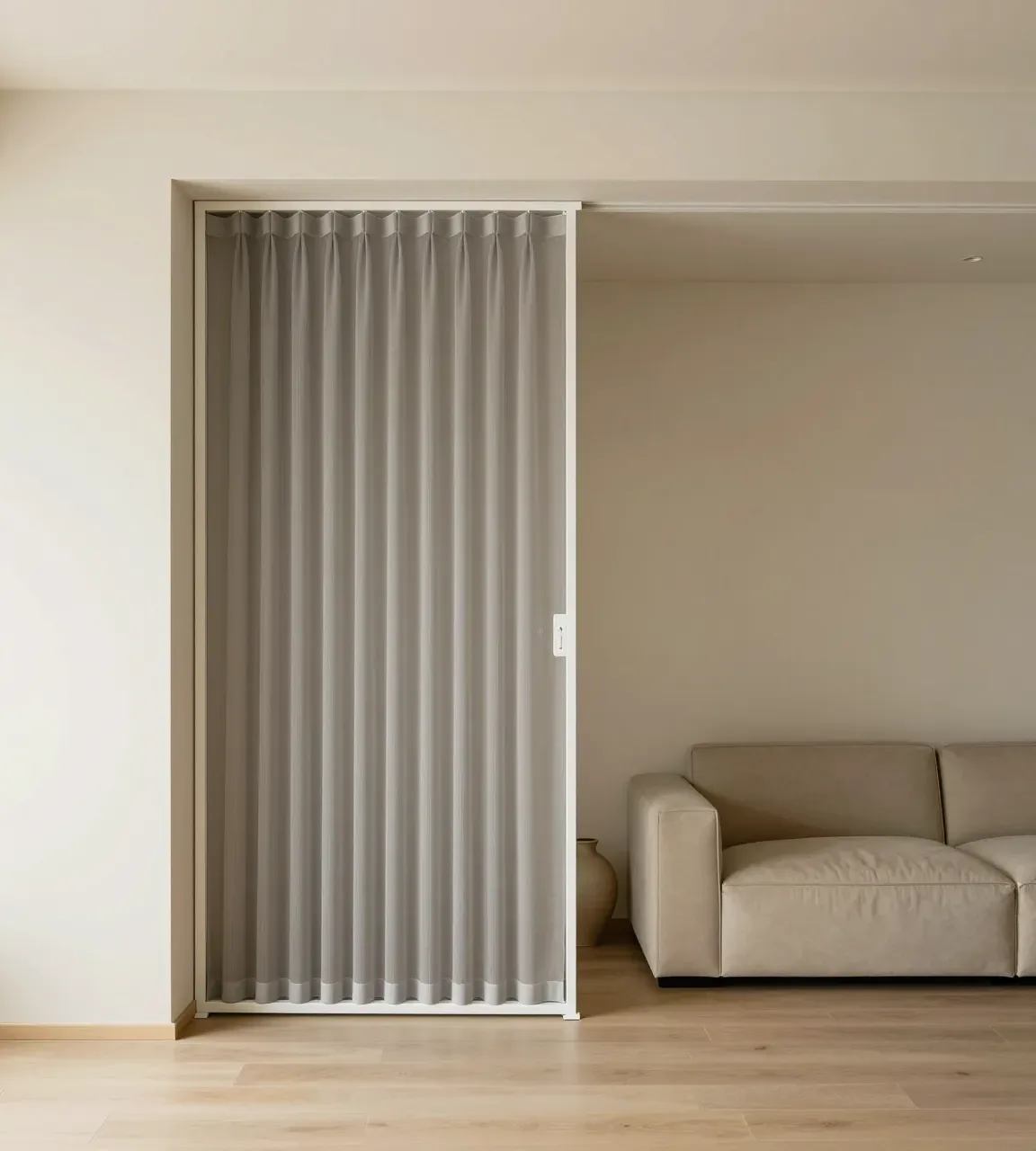 Choosing
We compare the price, lead time and how each screen performs on a door that you walk through every day.
March 2, 20268 min read
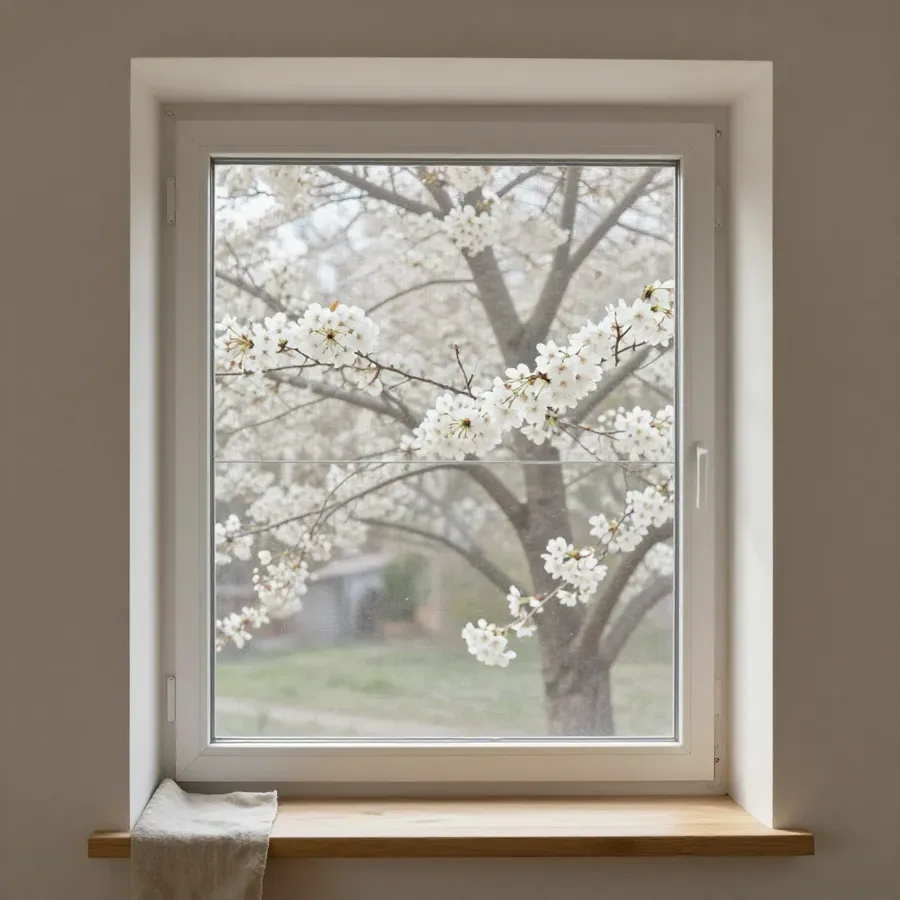 Mesh types
How Poll-Tex mesh with a 0.25×1 mm cell works and who it helps in pollen season.
February 17, 20268 min read
 Prices
Price list breakdown: frame screen from 2 000 ₸ per m², installation 1 750 ₸, pleated from 28 000 ₸. Costing a 70×140 cm window.
February 1, 20268 min read
 Repair
Worn fixings, a wrong measurement, wind on high floors. A set of fixings costs 290 ₸, installation 871 ₸.
January 14, 20268 min read
 Choosing
Anti-Cat mesh on vinyl threads, the fixings and what to do about gaps around the window opening.
December 23, 20258 min read
 Mesh types
The mesh lets in 25% more light and air. Where the difference shows and where paying extra is not worth it.
December 11, 20258 min read
 Choosing
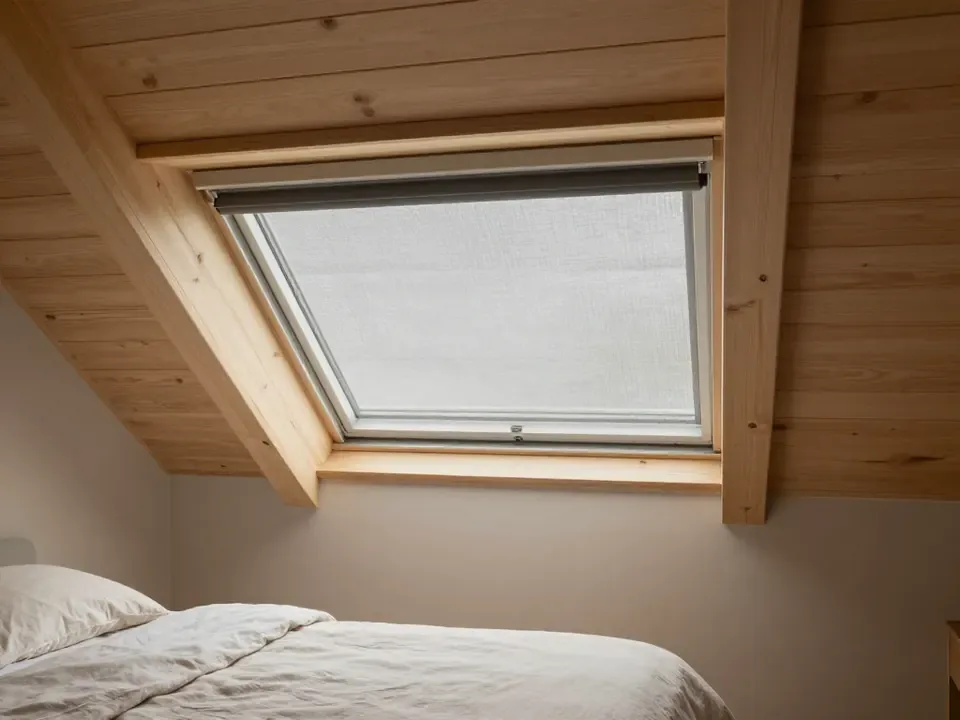
A tilted sash, outward opening and a roller screen at 15 000 ₸ per m²: what will suit your window.
November 21, 20258 min read
 Mesh types
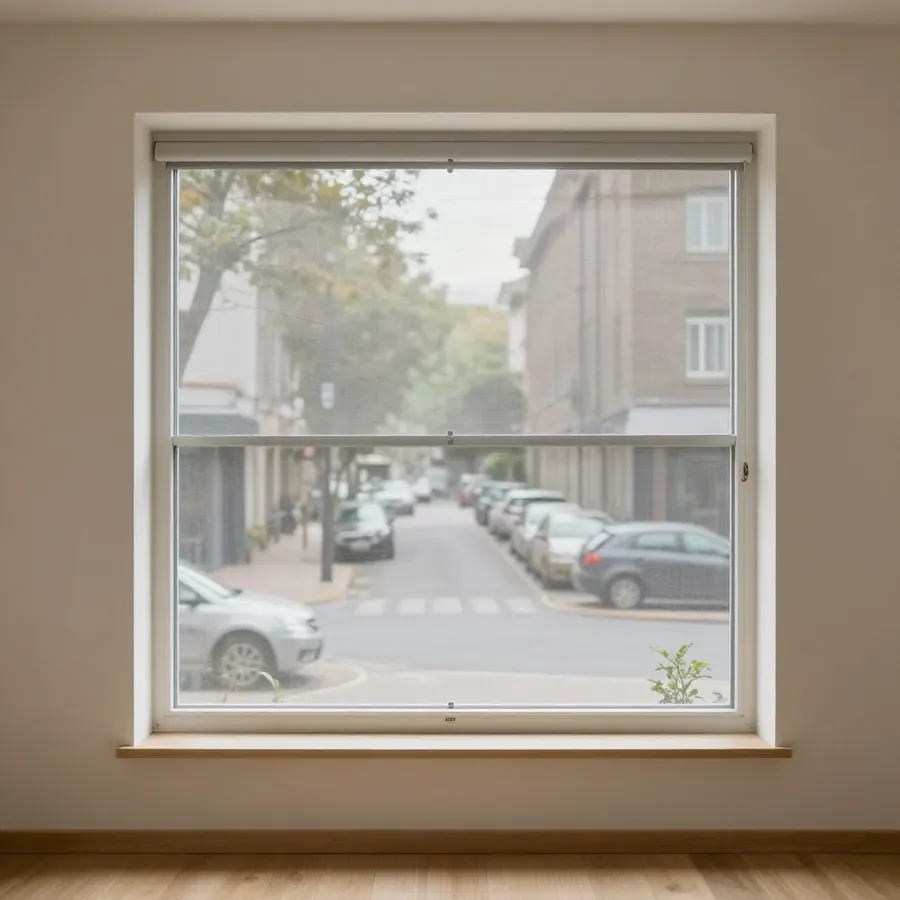
The mesh stops coarse and fine dust along with mosquitoes. When it is worth the price of 8 500 ₸ per m².
October 20, 20258 min read
Thank you. We will call you back within 10 minutes!
Your order number is on the receipt or in the SMS. Choose where to leave your review.
Write a review on WhatsApp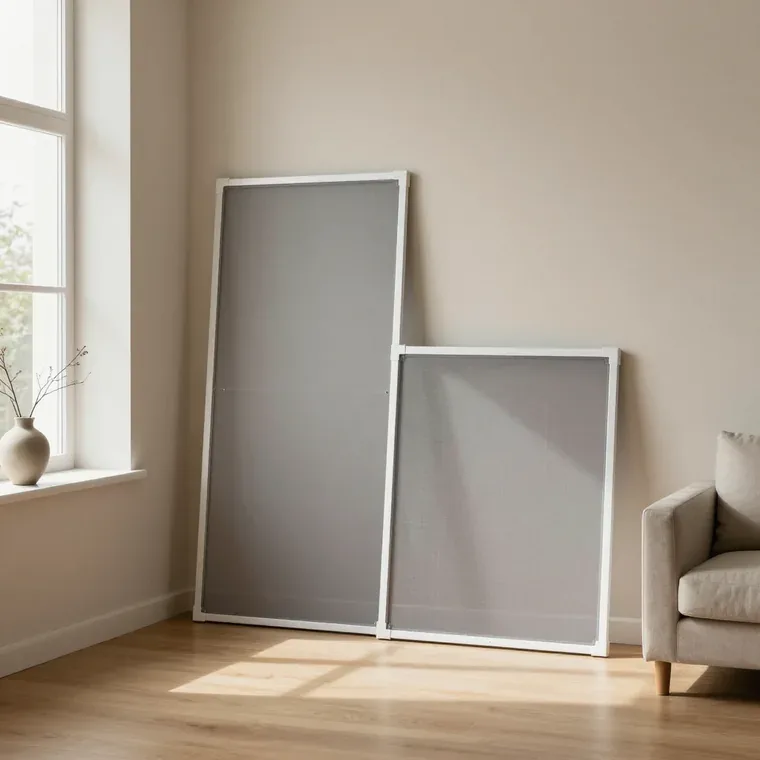 Ready-made mosquito screens
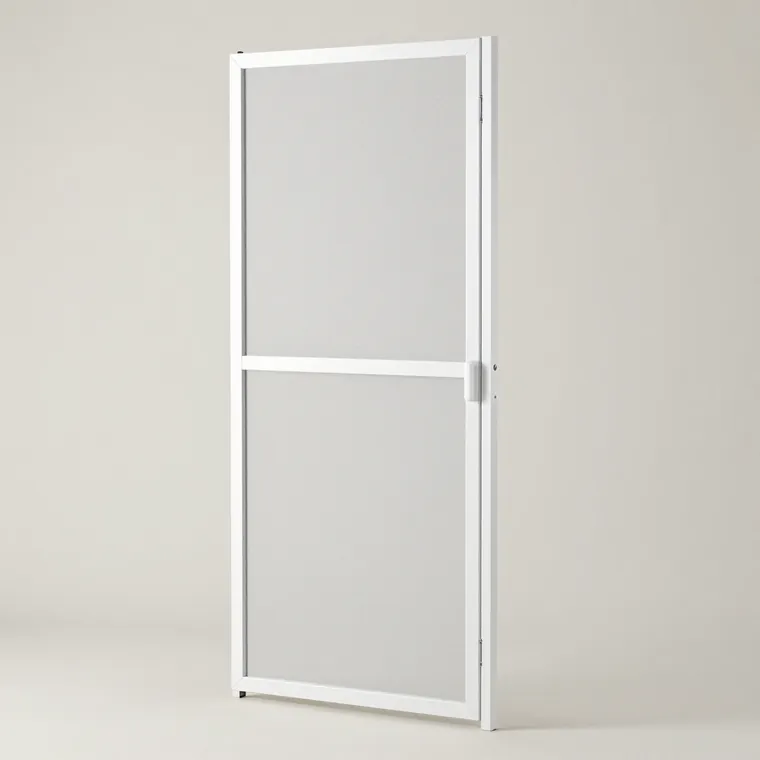 Mosquito doors
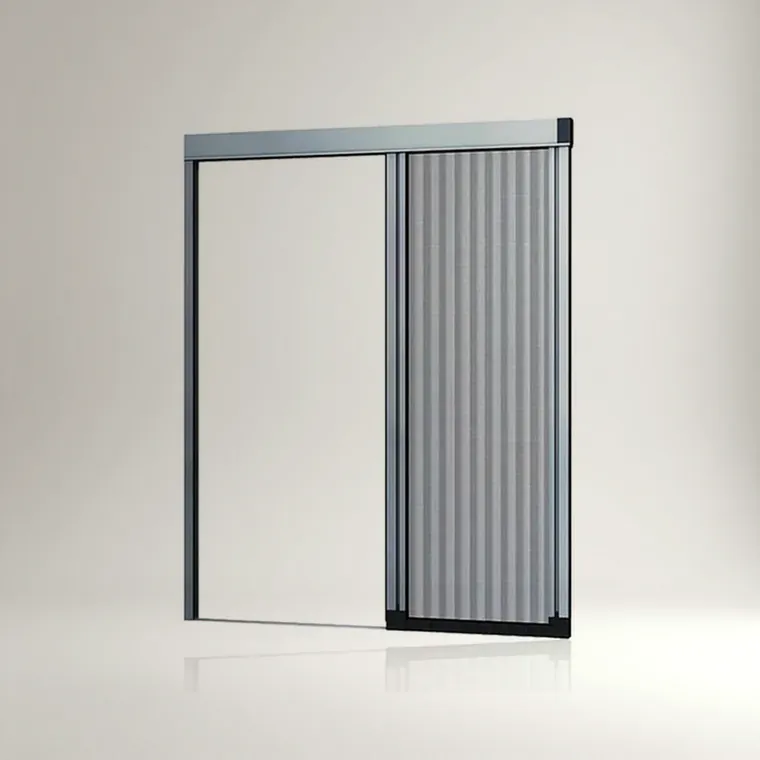 Pleated mosquito screens
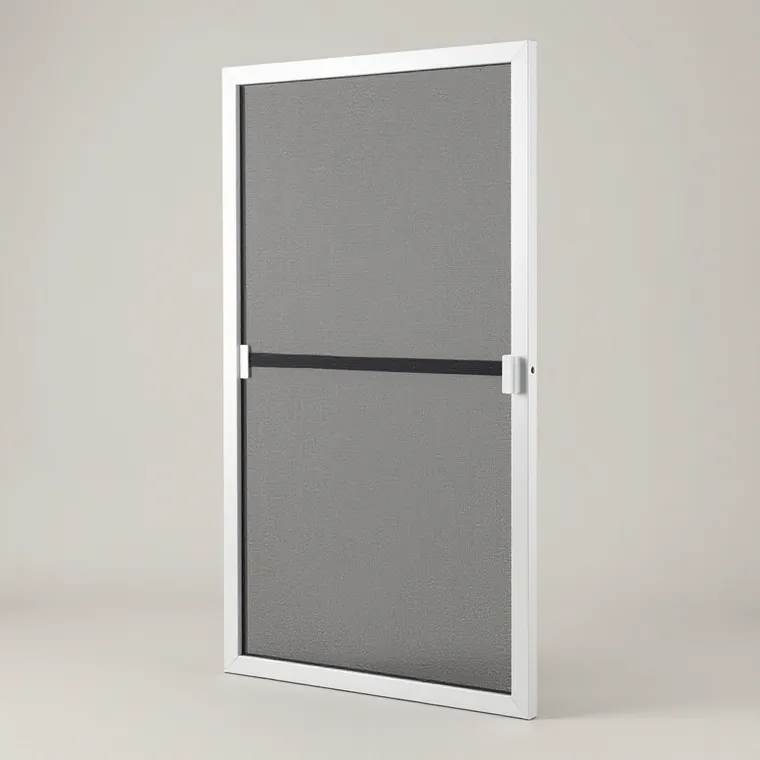 Framed mosquito screens
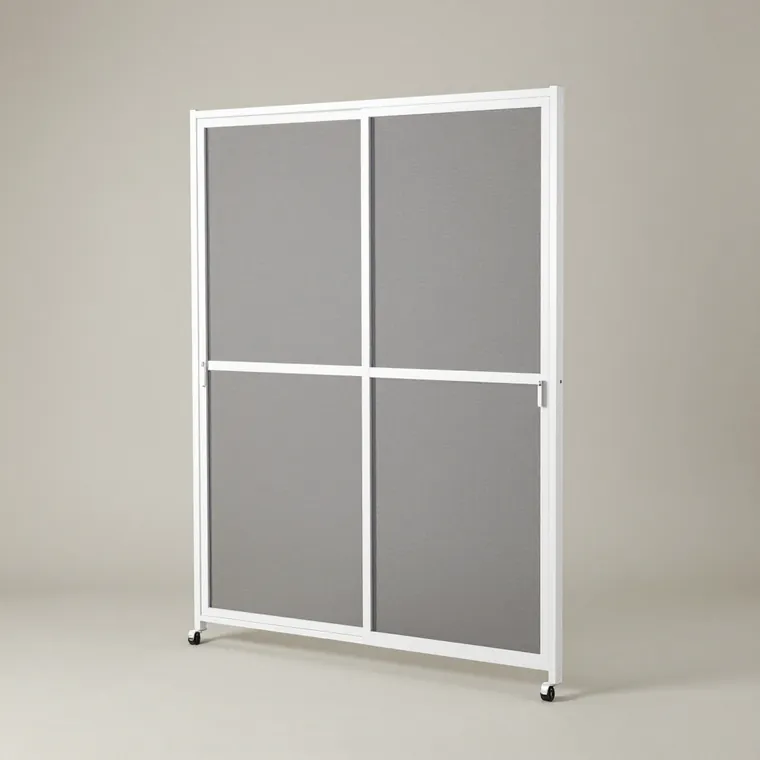 Sliding mosquito screens
