
Mosquitoes and flies · Fiberglass
Standard mesh
Fiberglass resists fire and temperature changes. Price from 17 400 ₸ per m².
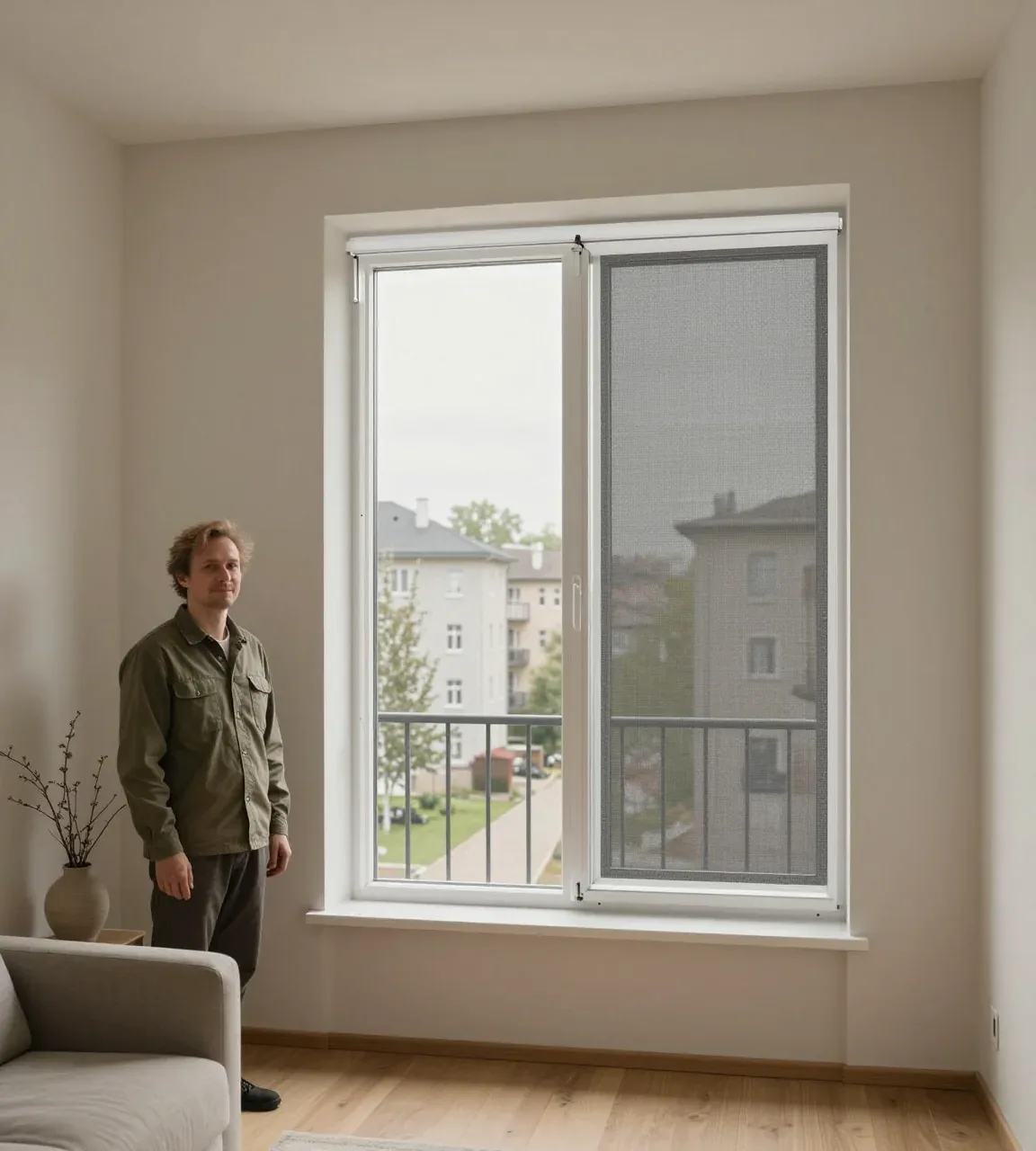
Standard mesh
Fiberglass resists fire and temperature changes. Price from 17 400 ₸ per m².
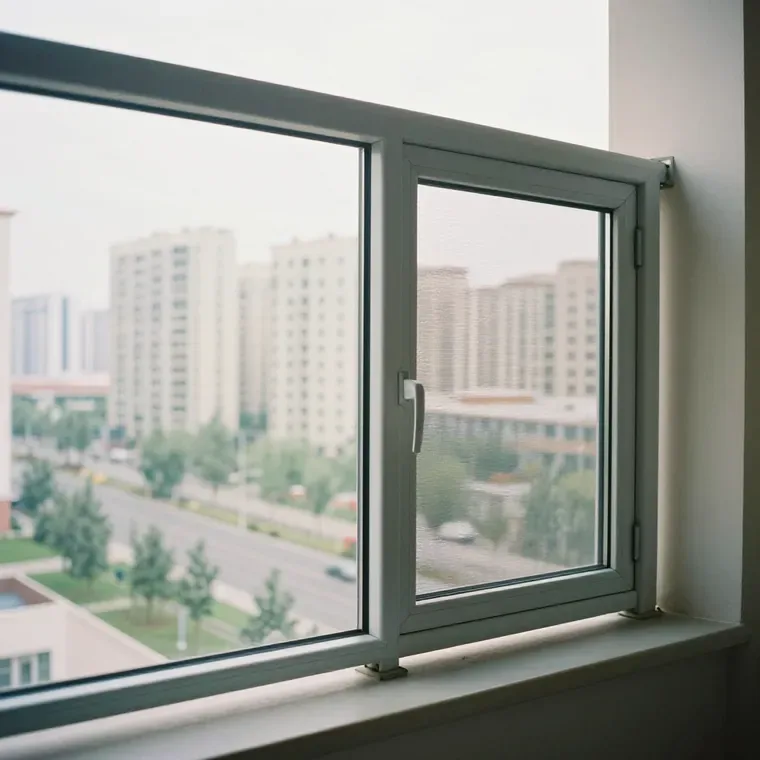
UltraVue
Lets through 25% more light and air than other meshes. Price from 17 400 ₸ per m².
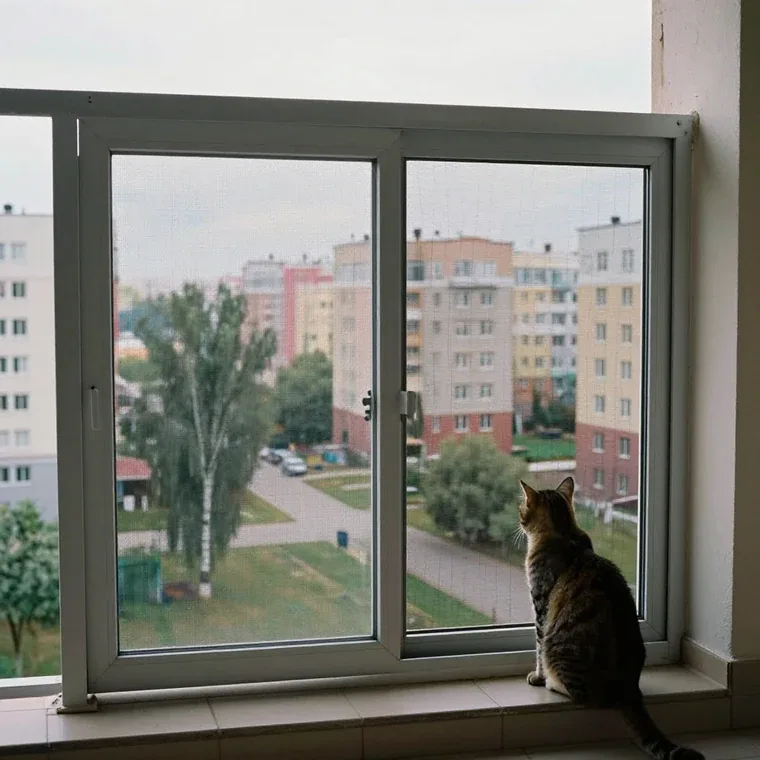
Anti-Cat
Vinyl threads are several times stronger than standard mesh. Price from 21 000 ₸ per m².
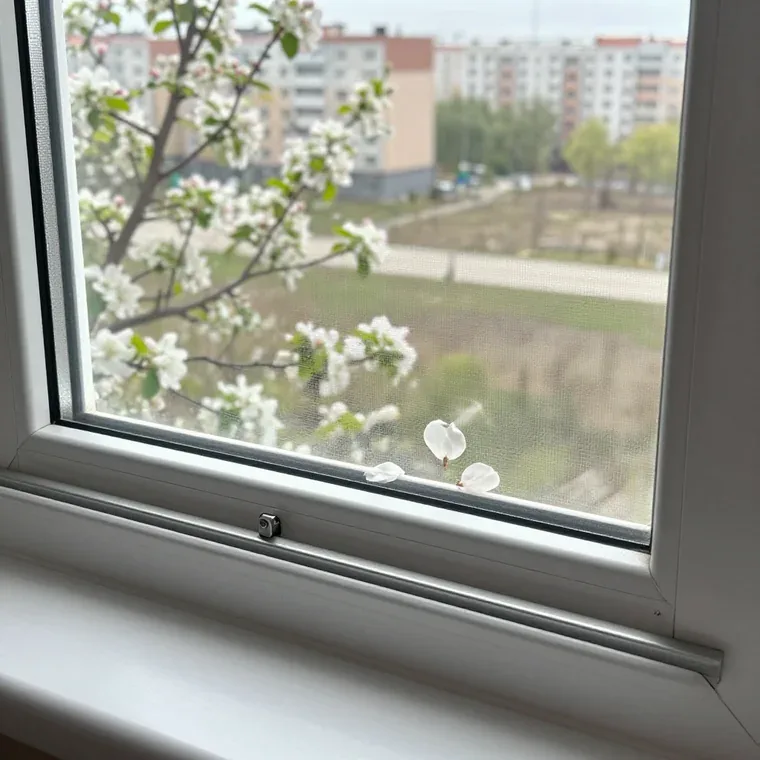
Anti-Pollen
0.25×1 mm mesh catches fine dust and pollen. Price from 17 400 ₸ per m².
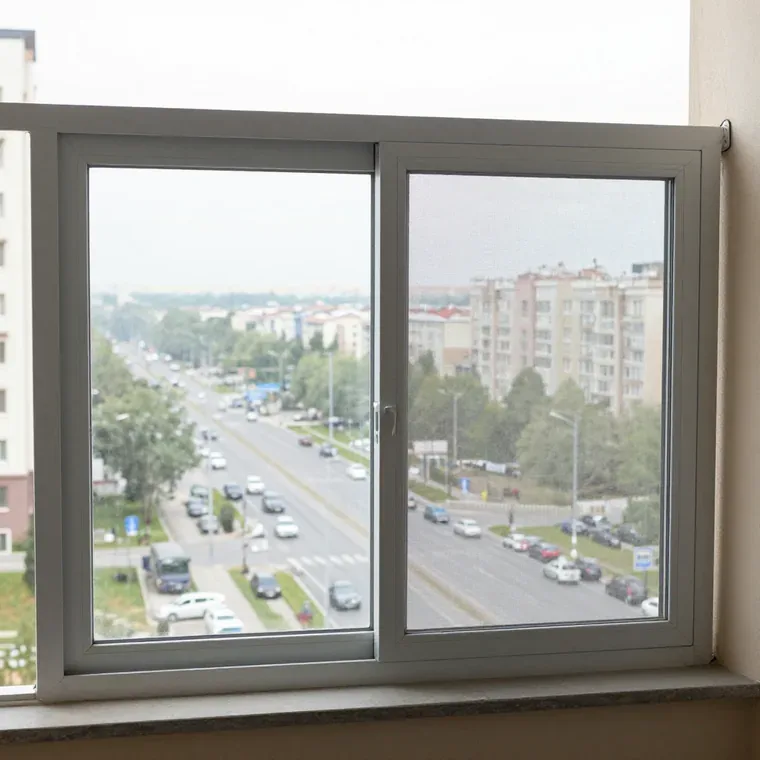



5,097 reviews on review sites
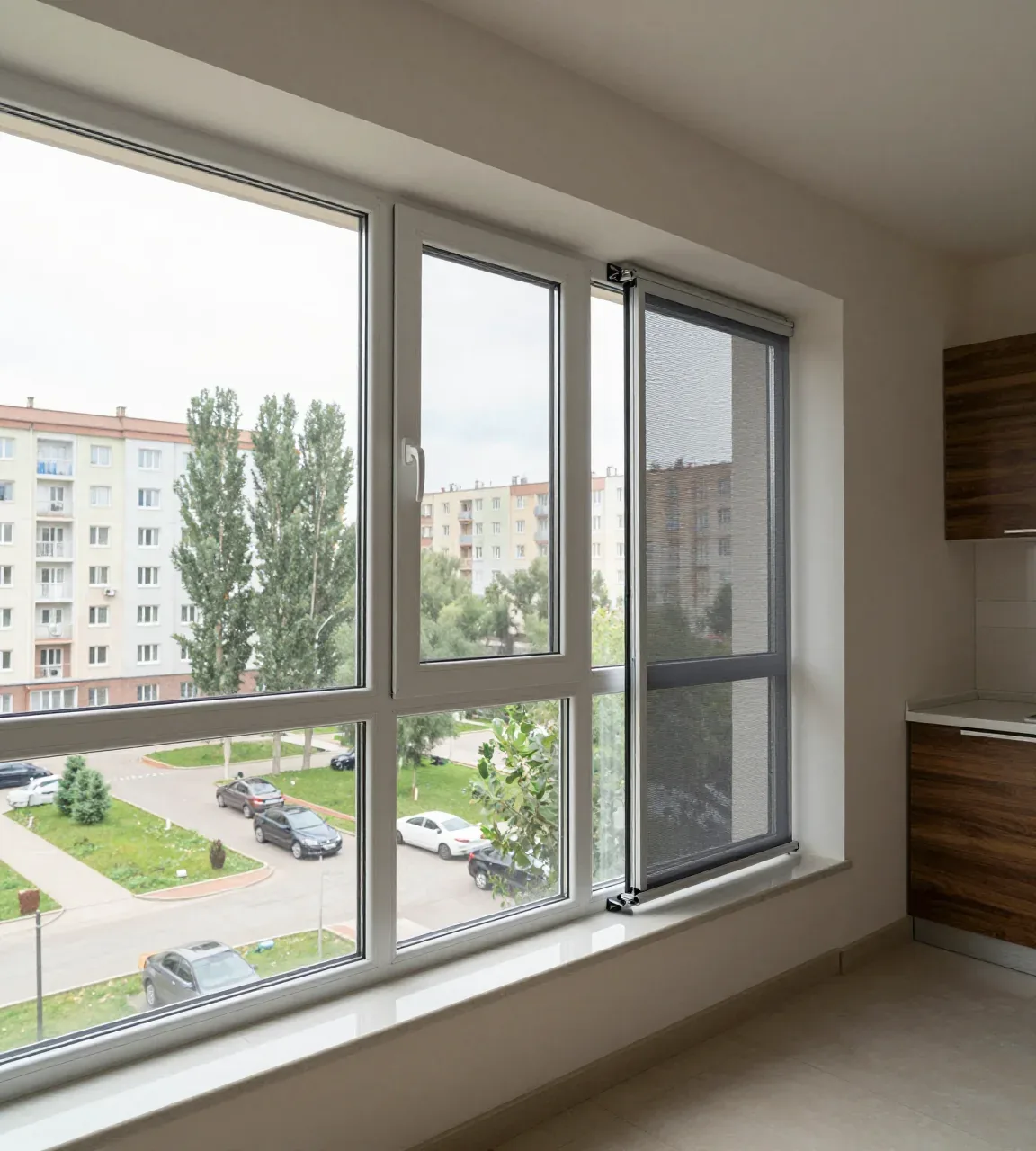
The mesh in a frame moves along guides in the window or balcony door opening.
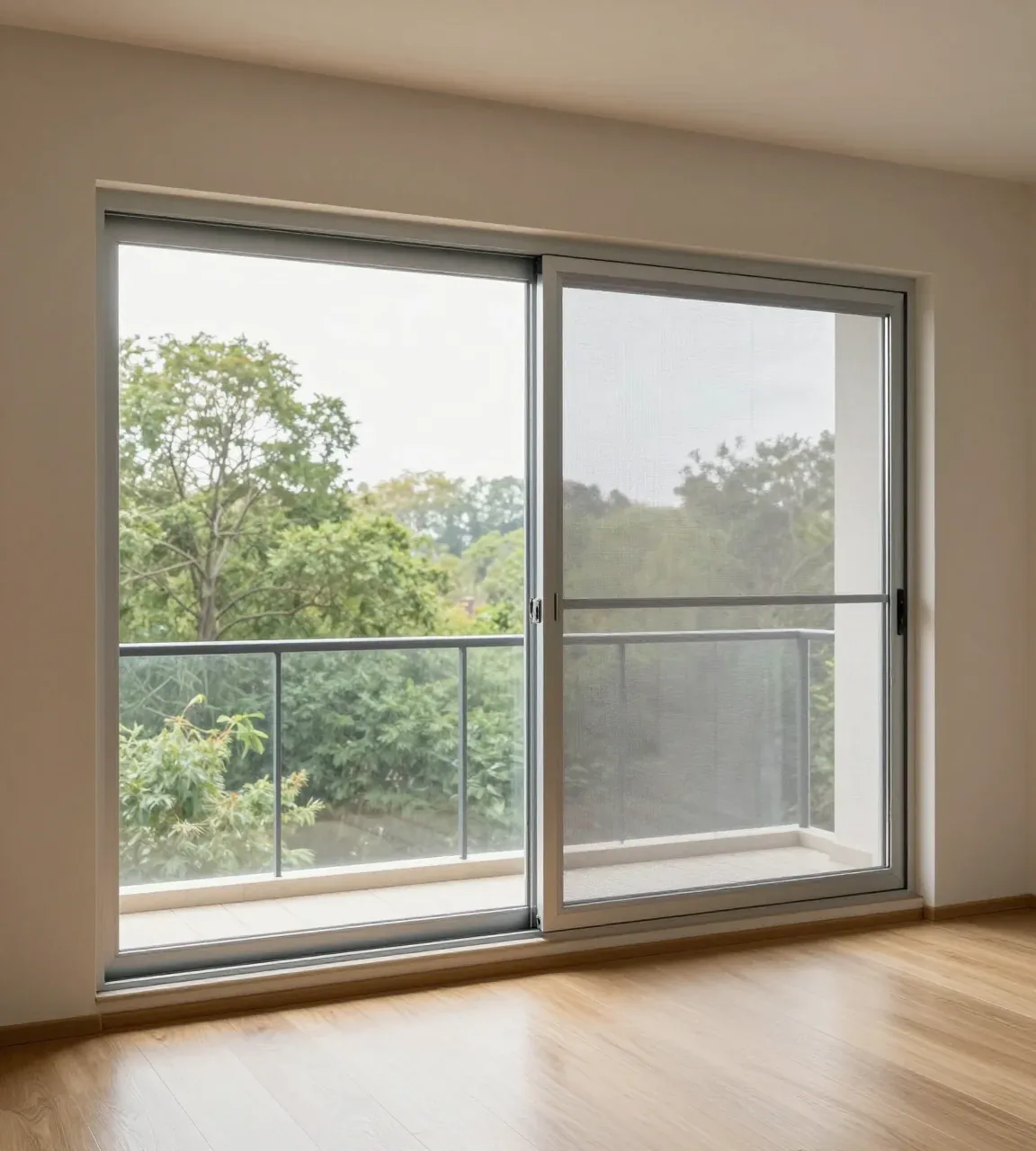
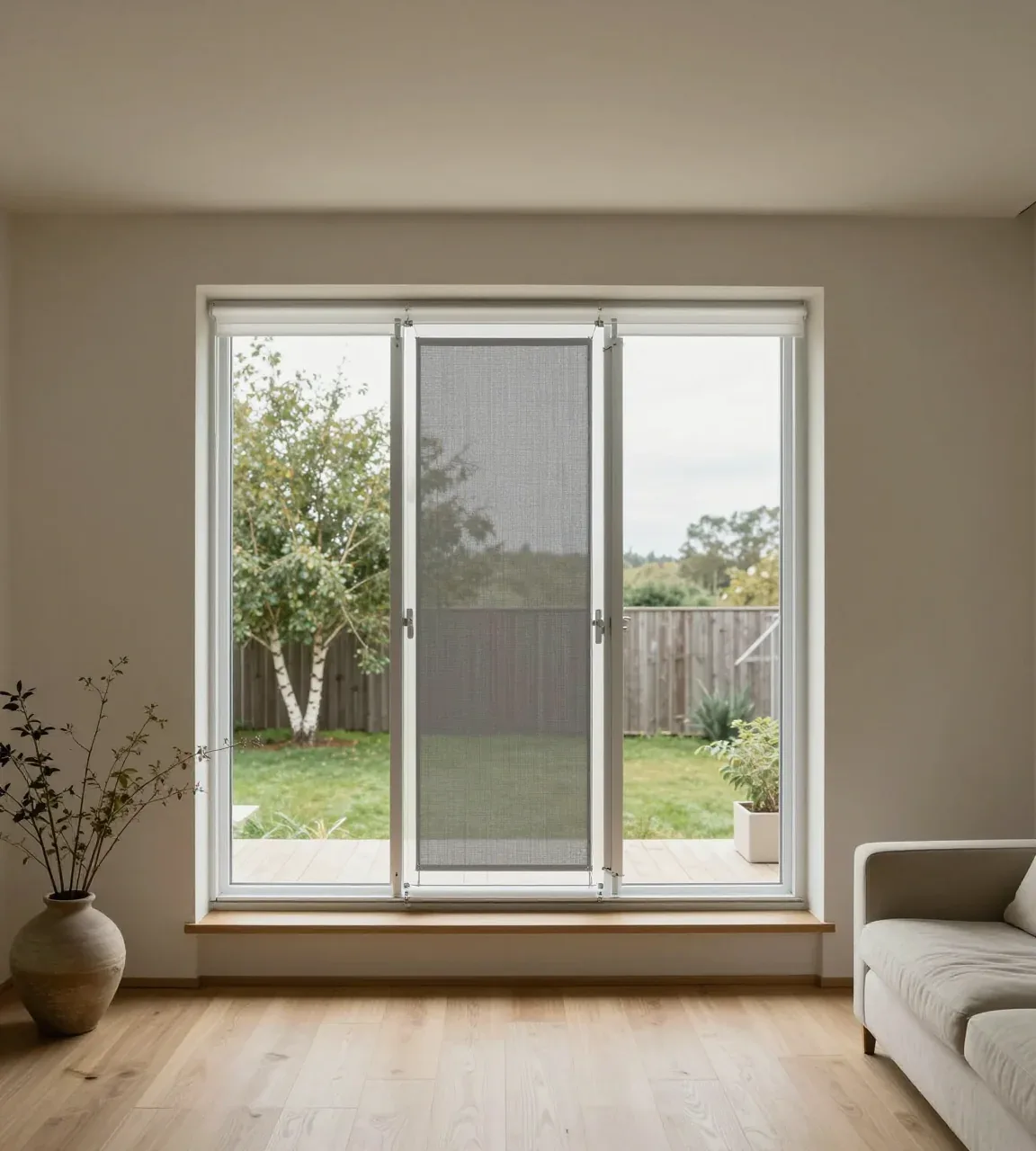
A sliding mosquito screen is a mesh stretched over a frame that moves along guides fixed in the window or door frame. The panel slides aside, does not need to be removed each time and does not block the passage.
The design is installed on aluminium balconies, loggias, terraces and sliding windows. For openings from 1 m wide, a double sliding system is convenient: two panels slide towards each other.
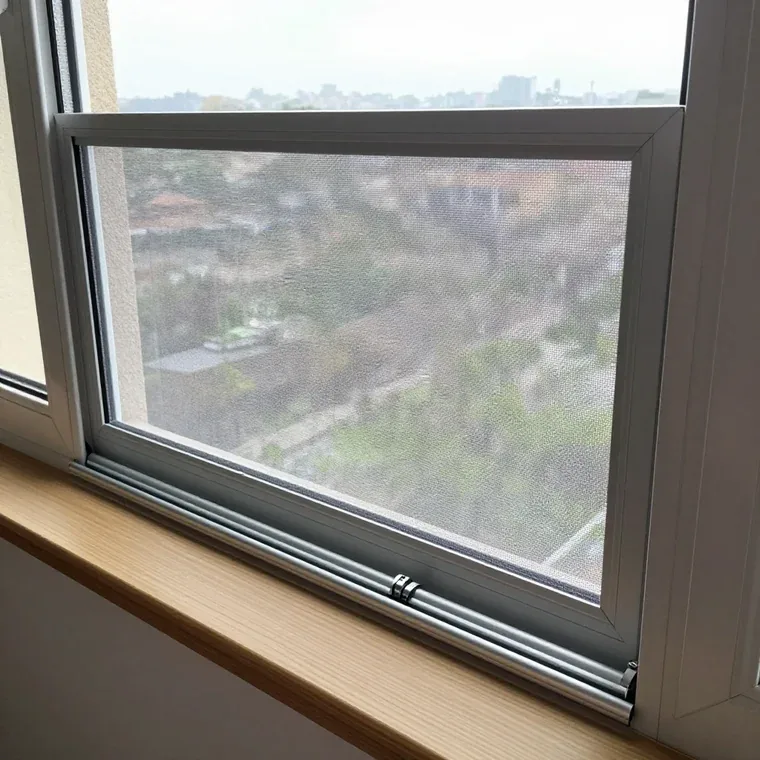
price of mesh in a frame with guides
production of a framed screen to your dimensions
fitting of the ready-made product per unit
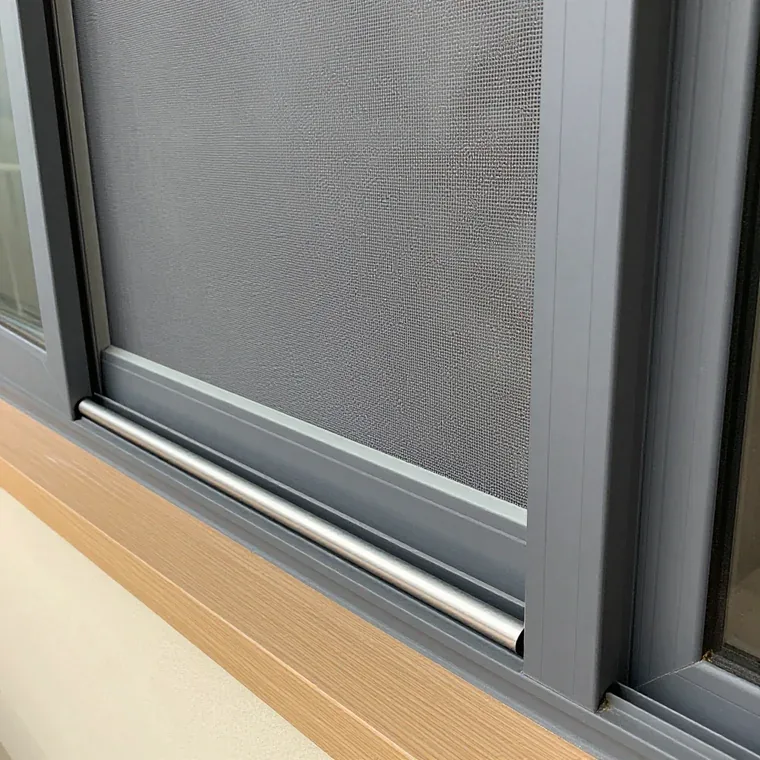
Guides, rollers, stoppers and seal form a single unit that holds the panel and protects against gaps.
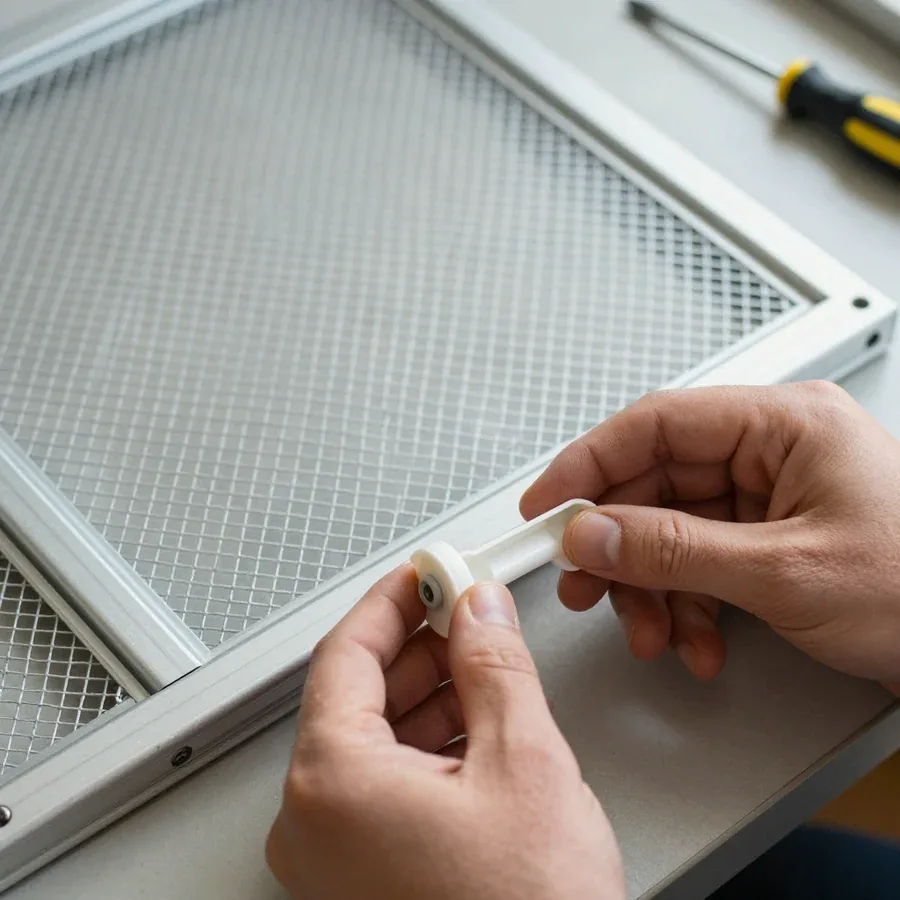
The profile is fixed into the window or door frame, and the panel slides along it. Guide installation — 8 500 ₸ per job.
Rollers ensure smooth movement, stoppers prevent the screen from being blown out by the wind and falling out of the guide.
The brush along the profile closes the gap between the screen and the frame, through which insects and dust get in.
The unit consists of two rollers on the bottom edge of the panel, upper and lower guides, a pair of stoppers and a brush seal around the perimeter. These parts determine the smoothness of movement and how tightly the screen fits the frame.
The five meshes differ in strength, light transmission and mesh size. The measuring technician will help you choose.
Fiberglass · fire-resistant
Basic mesh for windows and balconies, resistant to temperature changes.
Ultravue · +25% light and air
Lets through 25% more light and air than other meshes.
Pet Screen · reinforced threads
Vinyl threads are several times stronger than standard mesh and withstand the weight of a small pet.
Dense weave
Traps urban dust, ideal for windows facing the road.
Poll-Tex · mesh 0.25×1 mm
Hypoallergenic mesh for the pollen season.
Plastic, wooden and aluminium windows, vents, loggia, gazebo and veranda windows. The measurer chooses the fixing.
Balcony door: hinged, sliding or pleated screen
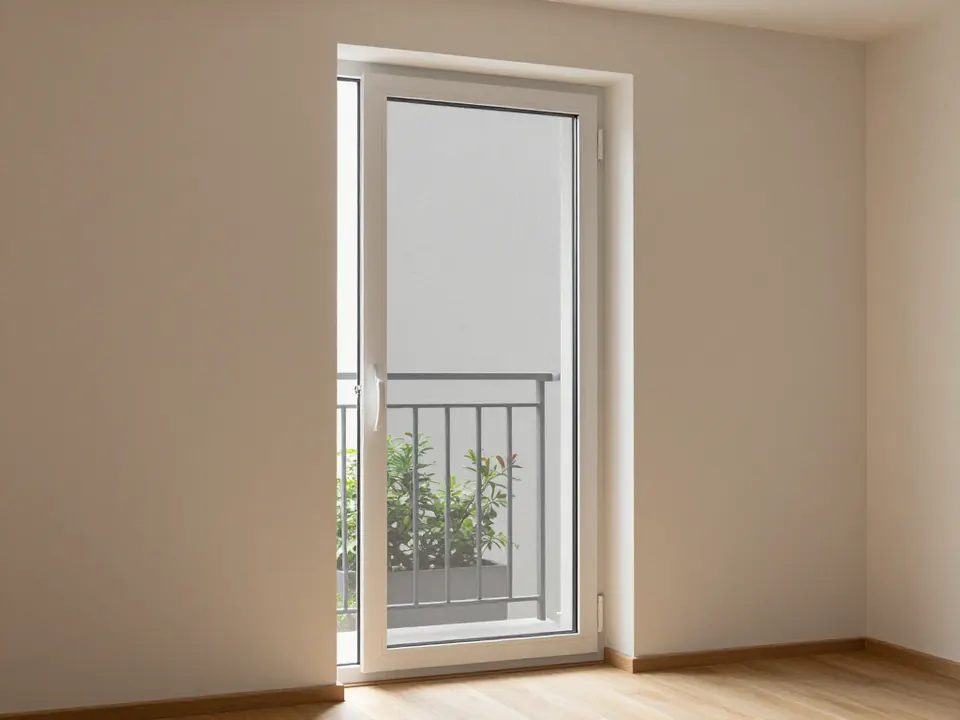
Framed screens for opening sashes
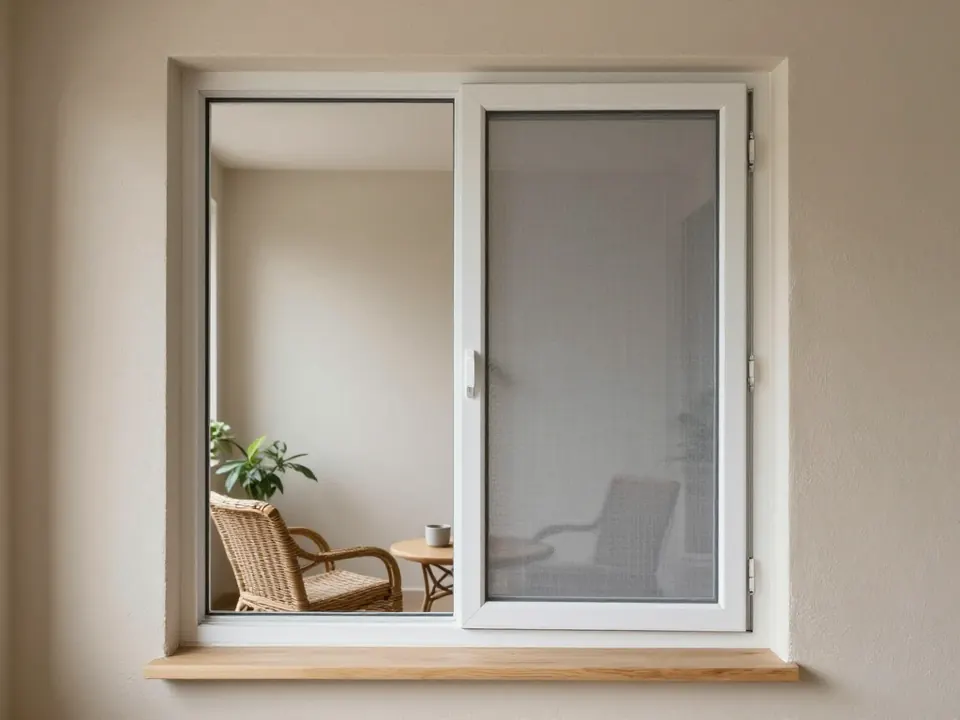
Wide openings: sliding and pleated screens
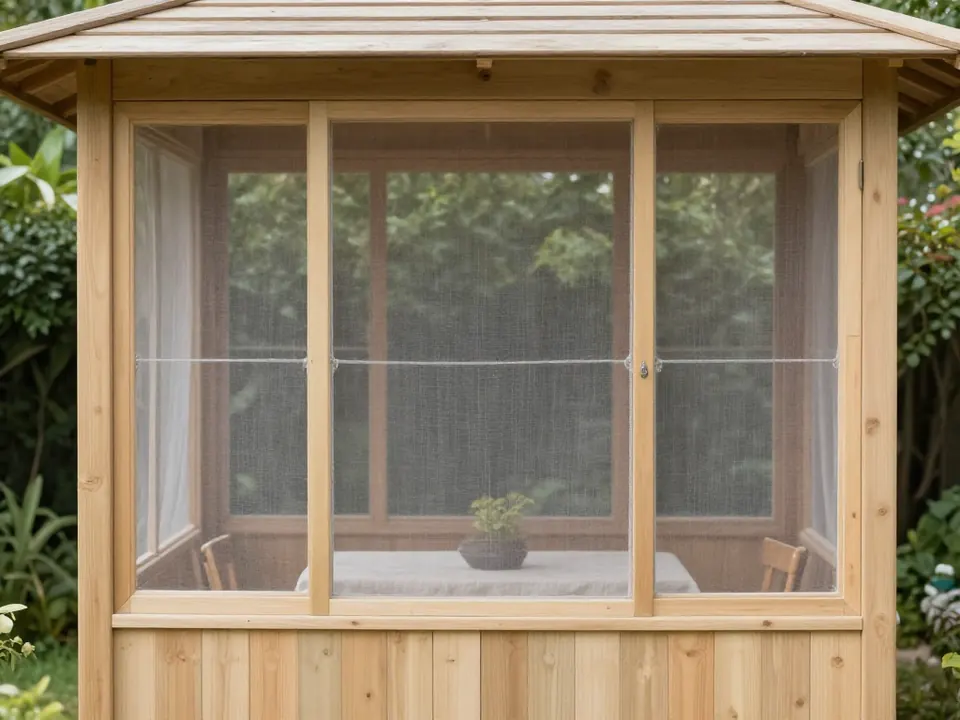
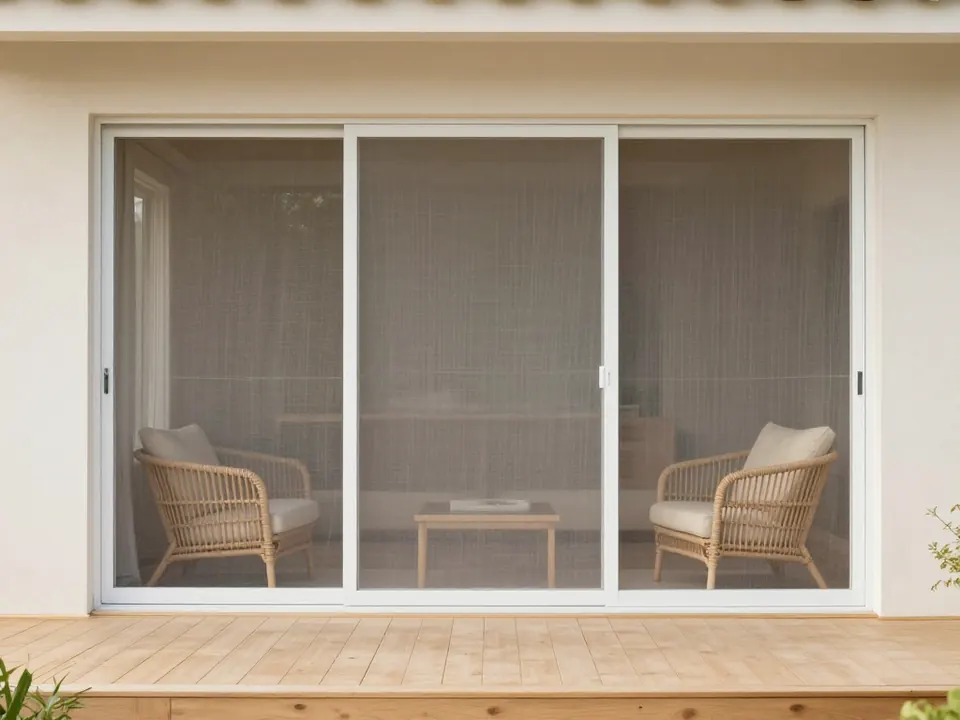
Large windows and doors to the terrace
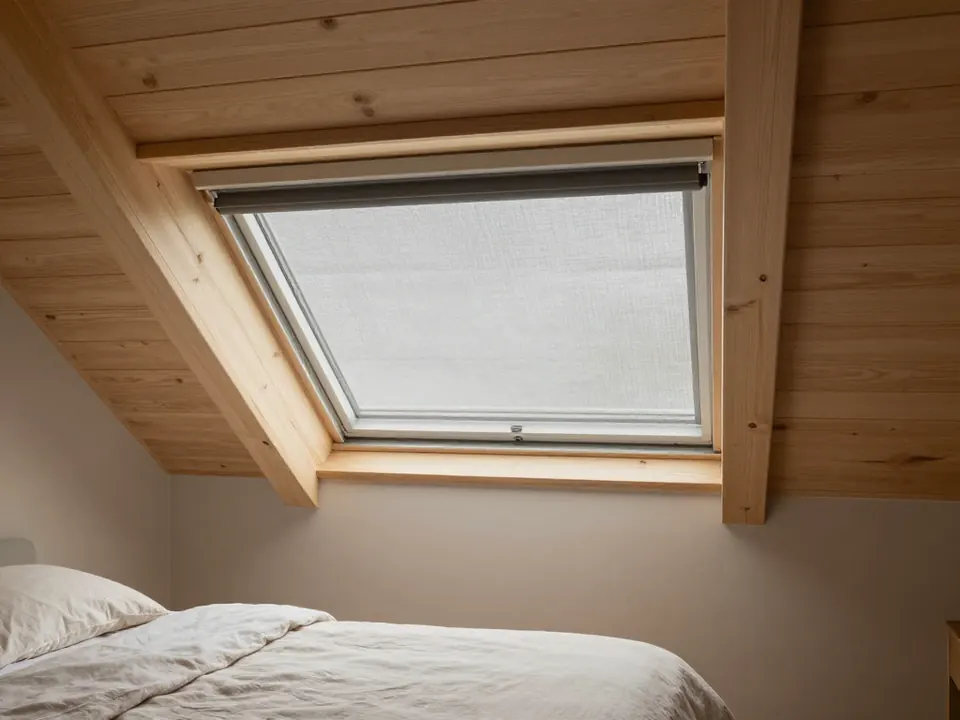
Sloped windows: the measurer chooses the fixing
Framed screen made to the exact size of the transom
Prices for products and installation and repair of sliding screens.
| Screen type | Price | Fitting | Making | Options and prices |
|---|---|---|---|---|
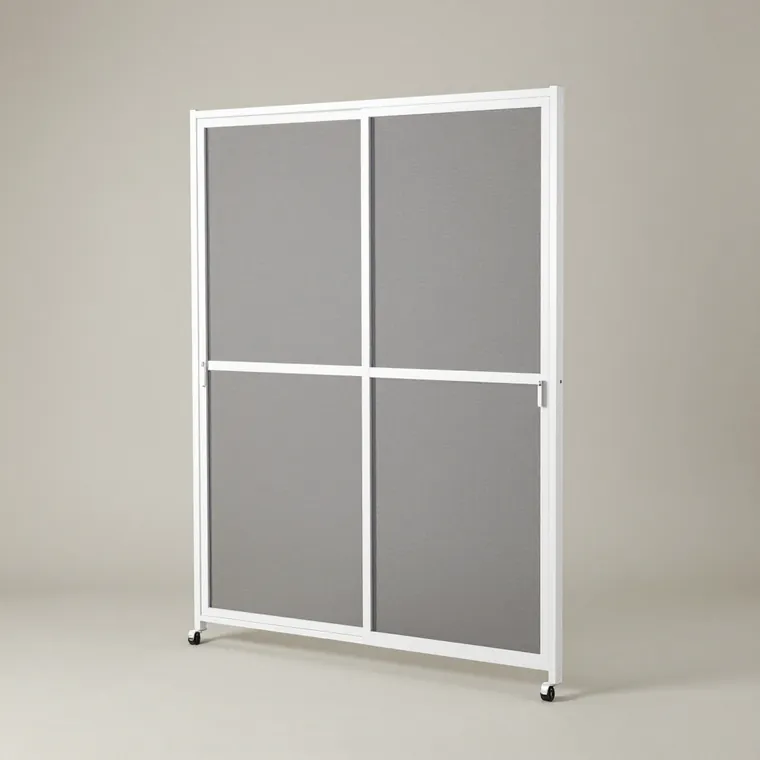 Sliding mosquito screenmesh in a frame with guides | from 17 400₸ per m² | 3 300 ₸ | 10–15 minutes | Anti-Cat sliding · 21 000Sliding screen for aluminium windows · 27 000 ₸ per unit |
| Sliding mosquito screen (per unit)ready-made product to size | from 25 500₸ per unit | — | — | |
| Double sliding systemtwo panels sliding towards each other | from 55 000₸ per unit | — | — | |
| Guide installationmounting the profile into the frame | from 8 500₸ per job | — | — | |
| Repair and mesh replacementre-meshing and adjustment | from 13 200₸ per job | — | — | |
| Measuring visit if the order is cancelled | from 2 500₸ per job | — | — | |
| Delivery of ready-made screens within the city | from 4 500₸ per job | — | — |
Price is fixed in the order after measuring.Measuring and consultation are free.Payment after installation: cash, card or Kaspi.
Calculate costEnter the opening width and height, choose the mesh — the calculator will show an approximate cost.
1. Screen type
2. Mesh and design
3. Opening size, cm
Own production, free measuring visit and warranty on the product.
We have been making mosquito screens since 2012 at our production facility in Almaty.
We make framed screens to your dimensions in 10–15 minutes.
We paint the profile to match your windows: white, brown, grey, etc.
1-year warranty on mosquito screens.
Measuring and consultation are free, the measurer will come at a convenient time.
We accept requests and work without days off.
Mosquito screens can be ordered in 17 cities of Kazakhstan.
We reply on WhatsApp within 5 minutes.
From request to installation on the window.
You leave a request or write on WhatsApp. We reply within 5 minutes, clarify dimensions and window type.
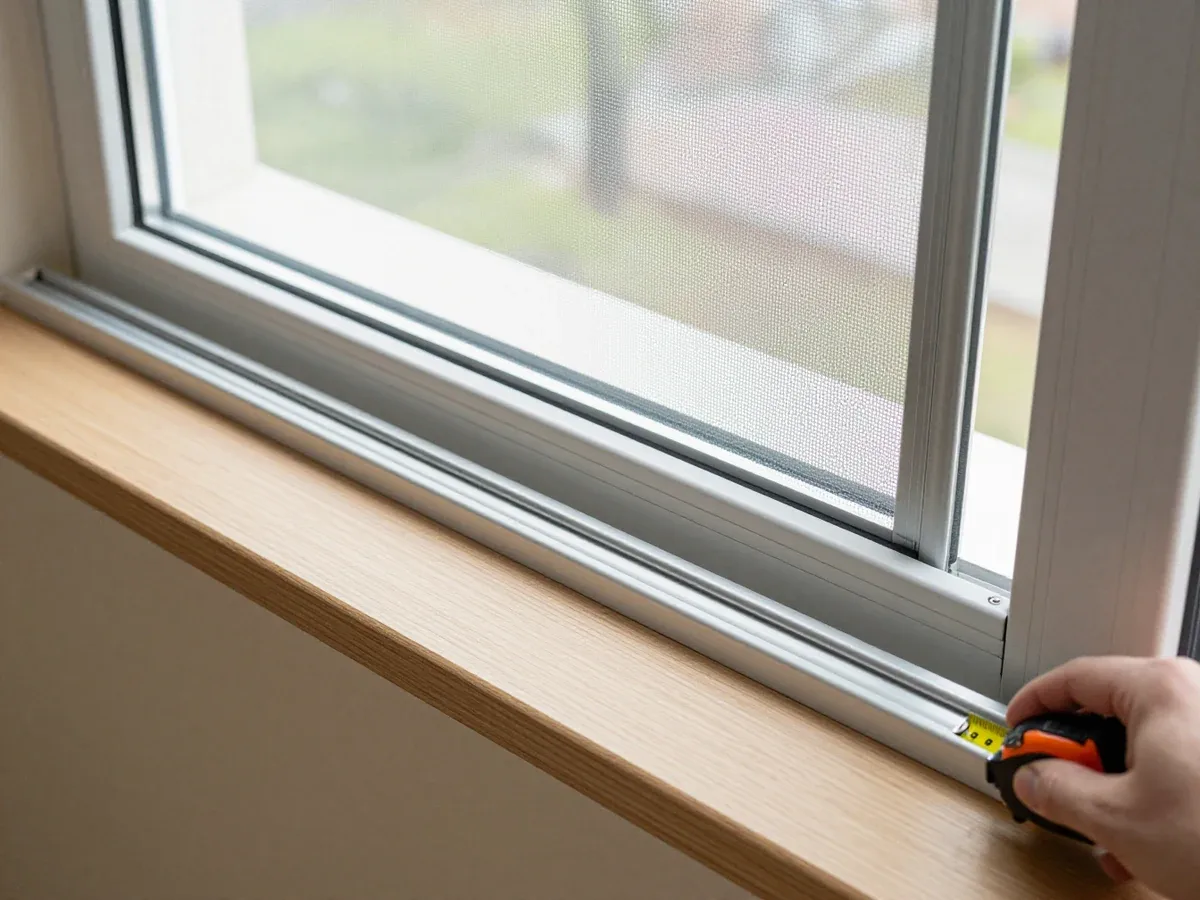
The measurer measures the opening, frame, guides and the opening side of the panel so the screen fits without gaps.
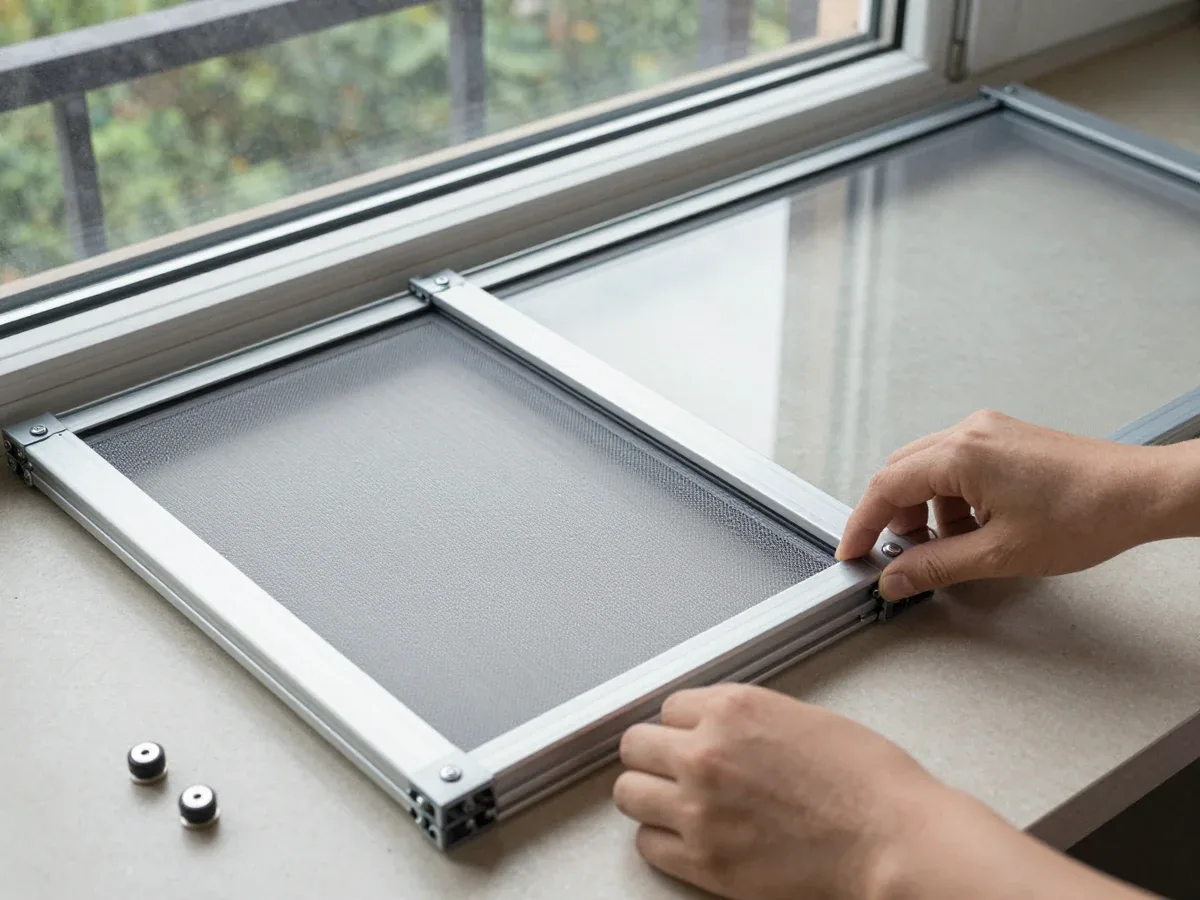
At the production facility, the mesh is cut, the frame is assembled, rollers and seal are installed.
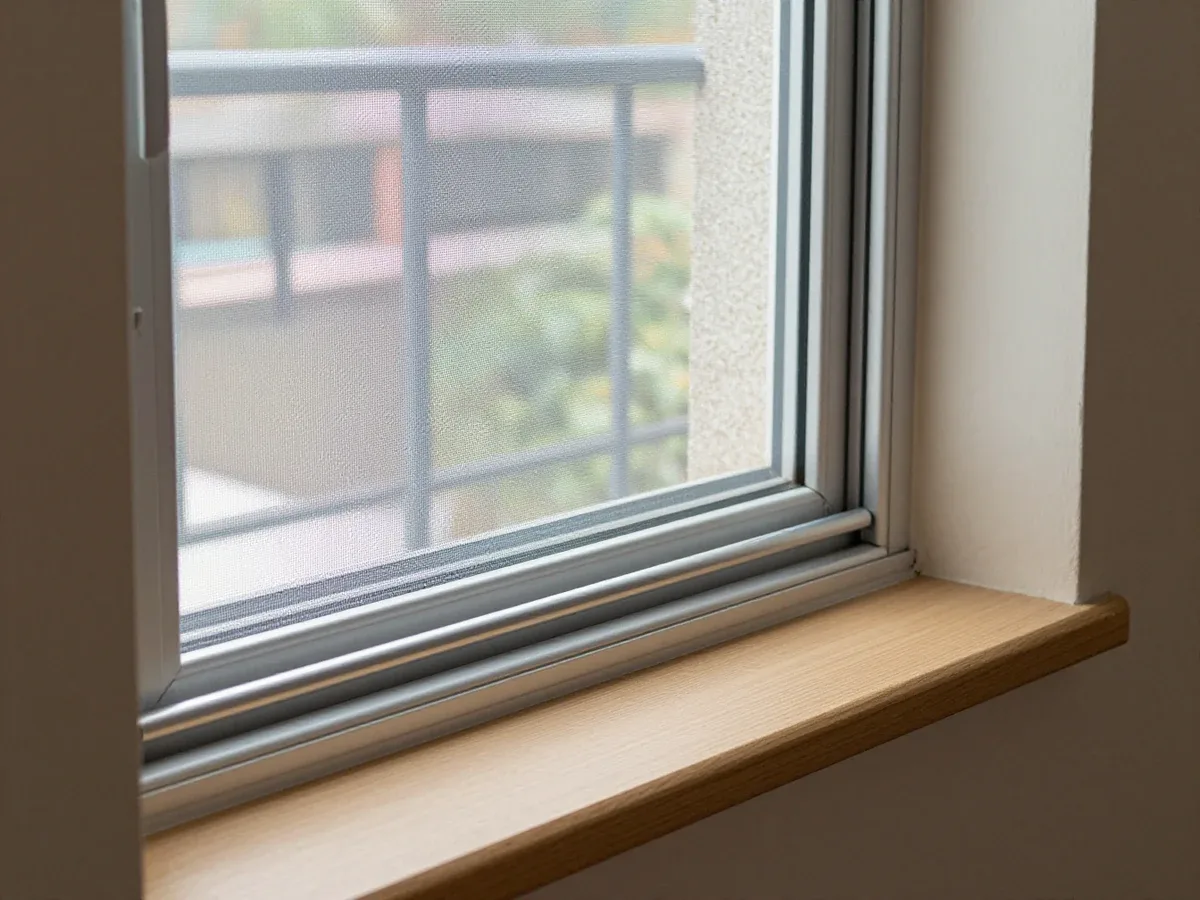
We mount the guides into the window or door frame and check the smooth movement of the panel.
Good to know

Senior mosquito screen specialist at moskitnyesetki.kz
We make and fit sliding mosquito screens in Taraz to your exact opening, with free measuring and a 1-year warranty on the screens. The measurer picks the mesh and fixings for your window profile and floor, we paint the frame to match your windows, and you pay only after installation.
A mesh panel on guides travels sideways instead of swinging open. Below we break down what the unit is built from and when it suits an opening better than a framed cover.
The unit is a framed mesh panel that travels along top and bottom guides instead of swinging open, so it never blocks the opening it protects. The frame is usually slim aluminium, painted to match your window profile, and the mesh is stretched and held inside it under tension. The lower rail carries the rollers, small wheels that let the panel glide; the upper guide only keeps the panel upright and stops it from tilting. A catch or stop at one end limits travel so the panel cannot roll past the frame. The bottom rail carries most of the weight and collects grit first, so keeping that channel clean matters more than cleaning the mesh.
We fit a sliding screen where a swinging panel would get in the way, such as a balcony door or a wide window you open often, and a framed screen where you just need a simple cover you lift off in seconds. A sliding unit leaves the sill clear and lets you reach the handle without removing anything, which matters on a loggia door you use daily. A framed screen is lighter, simpler in construction and cheaper to make, and it sits flat against the frame rather than running on a track. A framed screen comes off from inside in about a minute, which makes it the easier choice for a window you rarely open and want to strip for winter.
The panel runs on a slim lower rail and a matching top guide, and a small catch keeps it from drifting out of the opening when the window is shut. The lower rail is fixed to the sill or the frame base and stands a few millimetres above it; the top guide is screwed to the head of the frame and is barely visible once fitted. Rollers sit in the bottom rail of the panel, usually two per panel, and take the load as the screen slides. A lower rail that sits slightly proud of the sill is normal and keeps the panel from dragging on the frame, so do not press it flat during cleaning.
A sliding system is not only for a patio door. Here is where we fit it across the city and what changes with each type of glazing.
| Opening type | What we check | Solution |
|---|---|---|
| Plastic windows | Sash clearance and depth | Standard guides with Z-brackets |
| Wooden windows | Evenness of the frame | Guides fixed with pins |
| Aluminium windows | Slim profile room | Low-profile guide, checked on site |
| Provedal sliding glazing | Track position and travel | Panel sized to the moving leaf |
We install sliding mosquito screens in Taraz on balcony doors, loggia glazing, verandas and gazebos, and on a wide span the panel is sized so it clears the moving sash. A balcony door takes a taller, heavier panel than a window, so the measurer checks the threshold and headroom before choosing the guide. Loggia glazing often runs on its own track, and the screen must travel beside it without catching. On verandas and gazebos the structure is exposed to wind, so fastenings are picked for it, not just the frame. On such a door the screen usually travels on the side the leaf does not open toward, so plan free wall space before measuring.
The mesh decides how much light reaches the room and what it keeps out. Below are the five canvases we work with and a plain guide to matching one to a cat, a dusty street, pollen or a darker flat.
| Mesh | What it does | Best for |
|---|---|---|
| Standard (Fiberglass) | Basic weave, resists fire and temperature swings | General use on any window |
| Ultravue (Ultravue) | 25% more light and air than other meshes | Dark rooms, north-facing windows |
| Anti-Cat (Pet Screen) | Vinyl threads several times stronger than standard | Doors a cat or small dog uses |
| Anti-Dust | Denser weave traps fine street dust | Windows facing the road |
| Anti-Pollen (Poll-Tex) | 0.25×1 mm cell holds back pollen | Allergy season, open steppe side |
If you have a cat and a dusty street, we suggest "Anti-Cat" on the pet door and "Anti-Dust" or "Anti-Pollen" on windows facing the road. The split works better than one canvas everywhere, because a pet door takes claws and weight while a street window takes grit. "Anti-Cat" holds the weight of a small animal because its vinyl threads are several times stronger than standard mesh, but it lets through less light than "Ultravue". On a shaded side, "Ultravue" keeps the room brighter, while "Anti-Pollen" with its 0.25×1 mm cell suits sleepers who wake up congested. A tighter weave blocks more dust and pollen but cuts airflow, so match the mesh to the side facing the road or the open steppe.
From the first call to a screen on the frame, the job runs in a few clear steps: the free measuring visit, production time and payment after installation.
Measuring and consultation are free, and the measurer comes at a time that suits you, takes the sizes and helps choose the design, mesh and fixings for your window and floor. The same visit settles the fastening question: for a plastic profile on an upper floor we usually pick Z-shaped brackets, on a wooden frame pins, and on a light aluminium sash magnets. You can note the opening width and height yourself, but leave the final figures to the measurer, since the guide and fixing allowance change the finished panel size. A few millimetres the wrong way and the panel drags along the sill or leaves a gap — the measurer measures the opening, not the old mesh.
A framed screen made to your size takes 10–15 minutes and a pleated screen 40–60 minutes; we deliver and install screens on windows and doors, and you pay after installation by cash, card or Kaspi. Fitting is quick because the brackets are already matched to your profile, so the crew spends most of the visit levelling the guides and checking that the panel glides without catching. The price is fixed in the order after measuring, so the figure you agree at the visit is the one you settle once the panel is up. Ask the fitter to show you how the panel lifts out of the guide before he leaves — you will repeat that every autumn.
A sliding screen runs smoothly with little upkeep if guides stay clean and the leaf comes out before cold. Here is what to wipe, when to lift it off, and how servicing and warranty work.
Wipe the bottom rail and guides every few weeks and lift the leaf out before the cold season, because grit in the channel makes it stick and jump the track. Dust, sand and street grit gather along the lower rail, and the rollers pass through that layer on every pass. A framed model lifts out from inside in about a minute, so taking it off for winter costs almost no effort. Cleaning the fabric matters far less than keeping the channel clear. A dry brush or vacuum along the lower rail does more for smooth travel than washing and stops grit from wearing the rollers down. Check the top guide too, since a loose screw lets the frame tilt and rub.
If a leaf skews or pops out of its guides, we repair screens and replace fastenings, and every mosquito screen we fit carries a 1-year warranty. Our team also delivers and installs on windows and doors across the city, so a service visit is booked on the same schedule as a new fitting. Fixings are matched to the profile and the floor: Z-brackets, pins or magnets, and we swap a worn set rather than refitting the old one. Most skewing comes from a worn roller or a bent guide, so a visit often restores travel without replacing the whole unit. If the frame or mesh is damaged, we will tell you plainly whether a fix makes sense.
A sliding mosquito screen solves a practical problem: it keeps insects out without blocking an opening that needs to stay clear. Here is what matters most before you order.
Installation, profile, mesh, strength, repair, care
Konstantin Selenenkovsenior mosquito screen specialist, 10 years in the tradeOnline · replies within 5 minutes
Ask a questionYes, sliding screens are installed on aluminium windows, including Provedal systems. Fixings are selected to match the profile and floor: guides are attached to the frame, while rollers and stoppers ensure smooth movement. The free measuring visit will confirm the right option for your window.
For a sliding screen, an aluminium profile with guides is used, selected to match the colour and geometry of your windows. We paint the profile in any colour: white, brown, grey and others. The exact profile and fixings are chosen by the specialist on site.
For protection against fine dust and pollen, the Anti-Pollen (Poll-Tex) mesh with a 0.25×1 mm cell is the best choice — it is hypoallergenic and traps the smallest particles. If you only need dust protection, you can choose Anti-Dust.
Anti-Cat (Pet Screen) is several times stronger than standard mesh: the vinyl threads can support the weight of a small animal. It is suitable for windows where cats actively climb and will last a long time. This mesh is also available for sliding systems.
Repairing a sliding screen most often involves replacing the mesh and rollers, as well as adjusting or replacing the guides. If the profile is damaged, individual frame elements may be replaced. The exact scope of work is determined by the specialist after inspection.
The sliding screen can stay in place for the winter — it does not interfere with the window and is not affected by frost. To extend the life of the rollers and guides, it is better to remove and wash it before the cold. It is easy to remove: lift the mesh and take the rollers out of the guides.
 Care
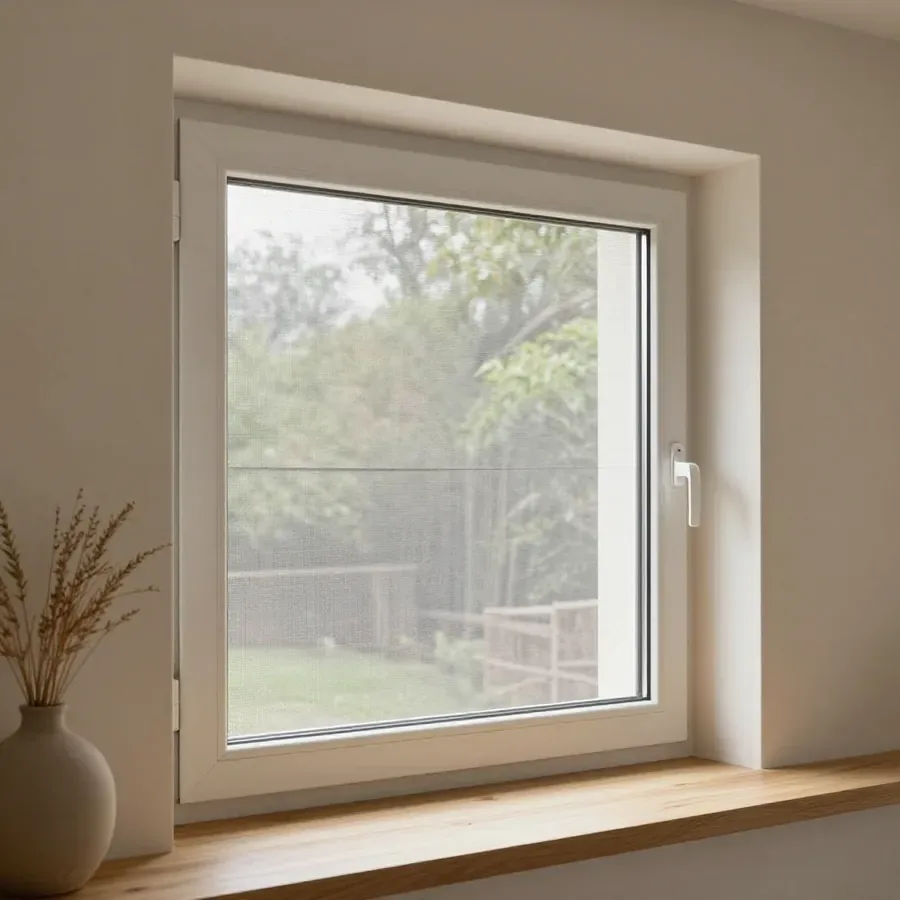
A frame screen comes off in a minute: we show how not to bend the frame or lose the fixings.
April 15, 20268 min read
 Choosing
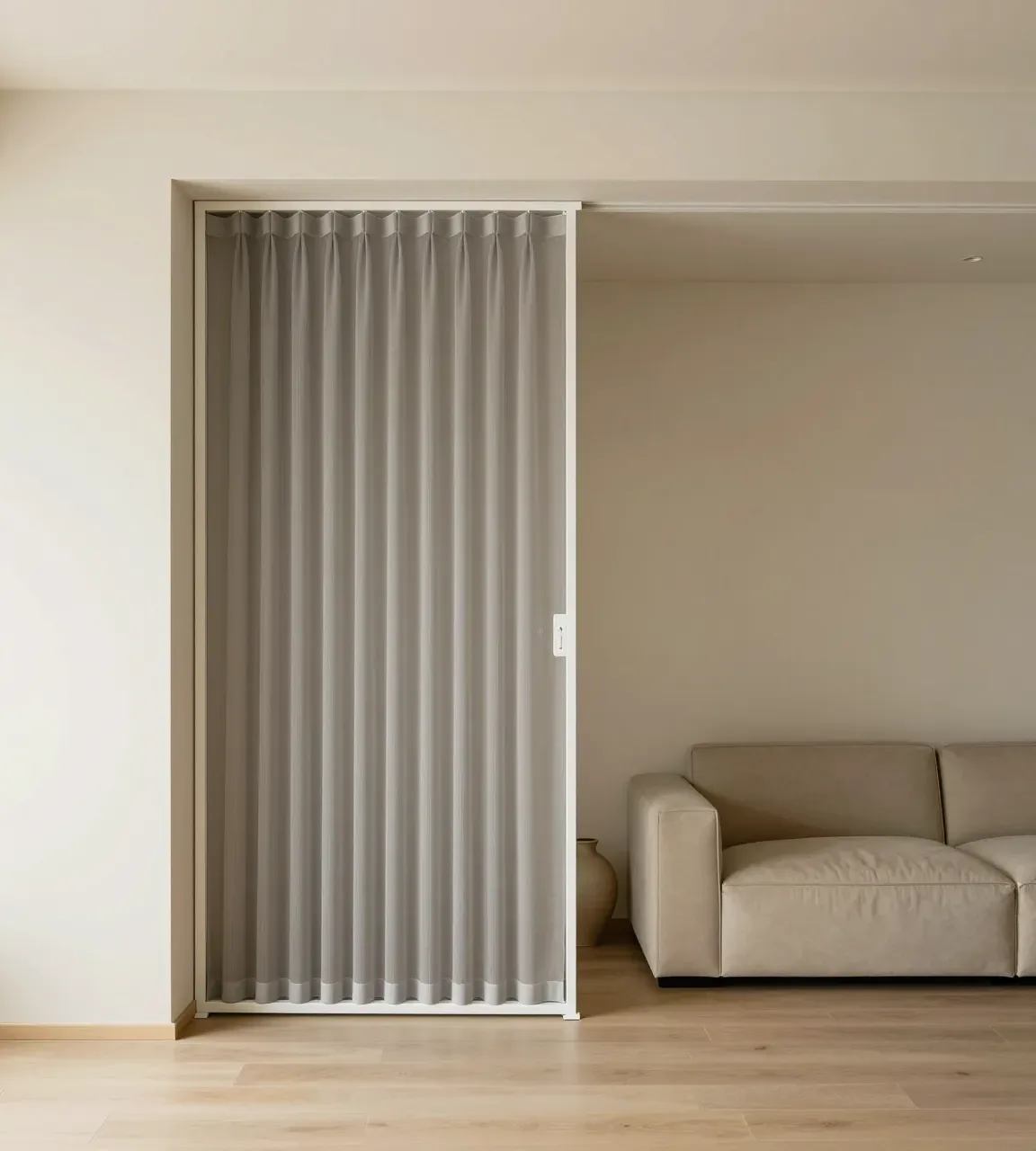
We compare the price, lead time and how each screen performs on a door that you walk through every day.
March 2, 20268 min read
 Mesh types
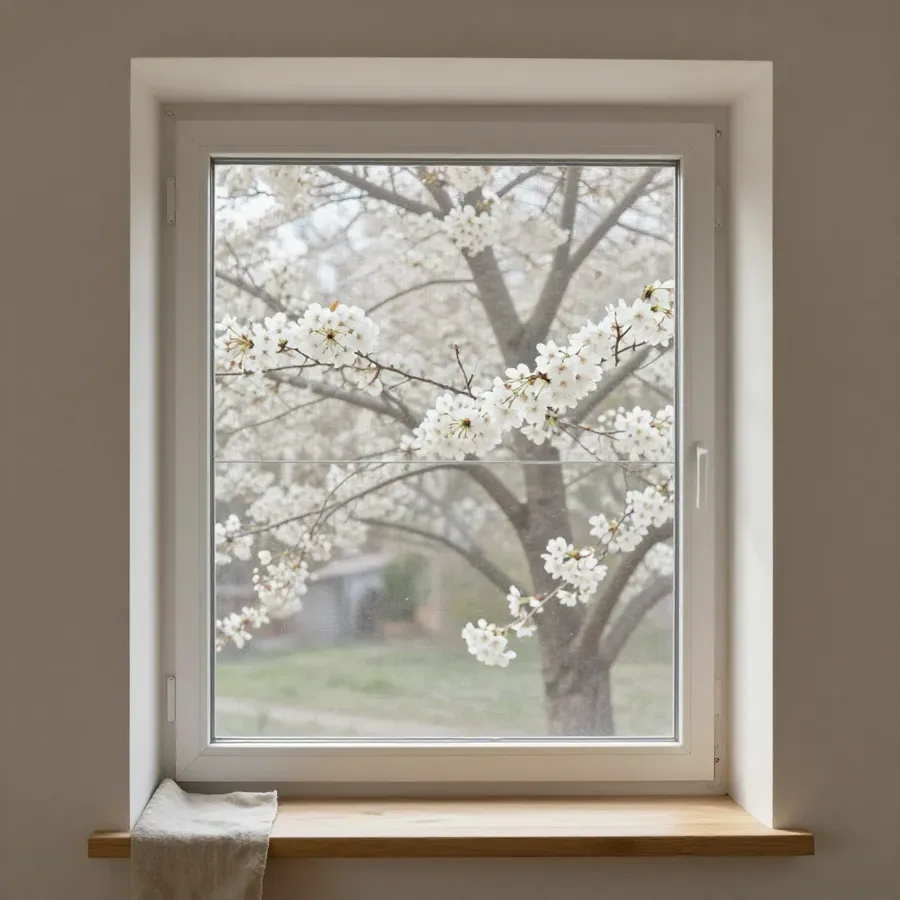
How Poll-Tex mesh with a 0.25×1 mm cell works and who it helps in pollen season.
February 17, 20268 min read
 Prices
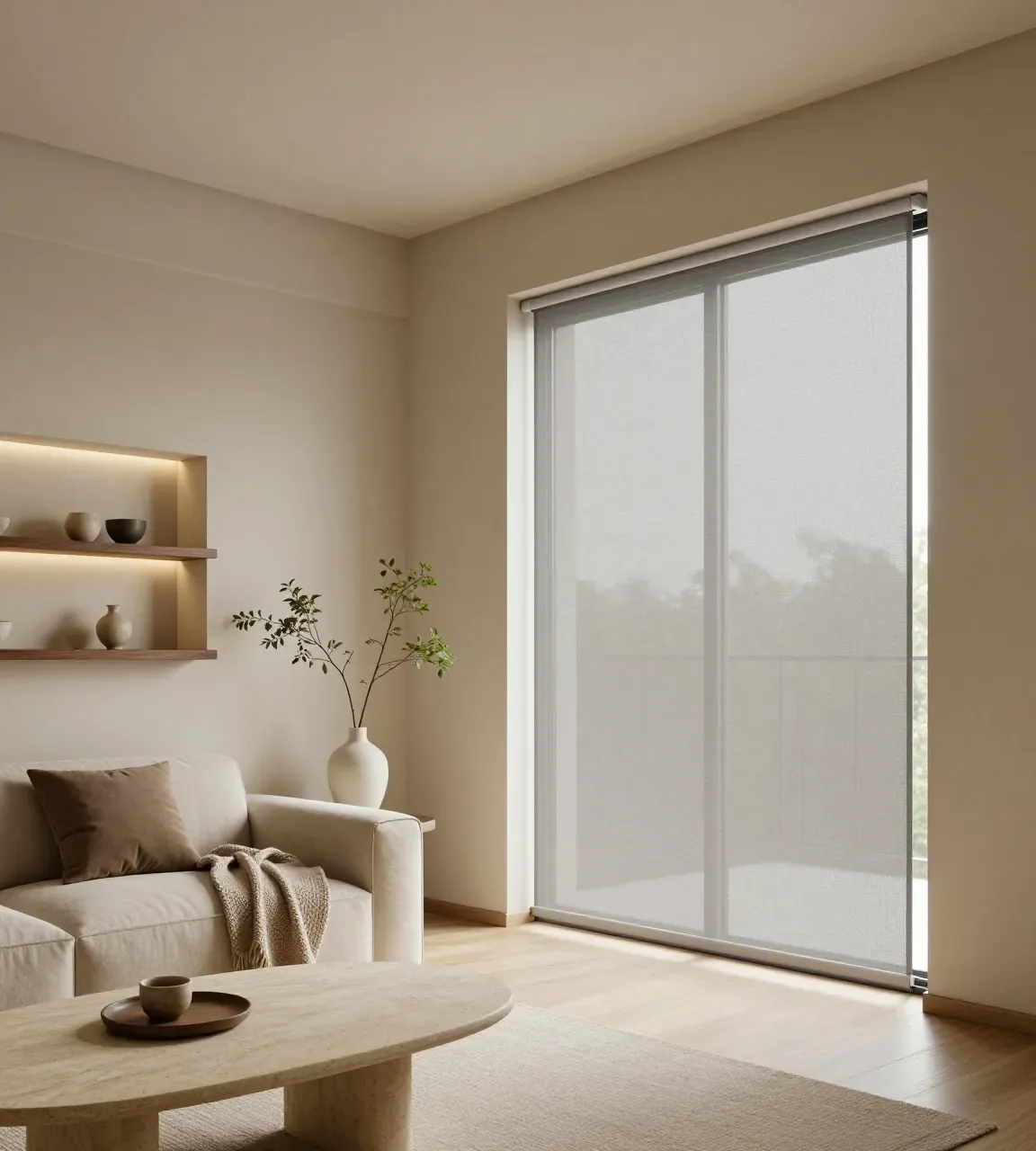
Price list breakdown: frame screen from 2 000 ₸ per m², installation 1 750 ₸, pleated from 28 000 ₸. Costing a 70×140 cm window.
February 1, 20268 min read
 Repair
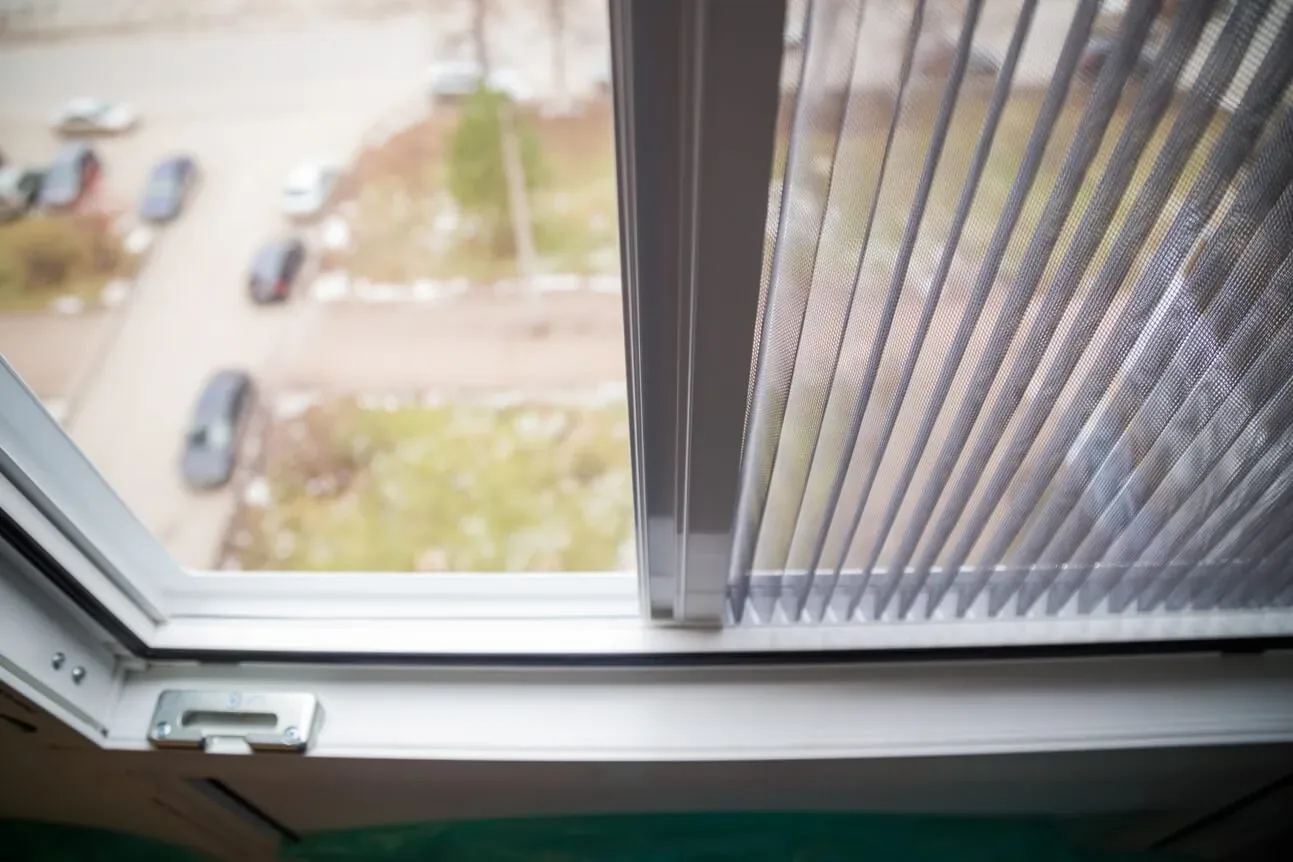
Worn fixings, a wrong measurement, wind on high floors. A set of fixings costs 290 ₸, installation 871 ₸.
January 14, 20268 min read
 Choosing
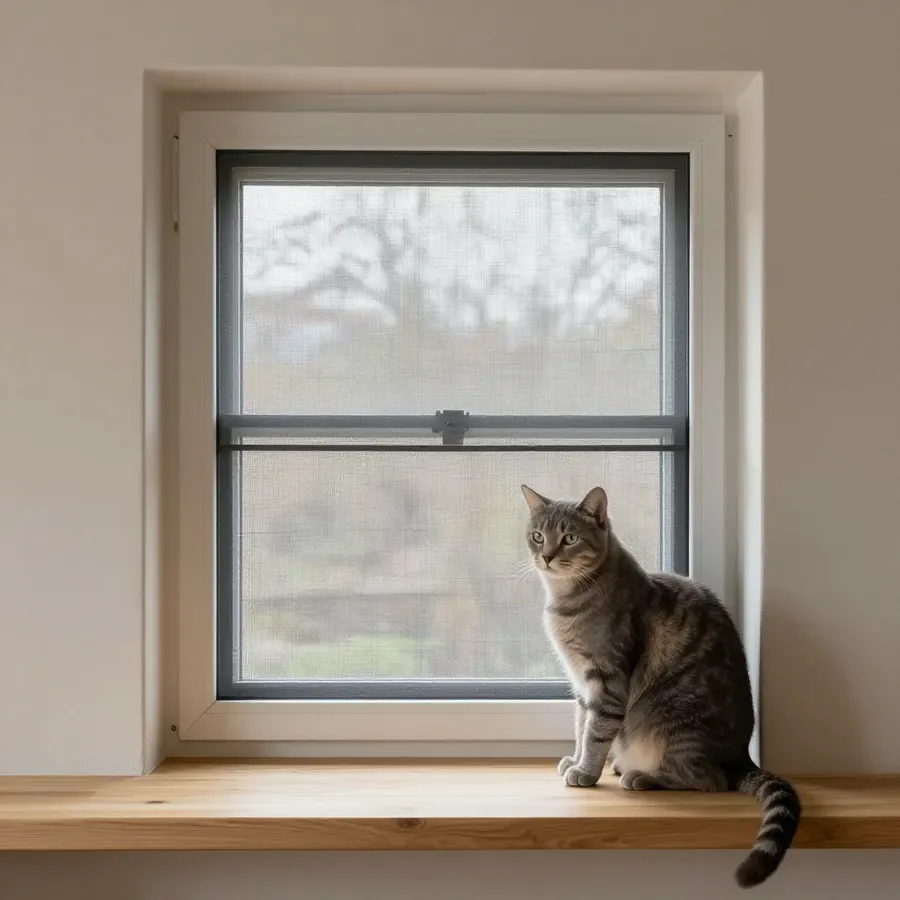
Anti-Cat mesh on vinyl threads, the fixings and what to do about gaps around the window opening.
December 23, 20258 min read
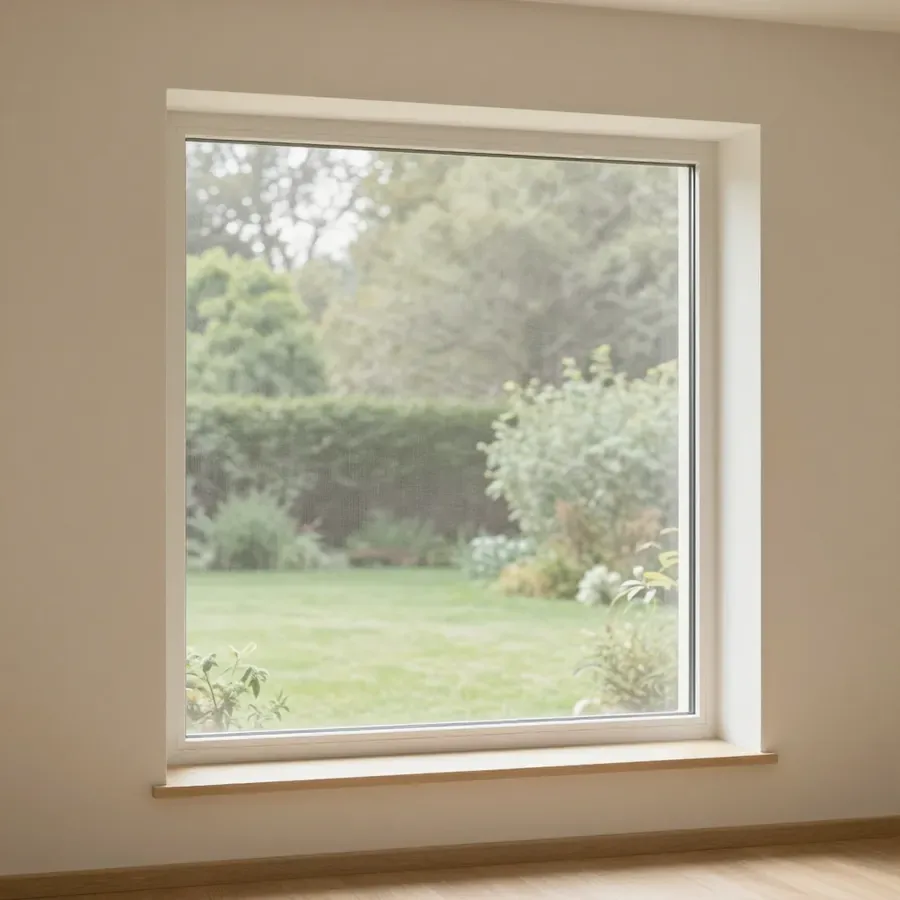 Mesh types
The mesh lets in 25% more light and air. Where the difference shows and where paying extra is not worth it.
December 11, 20258 min read
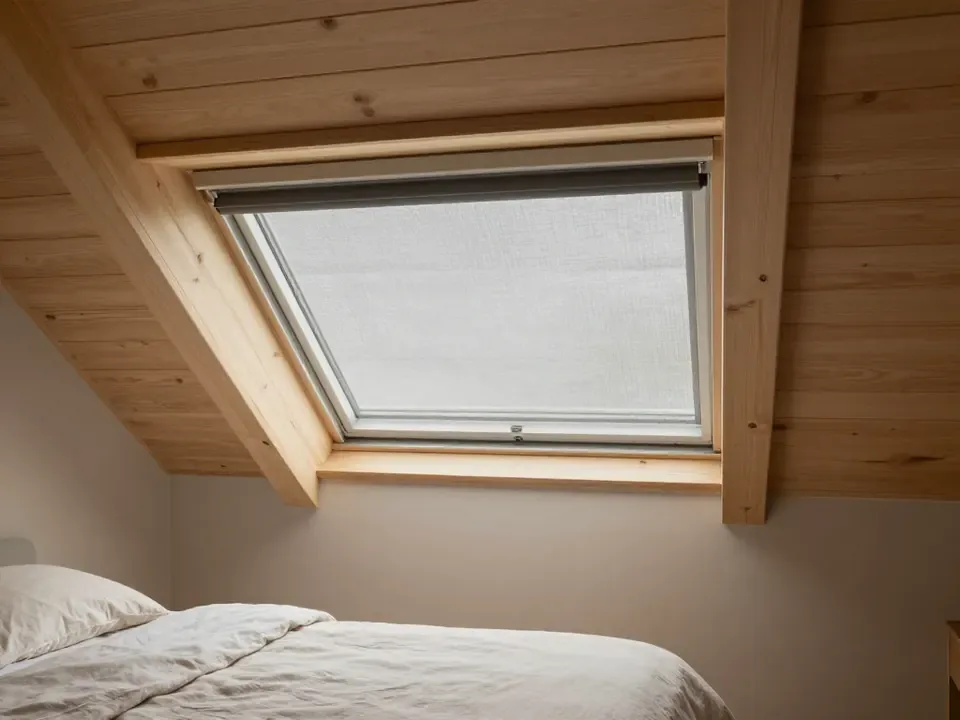 Choosing
A tilted sash, outward opening and a roller screen at 15 000 ₸ per m²: what will suit your window.
November 21, 20258 min read
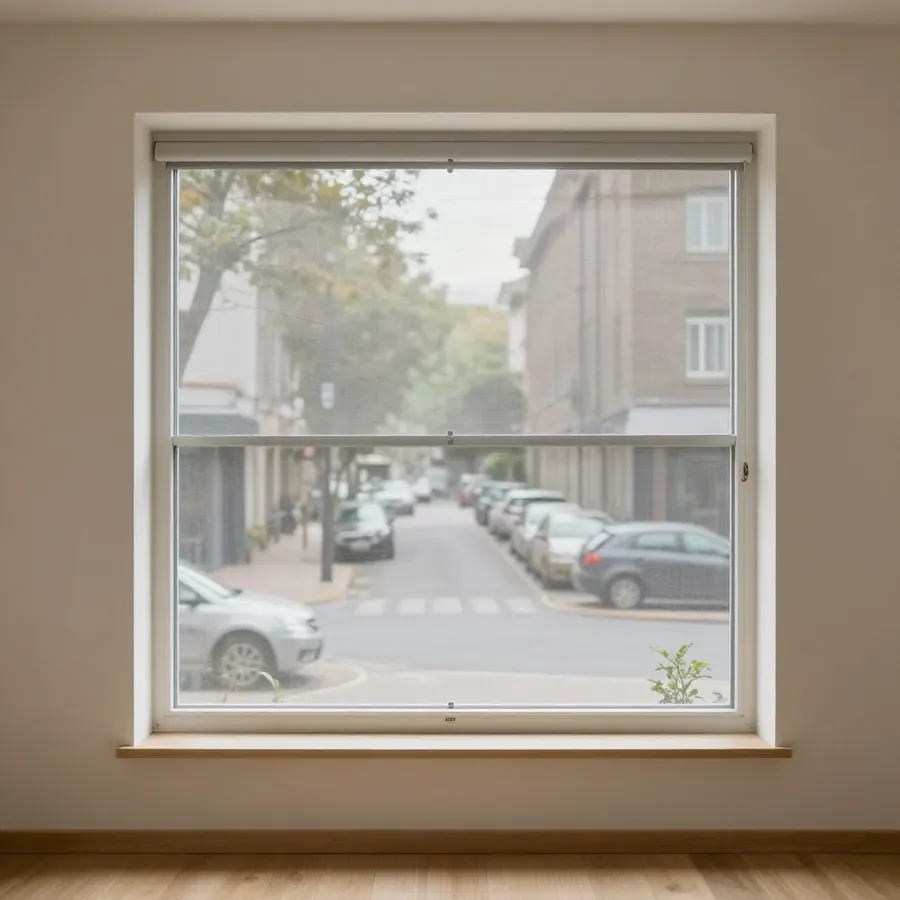 Mesh types
The mesh stops coarse and fine dust along with mosquitoes. When it is worth the price of 8 500 ₸ per m².
October 20, 20258 min read
Thank you. We will call you back within 10 minutes!
Your order number is on the receipt or in the SMS. Choose where to leave your review.
Write a review on WhatsApp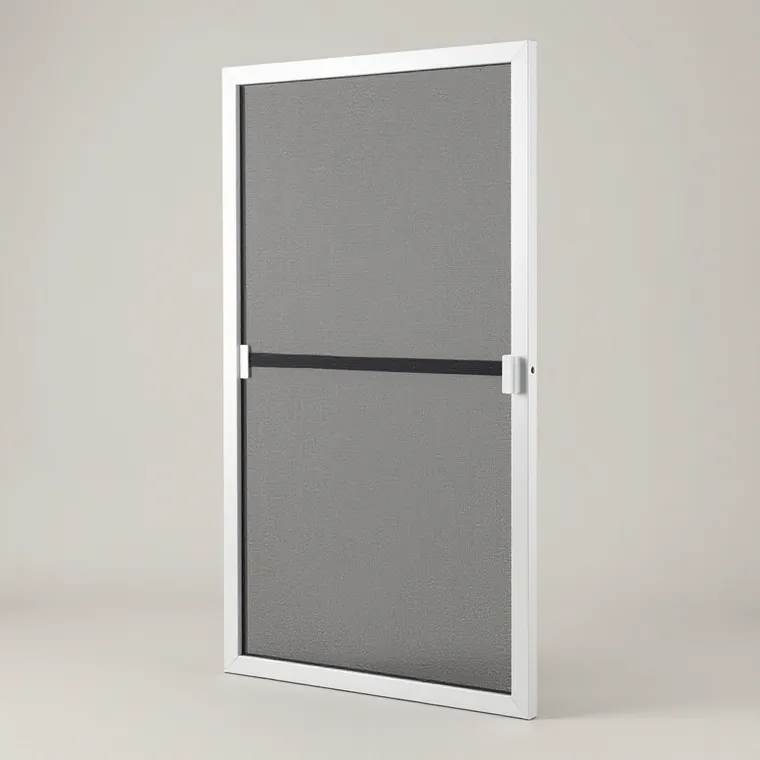 Framed mosquito screens
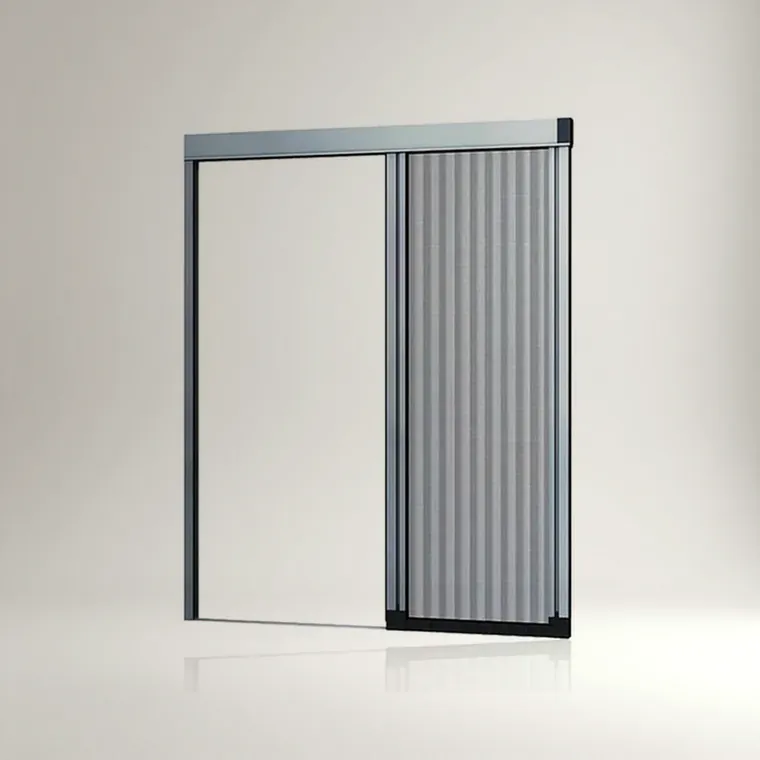 Pleated mosquito screens
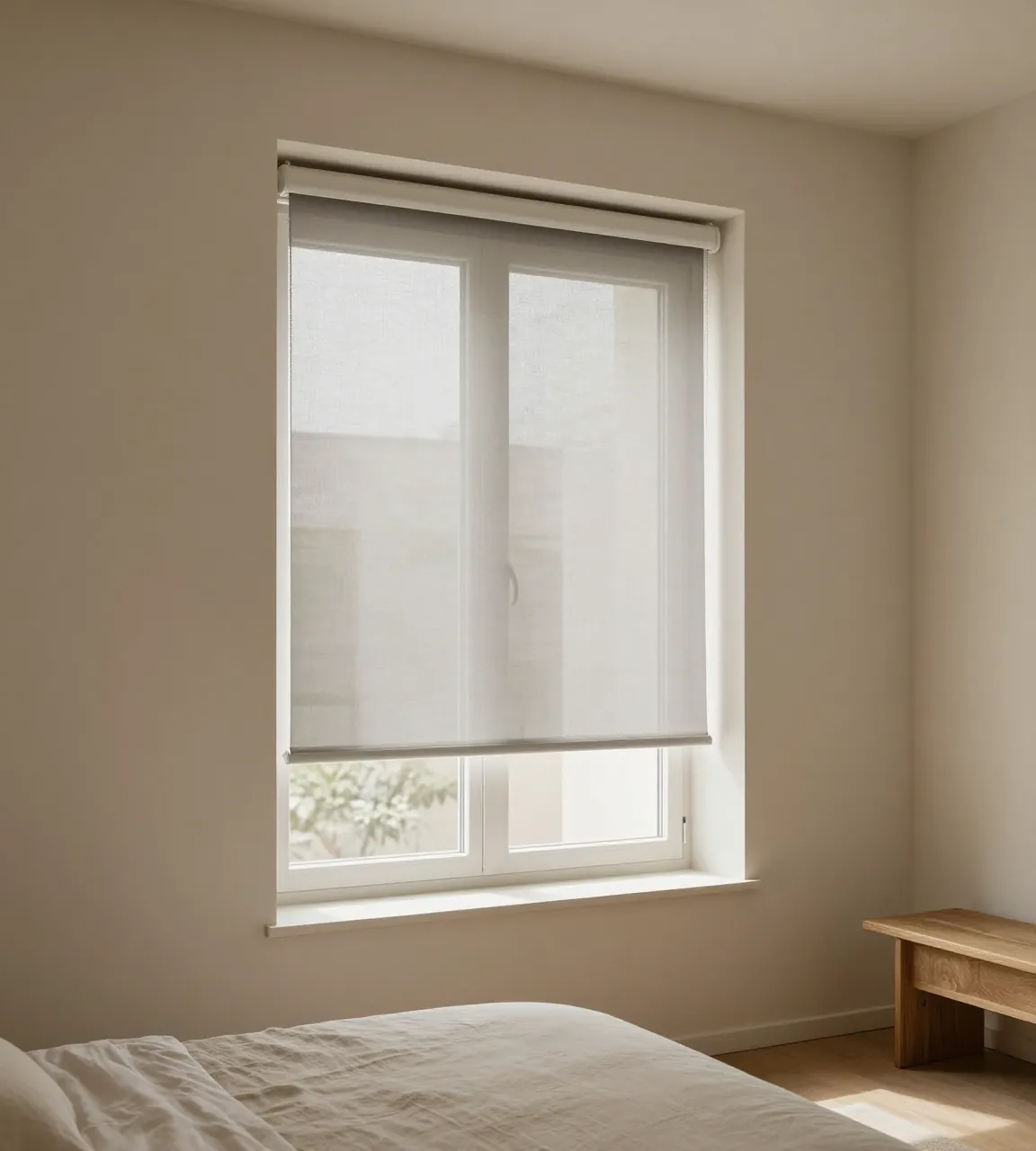 Roller mosquito screen
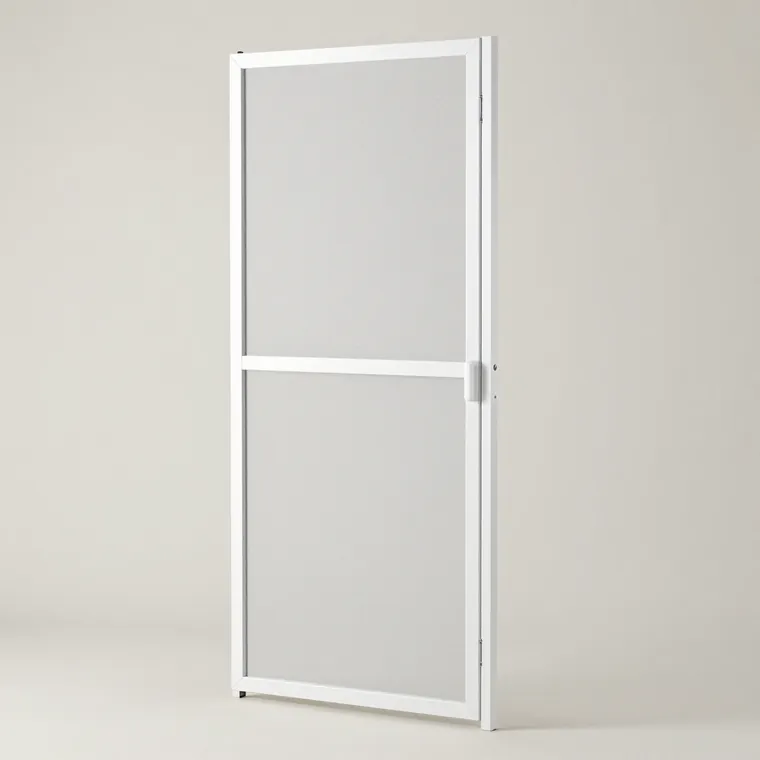 Mosquito doors
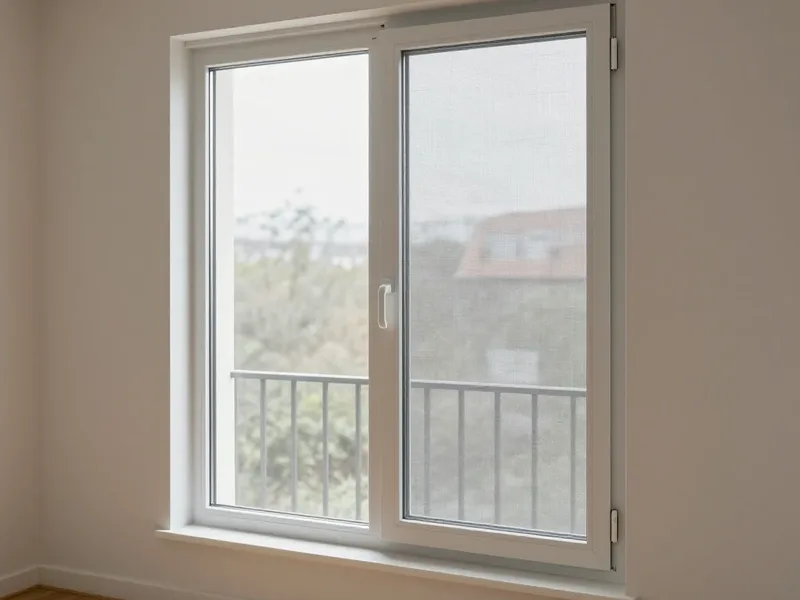 Internal mosquito screens
